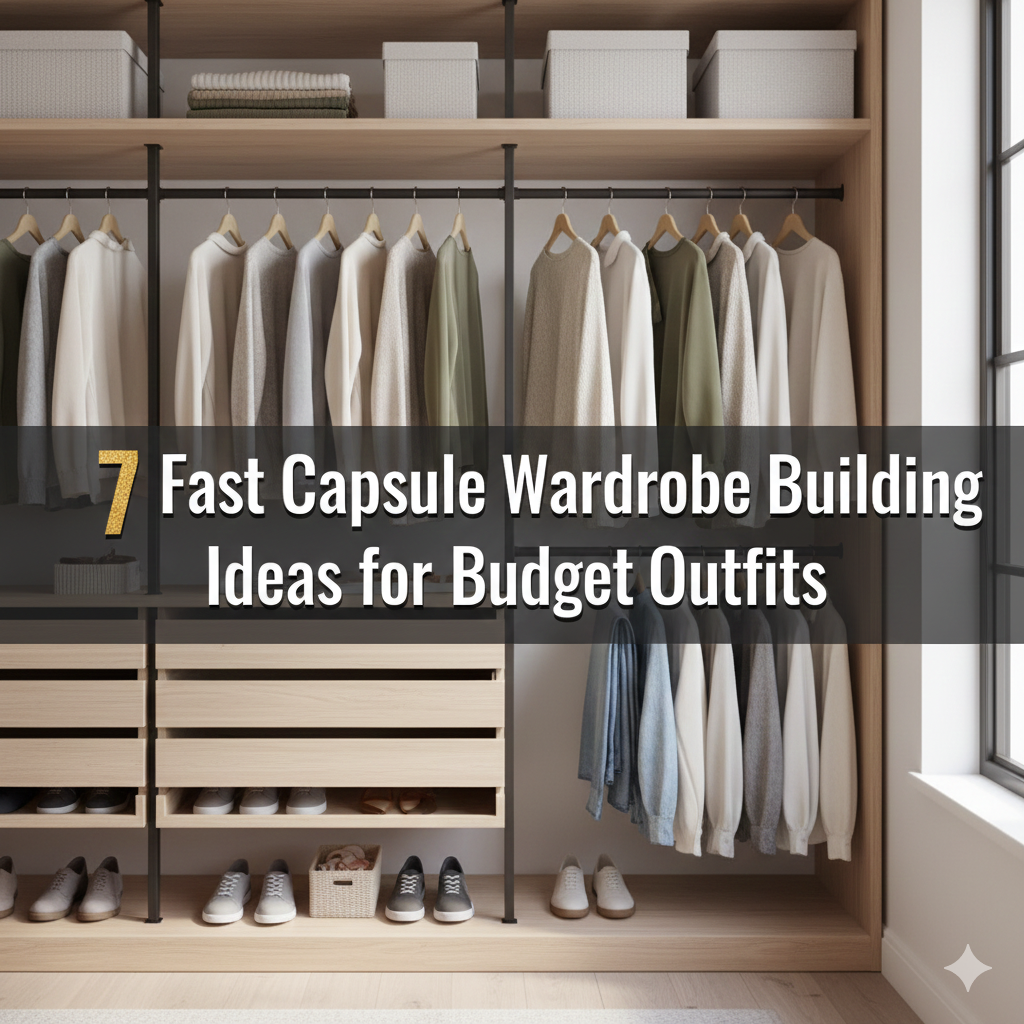
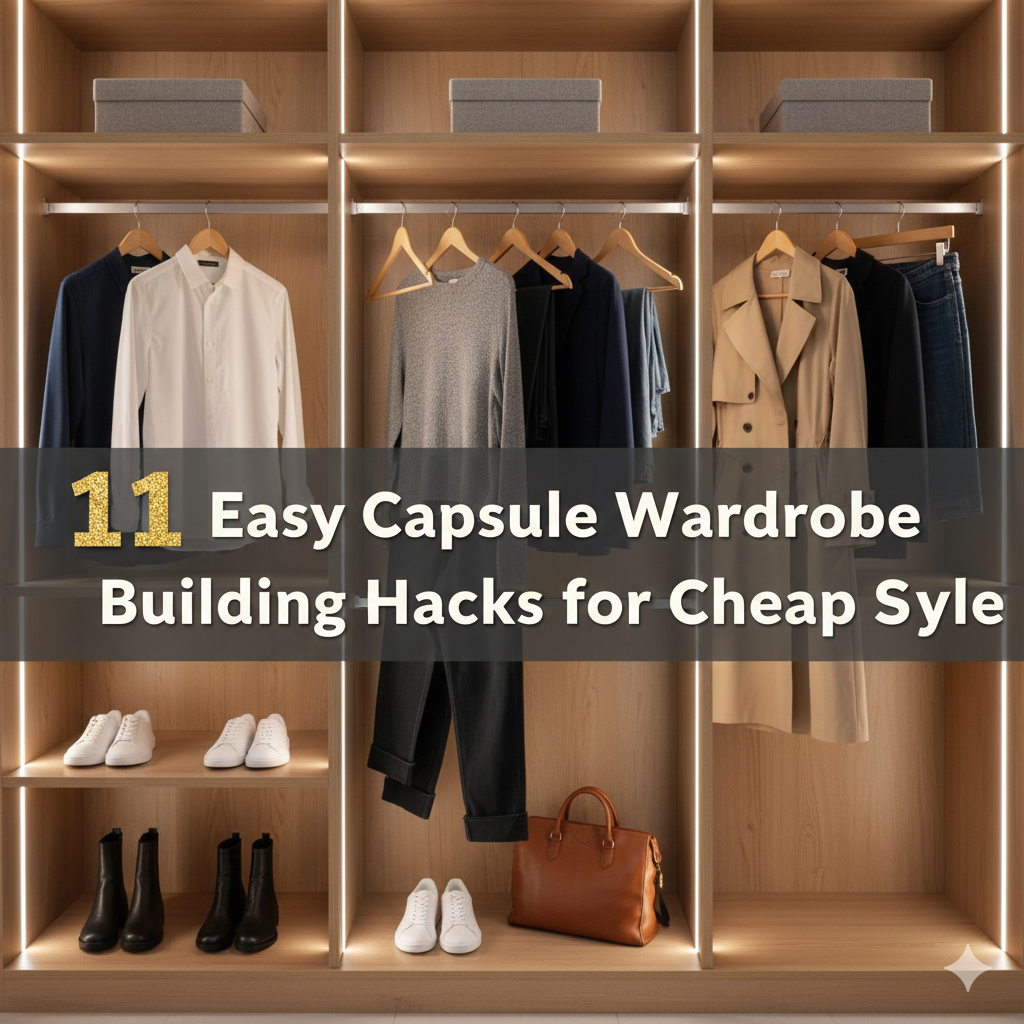
Looking Good Doesn’t Have to Cost an Arm and a Leg
That’s the truth that most fashion content overlooks. It advocates costly “investments” and “must have” extravagances, as if style is possible only for those with fat wallets.
It isn’t.
Building a solid capsule wardrobe — one that looks great but feels easy and works for multiple occasions — is totally doable on a budget. You just have to do it differently.
These capsule wardrobe building hacks are for you if you want real style but not the real spending. So, whether you’re a student, someone resetting your wardrobe for the new season, or just tired of spending too much on clothes that don’t do anything for you, this guide is packed with actionable strategies that actually work.
Let’s get into it.
The Magic of Budget Capsule Wardrobes
Here’s something they’d rather not tell you in the fashion industry: most high-end “capsule” pieces aren’t superior in quality. They cost more, but that’s branding for you.
A white button-down from a $300 designer and one from a $25 fast-fashion retailer frequently use the same fabrics. The difference is in the label — not in the longevity or versatility.
Building a capsule wardrobe on a budget forces you to be more thoughtful. You select for utility, not brand prestige. That discipline really does make better capsules.
Here’s the budget reality check:
| Shopping Approach | Average Spend | Number of Outfits | Longevity |
|---|---|---|---|
| Fast fashion hauls | $200–400/season | Low | High |
| Budget capsule (smart) | $150–300 total | High | Medium-high |
| Designer capsule | $1,000–3,000 | Medium-High | High |
| Thrift + budget hybrid | $50–150 total | Very High | Medium-High |
The budget capsule wins on pretty much every key metric except pure longevity — and even that one closes when you shop smart secondhand.
The Essential Mindset Shift That Makes Budget Capsule Shopping Work
Before the hacks come a mindset shift that makes them all work better.
Stop thinking in pieces. Start thinking in outfits.
The majority of people shop by asking “Do I like this item?” The better question is: “How many outfits does this item create with what I already own?”
If at least four combinations don’t immediately spring to mind, put it back.
Not only does this one filter eliminate impulse purchases and help keep your closet free of clutter, it ensures that every inexpensive item you add really earns its place. It’s the bedrock upon which all 11 hacks are premised.
11 Simple Capsule Wardrobe Hacks To Look Chic On The Cheap
Hack 1: Do a Ruthless Closet Audit — Your Capsule Probably Already Exists
Before you spend a single penny, scour the things you already own.
Surprisingly, many people will discover they already own a number of good capsule pieces buried under impulse buys, forgotten gifts and trend-chasing purchases.
How to do a proper closet audit:
Pull everything out. Yes, everything. Then sort into three piles:
- Keep: Good fit, can be worn with 4+ other items I own, worn in the past 6 months
- Maybe: Seems to fit well enough, haven’t worn recently
- Go: Doesn’t fit, hasn’t been worn for a year, feels dated or off
Your “Keep” pile is the foundation of your capsule wardrobe. The idea is to build from there, not rebuild from scratch.
What to keep in the Keep pile:
- Colors that go with everything (black, white, navy blue, gray, or camel)
- Classic silhouettes (straight cuts, clean lines)
- Items that can be dressed up or down
The majority of people discover 5–8 wearable capsule items they already have. That is a big head start — and it costs nothing.
Hack 2: Always Shop Secondhand First
Thrift stores and resale platforms are the single most powerful tool in budget capsule wardrobe building.
Blazers, trousers, denim and knitwear in great condition for a fraction of retail price. The trick is knowing what to look for — and what to ignore.
Best secondhand platforms by category:
| Platform | Best For | Price Range |
|---|---|---|
| ThredUp | Everyday basics, workwear | $5–$40 |
| Poshmark | Brand name items, jeans, shoes | $10–$60 |
| Depop | Vintage pieces, unique finds, youth looks | $8–$50 |
| Facebook Marketplace | Local finds, bulk lots | $2–$30 |
| Local thrift stores | Everything — luck-based | $1–$20 |
What to always check when thrifting:
- Fabric content: Cotton, wool and linen are signs of quality — steer clear of 100% polyester
- Seams and stitching (loose threads = near end of life)
- Underarms and collar for discoloration
- Zipper and button function
Best capsule items to buy secondhand: Blazers, denim jeans, leather or faux-leather jackets, trousers and wool coats all hold up very well secondhand. These are also the most expensive items when new — so the savings here are highest.
Hack 3: Stick to Three Neutral Colors Only
Where budget wardrobes break down is color.
People purchase pieces in a dozen colors, and nothing matches. You end up with 40 items that make 10 outfits instead of 40 items that make 100+ combinations.
The hack: Choose three neutral anchor colors and buy everything in that palette.
Most versatile three-color neutral combinations:
- Combo 1 — Classic: Black + White + Gray — Fits anywhere. Timeless. Easy to shop.
- Combo 2 — Warm: Camel + Cream + Navy — Very polished, very editorial. Works especially well in fall/winter.
- Combo 3 — Cool Modern: Navy + White + Denim Blue — Relaxed, modest, works for every season.
- Combo 4 — Earthy: Olive + Cream + Brown — Lends itself to relaxed and outdoorsy lifestyles. Increasingly timeless.
When every new piece you buy fits within your three chosen colors, everything goes together automatically. You never spend money on something that “doesn’t go with anything.”
Hack 4: Buy Fabric, Not Brand — Every Time
This hack lets you save money and build a better wardrobe at the same time.
A brand name on a label does not dictate how long a piece lasts or how good it looks. The fabric does.
A quick fabric primer for bargain hunters:
| Fabric | What It’s Good For | What to Be Careful Of |
|---|---|---|
| 100% Cotton | Breathable, durable, easy to care for | Can shrink — check sizing |
| Cotton-Poly Blend | Wrinkle-resistant, holds shape | Less breathable than pure cotton |
| Merino Wool | Regulates temp, resists odor | Hand wash only — easy to ruin |
| Linen | Lightweight, breathable, textural | Wrinkles easily — embrace or iron |
| Viscose/Rayon | Soft, drapes well, affordable | Delicate — can lose shape when wet |
| Polyester | Cheap, wrinkle resistant | Traps heat and pills fast; looks cheap |
For everyday pieces, aim for at least a cotton or cotton-blend fabric at a budget price point. Steer clear of 100% polyester in anything you plan to wear often — it wears poorly and rarely looks elevated.
Even at thrift store prices, taking 10 seconds to check the fabric tag before purchasing prevents a lot of regret.
Hack 5: Know the Five Basic Capsule Items — And Buy Them Cheap
Five basic pieces that every capsule wardrobe — whatever the budget — requires. These are non-negotiable. Everything else is optional.
The five staple pieces and where to buy them cheap:
1. Dark wash jeans Cheap sources: Thrift stores, Levi’s sales (they run 40% off frequently), Mango outlet, ASOS sale section Spend: $10–$35
2. White button-down shirt Cheap sources: Uniqlo (great value and quality), thrift stores, H&M Spend: $10–$30
3. Plain white and black tees Cheap sources: Uniqlo Supima cotton tees, Everlane sales, Target’s Universal Thread, thrift multipacks Spend: $5–$20 each
4. Neutral blazer Cheap sources: Thrift stores (best value — blazers hold shape well secondhand), Zara sale, ASOS Spend: $8–$40
5. Straight-leg neutral pants Cheap sources: Thrift store, H&M, Mango sale, ASOS sale Spend: $12–$35
All five core pieces total: $45–$160
That’s a functional capsule wardrobe base for under $160 — often, if you thrift wisely, under $100. If you want a deeper breakdown of how to structure these pieces around your lifestyle, Minimal Wardrobe Plan is a great resource to explore.
Hack 6: Apply the Cost-Per-Wear Formula When You Shop
This is the most useful math in all of fashion.
Cost-per-wear = Cost of Item ÷ Number of Times You’ll Wear It
- A $15 trendy top worn twice = $7.50 per wear
- A $40 white button-down worn 80 times = $0.50 per wear
The low-cost alternative is often the expensive one in disguise.
Cost-per-wear examples for capsule pieces:
| Item | Cost | Estimated Wears/Year | CPW |
|---|---|---|---|
| Quality white tee ($25) | $25 | 60 | $0.42 |
| Trendy graphic tee ($12) | $12 | 8 | $1.50 |
| Thrifted blazer ($18) | $18 | 50 | $0.36 |
| Fast fashion blazer ($45) | $45 | 10 | $4.50 |
| Dark jeans ($35) | $35 | 90 | $0.39 |
| Seasonal trend jeans ($30) | $30 | 12 | $2.50 |
Always run the cost-per-wear math in your head before purchasing. This reframes “How cheap is it now?” to “How much value does it provide over time?”
Hack 7: Let Accessories Do the Heavy Lifting
Here’s the trick most people overlook: accessories transform capsule items into fresh outfits.
The same dark jeans + white tee combo feels completely different when paired with:
- White sneakers and a baseball cap = casual streetwear
- Silk scarf and loafers = French-girl chic
- Chunky belt + ankle boots = editorial and intentional
- Gold hoops and a structured bag = polished and put-together
You didn’t change the clothes. You changed the story.
Best inexpensive accessories to style a capsule wardrobe:
| Accessory | Why It Works | Budget Pick |
|---|---|---|
| Simple gold or silver hoops | Elevates any outfit instantly | $8–$15 on Amazon or H&M |
| Silk or satin scarf | Works for hair, neck, bag and more | $6–$20 on AliExpress or thrifted |
| Leather or faux-leather belt | Defines waist, shapes silhouette | $10–$25 thrifted or ASOS |
| Canvas tote bag | Casual, useful, matches everything | $10–$20, often free with other purchases |
| Simple white sneakers | Elevates casual looks | $25–$45 at Walmart, Target, or H&M |
You don’t need expensive accessories. You need the right ones, chosen to work across your capsule palette.
Hack 8: Shop End-of-Season Sales With the Next Season in Mind
The most common way to blow your wardrobe budget: buying summer outfits in summer, winter coats when it’s freezing.
At the end of every season, retailers practically give away old stock at 50–70% off. That’s your window.
The end-of-season shopping calendar:
| Buy This | Best Time to Buy | Typical Discount |
|---|---|---|
| Winter coats, sweaters, boots | January–February | 50–70% off |
| Spring jackets, trousers, tees | May–June | 30–50% off |
| Summer dresses, shorts, sandals | August–September | 50–70% off |
| Fall blazers, denim, knits | October–November | 30–50% off |
The secret: Purchase for next season, not this one.
When you buy a wool coat in February for the following winter, you pay $40 instead of $120. The coat is identical. The timing is just smarter.
This one hack can reduce your annual clothing budget by 40–50% without sacrificing a single quality item.
Hack 9: Learn Three Simple Tailoring Tricks to Fix Cheap Clothes
The reason inexpensive clothing often looks cheap isn’t always the fabric. It’s usually the fit.
A $15 shirt that fits well looks better than a $150 shirt that doesn’t. The difference is tailoring — and it doesn’t always require paying a tailor.
Three DIY fit fixes that cost almost nothing:
1. Hemming jeans and trousers Buy iron-on hemming tape from any fabric or craft store ($5–$8). It holds a new hem sharply — without sewing. A game-changer for budget trousers that are just a touch too long.
2. Fixing a too-loose waist Pinch the excess fabric at the back of the waistband and secure with a couple of safety pins or a small elastic loop. Great for skirts and trousers you love but that gap at the back.
3. Shortening sleeves (the ironing method) Roll the sleeves up once or twice and press with a hot iron. It creates a crease that holds for a full day of wear and gives a cleaner finish to an otherwise boxy shirt.
For more serious alterations — taking in a blazer, properly hemming a dress — a local tailor typically charges $8–$20 for basic work. A $20 thrift store blazer tailored for $15 is still a $35 blazer that fits like it cost $200.
Hack 10: Be Strict With the “One In, One Out” Rule
One thing is building a budget capsule. Another is keeping it functional over time.
Without discipline, inexpensive shopping habits refill your closet with things that don’t work together. The “one in, one out” rule prevents exactly that.
How it works: For every new piece that enters your wardrobe, one piece goes out. No exceptions.
This rule forces you to compare every new purchase against something you already own. If you can’t identify a piece to let go of, that’s usually a sign the new item isn’t a genuine upgrade — and you shouldn’t buy it.
What to do with the outgoing piece:
- Sell it on Poshmark or Depop (put the money toward your next capsule piece)
- Donate it to a thrift store or shelter
- Pass it on to a friend who’ll actually wear it
The one-in, one-out system keeps your capsule trim, intentional and functional — even on a budget.
Hack 11: Run the “Capsule Test” Before Every Purchase
The final hack is a simple decision filter. Use it every single time before buying anything new.
The Capsule Test — 5 Questions:
- Does this work with at least five items I already own?
- Can I wear it across two or more seasons?
- Is the color within my three-neutral palette?
- Will this still feel relevant in two years?
- Am I buying this because I need it — or because it’s on sale?
If a piece fails questions 1, 2, or 3, put it back immediately. If it only fails 4 or 5, wait a day before deciding.
This test takes 60 seconds. It saves years of regret and wasted money.
Print it out. Save it on your phone. Make it a habit.
The Budget Capsule Wardrobe: Real Numbers
This is what a complete budget capsule looks like with all 11 hacks applied:
| Item | Budget Source | Estimated Cost |
|---|---|---|
| Dark wash jeans | Thrift store | $12 |
| White button-down | Uniqlo | $20 |
| White tee (x2) | Target / Uniqlo | $18 |
| Black tee | Thrift store | $5 |
| Neutral blazer | Thrift store | $15 |
| Straight-leg trousers | H&M sale | $20 |
| Lightweight knit sweater | Thrift store | $10 |
| White sneakers | H&M / Walmart | $25 |
| Loafers or flat shoes | Thrift store | $12 |
| Simple scarf | H&M / Amazon | $10 |
| Trench coat or light jacket | End-of-season sale | $35 |
| Total | ~$182 |
Less than $200 for a functioning, year-round capsule wardrobe. With a little thrift luck, it can drop to $100–$130.
That’s genuine value — without the frantic churn of fast fashion, and without the guilt of impulse trend buys.
Frequently Asked Questions About Capsule Wardrobe Hacks
Q: Can these hacks apply if I have a strict dress code for work? Yes. The hacks work with any lifestyle. For strict dress codes, focus your core five pieces on workwear essentials — tailored trousers, blazers, button-downs — and apply the same neutral palette to casual weekend wear.
Q: How do I build a capsule wardrobe with just $50? Start with thrifting only. Visit local thrift stores and look for dark jeans, a blazer and neutral tops. A strategic $50 thrift run can yield 5–7 solid capsule items. Then expand gradually over time.
Q: How many pieces does a budget capsule wardrobe need? Aim for 20–30 total items — shoes and outerwear included. More than that and pieces start going unworn. Fewer than 15 and you may feel restricted day to day.
Q: Is there ever a place for fast fashion in a capsule wardrobe? For certain specific items — basic tees, simple accessories — yes. Avoid fast fashion for blazers, trousers or any structured pieces. These need to be durable, and fast fashion versions tend to fall short.
Q: How do I avoid impulse buying even when something is on sale? Apply the 24-hour rule to all non-essential items. If you spot something on sale, wait a day. If it still passes the Capsule Test after reflection, buy it. The vast majority of impulse purchases lose their appeal within 24 hours. According to a study published in the Journal of Consumer Psychology, creating deliberate pause between desire and purchase significantly reduces unnecessary spending.
Q: What is the number one mistake people make building a cheap capsule wardrobe? Buying too many pieces too quickly. It sounds productive, but it creates the same problem — an overflowing wardrobe with nothing to wear. Start with the five core pieces and build slowly and intentionally from there.
Q: Should I buy cheap shoes for a capsule wardrobe? Mid-tier or secondhand shoes will always outperform cheap fast-fashion designs. Shoes are among the most-worn items in your wardrobe. A $30 thrift-store leather loafer looks better and lasts longer than a new $20 pair with plastic soles — every time.
The Skill of Style Over the Size of a Budget
The one truth that ties all 11 hacks together is this:
Style has nothing to do with price. It’s about clarity of thought.
The most stylish people in any room aren’t always wearing the most expensive clothes. They’re wearing clothes that fit well, coordinate intentionally and suit their real life.
A budget capsule wardrobe — built using these hacks — does exactly that.
You audit what you have. You shop secondhand first. You stick to three colors. You choose fabric over brand. You run the numbers. You accessorize smartly. You buy ahead of season. You fix the fit. You stay disciplined about what comes in and what goes out. And you test every purchase before it makes the cut.
Do that consistently, and you’ll have a wardrobe that looks three times more expensive than it is.
Cheap style is real. It just requires a little more intention than throwing money at the problem.
Start with one hack. Then add another. Your capsule wardrobe — and your wallet — will thank you.

Related Posts