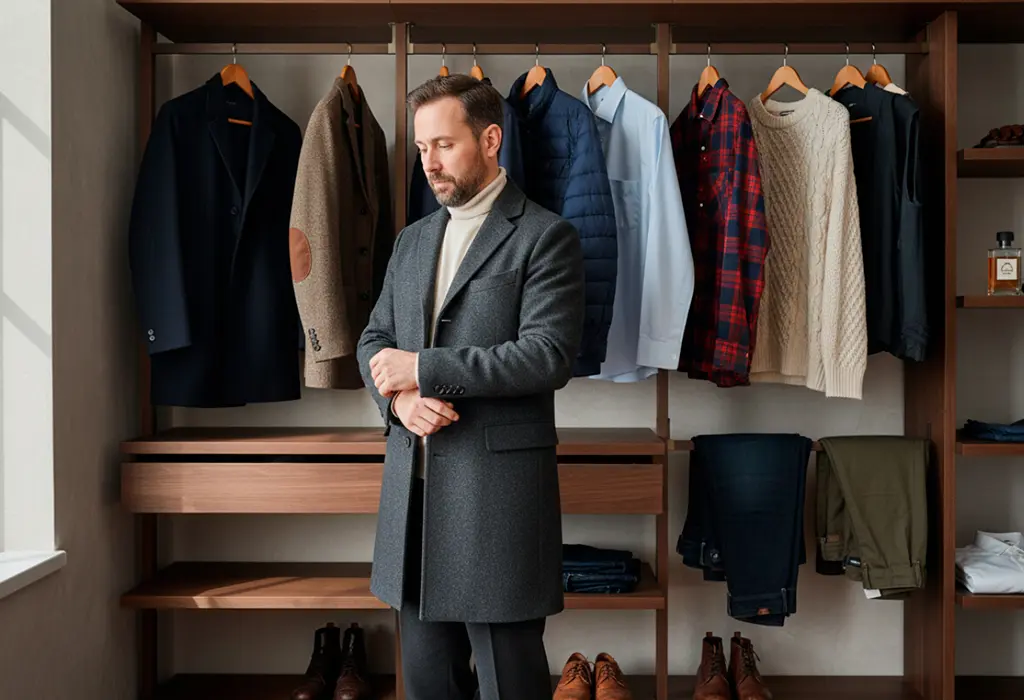
You Get Up, Look at Your Phone and the Weather App Reads “Partly Cloudy With a Chance of Rain — High of 72, Low of 51.”
What Do You Even Wear to Something Like That?
One of the greatest frustrations in getting dressed is changeable weather. Too hot in the morning but freezing at lunch, humid in the afternoon. One day it’s a jacket day. The next day, you sweat through your shirt by 9am in that same jacket.
Most people handle this by owning more clothes. A mountain of “just in case” options that takes up closet space and complicates mornings.
But there’s a smarter solution: building a capsule wardrobe specifically designed to handle transitional weather — one built around layering, versatile fabrics, and outfit formulas that shift from day to evening.
When your wardrobe is designed around layering, versatile fabrics, and outfit formulas that shift from day to evening, erratic weather stops being a problem. It becomes something your wardrobe is already set up for.
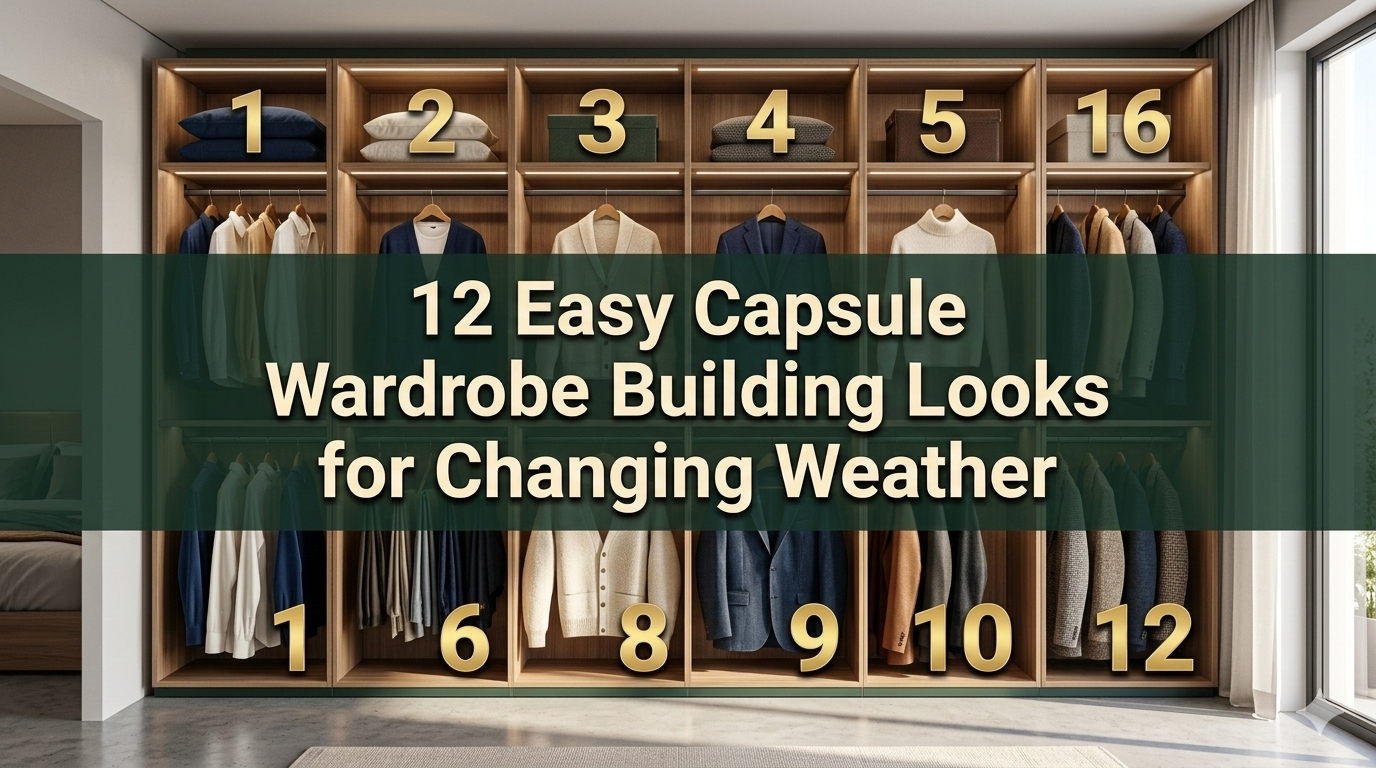
This article takes you through 12 actual, wearable looks — each designed to handle changing temperatures with ease. You’ll also find practical tips, a fabric guide, and a simple framework for building your very own weather-ready capsule wardrobe from scratch.
Let’s get into it.
Why Most Wardrobes Fail in Changing Weather
Most closets are built for relatively stable conditions. Lightweight summer pieces. Heavy winter layers. But neither extreme works for the in-between — and “in-between” describes a vast majority of the year in most climates.
Spring and fall are the obvious culprits. But even summer mornings and winter afternoons can be unpredictable. This challenge is especially intense in coastal cities, mountain towns, and anywhere with volatile weather patterns.
The result is decision fatigue. You have clothes for hot days and clothes for cold days, but very little that works when it’s both in the same afternoon.
Capsule wardrobes solve this by emphasizing versatility over volume. The goal isn’t to have an outfit for every possible weather scenario. It’s to have a small group of pieces that can flex across multiple scenarios.
The magic ingredient? Layering. And every look below revolves around it.
The 18-Piece Weather-Ready Capsule Wardrobe Base
Before diving into the looks, here are the core pieces referenced throughout this article. You don’t need all 18 right away — start with what you have and fill the gaps over time.
| # | Piece | Why It Matters |
|---|---|---|
| 1 | White fitted tee | Fits under everything; stands alone in warmth |
| 2 | Black fitted tee | Neutral base for every look |
| 3 | Striped long-sleeve tee | Adds texture and variety to the wardrobe |
| 4 | Light grey crewneck sweatshirt | Simple mid-layer; casual but polished |
| 5 | Classic denim jacket | The ultimate transitional piece |
| 6 | Neutral blazer (tan, grey, or black) | Elevates anything you wear |
| 7 | Lightweight trench coat | For wind and light rain |
| 8 | Chunky knit cardigan | A warm layer that works indoors and out |
| 9 | Dark wash straight-leg jeans | Goes with everything |
| 10 | Beige or tan chinos | Smart-casual bottom for polished looks |
| 11 | Black slim trousers | For elevated, professional settings |
| 12 | Midi skirt (neutral tone) | Layers well; ideal transition piece |
| 13 | Slip dress (neutral) | Layer magnet — works any season |
| 14 | White button-down shirt | Classic as a layer or standalone |
| 15 | Ankle boots | Footwear that works across three seasons |
| 16 | White sneakers | Casual workhorse shoe |
| 17 | Loafers | Smart-casual; easy to dress up or down |
| 18 | Lightweight scarf | Warmth without bulk |
These 18 pieces are the foundation of every look below. They all live within a neutral color palette, which allows them to mix freely, multiply outfit options, and never clash.
The 12 Looks
Look #1: The “Peel-Off” Layer Stack
Best for: Chilly mornings that heat up quickly
Outfit: White tee + denim jacket + dark jeans + white sneakers
This is the classic transitional weather formula. You’re warm in the morning when you need to be, and the jacket ties around your waist or goes into your bag as temperatures rise.
Fit is key. A well-fitted denim jacket with a tucked-in tee creates an intentional, put-together look — not a rushed, grabbed-whatever vibe.
Why this look works: The denim jacket is arguably the most essential piece in any weather-proof capsule wardrobe. It’s light enough to avoid overheating, structured enough to look polished, and casual enough to wear every day. In terms of cost-per-wear, it may be the best investment on this entire list.
Look #2: The Trench + Knit Pairing
Best for: Drizzly spring days or blustery autumn afternoons
Outfit: Chunky knit sweater + black trousers + ankle boots + trench coat
This outfit solves two problems at once: warmth and weather protection. The trench coat handles wind and light rain. The chunky knit underneath provides insulation without bulk.
The two pieces work naturally together because they’re both in neutral tones. Add a light scarf for extra warmth — and remove it just as easily when you’re indoors.
This is a great capsule wardrobe building outfit because both the trench and the knit carry into dozens of other looks throughout the season.
Look #3: The Slip Dress Swapper
Best for: Mild days with unpredictable temperature swings
Outfit: Slip dress + white long-sleeve tee underneath + denim jacket on top + sneakers or ankle boots
The slip dress is one of the most underrated pieces in transitional dressing. On its own, it’s a warm-weather item. But layer a fitted long-sleeve underneath and a jacket on top, and it becomes a complete fall or spring outfit.
Three ways to style the same slip dress:
| Temperature | Layers | Footwear |
|---|---|---|
| Warm (70°F+) | Slip dress on its own | Sandals or sneakers |
| Mild (55–70°F) | Long-sleeve tee underneath | Sneakers or loafers |
| Cool (45–55°F) | Long-sleeve tee + denim jacket | Ankle boots |
One dress. Three completely different temperature ranges. That is capsule wardrobe efficiency at its best.
Look #4: The Blazer-Over-Everything Formula
Best for: Office days or casual Fridays with fluctuating temps
Outfit: Black fitted tee + beige chinos + neutral blazer + loafers
A blazer can add around 5–10 degrees of warmth — exactly the kind of adjustable insulation you want on a day that starts chilly and warms up. It’s also one of the simplest ways to look pulled-together without overdressing.
The key is a relaxed fit and a soft fabric — think unstructured linen blend or ponte knit. Heavy, structured blazers feel weighty and formal. A softer blazer feels effortless.
Slip it off as the afternoon sun hits, and you suddenly have a completely different, more relaxed look — same outfit, new energy.
Look #5: The Smart-Casual Weather Buffer
Best for: Everyday errands on a cloudy, unpredictable day
Outfit: Striped long-sleeve tee + dark jeans + trench coat + white sneakers + light scarf
A practical, everyday outfit that still looks deliberate and smart. The striped long-sleeve provides your base warmth. The trench handles wind and light rain. The scarf keeps your neck warm and tucks into a pocket when you heat up.
The brilliance of this outfit is that it looks considered — and every single piece has a functional reason for being there.
Look #6: The Cardigan-as-Jacket Move
Best for: Mild indoor-outdoor days, café mornings, weekend walks
Outfit: White button-down + dark jeans + chunky cardigan + ankle boots
This look works because the chunky cardigan fully replaces a jacket. Open-front cardigans are especially good for this — they drape well over structured pieces and can be removed and carried easily.
A white button-down underneath adds crispness and structure. The combination of relaxed (cardigan) and structured (button-down) achieves that effortless balance that good capsule wardrobe building is all about.
Look #7: The Midi Skirt Stack
Best for: Brisk spring mornings or transitional days in early fall
Outfit: Black fitted tee + midi skirt + denim jacket + ankle boots + lightweight scarf
Midi skirts are ideal for transitional weather — they cover more of your legs than a mini but feel lighter than trousers. Wear them with tights when it’s cold, or bare-legged on warmer days.
The denim jacket pulls the look together while keeping it temperature-adaptable. The scarf adds warmth and visual interest without the bulk.
Midi skirt temperature adaptations:
| Temp Range | Adjustment |
|---|---|
| 65°F+ | Tee + skirt, no jacket |
| 55–65°F | Add denim jacket |
| 45–55°F | Add tights + ankle boots + scarf |
| Below 45°F | Swap denim jacket for trench or wool coat |
Look #8: The Monochrome Layer Trick
Best for: Any weather, any day — looks intentional and elevated with minimal effort
Outfit: Grey crewneck sweatshirt + grey or charcoal trousers + white sneakers + grey trench (or other long outerwear)
Monochrome dressing — where one color dominates from head to toe — is one of the most powerful style tricks in capsule wardrobe building. It creates an intentional, elevated feel without any extra effort. It also makes layering look seamless, since everything flows together naturally.
It works especially well in grey, camel/tan, navy, and all-black palettes. Varying textures (smooth trousers, soft knit sweatshirt, structured trench) keep the look visually interesting even without color contrast.
Look #9: The Polished Top, Relaxed Bottom
Best for: Hybrid work days, video calls, or smart-casual events
Outfit: White button-down shirt + beige blazer + dark jeans + loafers
This look solves a very modern problem: you need to look professional, but you’re also navigating a commute, unpredictable weather, or an occasion that’s half casual and half formal.
The blazer-over-button-down reads as polished and composed from the waist up. The dark jeans and loafers keep it approachable and easy below. Undo the blazer for the commute; pull it back on when you arrive.
This is a tried-and-true capsule wardrobe formula for creatives, remote workers, and anyone who splits their time between home, studios, and various locations.
Look #10: The Weekend Change-Up Outfit
Best for: Flexible weekend days that run from a morning farmers market to an afternoon dinner
Outfit: Fitted white tee + midi skirt + chunky cardigan + sneakers (morning) → swap to ankle boots + small bag (evening)
The swap is the secret here. One outfit, two completely different occasions — with only a shoe change and an added accessory.
This is exactly why capsule wardrobe building places such emphasis on footwear and accessories as outfit transformers. You’re not changing your clothes. You’re changing the context of what you’re wearing.
Look #11: The All-Weather Uniform
Best for: Anyone who wants one solid formula they never have to think about
Outfit: Neutral tee + dark jeans + denim jacket (or blazer, depending on the occasion) + ankle boots
This is the most pared-back look on the list — and the most versatile. It works in spring, summer evenings, fall, and mild winter days. It works for work, errands, dates, and travel.
The power lies in the swappable top layer. The same jeans-tee-boots base can be styled with:
- A denim jacket for casual days
- A blazer for a polished look
- A trench for rainy or windy weather
- A chunky knit cardigan for relaxed weekends
- A wool coat for cold days
That’s five different looks from a three-piece base. This is the essence of smart capsule wardrobe building.
The all-weather uniform swap chart:
| Top Layer | Occasion | Temp Range |
|---|---|---|
| Denim jacket | Casual errands | 55–70°F |
| Neutral blazer | Work, dinners | 55–70°F |
| Trench coat | Rainy days | 45–65°F |
| Chunky cardigan | Weekend, cozy | 50–65°F |
| Wool or puffer coat | Cold days | Below 45°F |
Look #12: The Transitional Travel Look
Best for: Days involving planes, trains, long drives, or multiple climate zones
Outfit: Black tee + black tapered trousers + denim jacket + white sneakers + light scarf + tote
Travel days are the true test of a weather-proof wardrobe. You might depart from a warm city and arrive somewhere cold. You might step out of an air-conditioned airport straight onto a humid street.
This look handles all of it. The all-black base is clean and simple. The denim jacket adds warmth. The scarf provides extra insulation — and doubles as a blanket on cold flights. The sneakers can handle miles of airport walking. The tote carries whatever layers you’re not wearing.
This is capsule wardrobe building at its most practical — a look that keeps you comfortable and put-together no matter what the day throws at you.
Fabrics That Deliver in Variable Weather
The looks above are only as effective as the fabrics you choose. Here’s a guide to what works best when temperatures shift:
| Fabric | Best For | Why It Works |
|---|---|---|
| Cotton jersey | Base layers | Breathable, soft, and easy to layer |
| Ponte knit | Trousers, blazers | Holds shape, comfortable, transitions well |
| Wool blend | Cardigans, coats | Insulates without adding bulk |
| Chambray/denim | Jackets, shirts | Medium weight; excellent layering piece |
| Linen blend | Light outer layers | Breathable in warmth; layerable in cool |
| Polyester blend | Trench coats, trousers | Wrinkle-resistant; low-maintenance and adaptable |
Avoid heavy fabrics like thick wool or fleece for transitional weather. They’re too warm as the day progresses and aren’t easy to remove. Save those for the heart of winter.
A Step-by-Step Guide to Building Your Weather-Ready Capsule Wardrobe
If you’re starting from scratch — or rebuilding — here’s a straightforward process to follow:
Step 1 — Audit what you have. Pull everything out. Identify what already fits the neutral palette and layering approach. Set aside what doesn’t.
Step 2 — Map your climate. Note the temperature range for each season in your area. Identify which months are your “swing” months — when weather is least predictable. Those are the months your capsule needs to work hardest for.
Step 3 — Find your gap pieces. Using the 18-piece base list at the beginning of this article, note which key pieces are missing. Write a gap list.
Step 4 — Shop strategically. Buy only what’s on your gap list. Focus on fewer, better pieces — especially anchor items like the trench coat and denim jacket.
Step 5 — Practice the looks. Try on all 12 outfits (or your versions of them) before you actually need to wear them. Make sure everything integrates and works well together. Adjust as needed.
Step 6 — Review seasonally. Revisit your wardrobe every 3 months. What did you wear? What didn’t work? What do you still need? Building a capsule wardrobe is an ongoing process — not a one-time event.
For more guidance on building and refining your capsule wardrobe year-round, Minimal Wardrobe Plan is a great resource to explore.
Frequently Asked Questions
Q: How many items do I really need for a weather-ready capsule wardrobe? Most people manage well with 25–40 items total, including shoes and accessories. The 18-piece base in this article is a solid starting point — add a few pieces that suit your personal lifestyle and climate.
Q: What is the single most important piece for changing weather? The lightweight trench coat. It handles wind, light rain, cool mornings, and breezy evenings. It works equally well with casual and formal outfits. If you only ever invest in one good piece for transitional weather, make it the trench.
Q: Is it possible to build a weather-ready capsule wardrobe on a budget? Yes. Start with what you already own. Look for anchor pieces like blazers and trench coats at secondhand stores. Prioritize fit over brand — a well-fitting budget piece will always outperform an ill-fitting expensive one.
Q: What if I live somewhere with dramatic weather changes — like the Midwest or coastal areas? This is exactly who capsule wardrobe building is designed for. Focus on layering pieces and versatile fabrics. You can add one or two location-specific items (a packable rain jacket, a heavier coat) to your base capsule without overhauling everything.
Q: Are accessories included in the capsule wardrobe item count? Yes, but keep them simple. A light scarf, one or two bags, and a few basics all count. Don’t let accessories become their own clutter problem — 5–8 accessories is more than enough for a functional capsule.
Q: Can men use these same looks and principles? Absolutely. The layering formulas, color palette rules, and fabric guidance all apply regardless of gender. Swap out pieces as needed (midi skirt → chinos, slip dress → linen shirt), but the core logic remains the same.
Q: What should I do about really dramatic weather swings — like a 40-degree temperature change in a single day? Build your outfit around the coldest point of the day and layer from there. Wear your warmest layer in the morning, bring a lighter one for the afternoon, and keep a packable outer piece — a trench draped over your arm or stuffed in a tote — that gives you flexibility throughout the day.
The Bigger Picture: Dressing for Uncertainty
Weather is unpredictable. But your closet doesn’t have to be.
The 12 looks here are more than outfits — they represent a new way of thinking about clothes. Instead of responding to the weather each morning with a wardrobe emergency, you respond with a system. A base of reliable pieces, tested formulas, and smart layering that does the heavy lifting for you.
That’s what capsule wardrobe building really comes down to. It’s not minimalism for the sake of minimalism. It’s not fashion rules. It’s simply a smarter relationship with your clothes — one that saves time, reduces stress, and ensures you feel at ease and self-assured every single day.
Start with one look from this list. Try it this week. Then try another.
Before long, you won’t be dreading the weather app. You’ll be reaching into your capsule with confidence — and heading out the door ready for anything.

Related Posts