
5 Secrets for Building a Seasonal Capsule Wardrobe That Works Year-Round
Have you opened your closet at the beginning of a new season and felt utterly confused?
Summer is ending. Fall is coming. And somehow, even with dozens of clothes at your fingertips, nothing seems right. Half of your wardrobe doesn’t suit the weather. The other half doesn’t go with anything else. And you buy more in an attempt to feel put-together again.
This cycle repeats itself, season after season — and it drains your time, your money, and your energy.
A seasonal capsule wardrobe is the answer.
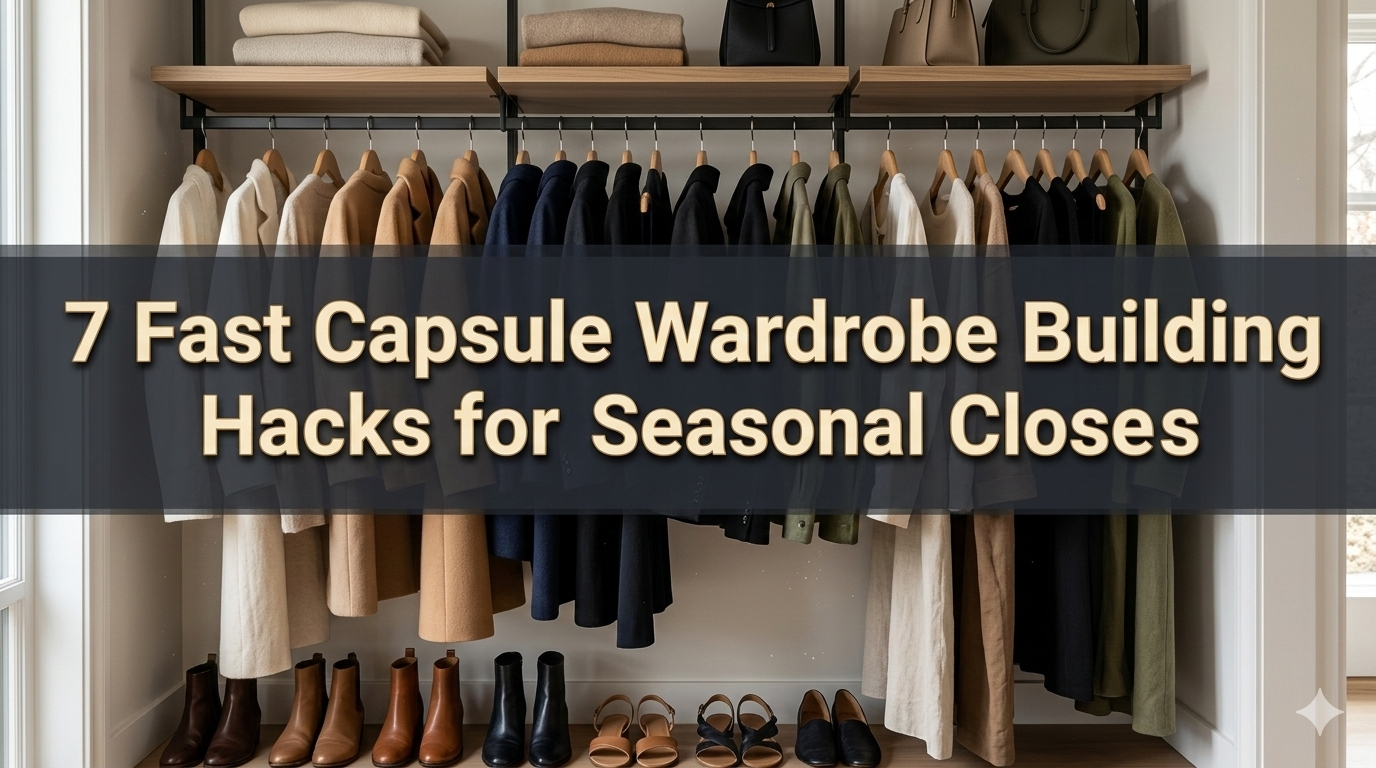
A seasonal capsule wardrobe is a tight, smart, intentional collection of clothes built for just one season at a time. All the pieces work with all the other pieces. Seasonal transitions can be seamless rather than stressful. And you always know exactly what to wear.
In this article we’ll explore the 5 ultimate secrets for capsule wardrobe building that are unique to seasonal fashion. These are the very same tactics that professional stylists and minimalist fashion enthusiasts use to look great year-round — without an overflowing closet or a blown budget.
Ready to transform your wardrobe? Let’s get into it.
Why You Need a Seasonal Capsule Wardrobe
A lot of general capsule wardrobe advice treats all seasons the same. But dressing in spring is a whole different experience from dressing in winter.
Fabrics change. Layering changes. Color moods shift. Occasion needs evolve.
A capsule that works beautifully in July will feel completely wrong in December if it wasn’t built with that in mind.
Here’s the smarter approach — build with seasons in mind:
| Factor | Generic Capsule Wardrobe | Seasonal Capsule Wardrobe |
|---|---|---|
| Weather Appropriateness | Hit or miss | Always spot-on |
| Fabric Choices | Random | Intentional per season |
| Color Palette | Fixed year-round | Shifts with the season |
| Layering Strategy | Overlooked | Central to the design |
| Transition Ease | Difficult | Smooth and planned |
| Overall Outfits | Limited by season | Maximized per season |
Every piece earns its place in a much more meaningful way when you build a capsule wardrobe with the seasons in mind.
And now — the five secrets to do it right.
Secret #1 — Before Any Purchases, Create a Four-Season Wardrobe Calendar
Stop Shopping Blind — Have a Plan
Most wardrobe mistakes are made before a piece is ever bought.
People walk into stores or browse online aimlessly. They buy what looks good in the moment. Then they get home and discover it doesn’t work with anything else they own — or, even worse, it’s completely wrong for the season ahead.
The solution is a four-season wardrobe calendar.
It’s simply a visual map of the clothing you need throughout the entire year. It tells you what you need for each season, how those seasons overlap, and where the real gaps in your wardrobe are.
Building Your Wardrobe Calendar
Here’s how to create yours right now — even on a piece of paper:
Step 1 — List the four seasons and their approximate months for your climate. Weather varies by location, so be specific to where you actually live.
Step 2 — List three to five major activities for each season. In winter, for example, you might have holiday parties, cold commutes, and cozy weekend plans. In summer, outdoor entertaining, travel, and daily casuals.
Step 3 — Categorize the clothing each season requires: tops, bottoms, layers, footwear, accessories. Write down what each season needs.
Step 4 — Highlight overlaps. Which pieces can carry you through two seasons? A lightweight denim jacket works in both spring and fall. A versatile midi dress can work through summer and early fall.
Your Secret Weapon: The Overlap Zone
Those overlapping pieces are gold.
They give you the best value because they do double duty across seasonal transitions. When overlap pieces form the core of your capsule, you need far fewer items overall — and your wardrobe feels seamless during those awkward in-between weather weeks.
Here’s how seasonal overlap generally works:
WINTER ←──────────────────────────────────→ SPRING
[Heavy Knits]    [Mid-layers]    [Light Layers]
                       ↑
       These transitional pieces work for BOTH seasons
Identify these transition zones for all four seasonal changes and plan for them intentionally.
Secret #2 — Choose a Seasonal Color Palette That Transitions Naturally
Colors Are Not Accidental — They’re Seasonal
There’s a reason fashion brands release specific color palettes at specific times of year. It’s not just marketing. Colors genuinely feel more natural and seasonally appropriate when they reflect what’s happening in the world around you.
Spring’s vibrant, crisp tones feel alive. Deep, rich tones feel comforting and grounding in autumn. Crisp whites and icy blues feel sharp and clean in winter. Warm, earthy neutrals glow beautifully in summer’s golden light.
When you build your seasonal capsule wardrobe around a season-appropriate color palette, your outfits look more put-together by default — even without much effort.
The Four-Season Color Guide
| Season | Core Neutrals | Accent Colors | Mood |
|---|---|---|---|
| Spring | Ivory, soft white, light grey | Blush, sage green, lilac, sky blue | Fresh, airy, hopeful |
| Summer | Warm white, tan, sand | Coral, bright yellow, turquoise, terracotta | Bold, sunny, energetic |
| Autumn | Camel, chocolate brown, rust | Burgundy, mustard, forest green, burnt orange | Warm, rich, cozy |
| Winter | Charcoal, black, deep navy | Emerald, cobalt, deep red, cream | Sharp, elegant, structured |
How to Carry Your Palette From Season to Season
The smart approach: don’t reinvent your color palette each season. Instead, blend one palette into the next.
For example, transitioning from summer to fall, you hold onto warm neutrals like tan and camel but begin swapping out bright corals for deeper burgundies and burnt oranges. The transition feels gradual and deliberate — not like you’re starting from scratch.
This also means your transition pieces (the overlap items from Secret #1) never feel out of place in either season, because their colors work within both palettes.
Build Your Personal Color Story
Every person has colors that naturally suit them — based on skin tone, hair, and eye color — and these respond differently to seasonal palettes.
Take a few minutes to observe which seasonal colors brighten your face versus which ones dull or wash it out. Within each season, stick to the palettes that actually flatter you.
The goal is not to replicate a trend board. It’s to create a seasonal color story that feels both seasonally appropriate and personally beautiful.
Secret #3 — The Layering Code: More Outfits, Fewer Pieces
Layering Is the Engine of Seasonal Fashion
If there’s one skill that separates a great seasonal wardrobe from a frustrating one, it’s layering.
Layering is the art of combining several pieces so the result looks purposeful and polished — and it’s especially vital for seasonal dressing because weather is unpredictable, temperatures shift throughout the day, and one outfit often needs to carry you from a morning event through an afternoon and into the evening.
Once you master layering, the number of outfits you can create from your capsule wardrobe multiplies exponentially.
The Three-Layer System
Professional stylists often refer to a three-layer system for building season-ready outfits. Here’s how it works:
Layer 1 — The Base The layer closest to your body. It forms the foundation of the outfit. Examples: fitted T-shirt, tank top, thermal undershirt, light blouse, basic knit
Layer 2 — The Middle This adds warmth, texture, and interest. Examples: denim jacket, cardigan, light sweater, flannel shirt, vest
Layer 3 — The Outer The outermost layer that protects you from the elements. Examples: trench coat, wool coat, puffer jacket, leather jacket, rain mac
Seasonal Layering Combinations
| Season | Base | Middle | Outer |
|---|---|---|---|
| Spring | Light blouse | Denim jacket | (Optional) light trench |
| Summer | Tank or tee | (Often skip) | Light linen shirt, open |
| Autumn | Long-sleeve tee | Chunky cardigan | Wool coat |
| Winter | Thermal tee | Knit sweater | Heavy coat + scarf |
The Magic of Reversible Layering
Here’s a tip most people overlook: your layers should work in reverse too.
That means when you remove the outer coat, the middle and base still look like a complete, intentional outfit. And when you remove the middle layer, the base still works on its own.
Think of each layer as a standalone piece first, and part of a layered look second. When every layer stands alone, you genuinely multiply your outfit options without growing your wardrobe.
Secret #4 — The 10 Non-Negotiable Staples Per Season (And How to Rotate Them)
Every Season Has Its Foundational Pieces
Some pieces need to appear in every seasonal capsule wardrobe. These are the staples — the anchor items that allow everything else to work.
The exact staples shift from season to season, but their function stays the same: they are the reliable, multi-purpose workhorses that most of your outfits are built around.
Seasonal Staple Breakdown
Spring Staples:
- White or ivory blouse
- Light-wash straight-leg jeans
- Trench coat (neutral tone)
- White sneakers
- Midi dress in a soft print
- Denim or chore jacket
- Linen or cotton wide-leg trousers
- Ballet flats or loafers
- Light knit cardigan
- Nude crossbody bag
Summer Staples:
- Breezy linen shirt
- Casual shorts or linen trousers
- Slip dress (also works as a layer)
- Comfortable sandals
- Solid-colored oversized tee
- Swimsuit (if suited to your lifestyle)
- Lightweight maxi dress
- Canvas tote bag
- Espadrilles or mules
- Casual denim cut-offs or a skirt
Autumn Staples:
- Chunky knit sweater
- Dark or mid-wash slim jeans
- Ankle boots
- Trench coat or wool-blend coat
- Plaid or flannel button-down
- Leather or faux-leather jacket
- Brown or russet tailored trousers
- Midi skirt in a warm tone
- Loafers or Chelsea boots
- Structured tote or shoulder bag
Winter Staples:
- Heavy wool or cashmere sweater
- Black or navy straight-leg trousers
- Knee-high or over-the-knee boots
- Long wool or puffer coat
- Turtleneck (a winter game-changer)
- Cozy scarf in a neutral tone
- Tailored blazer for layering
- Dark denim jeans
- Thermal base layers
- Classic leather or structured handbag
The Smart Swap Strategy
There’s no need to overhaul your entire closet each season. Instead, use the Smart Swap Strategy.
Keep 60–70% of your core pieces that work across seasons. Only rotate out the most season-specific items and swap in new seasonal staples.
This means your seasonal wardrobe change involves around 8 to 12 new or rotated pieces — not a complete overhaul.
Secret #5 — Build a Seasonal Storage System That Keeps Everything Fresh
The Invisible Flaw in Most Wardrobes
Here’s something most style articles don’t address: how you store your off-season pieces matters enormously.
If your summer clothes emerge in spring wrinkled, faded, and smelling musty, your capsule wardrobe can’t do its job. If your winter coat comes out of storage battered and crumpled, the whole autumn-to-winter transition feels dreary rather than exciting.
Seasonal storage is the behind-the-scenes work that keeps your capsule feeling fresh, intentional, and ready to wear.
A Simple Seasonal Storage System
Here’s a straightforward, effective system anyone can use:
Step 1 — Wash Everything Before You Store It Never put away clothes that have been worn, even briefly, without washing them first. Body oils and deodorant residue build up over time, and light stains become permanent. Always store clean clothes.
Step 2 — Fold Knits, Hang Everything Else Heavy knits and sweaters should be folded and stored flat — hanging them causes stretching. Structured items like blazers and coats should stay on quality hangers.
Step 3 — Use Breathable Storage Containers Avoid plastic bags and airtight containers for most fabrics. They trap moisture and promote mildew. Use breathable cotton storage bags, fabric bins, or cedar-lined drawers instead.
Step 4 — Add Cedar or Lavender Blocks of cedar and dried lavender naturally repel moths and keep fabrics smelling fresh. Place them in drawers and storage bins with your seasonal pieces.
Step 5 — Label Everything Clearly When it’s time to rotate, you want things to be easy to find. Use a label maker to mark bins by season so your wardrobe rotation takes minutes, not hours.
Check Condition When Rotating In
Every time you bring a season’s wardrobe back in, do a quick five-minute condition check before hanging anything up.
Ask:
- Does this still fit well?
- Does it show wear — pilling, fading, loose seams?
- Do I still love it and want to wear it?
Donate or repair anything that doesn’t pass the test before it re-enters your capsule. It keeps your wardrobe tight, intentional, and always performing at its best.
The Annual Seasonal Wardrobe Calendar: A Visual Overview
Here’s how your seasonal capsule wardrobe cycle should look across the full year:
| Month | Action |
|---|---|
| January–February | Deep Winter Capsule in action |
| March | Winter-to-Spring transition; add light layers |
| April–May | Full Spring Capsule in action |
| June | Spring-to-Summer transition; bring in breezy pieces |
| July–August | Full Summer Capsule in action |
| September | Summer-to-Autumn transition; warm tones return |
| October–November | Full Autumn Capsule in action |
| December | Autumn-to-Winter transition; heavy coats return |
Following this cycle keeps your wardrobe feeling intentional and fresh year-round — without ever feeling overwhelming.
How Many Items in a Seasonal Capsule?
That’s the question everyone eventually asks. Here’s a realistic breakdown:
| Category | Spring | Summer | Autumn | Winter |
|---|---|---|---|---|
| Tops | 7–9 | 8–10 | 7–9 | 6–8 |
| Bottoms | 4–5 | 3–5 | 4–5 | 4–5 |
| Dresses/Jumpsuits | 2–3 | 3–4 | 1–2 | 1–2 |
| Layers/Outerwear | 2–3 | 1–2 | 3–4 | 3–4 |
| Shoes | 3–4 | 3–4 | 3–4 | 3–4 |
| Accessories | 3–4 | 3–4 | 3–4 | 4–5 |
| Total Per Season | 21–28 | 21–29 | 21–28 | 21–28 |
Aim for around 25 pieces per season. Many of these will be shared across two seasons (your transitional overlap pieces), so your overall wardrobe at any given time remains very manageable.
FAQs on Building a Seasonal Capsule Wardrobe
Q: What is the difference between a seasonal capsule wardrobe and a regular capsule wardrobe? A standard capsule wardrobe is usually a fixed collection of pieces designed to work year-round. A seasonal capsule wardrobe is a revolving set specifically designed to suit the weather, colors, and lifestyle requirements of each season. It’s more versatile, more practical, and far more enjoyable to wear.
Q: Do I need four entirely different wardrobes for four seasons? No. The key is overlapping pieces. You’ll have a foundation of versatile basics that carry across seasons, plus a rotating set of season-specific pieces that come in and out. With smart overlaps, most people manage around 40–50 total pieces across all four seasons.
Q: What if I live somewhere with only two seasons — such as hot and wet, or cold and mild? The same principles apply. Simply create two seasonal capsules instead of four. Hot climate? Build a dry season capsule and a rainy season capsule. Cold climate? Build a mild-cold capsule and a deep winter capsule. The layering and transition logic works just the same.
Q: How much does it cost to build a seasonal capsule wardrobe? It varies widely depending on where you’re starting from and your budget. The key is to begin with what you have, identify genuine gaps, and fill them in gradually. Most people find they need to buy very little once they edit carefully — they already have enough, just not the right pieces. For inspiration on building smartly and affordably, The Good Trade’s guide to sustainable fashion is a great place to start.
Q: What if I live in a small space — where do I put off-season clothes? Use under-bed storage containers, vacuum bags for bulky items like coats and knitwear, or over-door organizers. A defined seasonal rotation system makes an enormous difference even in smaller spaces. And the less you own overall, the easier it becomes.
Q: Can I still follow trends with a capsule wardrobe? Absolutely. Think of trend pieces as your seasonal accent items — the 10% statement layer of your wardrobe. Pick one or two genuinely loved trend pieces per season that work with your existing capsule. Just ensure they align with your color palette and lifestyle before buying.
Q: How long does it take to build a seasonal capsule wardrobe from scratch? Planning — calendar, color palette, staple list — takes a few hours. The wardrobe edit and rotation itself can happen over a weekend. Filling genuine gaps with intentional purchases may take a few weeks or a couple of months. There’s no need to rush — the process itself is quite revealing about your personal style.
Your Seasonal Style, Simplified
Building a seasonal capsule wardrobe is one of the most liberating things you can do for your daily life.
It eliminates the seasonal chaos that most people accept as normal. It replaces panic buying with purposeful, confident decisions. And it ensures that for every season — whether it’s the first crisp fall morning or a scorching July afternoon — your wardrobe is ready. You are ready.
The 5 secrets covered in this guide give you everything you need:
- A four-season wardrobe calendar to help you plan before you buy
- A seasonal color palette that flows naturally from one season to the next
- A layering system that multiplies your outfit possibilities
- 10 seasonal staples you can’t do without at any time of year
- A seasonal storage system that keeps everything fresh and rotation-ready
None of this requires a huge budget. None of it demands a large closet. All it takes is a little intention — and the decision to stop letting fashion happen to you, and start letting it work for you.
One season at a time. One deliberate piece at a time.
That’s all it takes.

Related Posts