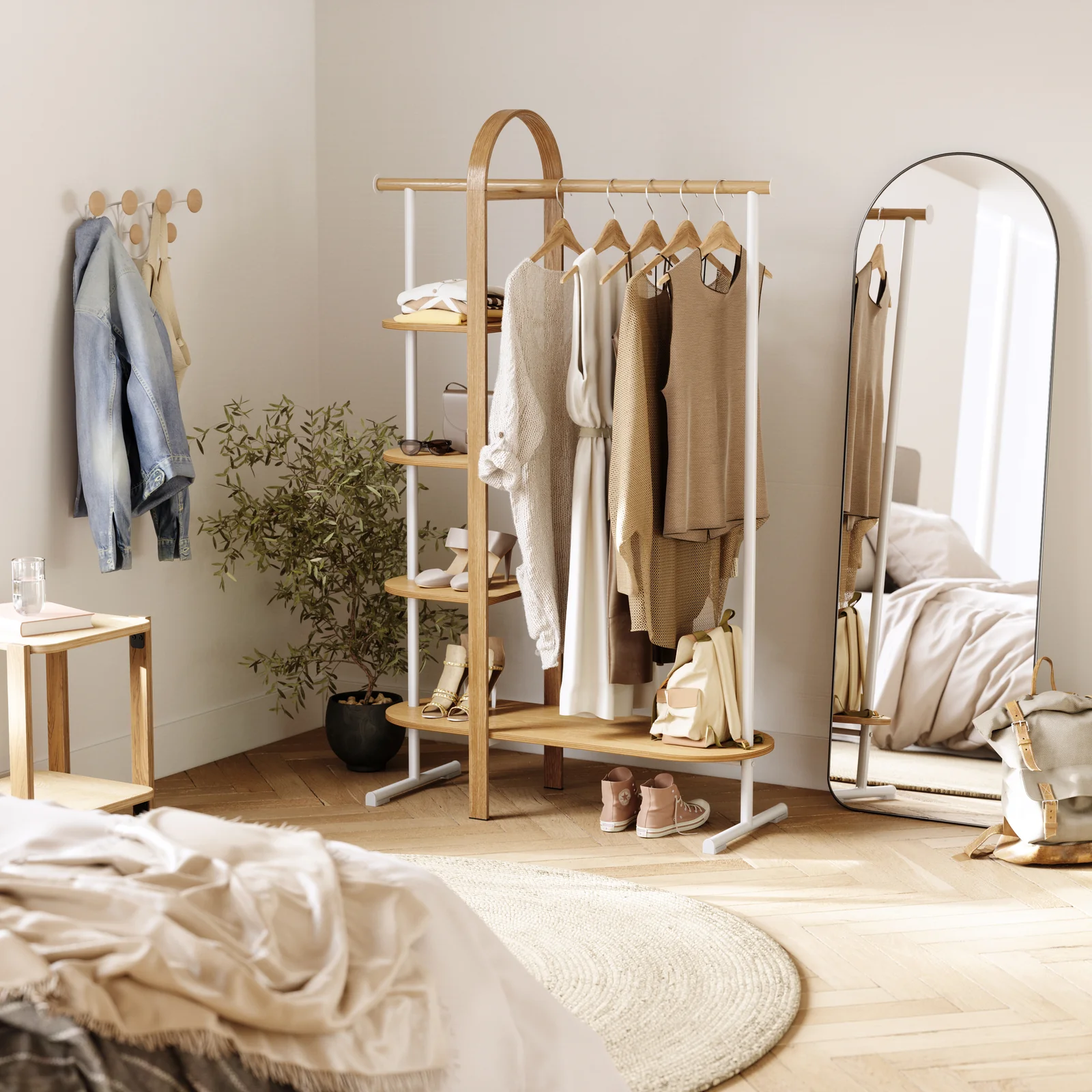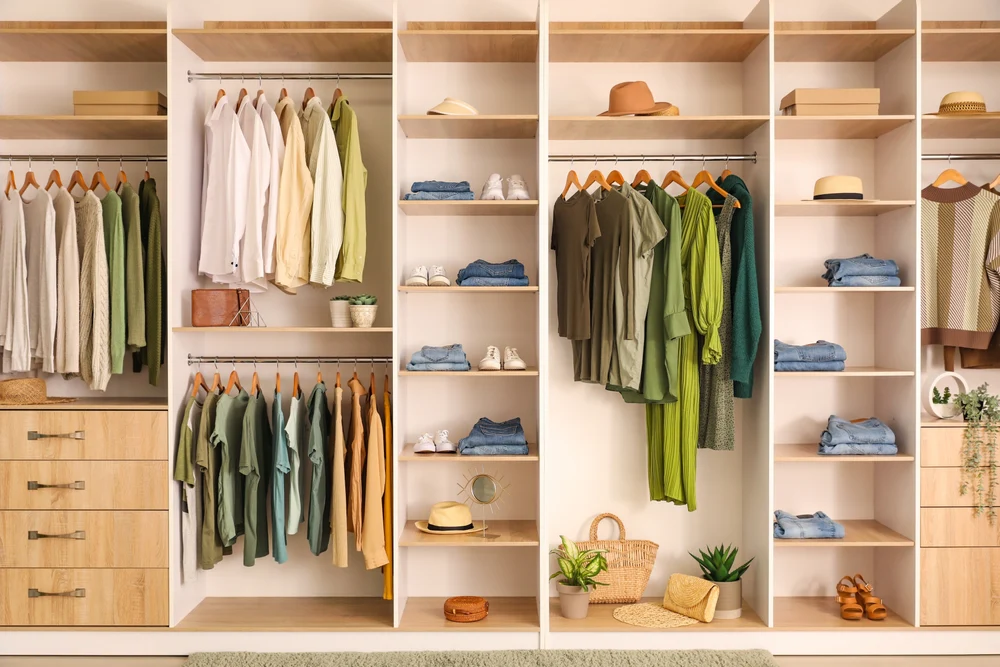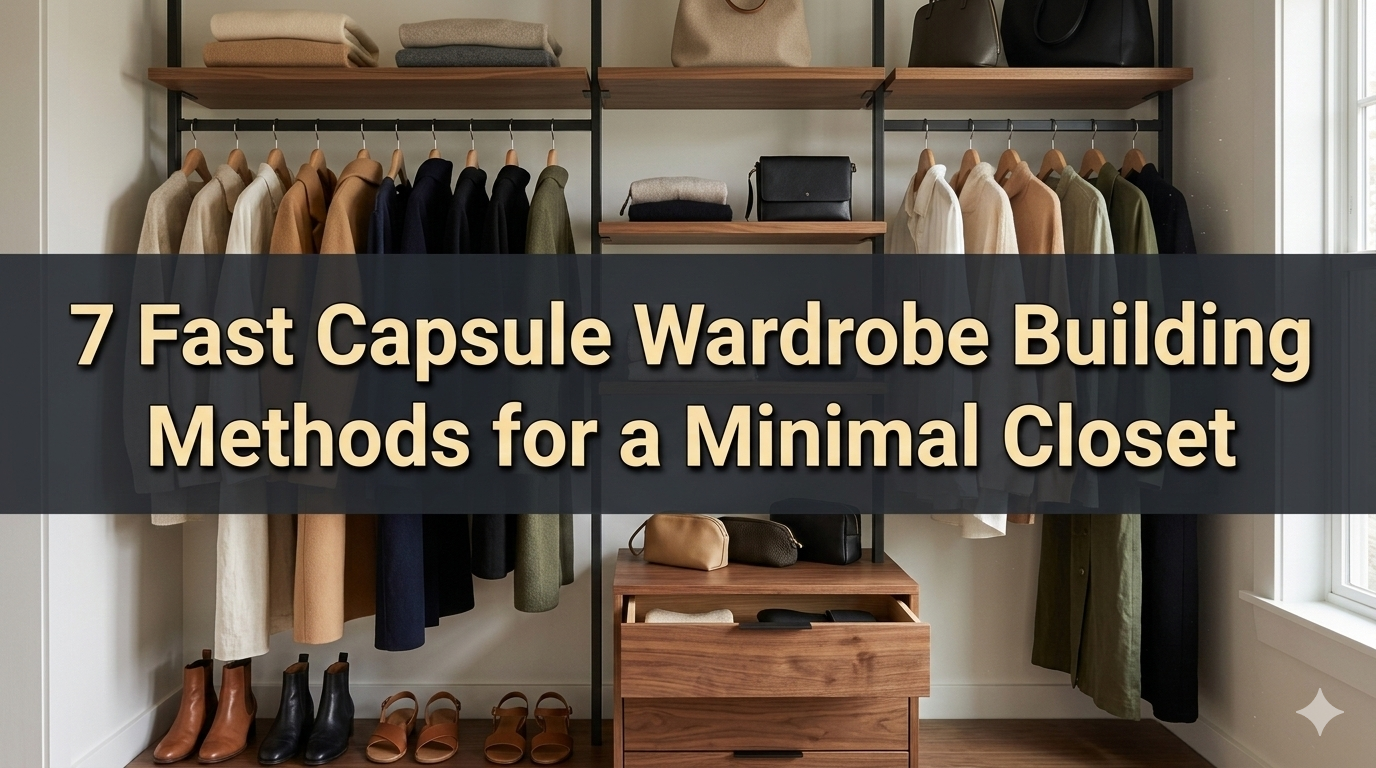
Do You Look at a Closet Bursting With Clothes but Still Have Nothing to Wear?
You’re not alone. Most people have way more clothes than they need — and yet getting dressed still feels like an everyday slog.
That’s precisely where capsule wardrobe building steps in. A capsule wardrobe is a small, curated set of clothes that all go together. Every piece earns its place. Nothing sits there collecting dust.
The concept originated with a London boutique owner named Susie Faux in the 1970s. Fashion designer Donna Karan popularized it decades later, with her legendary “Seven Easy Pieces” collection in 1985. Millions of people across the world have adopted this method to reclaim their time, money, and mental energy on a daily basis.
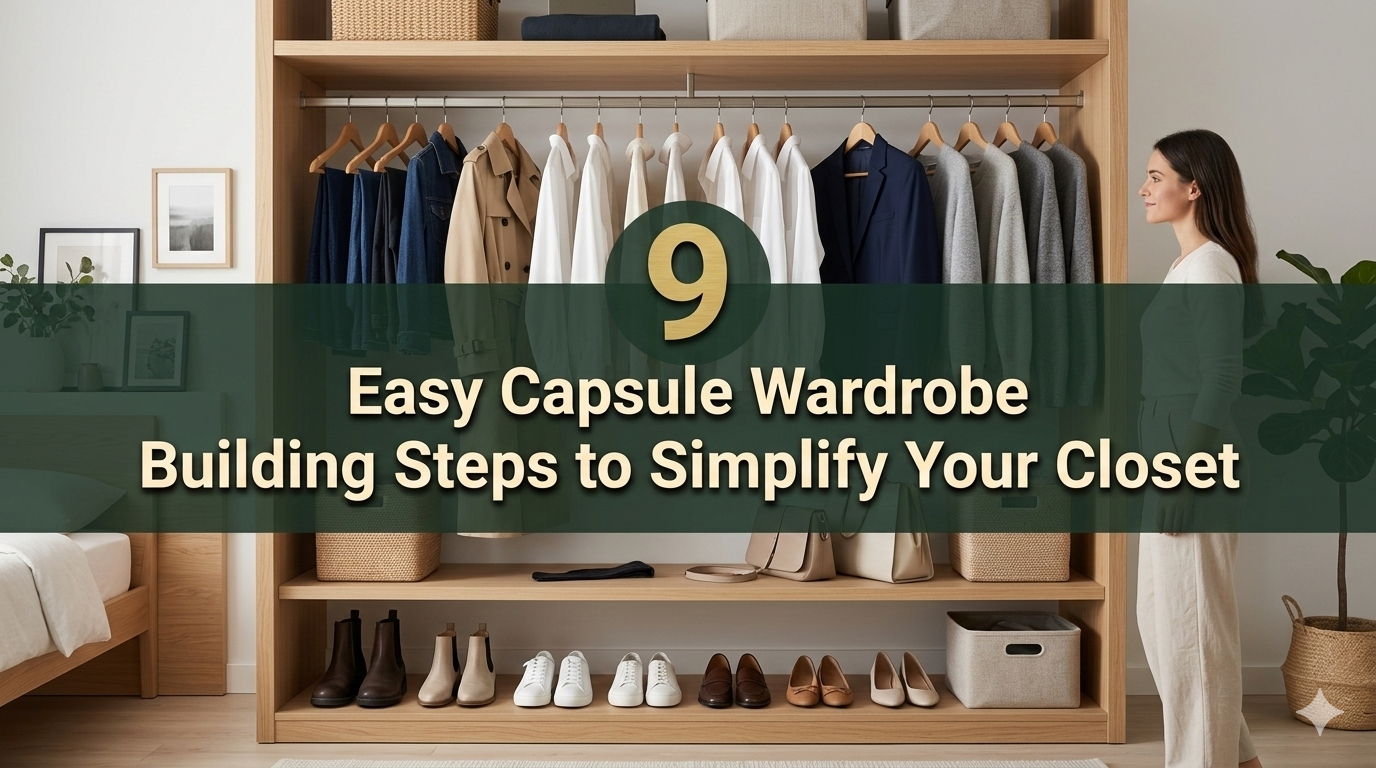
This guide will teach you 9 capsule wardrobe building steps, broken down simply and clearly. Whether you’re building from scratch or refreshing an existing closet, these steps will apply.
Let’s get into it.
Why a Capsule Wardrobe Really Changes Your Life
Before the steps, you may want to understand why this works.
When your closet is cluttered, your brain gets cluttered too. Researchers call this “decision fatigue.” The more decisions you make during the first part of the day, the less cognitive energy you have available for what actually matters.
A capsule wardrobe eliminates that friction entirely.
Here’s what people stand to gain after building one:
| Benefit | What It Means For You |
|---|---|
| Less mental fatigue | Decisions take less time, every morning |
| More savings | You stop buying things you don’t need |
| A clearer sense of style | You know exactly what you own and love |
| Faster mornings | No more standing in front of an open closet |
| Less laundry chaos | Fewer items means a more manageable load |
These aren’t small perks. They’re life-quality upgrades.
Step 1: Gain Clarity on Your Real Lifestyle
Building your first capsule wardrobe starts with a step that has nothing to do with clothes. It’s about you.
Before you buy or hold on to anything, you have to be real about how you truly live — not how you wish you lived.
Ask yourself:
- How many days a week do you work in an office?
- How frequently do you go out socially?
- Is your job mostly remote?
- Are you active? Do you exercise regularly?
- How often do you attend formal events?
Map Out Your Week
One helpful trick: plan out a standard week by category. Here’s an example:
| Scenario | Frequency | Clothes Needed |
|---|---|---|
| Work from home | 5 days/week | Casual but polished |
| Gym or activity | 4x/week | Activewear |
| Social outings | 1–2x/week | Smart casual |
| Formal events | 1x/month | Dressy pieces |
Once you see the life you’re actually living laid out on a page, you’ll know exactly what your wardrobe needs to look like.
This step alone prevents the most common capsule pitfall: organizing an entire closet around illusions rather than what you’ll actually wear. That blazer isn’t going to see much action if you work from your couch every single day.
Step 2: Take Everything Out of Your Closet
Yes, completely.
Pull everything out. Spread it across your bed, floor, or another clear surface. It sounds daunting, but this is actually one of the most powerful capsule wardrobe building steps of all.
Why? Because clothes hanging in a closet are easy to ignore. Once they’re all in one pile, you finally see the whole picture.
What You’re Looking For
As you go through everything, keep these questions in mind:
- What do you wear every single week?
- What haven’t you touched in 6+ months?
- What still has the tags on?
- What no longer fits properly?
- What are you only keeping out of guilt?
Don’t sort yet. Simply take everything out and let it sit.
That clearing is also a mental reset. You’re not just tidying a closet — you’re deliberately choosing to streamline your life.
Step 3: Create Four Honest Piles
Now the sorting begins. This step requires honesty.
Create four piles:
- Keep — You wear it often, it fits well, and it makes you feel good.
- Give — It’s in decent shape, but it no longer suits your life.
- Sell — Better-quality items you can resell on platforms like ThredUp, Poshmark, or local Facebook groups.
- Toss — Stained, stretched, or unfixably damaged.
The “One Year Rule”
Rule of thumb: if you haven’t worn it in the last 12 months, it probably shouldn’t be in your capsule wardrobe.
Exceptions apply — something nice for weddings or funerals, or seasonally relevant items you simply haven’t gotten to yet. But do be strict with yourself here. Most things people say they’ll “wear someday” never get worn.
Questions to Ask About Each Item
- Does this suit my body right now?
- Does it match 3 or more other things I already own?
- Do I feel good wearing it?
- Is it in good condition?
Answer “no” to most of these, and it goes into the donate, sell, or toss pile.
Step 4: Pick Your Colour Palette
This is one of the most exciting capsule wardrobe building steps — and also one of the most clarifying.
A colour palette is a group of colours that complement each other. When your wardrobe shares a common palette, everything mixes and matches easily.
How to Build Your Capsule Colour Palette
A classic capsule palette has three layers:
- Neutrals (the foundation — 60–70%): Black, white, grey, navy, beige, camel, cream
- Accent Colours (your personality — 20–30%): 2–3 colours you truly love and wear often. Olive green, burgundy, rust, dusty blue — whatever works with your skin tone.
- Pop Colours or Patterns (optional — 5–10%): A few fun pieces to lift your looks.
Sample Colour Palette
| Neutrals | Accents | Pops |
|---|---|---|
| ⬛ Black | 🟫 Camel | 🟥 Rust |
| ⬜ White | 🔵 Navy | 🟩 Olive |
| 🩶 Grey | 🤎 Cream |
When everything in your closet fits within this palette, getting dressed becomes nearly automatic.
Step 5: Figure Out the Number of Pieces in Your Core Wardrobe
How many items does a capsule wardrobe really require?
There’s no single right answer — but most style experts recommend somewhere in the range of 30 to 50 total items (not including underwear, socks, and gym-specific gear).
A Simple Capsule Wardrobe Breakdown
| Category | Suggested Count |
|---|---|
| Tops (t-shirts, blouses, sweaters) | 4–10 |
| Bottoms (pants, jeans, skirts) | 4–6 |
| Dresses or jumpsuits | 2–3 |
| Outerwear (jackets, coats) | 2–3 |
| Shoes | 4–6 pairs |
| Accessories (bags, belts, scarves) | 4–6 |
| Formal or occasion wear | 1–2 |
| Total | ~30–40 items |
Use this as a rough guide for where to start. Some people do beautifully with 25 pieces. Others need 50. The only thing that matters is that every single piece has intention behind it.
Step 6: Build Around Your “Hero Pieces”
Every great capsule wardrobe is anchored by a few hero pieces — the items you inevitably reach for time and again.
These are the core of your entire system. They’re versatile, timeless, and feel good every time you wear them.
Classic Hero Pieces to Consider
For a feminine-leaning wardrobe:
- A well-fitted white button-down
- Dark straight-leg jeans
- A knee-length wrap dress
- A tailored blazer
- A cozy neutral sweater
- White trainers and classic ankle boots
For a masculine-leaning wardrobe:
- A crisp white Oxford shirt
- Dark slim or straight chinos
- A well-fitted grey crewneck
- A denim jacket or bomber
- White sneakers and clean leather loafers
These pieces work across seasons and dozens of outfit combinations. That’s precisely why capsule wardrobes feel so effortless once you have one built. If you want a head start on identifying the right hero pieces for your lifestyle, Minimal Wardrobe Plan is a great resource to explore.
The “Cost Per Wear” Mindset
When selecting hero pieces, quality trumps price tags. A $120 pair of jeans you wear 150 times costs $0.80 per wear. A $30 pair you wear 5 times costs $6 per wear.
Spend the most money on what you wear the most.
Step 7: Fill in the Real Gaps — Not the Imaginary Ones
After sorting and defining your hero pieces, you’ll likely spot some real gaps.
Perhaps you need another pair of versatile trousers. Or you discover you have no good outerwear for spring. These are meaningful gaps — and now is the time to fill them in an informed, intentional way.
How to Shop for a Capsule Wardrobe
This step requires discipline. Here’s how to shop smart:
- Write a specific shopping list. Not “I need tops” — but “I need one lightweight long-sleeve top in a neutral colour that layers under my camel blazer.”
- Shop with your palette in mind. If it won’t work with the colours you’ve chosen, put it back — even if you love it.
- Try secondhand first. Thrift stores, consignment shops, and resale apps are goldmines for quality basics at lower prices. You’re also reducing fashion waste, which is a bonus. According to the Ellen MacArthur Foundation, the fashion industry produces significant waste each year — buying secondhand is one of the most effective ways to push back against that.
- Wait 24–48 hours before buying. Impulse purchases are the enemy of a capsule wardrobe. If you still want it the next day, it might be worth having.
- Avoid “just in case” shopping. Buy only for your real life — the lifestyle map you created in Step 1.
Step 8: Organise Your Closet for Day-to-Day Ease
You’ve done the hard work. Now, overhaul your space so the capsule wardrobe system truly sticks.
A clear, organised closet is what separates a capsule wardrobe that lasts for years from one that gradually becomes cluttered again.
Closet Organisation Tips That Actually Work
- Group by type, not by outfit. Keep all tops together, all bottoms together, and so on. This lets you see what you have at a glance.
- Face everything forward. All hangers should face the same direction. It sounds minor, but visually it makes a world of difference.
- Use matching hangers. Slim velvet hangers save space and make your closet look intentional. Ditch wire hangers entirely.
- Add a “to donate” bin. Keep a small bin near your closet. If something stops working, drop it in immediately rather than letting it linger.
- Store off-season pieces elsewhere. Winter coats taking up prime real estate in summer? Pack them into a spare bin, drawer, or under-bed storage.
The “One In, One Out” Rule
Once your capsule is complete, protect it with this rule: for every new item you bring in, one old item must go.
This prevents the total number from creeping up and forces you to think before making a purchase.
Step 9: Evaluate and Refresh Each Season
A capsule wardrobe isn’t a one-and-done project. It’s a living system that evolves with you.
Every 3–4 months — roughly when a season shifts — do a quick review:
- What did you wear constantly?
- What sat untouched?
- What wore out and needs replacing?
- Has your lifestyle changed at all?
A seasonal review takes about 30–60 minutes. It prevents the slow return of closet chaos.
Seasonal Capsule Swap Guide
| Season | Swap In | Swap Out |
|---|---|---|
| Spring | Light layers, denim jackets, white sneakers | Heavy coats, thick knits, boots |
| Summer | Linen, shorts, sandals, sundresses | Jeans, sweaters, closed-toe shoes |
| Fall | Blazers, ankle boots, earth tones | Summer dresses, shorts, sandals |
| Winter | Coats, chunky knits, scarves, boots | Light tops, linen, sandals |
You don’t need an entirely different capsule for each season. Most core pieces cross over. Simply rotate in 8–12 seasonal-specific items and swap out the rest.
At a Glance — A Complete Starter Capsule Wardrobe
Here’s a straightforward checklist you can use as a guideline:
| # | Item | Category |
|---|---|---|
| 1 | White or cream t-shirt (x2) | Top |
| 2 | Striped or solid long-sleeve tee | Top |
| 3 | Button-down shirt (white or light blue) | Top |
| 4 | Fitted knit sweater (neutral) | Top |
| 5 | Casual blouse or relaxed top | Top |
| 6 | Dark jeans (straight or slim) | Bottom |
| 7 | Casual chinos or trousers | Bottom |
| 8 | Simple skirt (midi or mini) | Bottom |
| 9 | Classic little black dress or casual dress | Dress |
| 10 | Tailored blazer | Layer |
| 11 | Denim or light jacket | Layer |
| 12 | Warm coat (for cooler months) | Outerwear |
| 13 | White shoes | Shoes |
| 14 | Classic ankle boots or lace-ups | Shoes |
| 15 | Sandals or slip-ons | Shoes |
| 16 | Leather or faux-leather bag (neutral) | Accessories |
| 17 | Plain belt | Accessories |
| 18 | One or two subtle scarves or jewelry pieces | Accessories |
This initial list of 18 can grow to 30–40 as needed. Everything here works together with ease.
The Biggest Mistakes to Avoid
Despite the best intentions, a few common mistakes can throw the entire process off course.
Mistake 1: Building a wishful wardrobe. Buying a dozen blazers when you rarely go into an office isn’t building a capsule wardrobe — it’s wishful thinking.
Mistake 2: Prioritising quantity over quality. Ten cheap basics that fall apart after five washes aren’t a foundation — they’re a new problem.
Mistake 3: Ignoring fit. A $200 garment that doesn’t fit well looks worse than a $20 piece that fits perfectly. Fit is everything.
Mistake 4: Copying someone else’s capsule. What works for a minimalist fashion blogger in New York won’t necessarily hold up for a teacher in the Midwest. Personalise.
Mistake 5: Buying things “on sale” that you don’t need. A discount on something you wouldn’t have bought in the first place is just wasted money.
Frequently Asked Questions
Q: How many pieces do I need for a beginner capsule wardrobe? Start with 30–40 items. This includes tops, bottoms, shoes, and layers. You can always revise once you see how it fits into your day-to-day.
Q: Will building a capsule wardrobe cost a fortune? Not at all. Thrift stores, consignment shops, and resale apps like ThredUp or Poshmark are excellent resources for finding quality basics at lower prices. Focus on fit and fabric quality, not brand names.
Q: Can I have a capsule wardrobe if I dress differently for different occasions? Yes. You can build a capsule that covers several areas of life — work, casual, athletic, and occasional formal wear — as long as each piece serves a purpose. The key is versatility.
Q: How often do I need to refresh my capsule wardrobe? Do a light review every season (four times per year). A more thorough overhaul once a year should suffice. The goal is gradual evolution, not endless shopping.
Q: What if I love fashion and colour — is a capsule wardrobe too dull? Not at all. A capsule wardrobe is a guide, not a strict rule. You can absolutely include bold colours, patterns, and statement pieces — as long as they coordinate with your other clothes. A capsule simply means every element is intentional.
Q: What do I do with all the clothes I’m removing from my wardrobe? Donate wearable items to local charities or shelters. Sell higher-quality pieces online. Dispose of worn-out textiles in clothing recycling bins — many brands, including H&M and Zara, have these in stores.
Q: Is a capsule wardrobe the same thing as minimalist fashion? They overlap but aren’t identical. Minimalism is about owning as few things as possible. A capsule wardrobe is about owning the right things. You can have a vibrant, expressive capsule that isn’t minimal at all.
Wrapping It All Up
Creating a capsule wardrobe isn’t about owning less for the sake of it. It’s about owning better — pieces that fit your real life, work in harmony with each other, and make you feel great every single day.
Here’s a recap of the 9 steps covered in this guide:
- Know your lifestyle
- Empty your closet completely
- Sort into four honest piles
- Choose a colour palette
- Define your core wardrobe number
- Build around hero pieces
- Fill only real gaps
- Organise for daily ease
- Review and refresh each season
Follow these steps, and you’ll never look at your closet the same way again.
You don’t need more clothes. You need the right clothes. And now you know exactly where to start.

Related Posts