

A few years back, I made the mistake of donating a perfectly good white button-down shirt because I convinced myself it looked “too plain.” Two months later, I was standing in a store spending money to replace it — buying almost the exact same thing — because I kept reaching for that style and not having it.
That moment taught me something I probably should have figured out years earlier: some clothes just never actually go out of style. They’re not trendy. They’re not exciting to buy. But they show up for you every single time, in almost every situation, year after year.
These aren’t “investment pieces” in the influencer sense — you don’t need to spend a fortune. You just need to recognize them, own them in a version that fits you well, and stop getting rid of them every time you do a closet cleanout.
Here are the five that have consistently earned their place in my wardrobe — and honestly, in almost everyone’s wardrobe.
1. The White or Cream Top (Button-Down, Tee, or Both)
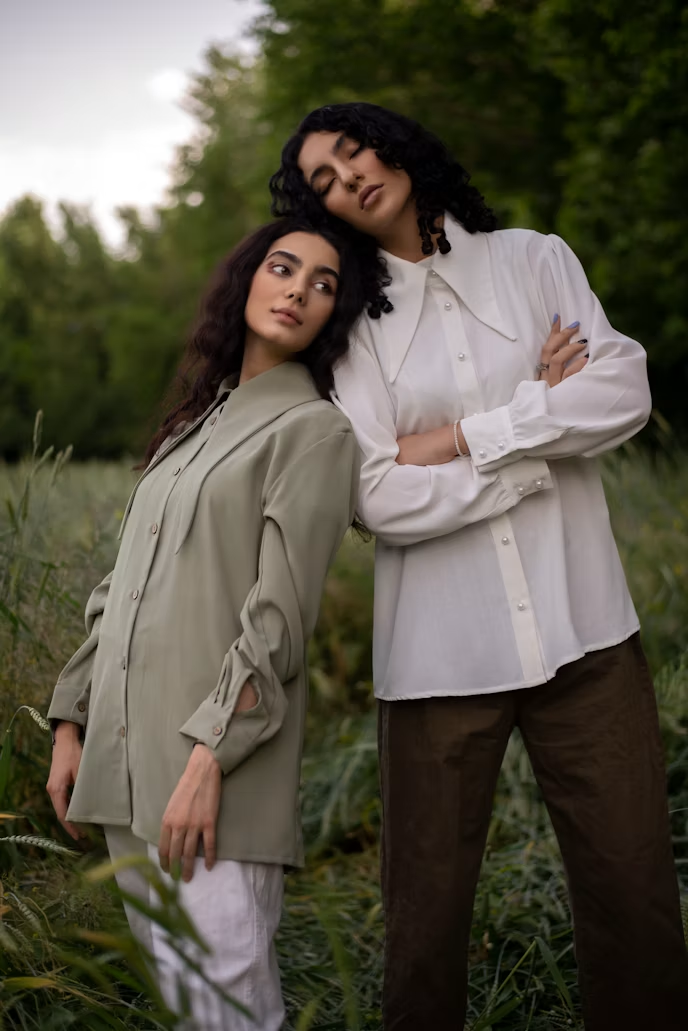
Yes, I’m starting with the one I donated and immediately regretted. Because it really is that essential.
A clean white or cream top is probably the most quietly powerful piece in any wardrobe. It works under blazers, over trousers, tucked into skirts, tied at the waist over jeans. It makes other pieces look more intentional just by being next to them. And it’s been doing this since long before most of us were buying our own clothes.
The reason it never goes out of style is simple: it’s a neutral that’s brighter and crisper than gray or beige, so it adds visual freshness without competing with anything. Pair it with bold trousers and it calms the look. Pair it with other neutrals and it lifts everything.
Now, the version matters. A stiff, formal white button-down reads completely differently from a slouchy oversized white tee — and both are valid, but they serve different purposes.
Choosing the right white top for your lifestyle:
| Style | Best For | Watch Out For |
|---|---|---|
| Crisp white button-down | Work, smart casual, layering | Goes see-through if too thin |
| Relaxed linen button-down | Casual, warm weather, weekends | Wrinkles easily |
| Classic white crew-neck tee | Everything — the most versatile | Quality matters; cheap ones pill fast |
| White fitted v-neck | Layering, casual dressing | Shows wear faster than structured styles |
| Cream or off-white knit | Autumn/winter, softer aesthetic | Harder to keep clean |
I personally own both a relaxed linen shirt and a good quality white crew-neck tee. Together they cover probably 60% of my “I don’t know what to wear” moments. That’s how reliably they show up.
One practical note: white tops require slightly more care — washing on a gentle cycle in cold water and avoiding tumble drying at high heat keeps them from going gray or yellow. A small price for something you’ll wear constantly.
2. Well-Fitting Dark Denim Jeans
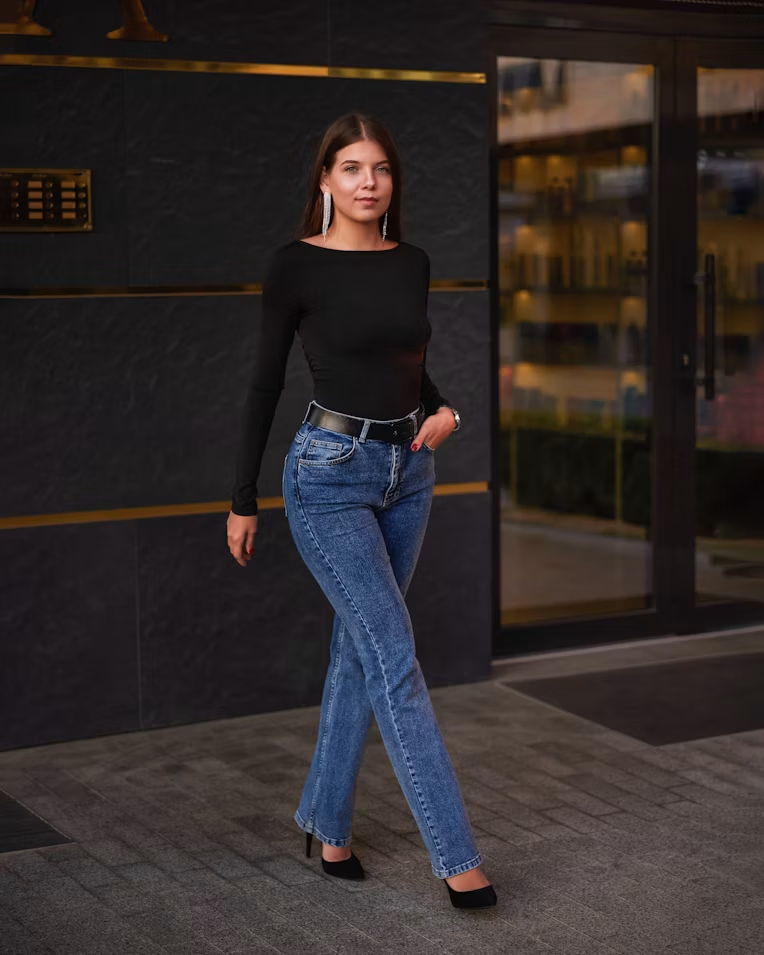
Jeans are interesting because they go through trend cycles — wide leg, skinny, straight, low-rise, high-rise — but dark wash denim in a relatively classic cut has been appropriate and stylish in essentially every decade since the 1950s.
The key words are well-fitting and dark wash. Distressed, very light, or heavily branded jeans tend to feel more era-specific. A clean dark indigo or near-black pair in a cut that flatters your actual body? Those just… work. Always.
I’ve had pairs of dark jeans last eight or nine years before they genuinely wore out. Not because I was hoarding them — because they kept being the right choice. Dress them up with a blazer and clean shoes, dress them down with a tee and sneakers. They transition between almost every context except formal events.
This breakdown of wardrobe basics every closet should have goes deeper into why denim sits at the foundation of so many functional wardrobes — and how to pick the right pair for your lifestyle.
Dark denim versatility by occasion:
| Occasion | Does Dark Denim Work? | What to Pair With |
|---|---|---|
| Casual weekend | ✅ Yes | White tee, sneakers |
| Smart casual dinner | ✅ Yes | Button-down, loafers or boots |
| Office (creative/relaxed) | ✅ Yes | Blazer, clean shoes |
| Formal event | ❌ No | Switch to trousers |
| Travel | ✅ Yes | Comfortable layers |
| Date night | ✅ Yes | Nice top, heels or boots |
The mistake most people make with jeans is keeping pairs that almost fit. Too tight in one place, slightly too long, a bit baggy in the wrong area — and they end up never reaching for them. A tailor can fix most of these issues for less than the cost of a new pair. Seriously worth it for a piece you’ll wear hundreds of times.
3. A Tailored Blazer in a Neutral Color
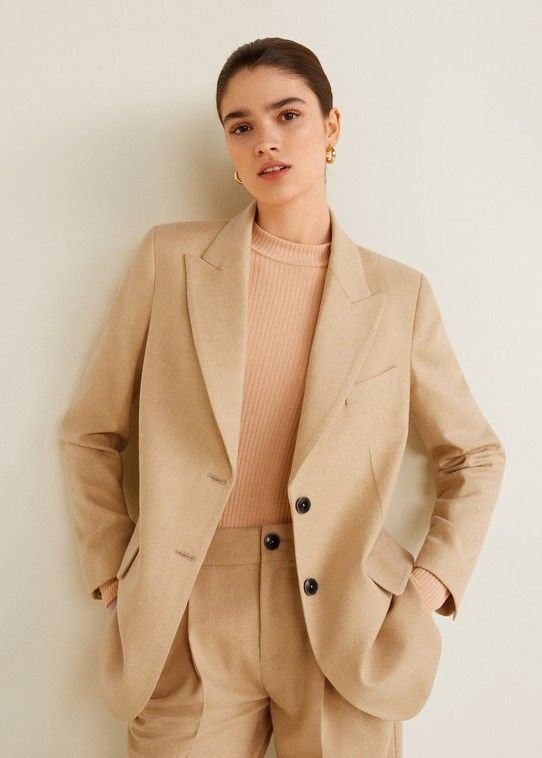
Hear me out on this one, because “blazer” has a reputation for being either stuffy-corporate or costume-y, and neither of those is what I’m talking about.
A well-cut blazer in navy, charcoal, camel, or black is one of the most transformative pieces you can own — not because it dresses you up, but because it structures an outfit. Throw it over a t-shirt and jeans and suddenly you look like you made a decision. Put it over a simple dress and you’ve got an entirely different silhouette. Layer it over a turtleneck in winter and it works there too.
I resisted blazers for a long time because I associated them with office clothes from the 90s. Then I bought a slightly oversized camel blazer on a whim because it was on sale, and I genuinely started wearing it almost everywhere. It changed how I thought about the whole category.
The fit is everything here. Not skin-tight, not shapeless — something that sits cleanly on your shoulders and has enough room through the body to layer a thin knit underneath. If the shoulders don’t fit, nothing else will, and that’s not a tailor fix — that’s a different size or silhouette.
Blazer colors and their versatility:
| Color | Works With | Seasons |
|---|---|---|
| Camel / tan | Almost everything | Autumn, winter, spring |
| Navy | Neutrals, white, grey | All year |
| Charcoal grey | All neutrals, bright accents | All year |
| Black | Everything, especially monochrome | All year |
| Cream / off-white | Earth tones, denim, black | Spring, summer |
| Burgundy / deep red | Neutrals, navy | Autumn, winter |
One thing I’ve noticed: the more oversized the trend in blazers gets, the more a classic slightly-relaxed fit stays relevant. Extreme silhouettes date. A clean-shouldered, slightly structured blazer in a neutral — that photograph from 2010 still looks fine today. That’s the test worth applying.
4. A Simple, Versatile Knit or Sweater
Not a heavily branded one. Not one with a big pattern or logo. A simple, well-made knit in a neutral or muted color — crew neck, V-neck, or mock neck — is the kind of piece that quietly anchors a wardrobe through years of use.
What makes a knit “timeless” vs. trendy usually comes down to three things: the silhouette (classic rather than extreme), the color (neutral or muted rather than season-specific), and the fabric (natural fibers like merino wool, cashmere, or cotton hold their shape and appearance much longer than synthetics).
I have a charcoal gray merino wool crew neck that I bought about six years ago. I wear it probably fifty times a year. It still looks good because merino holds its shape, doesn’t pill badly, and the color doesn’t fade. Six years of fifty wears is three hundred wears and counting — that’s extraordinary value from a single piece.
If you’re building a minimal wardrobe from scratch and want to know which knits and basics deserve your budget, this guide on minimal wardrobe essentials lays it out really practically.
Knit fabric comparison — quality and longevity:
| Fabric | Longevity | Feel | Best Season | Care Level |
|---|---|---|---|---|
| Merino wool | ⭐⭐⭐⭐⭐ | Soft, non-itchy | Autumn/winter | Medium |
| Cashmere | ⭐⭐⭐⭐⭐ | Very soft | Autumn/winter | High |
| Cotton knit | ⭐⭐⭐ | Breathable | Spring/summer | Low |
| Lambswool | ⭐⭐⭐⭐ | Warm, slight texture | Winter | Medium |
| Acrylic/synthetic | ⭐⭐ | Can feel cheap | Any | Low |
| Cotton/wool blend | ⭐⭐⭐⭐ | Balanced | Year-round | Medium |
The mistake I made early on: buying cheap acrylic knits because they looked fine in the store. Within a few months they’d pilled, lost their shape, and looked worn out. Spending a bit more on a natural fiber knit — even one on sale — almost always pays off in how long it actually lasts.
5. Clean, Simple Shoes in a Neutral Color
Shoes are where people’s wardrobes go sideways fastest. Too many shoes that only work with one specific outfit. Too many trend-driven choices that feel dated within two years. And somehow, never the right pair for the moment.
The basics here aren’t complicated: a clean white or off-white sneaker, and one pair of simple leather or leather-look shoes in a neutral (black, tan, or brown). Those two alone can handle an enormous range of occasions and outfits.
The sneaker has genuinely been a wardrobe staple since at least the 1980s and it’s not going anywhere. A simple low-profile style — think along the lines of a classic canvas sneaker, a clean leather tennis shoe, or a minimal running-inspired silhouette — works with jeans, trousers, dresses, skirts. The key is keeping it simple. The more design detail on the shoe, the more era-specific it becomes.
The neutral leather shoe — loafer, Oxford, simple low heel, ankle boot depending on your preference — handles the moments when sneakers feel too casual. A tan loafer or a simple black ankle boot will look just as appropriate in twenty years as it does today.
Shoe longevity by style:
| Style | Timeless Rating | Pairs Well With | Trend Risk |
|---|---|---|---|
| White/off-white minimal sneaker | ⭐⭐⭐⭐⭐ | Almost everything | Low |
| Black ankle boot | ⭐⭐⭐⭐⭐ | Jeans, dresses, trousers | Very Low |
| Tan/cognac loafer | ⭐⭐⭐⭐ | Neutral outfits, denim | Low |
| Classic leather Oxford | ⭐⭐⭐⭐ | Formal, smart casual | Very Low |
| Simple sandal (neutral color) | ⭐⭐⭐⭐ | Summer, casual | Low |
| Heavily branded trainers | ⭐⭐ | Specific outfits | High |
| Platform or extreme-heel styles | ⭐⭐ | Limited combinations | High |
One thing worth knowing about shoe care: even affordable shoes look expensive when they’re clean and well-maintained. A basic shoe brush, leather conditioner, and white sneaker cleaner are three things that extend the life and appearance of shoes dramatically. I’ve worn pairs for five or six years that still look good because I take ten minutes once a month to maintain them.
If you’re curious how to make a small number of wardrobe pieces work harder, this piece on capsule wardrobe pieces that simplify dressing walks through exactly that — with a focus on high-versatility items like the ones we’ve covered here.
Why These Five Specifically?
There are plenty of other good wardrobe basics — trench coats, straight-leg trousers, simple dresses — but these five show up more consistently across more lifestyles, body types, climates, and occasions than almost anything else.
They’re not defined by a trend decade. You can look at photos from the 1960s, the 1990s, and today, and all five of these appear — styled differently, but recognizably the same foundational pieces.
The five basics at a glance:
| Piece | Approximate Cost Range | Expected Lifespan | Occasions Covered |
|---|---|---|---|
| White / cream top | $20–$80 | 3–7 years | Casual to smart casual |
| Dark denim jeans | $40–$120 | 5–10 years | Casual to smart casual |
| Neutral blazer | $50–$200 | 7–15 years | Smart casual to semi-formal |
| Simple knit sweater | $40–$150 | 5–10 years | Casual to smart casual |
| Clean neutral shoes | $40–$150 per pair | 4–8 years | Casual to formal |
These aren’t prices you need to hit exactly. They’re ranges to show that you don’t need to spend a lot — but spending a bit more than the absolute minimum usually shows in longevity.
Mistakes That Undermine These Basics
Owning these pieces isn’t enough if you make a few common errors with them.
Buying the wrong fit. A white tee that’s too tight or too loose, jeans that bag in the wrong places, a blazer with shoulders that don’t sit right — all of these undermine the piece completely. Fit is the most important factor in whether a basic looks intentional or sloppy.
Neglecting care. White tops go gray. Knits pill. Leather shoes crack. All of this is preventable with basic maintenance — gentle washing, proper storage, occasional conditioning. Basics that look worn out stop being basics and start being clutter.
Keeping them past their prime. Timeless doesn’t mean immortal. A white tee that’s gone yellow, a knit with permanent pulls, jeans with a blown-out knee — these need to be replaced, not kept out of loyalty. The piece is replaceable; it’s the category that’s timeless.
Buying trendy versions of basics. An extremely cropped white shirt, jeans in an extreme silhouette, a blazer with strong fashion-moment details — these date. The closer to the classic version, the longer it stays relevant.
How to Build From These Five Pieces
If you have all five of these in good condition and fitting well, you already have the skeleton of a functional wardrobe. Everything else you add should build on this foundation, not replace it.
A quick self-check:
| Basic | Do I Own It? | Does It Fit Well? | Is It in Good Condition? |
|---|---|---|---|
| White / cream top | Yes / No | Yes / No | Yes / No |
| Dark denim jeans | Yes / No | Yes / No | Yes / No |
| Neutral blazer | Yes / No | Yes / No | Yes / No |
| Simple knit sweater | Yes / No | Yes / No | Yes / No |
| Clean neutral shoes | Yes / No | Yes / No | Yes / No |
Anything where you answered “No” to more than one question is a gap worth filling before buying anything else. Not because these are the most exciting pieces — they’re not — but because they’re the ones that make everything else in your wardrobe work better.
Final Thoughts
These five pieces aren’t going to make headlines. Nobody’s doing a trend report on “white t-shirts” or “dark jeans.” But that’s exactly the point.
Fashion moves fast and it’s designed to make you feel like what you have isn’t enough. The basics push back against that. They’re the quiet constant underneath every trend cycle — the pieces that were there before the trend and will still be there after it.
I’ve bought and donated a lot of clothes over the years. The things I’ve regretted getting rid of are almost always one of these five. The things I’ve never regretted keeping? Same list.
Nail these, take care of them, replace them when they genuinely wear out — and you’ll spend a lot less time, money, and mental energy on your wardrobe than most people do.
Also worth reading: 6 Wardrobe Basics I Regret Not Owning Sooner
Frequently Asked Questions
Q1: How much should I actually spend on wardrobe basics?
There’s no one-size-fits-all answer, but a useful rule is: spend proportionally to how often you’ll wear it. A white tee you’ll wear twice a week is worth spending more on than a blazer you’ll wear twice a month. Think cost-per-wear rather than sticker price. And check end-of-season sales — basics don’t expire, so buying a good knit in April for autumn is completely fine.
Q2: Can these basics work for all body types?
Yes — but the specific version might look different for each person. A straight-leg dark jean works across body types; the rise and cut that flatters you most will vary. A blazer works everywhere; the silhouette that fits your frame best might be slightly different from someone else’s. The category is universal. The specific item needs to be right for your body.
Q3: How do I know when a “basic” has become too trendy to be timeless?
Ask yourself: does this look feel strongly associated with a particular moment or decade? If you can picture it in a time capsule photo from a specific era, it’s probably more trend than basic. True timeless pieces feel oddly hard to place in a decade — that’s actually a good sign.
Q4: What if I want to add personality to my wardrobe without losing these basics?
That’s exactly the right way to think about it. The basics are your foundation — the pieces that make everything else work. Personality comes from the pieces you layer on top: a printed scarf, an interesting bag, a statement earring, a colorful knit layered under the blazer. The basics don’t have to be the whole outfit; they just hold the outfit together.
Q5: Is it worth buying basics secondhand or from thrift stores?
Absolutely — in fact, basics are some of the best thrift store finds because they’re not trend-specific. A well-made blazer from fifteen years ago is still a well-made blazer. A quality pair of dark jeans doesn’t expire. Apps like Depop, ThredUp, and Poshmark are great for hunting down specific pieces in good condition. Just be more careful about white tops secondhand — discoloration can be hard to reverse.
You are out of free messages until 6:00 PM
Sonnet 4.6