
introduction
Building a functional wardrobe does not require a large budget or a closet full of clothes. In fact, the most practical wardrobes are often the simplest ones—built around a small number of versatile, affordable pieces that work in multiple combinations.
A budget wardrobe is not about buying cheap clothes that wear out quickly. It’s about choosing cost-effective essentials that give you maximum use per item. The goal is simple: fewer items, more outfits, and less daily confusion about what to wear.
This guide breaks down 15 budget-friendly wardrobe essentials that can be worn daily, regardless of season, lifestyle, or personal style. These pieces are chosen based on versatility, durability, and affordability.
We will also explore outfit formulas, cost breakdowns, seasonal flexibility, and practical styling systems so you can build a wardrobe that works in real life, not just in theory.
what makes a budget wardrobe “smart”
A smart budget wardrobe focuses on value, not volume.
table 1: budget wardrobe principles
Principle | Meaning | Example
Versatility | One item, many outfits | White t-shirt
Neutrality | Easy to mix colors | Black, white, grey
Durability | Lasts multiple washes | Cotton denim
Layering ability | Works across seasons | Shirt + sweater
Cost efficiency | Low cost per wear | $20 tee worn 100 times
When these principles are followed, even a small wardrobe can feel complete.
the 15 budget wardrobe essentials
Below are the core pieces that form a strong everyday wardrobe without overspending.
- plain white t-shirt
A basic white t-shirt is the most worn item in almost any wardrobe. It pairs with jeans, skirts, trousers, and layers under jackets. - plain black t-shirt
A darker alternative that creates contrast and works well for casual or slightly dressed-up looks. - affordable blue jeans
A straight or slim fit pair in a medium wash is one of the most versatile clothing items. - black trousers
A budget-friendly pair of tailored or straight trousers can instantly elevate any outfit. - basic hoodie or sweatshirt
Comfort-focused, warm, and perfect for daily casual wear. - simple button-down shirt
Usually white or light blue, this works for casual layering or more polished looks. - neutral tank tops (2 pieces)
Great for layering or wearing alone in hot weather. - lightweight cardigan
A soft layering piece that works in all seasons. - simple casual dress
One piece outfit solution for quick styling. - basic jacket (denim or bomber)
Affordable outerwear that adds structure and warmth. - comfortable sneakers
Daily footwear for walking, commuting, and casual outfits. - basic sandals or slip-ons
Useful for summer and indoor/outdoor quick wear. - leggings or stretch pants
Comfortable, flexible, and ideal for home or casual errands. - basic tote bag or backpack
Functional accessory for daily use. - simple scarf or accessory item
Used for style variation and light warmth.
how these 15 items work together
The strength of a budget wardrobe lies in combination, not quantity.
table 2: outfit combination matrix
Top / Bottom | Jeans | Trousers | Leggings
White t-shirt | casual everyday | relaxed smart | home comfort
Black t-shirt | street style | minimal chic | casual comfort
Button shirt | smart casual | office ready | layered relaxed
Hoodie | laid-back | sporty casual | comfort wear
Adding shoes and jackets creates even more variations.
cost efficiency breakdown
Budget wardrobes are powerful when cost per wear is considered.
table 3: cost per wear example
Item | Cost | Uses per year | Cost per wear
T-shirt | $10 | 100 | $0.10
Jeans | $30 | 120 | $0.25
Hoodie | $25 | 80 | $0.31
Sneakers | $40 | 100 | $0.40
Trousers | $20 | 80 | $0.25
Even inexpensive items become valuable when used frequently.
seasonal flexibility system
A good budget wardrobe should work across all seasons without major changes.
table 4: seasonal usage chart
Item | Summer | Winter | Spring/Fall
T-shirt | high | layered | high
Jeans | medium | high | high
Hoodie | low | high | medium
Shirt | medium | high | high
Dress | high | layered | high
Jacket | low | medium | high
Layering is the key strategy here.
simple outfit formulas
Instead of thinking about fashion daily, use repeatable formulas.
table 5: outfit formulas
Occasion | Formula
Daily casual | t-shirt + jeans + sneakers
Comfort day | hoodie + leggings
Smart casual | shirt + trousers
Minimal outfit | dress + sneakers
Layered style | t-shirt + cardigan + jeans
These formulas reduce decision fatigue significantly.
color strategy for budget wardrobes
Sticking to a simple color palette helps maximize outfit combinations.
table 6: recommended color palette
Category | Colors
Base neutrals | white, black, grey
Soft tones | beige, cream, light blue
Dark tones | navy, charcoal
Accent colors | olive, burgundy, muted green
Neutral colors allow easier mixing and matching.
why these essentials work for daily wear
These 15 items work because they meet three conditions:
- they are interchangeable
- they suit multiple occasions
- they require minimal styling effort
Instead of buying many specific-use clothes, you focus on flexible ones.
common mistakes in budget wardrobes
Many people try to build a budget wardrobe but still struggle because of avoidable mistakes:
- buying extremely cheap low-quality fabrics
- choosing trendy items instead of basics
- ignoring fit and comfort
- buying items that don’t match each other
- overbuying duplicates
A budget wardrobe should still prioritize usability over quantity.
maintenance and durability tips
Even budget clothes can last long with proper care.
table 7: clothing care guide
Item | Care tip
T-shirts | wash cold, air dry
Jeans | avoid frequent washing
Hoodies | wash inside-out
Shoes | rotate usage
Trousers | hang properly after use
Good care reduces replacement costs.
building your wardrobe step-by-step
Instead of buying everything at once:
step 1: start with tops (t-shirts, shirt, tank tops)
step 2: add bottoms (jeans, trousers, leggings)
step 3: include layering (hoodie, cardigan, jacket)
step 4: choose footwear
step 5: add accessories
This avoids unnecessary spending.
how to maximize outfit variety
Even with 15 items, you can create dozens of outfits using simple mixing logic:
- swap tops daily
- layer differently each season
- change shoes to change outfit tone
- use accessories for variation
A small wardrobe becomes powerful when combinations are intentional.
budget wardrobe mindset
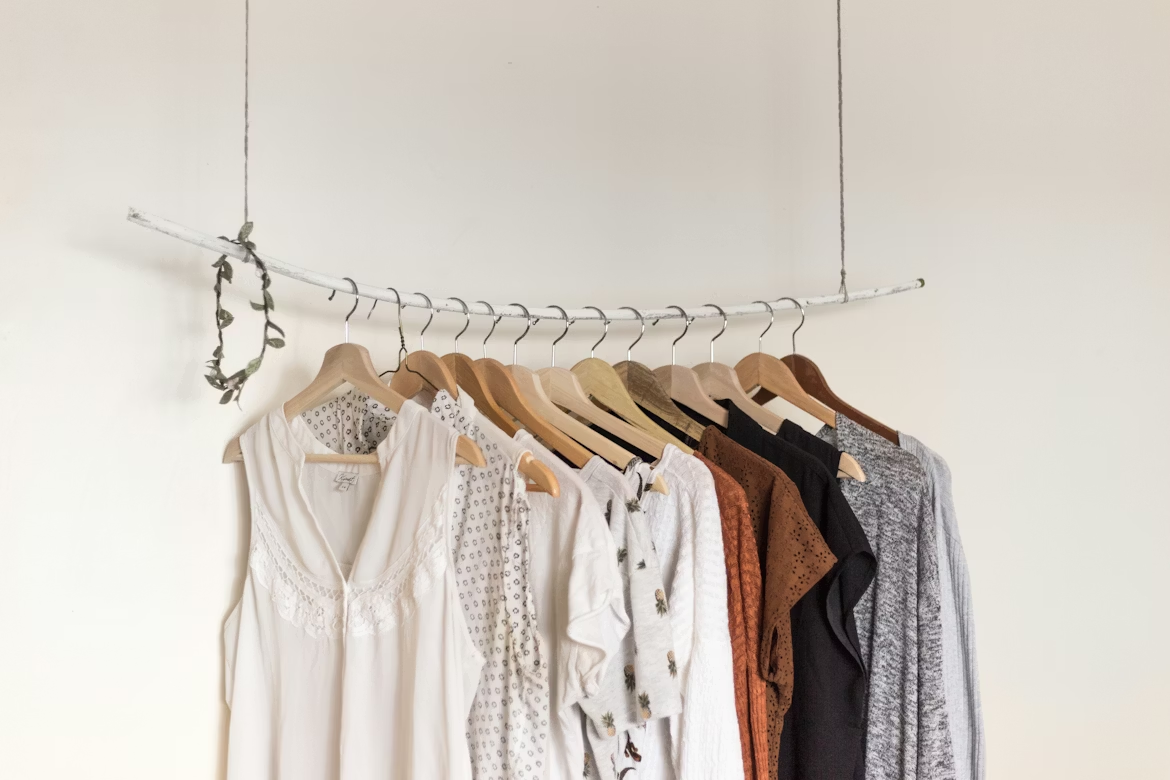
A budget wardrobe is not about limitation—it’s about clarity.
It shifts focus from:
- buying more → using better
- trends → functionality
- quantity → combination power
This approach reduces stress and saves money at the same time.
conclusion
A well-planned budget wardrobe built around these 15 essentials can handle daily wear without unnecessary shopping pressure. The goal is not to restrict your style, but to simplify it.
When each piece serves multiple purposes, getting dressed becomes faster, easier, and more intentional.
faqs
- how many clothes do I really need for a budget wardrobe?
Around 20–35 total items, including shoes and outerwear, is usually enough. - can a budget wardrobe still look stylish?
Yes, style comes from combinations and fit, not price. - what is the most important item in a budget wardrobe?
A good-quality t-shirt and jeans are usually the most essential starting point. - how do I avoid wasting money on clothes?
Focus on versatile basics instead of trend-based items. - can I build a wardrobe under a small budget?
Yes, if you prioritize essentials and buy gradually. - what is the biggest benefit of a budget wardrobe?
Reduced spending and easier daily outfit decisions.