

Introduction
At some point, my wardrobe stopped feeling like a helpful part of my life and started feeling like background noise. Clothes were everywhere, yet nothing felt right. Getting dressed became a repetitive cycle of trying things on, discarding options, and still feeling like I had “nothing to wear.”
What changed everything wasn’t buying more clothes—it was changing how I thought about clothes entirely. Minimal wardrobe rules aren’t about restriction. They’re about clarity, consistency, and removing unnecessary decision fatigue.
Over time, I noticed that the more structure I introduced into my wardrobe, the easier everything else became. Style stopped being stressful and started becoming automatic.
These are the 7 minimal wardrobe rules that genuinely changed how I dress, think, and shop.
Rule 1: If it doesn’t match at least 3 outfits, it doesn’t stay
This rule became the foundation of everything. Instead of asking “Do I like this?”, I started asking “How many outfits can I build with this?”
The shift was immediate. Clothes stopped being emotional purchases and became functional tools.
Outfit compatibility test:
| Question | If YES | If NO |
|---|---|---|
| Can this be styled in at least 3 outfits? | Keep | Reconsider |
| Does it match my color palette? | Keep | Remove |
| Does it work in multiple seasons? | Keep | Limited use |
Before vs After wardrobe structure:
| Factor | Before Rule | After Rule |
|---|---|---|
| Outfit variety | Random | Structured |
| Clothing usefulness | Low clarity | High clarity |
| Closet efficiency | Chaotic | Intentional |
This rule alone cut my wardrobe almost in half—but doubled my outfit combinations.
Rule 2: One in, one out keeps everything balanced
Clutter doesn’t happen suddenly—it builds slowly. This rule prevents that.
Every time I bring in a new clothing item, one must leave.
Wardrobe balance chart:
| Without Rule | With Rule |
|---|---|
| Constant accumulation | Controlled size |
| Emotional buying | Intentional buying |
| Overflowing closet | Stable wardrobe |
Impact over time:
| Month | Clothing Trend Without Rule | With Rule |
|---|---|---|
| Month 1 | Stable | Stable |
| Month 6 | +15 items | Stable |
| Month 12 | +40 items | Stable |
The rule creates natural limits without feeling restrictive.
Rule 3: Neutral colors first, personality colors second
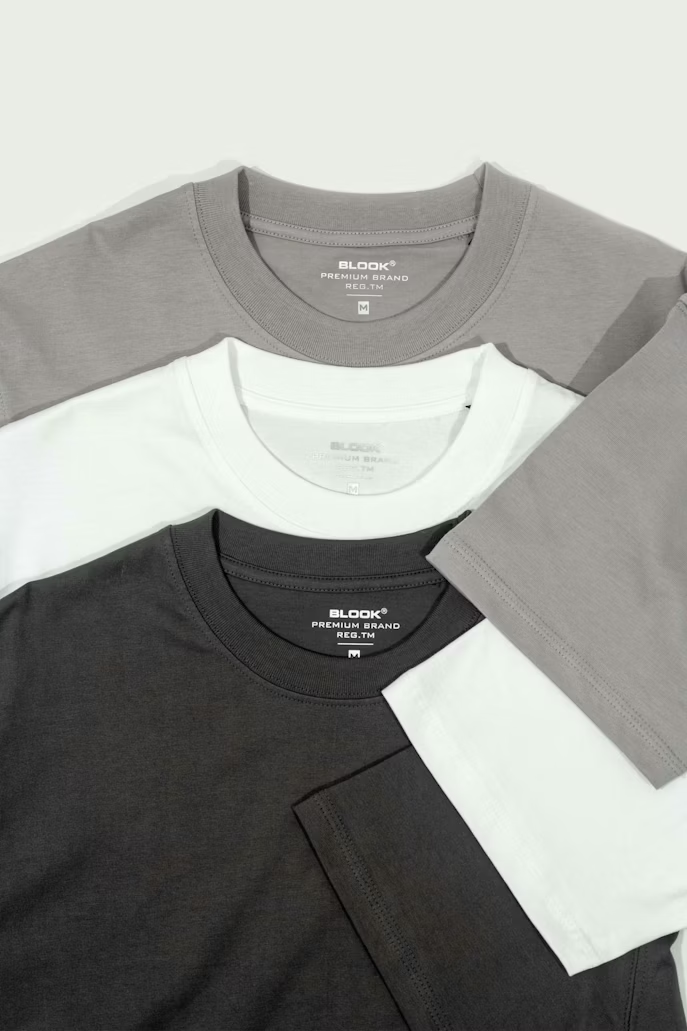
Before adopting minimal wardrobe thinking, I was drawn to colors randomly. The problem wasn’t color itself—it was inconsistency.
Switching to a structured color system simplified everything.
Minimal color system:
| Category | Colors |
|---|---|
| Base neutrals | Black, white, beige |
| Core tones | Navy, grey |
| Accent tones | Olive, rust, soft blue |
Color coordination results:
| Aspect | Before | After |
|---|---|---|
| Outfit matching ease | Difficult | Easy |
| Styling time | Long | Short |
| Outfit confidence | Medium | High |
Color became a system instead of a guessing game.
Rule 4: Comfort must exist before style
This rule changed how I evaluate clothes completely. If something looked great but felt uncomfortable, it never stayed.
Comfort evaluation chart:
| Factor | Acceptable Level |
|---|---|
| Movement | Full range |
| Fabric feel | Soft / breathable |
| Fit pressure | None or minimal |
| Wear duration | 6+ hours comfortable |
Before vs After decision-making:
| Scenario | Before Rule | After Rule |
|---|---|---|
| Stylish but tight jeans | Keep | Remove |
| Comfortable but simple shirt | Maybe ignore | Keep |
| Trendy shoes but painful | Keep | Remove |
The surprising outcome: comfort actually improved style consistency because I wore clothes more confidently.
Rule 5: Outfit formulas remove daily stress
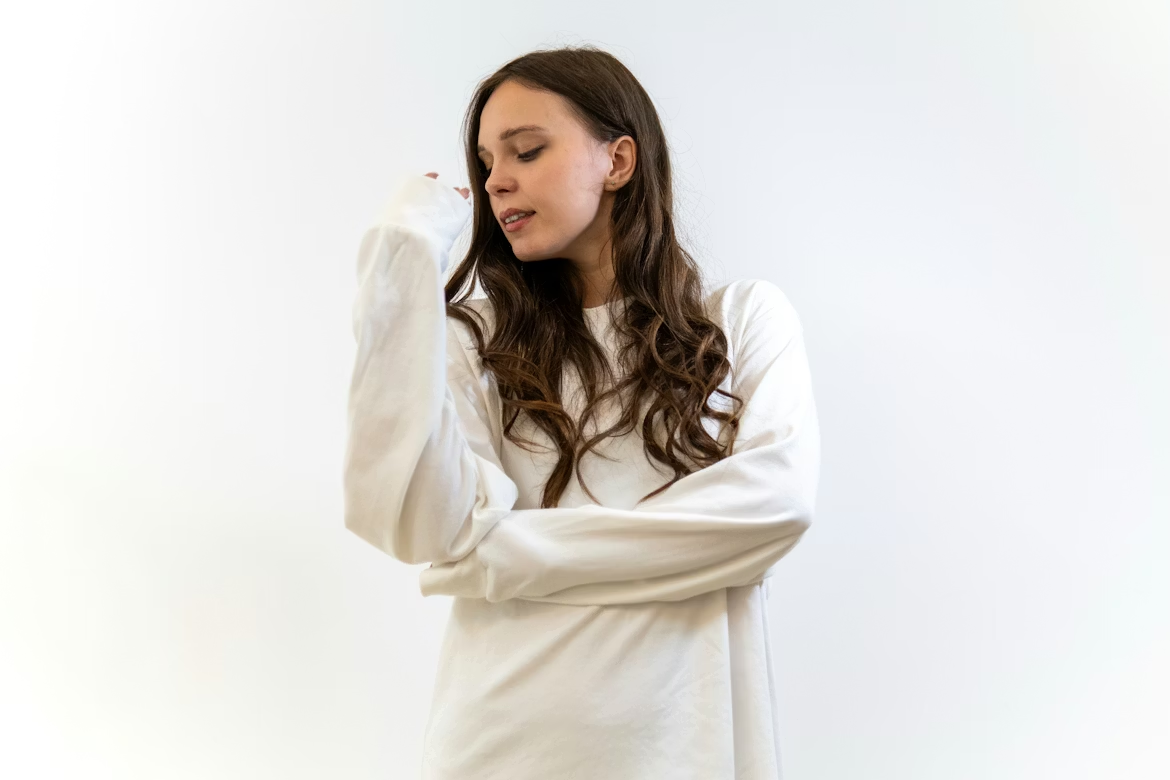
Instead of building outfits from scratch every morning, I started using repeatable formulas.
Outfit formula system:
| Situation | Formula |
|---|---|
| Casual day | T-shirt + jeans + sneakers |
| Work day | Shirt + trousers + blazer |
| Relaxed day | Hoodie + joggers |
| Smart casual | Button-up + chinos + loafers |
Effect on daily routine:
Before: Choose → Try → Change → Repeat → Stress
After: Select formula → Dress → Done
Efficiency comparison:
| Metric | Before | After |
|---|---|---|
| Time spent choosing outfit | 15–25 min | 3–5 min |
| Outfit satisfaction | Inconsistent | Consistent |
| Morning stress | High | Low |
Outfit formulas turned style into a system instead of a daily decision.
Rule 6: Seasonal rotation keeps the wardrobe fresh
One of the biggest mental clutter sources is seeing all clothes at once, regardless of season.
Seasonal rotation solved that.
Seasonal wardrobe structure:
| Season | Focus |
|---|---|
| Spring | Light layers, soft tones |
| Summer | Breathable fabrics |
| Autumn | Layered textures |
| Winter | Warm, structured pieces |
Storage system:
| Category | Storage Location |
|---|---|
| Current season clothes | Main closet |
| Off-season clothes | Storage box |
| Special items | Separate section |
Impact comparison:
| Factor | Before Rotation | After Rotation |
|---|---|---|
| Closet clarity | Low | High |
| Outfit fatigue | High | Low |
| Decision overload | Frequent | Rare |
Rotation made everything feel new again without buying more clothes.
Rule 7: Less variety, more consistency
This rule feels counterintuitive at first, but it’s the most powerful long-term change.
Instead of constantly chasing variety, I focused on consistency in style direction.
Consistency framework:
| Element | Choice |
|---|---|
| Fit type | Slightly relaxed |
| Color tone | Neutral-heavy |
| Fabric style | Natural, breathable |
| Silhouette | Balanced, minimal |
Wardrobe identity chart:
| Before | After |
|---|---|
| Random styles | Defined aesthetic |
| Trend-driven | Personal style-driven |
| Inconsistent outfits | Cohesive outfits |
The goal wasn’t to limit expression—it was to refine it.
Overall transformation summary
When all seven rules worked together, the wardrobe stopped feeling like storage and started functioning like a system.
Full impact table:
| Rule | Main Effect |
|---|---|
| 3-outfit rule | Better utility |
| One-in-one-out | Controlled size |
| Neutral-first colors | Easier coordination |
| Comfort priority | Better wearability |
| Outfit formulas | Faster dressing |
| Seasonal rotation | Reduced clutter |
| Consistency focus | Stronger identity |
Lifestyle changes:
| Area | Before | After |
|---|---|---|
| Morning routine | Stressful | Simple |
| Shopping habits | Impulsive | Intentional |
| Closet experience | Overwhelming | Calm |
| Style confidence | Unstable | Stable |
Final thoughts
Minimal wardrobe rules are not about owning less for the sake of minimalism. They are about creating clarity in a space that affects daily life more than most people realize.
Once the system is in place, getting dressed stops feeling like a task and starts feeling like a predictable, stress-free routine.
The biggest change isn’t in clothing quantity—it’s in mental space.
FAQs
- Do I need to throw away most of my clothes to follow minimal wardrobe rules?
No. Start by applying rules gradually and reassessing what you already own. - Can I still follow trends with a minimal wardrobe?
Yes, but selectively. Trends should fit into your existing system rather than replace it. - How many clothes should a minimal wardrobe have?
There is no fixed number, but most people function well with 25–50 versatile pieces. - Is a minimal wardrobe boring?
No. It often feels more expressive because outfits become more intentional and consistent. - What is the easiest rule to start with?
The “3 outfit rule” is usually the easiest and most effective starting point. - Do minimal wardrobe rules work for all lifestyles?
Yes, but they should be adapted based on climate, work type, and personal preference.