
A minimal wardrobe is often misunderstood as “owning fewer clothes.” In reality, it is about removing friction from daily dressing decisions. The goal is not just simplicity—it’s speed, clarity, and consistency.
When your wardrobe is minimal but well-designed, you don’t waste time thinking about what to wear. Everything works together. Everything has a purpose. Every outfit becomes predictable in a good way.
These five hacks are not about fashion theory—they are about building a system you can rely on every single morning.
hack 1: build a “repeatable outfit formula system”
Most people try to create new outfits every day. That is the fastest way to waste time. Minimal dressing works best when you stop reinventing outfits and start repeating formulas.
An outfit formula is a fixed structure you reuse with small variations.
Example formulas:
- tee + jeans + sneakers
- shirt + trousers + loafers
- hoodie + joggers + trainers
Instead of asking “what should I wear?”, you ask “which formula fits today?”
Formula breakdown table:
| Occasion | Formula Example | Result Style |
|---|---|---|
| Casual | T-shirt + jeans + sneakers | Relaxed clean |
| Work | Shirt + trousers + loafers | Smart minimal |
| Home/relax | Hoodie + joggers + slides | Comfortable basic |
| Outing | Shirt + jeans + jacket | Balanced style |
Time-saving comparison:
| Approach | Time to Decide Outfit |
|---|---|
| Random outfit choice | 5–8 minutes |
| Formula system | 1–2 minutes |
The key benefit is mental automation. Once formulas are established, dressing becomes a habit, not a decision.
hack 2: use a “capsule color loop” instead of random colors
Color chaos is one of the biggest reasons outfits feel difficult to assemble. Minimal wardrobes solve this by restricting colors into a loop system where everything matches everything else.
A capsule color loop includes:
- base colors (black, navy)
- neutral colors (white, grey, beige)
- optional accent (olive, brown, muted red)
Color compatibility matrix:
| Color | Matches Well With |
|---|---|
| Black | All colors |
| Navy | White, grey, beige, olive |
| White | All colors |
| Grey | Black, navy, muted tones |
| Beige | Navy, white, brown tones |
| Olive | Neutrals + denim |
Visual effect comparison:
| Wardrobe Type | Visual Outcome |
|---|---|
| Random colors | Disorganized |
| Capsule color loop | Cohesive and clean |
A strong color loop makes even simple clothes look intentional and styled.
hack 3: reduce wardrobe “decision points”
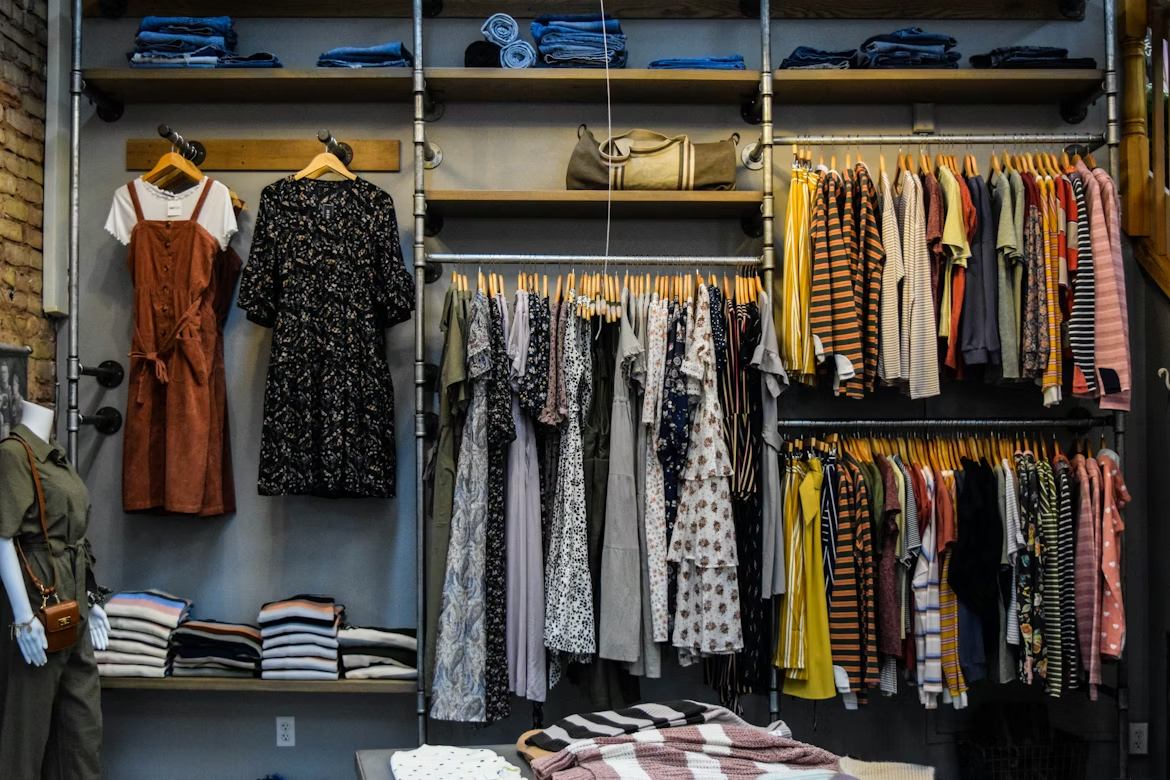
Every wardrobe creates decision points:
- what top?
- what bottom?
- what shoes?
- what layer?
Minimal wardrobes reduce these decisions intentionally.
Decision reduction system:
| Decision Area | Traditional Wardrobe | Minimal System |
|---|---|---|
| Tops | 15+ options | 3–5 options |
| Bottoms | 10+ options | 2–4 options |
| Shoes | 5+ options | 2–3 options |
| Layers | Many random items | 2–3 key layers |
Decision load comparison:
| System Type | Daily Mental Effort |
|---|---|
| Full wardrobe | High |
| Minimal wardrobe | Low |
The goal is not choice—it is elimination of unnecessary choice.
hack 4: create “anchor outfits” for the week
Anchor outfits are pre-decided combinations that you can rely on without modification. Instead of styling daily, you rotate ready-made looks.
Example weekly anchor plan:
| Day | Anchor Outfit |
|---|---|
| Monday | White tee + jeans + sneakers |
| Tuesday | Shirt + trousers + loafers |
| Wednesday | Hoodie + joggers + trainers |
| Thursday | Black tee + jeans + jacket |
| Friday | Shirt + chinos + casual shoes |
Why this works:
- removes morning thinking
- reduces outfit mistakes
- increases consistency
Weekly time breakdown:
| Method | Weekly Time Spent |
|---|---|
| Daily styling | 35–50 minutes |
| Anchor system | 10–15 minutes |
Once anchor outfits are set, mornings become automatic.
hack 5: apply the “one-touch wardrobe rule”
Minimal wardrobes fail when clothes are scattered, messy, or hard to access. The one-touch rule fixes this.
Rule:
Every item should be reachable, visible, and usable with a single motion.
Wardrobe organization example:
| Zone | Contents |
|---|---|
| Daily zone | Most-used outfits |
| Work zone | Shirts, trousers, formal wear |
| Casual zone | T-shirts, jeans, hoodies |
| Outerwear zone | Jackets and coats |
Efficiency comparison:
| Organization Style | Time to Find Outfit |
|---|---|
| Random closet | 3–5 minutes |
| One-touch system | Under 1 minute |
This hack removes physical friction, not just mental friction.
system integration: how all 5 hacks work together
Each hack is powerful alone, but together they create a fully automated dressing system.
System flow:
- outfit formulas define structure
- color loop ensures compatibility
- decision reduction simplifies choices
- anchor outfits remove daily planning
- one-touch rule ensures fast access
Integrated overview:
| Layer | Function |
|---|---|
| Structure | Outfit formulas |
| Coordination | Color system |
| Efficiency | Decision reduction |
| Planning | Anchor outfits |
| Execution | Wardrobe organization |
Result:
A wardrobe that functions like a system, not a collection.
example minimal wardrobe breakdown
A functional minimal wardrobe does not need many items.
Sample setup:
| Category | Items |
|---|---|
| Tops | 3 t-shirts, 2 shirts |
| Bottoms | 2 jeans, 2 trousers |
| Layers | 1 jacket, 1 hoodie |
| Shoes | 1 sneakers, 1 loafers |
| Extras | 2 accessories |
| Total | ~11–12 items |
Outfit potential:
| Tops | Bottoms | Layers | Total Outfits |
|---|---|---|---|
| 5 | 4 | 2 | 40+ |
Even a small wardrobe produces high variety when structured properly.
common mistakes in minimal wardrobes
mistake 1: owning too many “almost useful” items
These create confusion and slow down decisions.
mistake 2: ignoring outfit repetition
Trying to make every outfit unique leads to decision fatigue.
mistake 3: poor color coordination
Without a system, even minimal wardrobes feel messy.
mistake 4: lack of organization
If clothes are not easy to access, speed benefits disappear.
time impact of a minimal wardrobe system
| System Type | Daily Time to Dress |
|---|---|
| Traditional closet | 5–10 minutes |
| Minimal system | 1–2 minutes |
Annual time savings:
| Daily Savings | Yearly Impact |
|---|---|
| 5 minutes | ~30 hours |
| 10 minutes | ~60 hours |
That is multiple full workdays saved annually.
why minimal wardrobes feel more stylish
Minimal wardrobes often look more stylish because:
- outfits are consistent
- colors are controlled
- fits are prioritized
- repetition builds identity
Style perception table:
| Factor | Impact on Style Look |
|---|---|
| Fit | Very high |
| Color control | High |
| Simplicity | High |
| Quantity | Low |
Style is not complexity—it is clarity.
final thoughts
A minimal wardrobe is not about restriction. It is about removing everything that slows you down. When your clothing system is structured, repeatable, and easy to access, getting dressed becomes almost automatic.
The less you think about your clothes, the better they tend to look.
faqs
- how many clothes do i actually need for a minimal wardrobe
Most people function well with 10–25 well-coordinated pieces depending on lifestyle. - does a minimal wardrobe limit fashion choices
Not really. It removes unnecessary choices while keeping useful combinations. - can i still follow trends in a minimal wardrobe
Yes, but trends should be limited to small accent pieces, not core items. - what is the biggest benefit of a minimal wardrobe
Saving time and reducing daily decision fatigue. - how long does it take to build a minimal wardrobe system
Usually 2–4 weeks of refining what you actually wear and removing unnecessary items. - is minimal wardrobe style suitable for all seasons
Yes, but seasonal rotation helps keep it practical and comfortable year-round.