

The first time I tried building a capsule wardrobe, I failed spectacularly.
I’d watched all the YouTube videos, read the Pinterest boards, made a colour palette moodboard on my phone — and then I went shopping and bought 14 new things in one weekend. I thought I was being intentional. I was not. Three months later, half those items were still unworn, two didn’t actually go with anything else I owned, and I was back to the same frustrated feeling in front of my closet every morning.
The idea of a capsule wardrobe is genuinely brilliant. Own less, wear more, stress less. But the execution? That’s where most people — including me — trip up. And the frustrating part is that the mistakes aren’t obvious while you’re making them. They feel like good decisions at the time.
So let me walk you through the 7 mistakes I made (and still see everywhere) so you can skip the expensive trial-and-error phase I went through.
1. Starting Without Auditing What You Already Own
This is the mistake that costs people the most money before they’ve even bought a single new thing.
Everyone gets excited about capsule wardrobes and immediately wants to start fresh. New neutral pieces, clean palette, organised closet — it’s an appealing fantasy. But if you skip the audit step and just go shopping, you’ll end up buying things you already own (I bought a third white shirt without realising it), or pieces that don’t fill your actual gaps.
The right way to start:
Pull everything out. Literally everything. Lay it on your bed. Then ask three questions about each item:
- Have I worn this in the last 3 months?
- Does it fit properly right now?
- Does it go with at least 3 other things I own?
If something fails all three, it goes. If it passes even one, you think harder before removing it.
This process is slightly painful (I found a blazer I’d genuinely forgotten about — still had the tags on it) but it shows you what you’re actually working with. Most people find they already own more capsule-ready basics than they think. They just can’t see them through the clutter.
Use an app like Stylebook or even just your phone’s camera to photograph and catalogue what survives the audit. You’ll refer back to it constantly.
2. Copying Someone Else’s Capsule Wardrobe Exactly
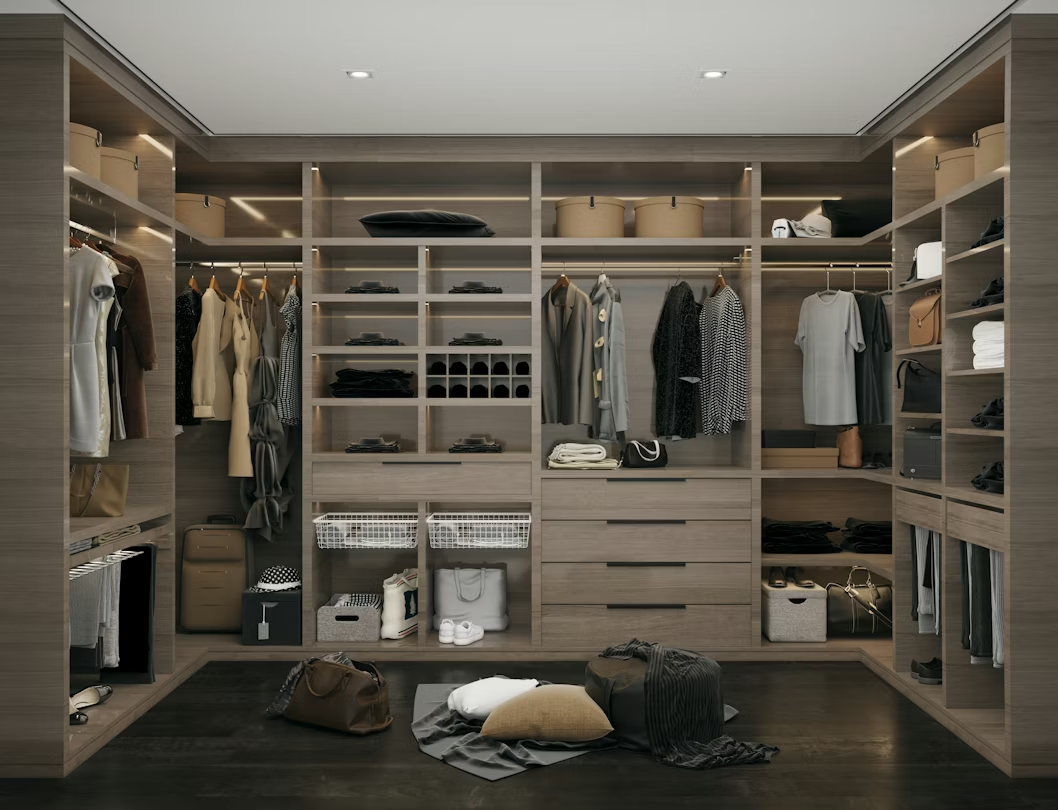
Capsule wardrobe content is everywhere right now, and a lot of it is genuinely beautiful. Flat lays of 30 perfectly coordinated pieces in beige and cream, all stacked neatly on white shelving. It looks aspirational. It also might be completely wrong for your life.
I spent months trying to dress like the minimalist bloggers I followed. Linen trousers, silk camisoles, structured mules. The problem? I was commuting on public transport, working in a casual office, and spending weekends outdoors. I needed denim, trainers, and layers — not a Parisian art gallery wardrobe.
Your capsule wardrobe has to be built around your actual life, not someone else’s aesthetic.
Ask yourself honestly:
- How many days a week do I need work-appropriate clothes?
- How often do I dress up vs. stay casual?
- What’s my climate like? (This matters enormously — a linen capsule wardrobe in a cold, rainy city is a nightmare)
- What activities take up most of my time?
The answers to those questions should shape every single purchase. A teacher’s capsule looks different from a freelancer’s. A person living in Dubai needs different pieces than someone in Edinburgh.
If you need help understanding what building rules actually apply to your life, 7 Essential Capsule Wardrobe Building Rules for Beginners breaks this down in a way that’s easy to personalise.
3. Buying Everything in the Same Neutral Tone
Neutrals are great. I love a neutral wardrobe. But there’s a version of “neutral capsule wardrobe” that goes so far it becomes boring and, weirdly, harder to style.
Here’s what happens: you buy everything in beige, oatmeal, and cream. You put on an outfit and everything matches but nothing has any contrast or visual interest. It looks flat. You end up feeling like you’re wearing a uniform — and not in a good way.
The trick is to build your neutrals with tonal variation, not just one single shade.
| Neutral Family | Pieces That Work Together |
|---|---|
| Warm neutrals | Camel, tan, cream, rust, warm white |
| Cool neutrals | Slate grey, navy, off-white, charcoal |
| Mixed base | Black + white + one warm accent (camel or olive) |
You don’t need colour-colour (unless you want it). But you do need light, mid, and dark tones. A white tee + mid-grey trousers + camel blazer works because there’s contrast. White tee + cream trousers + oatmeal cardigan? It all blurs together.
Also — and this took me embarrassingly long to figure out — warm and cool neutrals often clash. Mixing a cool grey with warm beige can look off without you knowing why. Pick one undertone family and stick mostly within it.
4. Prioritising Aesthetics Over Fabric and Fit
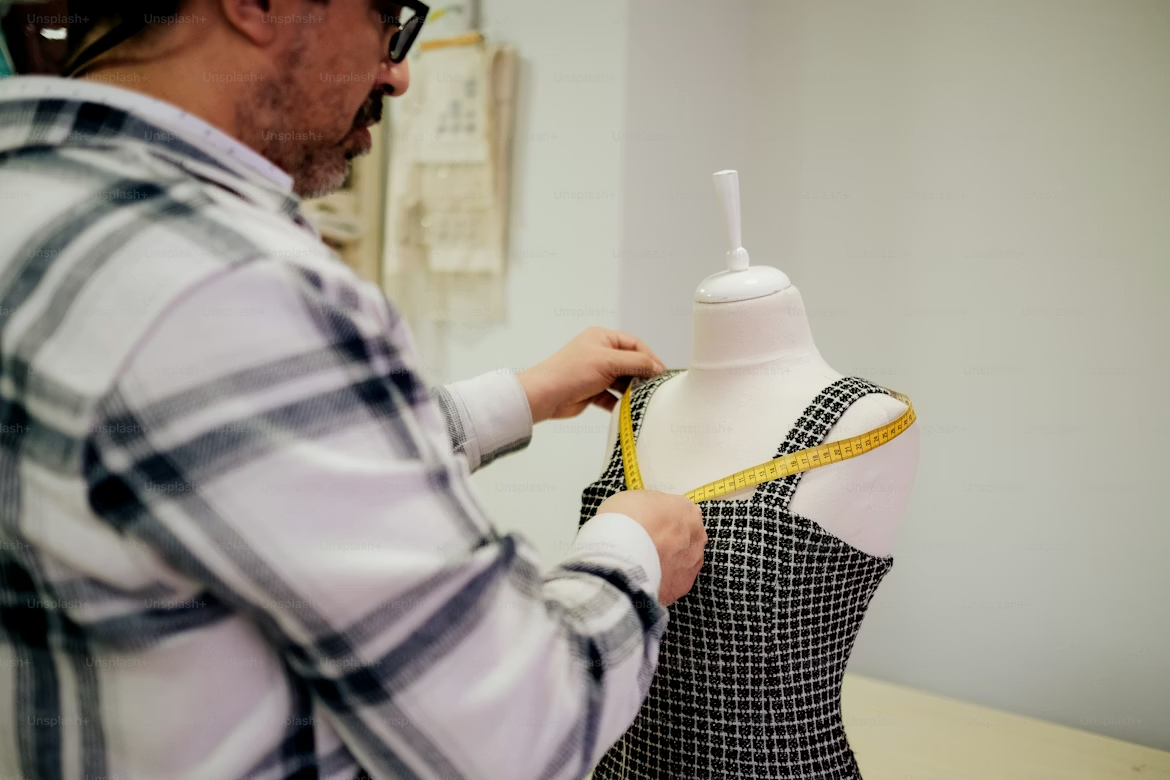
This is the one that costs you money long-term.
A capsule wardrobe only works if the pieces hold up over time and actually get worn. That means fabric and fit are everything — not how something looks in a flat lay photo.
I once bought a beautiful camel coat that photographed like a dream. Within two months, it was pilling all over the front, had lost its shape, and looked cheap in person even though it wasn’t. I replaced it with a slightly less “Instagram-worthy” coat in a proper wool blend, and three years later it still looks sharp.
Fabrics worth paying more for:
- Cotton and linen for basics (breathable, durable, get softer with washing)
- Wool or wool-blend for coats and knitwear (holds shape, insulates well)
- Denim with at least 2% elastane for jeans (moves with you, keeps shape)
Fabrics to be cautious of:
- 100% polyester tops (heat-trapping, shiny, pills quickly)
- Viscose/rayon in anything you’ll wash often (shrinks and wrinkles badly)
- Acrylic knitwear at the budget end (pills within weeks)
And fit — please, get things altered. A $15 tailor adjustment on a $25 pair of trousers turns a mediocre piece into something that looks expensive. The capsule wardrobe philosophy is literally built on “fewer, better” — and fit is the fastest way to make something look better instantly.
5. Ignoring Seasonal Needs and Climate Reality
A lot of capsule wardrobe advice is written by people in mild climates, for audiences who apparently never experience actual winter or actual summer.
If you live somewhere with real seasonal extremes — cold winters, hot humid summers, heavy rain — you need to factor that into every single piece you choose. Ignoring it means your capsule wardrobe only works for about four months of the year.
The fix isn’t buying separate “season wardrobes.” It’s building with layering in mind from the start.
A layering-friendly capsule approach:
- Base layer: Lightweight tees, thin long-sleeves (work year-round)
- Mid layer: Cardigans, light knits, denim jackets (spring/fall/cool summer evenings)
- Outer layer: One good coat, one lighter jacket (seasonal)
When your pieces are chosen with this system in mind, you’re not replacing your wardrobe every season — you’re just adjusting which layers you add or remove. That’s the whole efficiency of a well-built capsule.
If seasonal planning feels overwhelming, 8 Smart Capsule Wardrobe Building Tips for Seasonal Outfit Planning walks through exactly how to think about it without overcomplicating your closet.
6. Trying to Do It All at Once (The Big Purge + Big Haul Trap)
The dramatic closet reset looks great in a YouTube video. In real life, it often leads to a new wardrobe full of things you’ll regret.
Here’s what typically happens: you get inspired, donate half your wardrobe in a weekend purge, and then suddenly have nothing to wear to work on Monday. Panic sets in. You buy quickly — not intentionally — and end up with a bunch of “good enough for now” pieces that don’t actually align with your capsule vision.
I did this. I donated bags of clothes, felt amazing for 48 hours, and then realised I’d gotten rid of my only pair of work-appropriate trousers. I bought replacements in a rush and hated them for two years.
The slower, smarter approach:
Build your capsule while still wearing what you own. Identify the gaps first. Then fill them one or two pieces at a time, wearing each new piece before buying the next. This lets you see how new pieces actually fit into your existing rotation before committing to a whole direction.
A one-in, one-out rule also helps: when something genuinely wears out or stops working, replace it thoughtfully instead of accumulating.
Here’s a simple gap-filling framework:
| Step | Action |
|---|---|
| 1 | Audit current wardrobe (keep, donate, maybe pile) |
| 2 | List what’s missing based on your actual lifestyle |
| 3 | Rank gaps by urgency (what do you need this week?) |
| 4 | Buy one piece, wear it 5+ times before next purchase |
| 5 | Reassess after 30 days — does it work? |
Slow and deliberate beats dramatic every time.
7. Forgetting That a Capsule Wardrobe Has to Evolve
This is the mistake I see in people who’ve been at it for a year or two: they built their capsule, it worked, and now they’re treating it like a finished product that can never change.
But you change. Your job changes. Your body changes. Your lifestyle changes. The capsule wardrobe that worked perfectly at 25 when you were doing creative agency work might not serve you at 30 when you work from home or go on outdoor weekends.
A capsule wardrobe isn’t a one-time project — it’s an ongoing practice.
Signs your capsule needs updating:
- You keep reaching for the same 8 pieces while 12 others sit there
- Your life has shifted but your clothes haven’t caught up
- You feel bored by your wardrobe but can’t identify why
- Season changes leave you scrambling every time
Doing a mini-audit every 6 months (not a full purge — just a check-in) keeps things working. Pull out anything you haven’t worn in the last season and honestly evaluate why. Sometimes it’s the wrong size. Sometimes it just doesn’t go with anything. Sometimes you’ve simply grown out of it stylistically — and that’s fine.
The goal of a capsule wardrobe is to make getting dressed easier and more intentional. If it’s not doing that anymore, something needs adjusting.
For fresh ideas when your wardrobe needs a refresh without starting from scratch, 9 Easy Capsule Wardrobe Building Ideas to Refresh Your Style is genuinely useful — small swaps that can make an existing capsule feel new again.
The Common Thread Behind All These Mistakes
If you look at all seven, they come down to the same underlying issue: rushing the process or following someone else’s formula instead of building something that fits your actual life.
Capsule wardrobes work. They genuinely reduce decision fatigue, save money over time, and make getting dressed feel easier. But they only work when they’re built thoughtfully, around your real wardrobe needs — not a Pinterest aesthetic.
The good news? Every single mistake on this list is fixable. Even if you’ve already made some of them (I made most of them), you’re not starting from zero. You’re just course-correcting. And that’s a lot easier than starting from scratch.
| Mistake | The Fix |
|---|---|
| Skipping the audit | Pull everything out first — then shop for gaps |
| Copying others’ capsules | Build around your actual lifestyle and climate |
| All one neutral tone | Use tonal contrast: light, mid, dark shades |
| Aesthetics over quality | Prioritise fabric and fit over looks |
| Ignoring seasons | Build with layering as the foundation |
| Big purge + big haul | Go slow — one piece at a time, intentionally |
| Treating it as “done” | Review every 6 months and let it evolve |
Once you’ve sorted through these mistakes, the next smart step is understanding what actually goes into a wardrobe that truly simplifies your life. The Ultimate Capsule Wardrobe Guide for Effortless Style covers the full picture — from first audit to final wardrobe — and it’s the kind of resource that makes everything click into place.