
Introduction
There was a time when my wardrobe felt full but completely useless. Clothes were everywhere, yet getting dressed felt like a daily struggle. I had items with tags still on them, outfits I didn’t feel confident in, and a constant feeling that my style didn’t reflect who I actually was.
The shift didn’t happen overnight. It came from a series of small but powerful capsule wardrobe changes that slowly reshaped how I think about clothing, shopping, and personal style.
Instead of chasing trends or buying more, I focused on refining what I already had—and that changed everything.
This article breaks down the five most impactful capsule wardrobe changes that transformed not just my closet, but my entire approach to style.
Change 1: I reduced my wardrobe to only versatile essentials
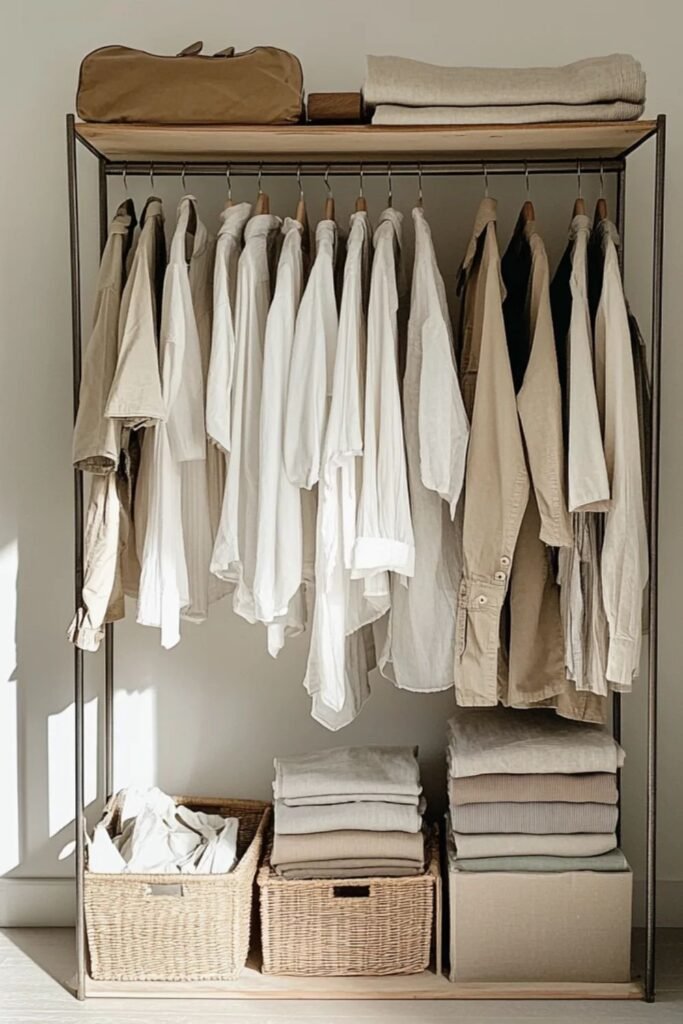
The first major shift was learning that more clothes do not equal more outfit options. In reality, most people wear a small percentage of what they own.
So I started by filtering everything based on versatility.
Wardrobe filtering criteria:
| Question | If YES | If NO |
|---|---|---|
| Can I wear this at least 3 different ways? | Keep | Consider removing |
| Does it match at least 3 other items? | Keep | Remove or reassess |
| Do I wear it monthly? | Keep | Store or donate |
| Does it fit my current lifestyle? | Keep | Remove |
After this process, my wardrobe shrank significantly—but my outfit options increased.
Before vs After comparison:
| Category | Before Capsule | After Capsule |
|---|---|---|
| Total clothing | 120 items | 35 items |
| Daily outfit confusion | High | Low |
| Favorite pieces usage | 20% | 80% |
| Time to choose outfit | 15–20 min | 3–5 min |
The surprising part was not losing clothes—it was gaining clarity.
Change 2: I committed to a consistent color palette
One of the biggest breakthroughs came from simplifying color choices. Before, I owned clothes in every shade imaginable, which made matching outfits unnecessarily complicated.
I shifted to a controlled palette that allowed every item to work together.
My capsule palette breakdown:
| Color Type | Colors Chosen | Purpose |
|---|---|---|
| Base Neutrals | Black, white, beige | Foundation pieces |
| Core Colors | Navy, grey | Everyday wear |
| Accent Colors | Olive green, rust | Style personality |
| Seasonal Pop | Soft blue | Occasional variety |
Impact of color consistency:
| Factor | Before | After |
|---|---|---|
| Outfit matching difficulty | High | Low |
| Mix-and-match success rate | ~40% | ~90% |
| Impulse outfit regret | Frequent | Rare |
Once colors started working together, outfits naturally felt more intentional and stylish—even without buying anything new.
Change 3: I built outfit formulas instead of random outfits
Before capsule thinking, I used to pick clothes randomly every morning. This often led to outfits that looked fine individually but didn’t feel cohesive.
So I started building repeatable outfit formulas.
Outfit formula system:
| Occasion | Formula |
|---|---|
| Work day | Blazer + shirt + tailored trousers + loafers |
| Casual day | T-shirt + jeans + sneakers |
| Smart casual | Button-up + chinos + light jacket |
| Relaxed day | Oversized tee + joggers |
| Evening | Neutral top + statement piece + boots |
Weekly outfit efficiency chart:
Before: Random selection → inconsistent style → outfit regret
After: Formula-based → consistent style → confidence
The biggest shift wasn’t fashion—it was decision-making.
Instead of reinventing outfits daily, I just followed patterns that already worked.
Change 4: I started prioritizing quality over quantity
Another turning point was realizing that cheap clothing often costs more in the long run—both financially and visually.
Low-quality clothes tend to:
- Lose shape quickly
- Fade after a few washes
- Feel uncomfortable
- Look inconsistent in outfits
So I slowly shifted toward fewer, better-made items.
Quality comparison table:
| Feature | Low Quality Items | Higher Quality Items |
|---|---|---|
| Lifespan | 3–6 months | 2–5 years |
| Fit retention | Poor | Excellent |
| Comfort | Medium | High |
| Styling flexibility | Limited | High |
Clothing investment breakdown:
| Category | Old Approach | New Approach |
|---|---|---|
| Tops | 15 cheap items | 7 quality items |
| Bottoms | 10 average items | 5 durable items |
| Shoes | 5 low-cost pairs | 3 reliable pairs |
The result was fewer purchases, but significantly better outfits.
Change 5: I introduced a seasonal rotation system
One of the most overlooked capsule wardrobe strategies is rotation. Instead of wearing everything at once, I began organizing clothes by season.
This created mental clarity and physical space.
Seasonal wardrobe structure:
| Season | Items Focus |
|---|---|
| Spring | Light layers, breathable fabrics |
| Summer | Minimal, airy outfits |
| Autumn | Layered textures, warm tones |
| Winter | Heavy outerwear, knitwear |
Storage system chart:
| Category | Location |
|---|---|
| Current season clothes | Main closet |
| Off-season clothes | Storage boxes |
| Special occasion items | Separate section |
Benefits of rotation:
| Area | Improvement |
|---|---|
| Closet space | +40% usable space |
| Outfit clarity | Much higher |
| Emotional overwhelm | Reduced |
| Clothing wear balance | Improved |
Rotation made my wardrobe feel fresh again without constant shopping.
The overall transformation
When these five changes came together, the transformation was not just visual—it was behavioral.
Before vs After lifestyle shift:
| Area | Before | After |
|---|---|---|
| Morning routine | Stressful | Simple |
| Shopping behavior | Impulsive | Intentional |
| Style identity | Confused | Defined |
| Closet experience | Overwhelming | Organized |
| Outfit confidence | Inconsistent | Stable |
The capsule wardrobe didn’t limit my style—it refined it.
Key takeaway summary chart
| Change | Main Impact |
|---|---|
| Versatile essentials | Reduced clutter |
| Color palette | Improved coordination |
| Outfit formulas | Saved decision time |
| Quality focus | Increased longevity |
| Seasonal rotation | Improved organization |
Each change built on the previous one, creating a system instead of just a wardrobe.
Final thoughts
A capsule wardrobe is not about owning less for the sake of minimalism. It’s about owning better, choosing intentionally, and creating a system that supports your lifestyle instead of complicating it.
What surprised me most wasn’t how much I removed—but how much easier everything became afterward.
Getting dressed stopped being a daily decision battle and became a simple, confident routine.
FAQs
- How many pieces should a capsule wardrobe have?
Most capsule wardrobes range from 25 to 40 items depending on lifestyle, climate, and personal preference. - Do I need to throw away all my clothes to start?
No. Start by identifying what you actually wear and gradually refine your wardrobe instead of removing everything at once. - Can capsule wardrobes still be stylish?
Yes. In fact, they often look more stylish because outfits are more coordinated and intentional. - What if I get bored with a capsule wardrobe?
You can refresh it seasonally by rotating colors, adding small statement pieces, or updating accessories. - Is a capsule wardrobe expensive to build?
It can be built slowly and often reduces long-term spending because you buy fewer but better-quality items. - Does it work for all lifestyles?
Yes, but it should be customized based on work type, climate, and daily activities.