

A wardrobe that actually works isn’t built on trends—it’s built on stability. Most people don’t struggle because they lack clothes, but because too many of those clothes depend on seasons, moods, or short-lived fashion cycles. The result is a closet full of items that don’t cooperate with each other.
Wardrobe basics solve that problem. They are not exciting in isolation, but they become powerful when combined. They reduce decision fatigue, increase outfit consistency, and make dressing feel almost automatic.
Below are six wardrobe basics that consistently prove their value across seasons, body types, and style preferences. These are not “maybe works” items—they are long-term functional anchors.
Before diving in, it helps to understand what qualifies something as a true wardrobe basic.
criteria for timeless wardrobe basics
| Factor | What It Means in Practice | Why It Matters |
|---|---|---|
| Versatility | Works in multiple outfit combinations | Reduces clutter |
| Season flexibility | Usable in at least 3 seasons | Year-round value |
| Neutral balance | Doesn’t clash with other colors or pieces | Easier styling |
| Durability | Withstands repeated wear and washing | Cost efficiency |
| Simplicity | Not dependent on trend cycles | Long-term use |
Now let’s move into the six essentials.
- the well-fitted white shirt

The white shirt is often treated as basic advice, but its importance is underestimated. The difference between an average white shirt and a great one is fit, fabric, and structure.
A good white shirt doesn’t just “match everything”—it elevates everything around it.
why it never goes out
- Works in formal and casual settings
- Layers under sweaters, blazers, and dresses
- Acts as a neutral base for bold accessories
- Suitable across seasons with minor styling changes
fabric performance comparison
| Fabric Type | Breathability | Structure | Best Season Use |
|---|---|---|---|
| Cotton Poplin | Medium | High | All seasons |
| Linen Blend | High | Low | Summer |
| Oxford Cotton | Medium | Medium | Spring/Fall |
| Stretch Cotton | Medium | High | Daily wear |
styling adaptability chart
| Styling Method | Resulting Look | Use Case |
|---|---|---|
| Tucked in | Polished | Office/formal |
| Untucked | Relaxed | Casual outings |
| Layered open | Effortless layering | Transitional weather |
| Knotted front | Casual chic | Summer styling |
The white shirt survives because it never competes—it supports everything else.
- dark denim jeans
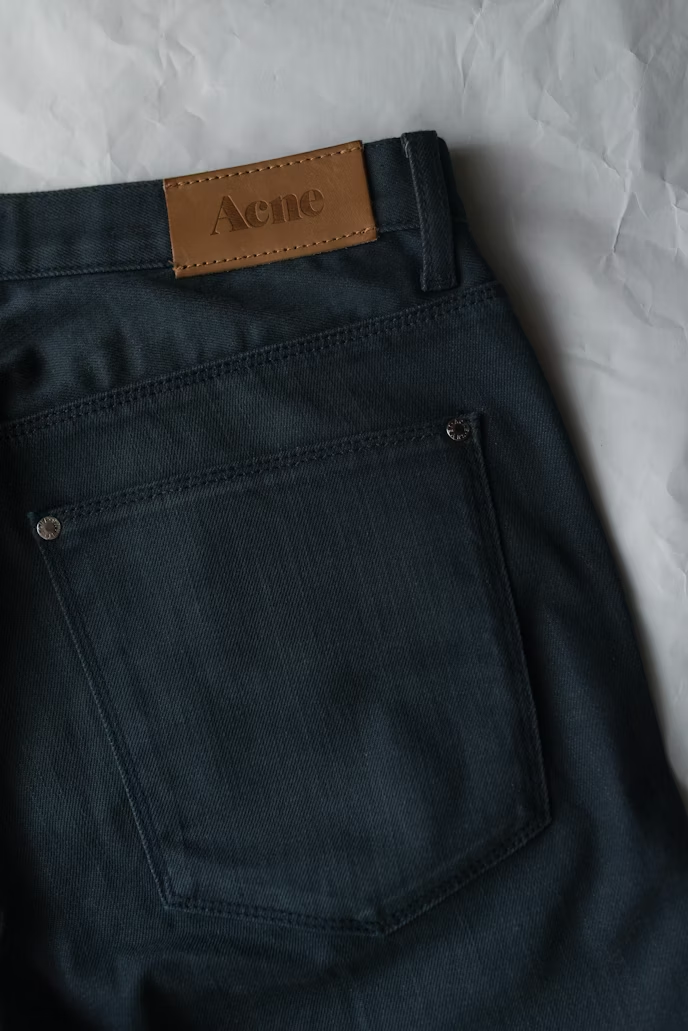
If there is one item that bridges casual and slightly refined dressing effortlessly, it is dark denim.
Unlike light-wash or distressed jeans, dark denim holds a cleaner visual line, making it adaptable in more situations.
why it remains essential
- Works with both sneakers and formal shoes
- Suitable for semi-casual office environments
- Less prone to visible wear patterns
- Easy to pair with structured or soft tops
fit impact chart
| Fit Type | Style Impression | Longevity Trend |
|---|---|---|
| Slim Fit | Sharp, modern | Declining |
| Straight Fit | Balanced, classic | Stable |
| Relaxed Fit | Casual, comfort-led | Rising |
| Tapered Fit | Clean but flexible | Stable |
seasonal adaptability
| Season | Pairing Strategy | Outcome |
|---|---|---|
| Spring | Light shirt or knit | Fresh casual |
| Summer | T-shirt + loafers/sneakers | Relaxed minimal |
| Autumn | Jacket + boots | Structured look |
| Winter | Coat + heavy knit | Layered warmth |
Dark denim works because it behaves like a neutral without looking boring.
- the neutral knit sweater
A knit sweater is one of those pieces that quietly carries a wardrobe through temperature shifts, travel, and layering challenges.
Neutral colors like beige, grey, navy, or black make it even more reliable.
why it always works
- Bridges seasonal transitions
- Works layered or standalone
- Adds texture without visual noise
- Easy to dress up or down
knit weight guide
| Knit Type | Thickness | Climate Use | Layering Ability |
|---|---|---|---|
| Fine Knit | Light | Mild weather | High |
| Mid-weight | Medium | Autumn/Spring | Medium |
| Chunky Knit | Heavy | Winter | Low |
color flexibility chart
| Color | Styling Flexibility | Visual Effect |
|---|---|---|
| Beige | Very High | Soft, warm |
| Grey | Very High | Neutral balance |
| Black | High | Structured |
| Navy | High | Classic depth |
A knit sweater is not about standing out—it is about stabilizing outfits.
- the classic blazer
The blazer has evolved far beyond corporate wear. It is now one of the most flexible layering pieces in modern wardrobes.
A well-cut blazer can shift an outfit from casual to intentional instantly.
why it stays relevant
- Adds structure to loose outfits
- Works across seasons with layering
- Can be styled formally or casually
- Elevates basic combinations effortlessly
fabric behavior chart
| Fabric | Season Fit | Structure Level | Comfort Level |
|---|---|---|---|
| Wool | Winter | High | Medium |
| Cotton | Spring | Medium | High |
| Linen | Summer | Low | High |
| Blends | All-season | Medium-High | Balanced |
style transformation examples
| Base Outfit | With Blazer Result |
|---|---|
| T-shirt + jeans | Smart casual |
| Dress | Refined feminine |
| Hoodie + jeans | Street-smart layering |
| Shirt + trousers | Professional ready |
A blazer works because it adds meaning to otherwise simple combinations.
- versatile midi dress
The midi dress occupies a unique space—it is neither too formal nor too casual, which gives it flexibility across occasions.
Its strength lies in transformation through layering.
why it is a permanent basic
- Works alone in warm weather
- Layers easily in colder months
- Adapts to both casual and formal environments
- Flattering across many body types
seasonal styling transformation
| Season | Layer Added | Final Look |
|---|---|---|
| Spring | Cardigan | Soft transition |
| Summer | None | Minimal elegance |
| Autumn | Jacket | Structured edge |
| Winter | Turtleneck + coat | Layered warmth |
fabric behavior chart
| Fabric Type | Movement | Formality | Comfort |
|---|---|---|---|
| Cotton | Medium | Casual | High |
| Viscose | High | Semi-formal | High |
| Jersey | High | Casual | Very High |
| Satin | High | Formal | Medium |
The midi dress works because it adapts instead of dictating.
- the structured outerwear piece (trench or utility jacket)
Outerwear is often underestimated as a wardrobe basic, but it is one of the most important categories for functionality.
A structured outer layer defines the entire outfit before anything else is seen underneath.
why it is essential
- Handles weather transitions
- Frames the entire outfit
- Adds polish instantly
- Works across casual and semi-formal contexts
outerwear comparison table
| Type | Climate Suitability | Style Identity | Versatility |
|---|---|---|---|
| Trench Coat | Mild/Rainy | Classic elegant | Very High |
| Utility Jacket | Mild/Cool | Casual functional | High |
| Wool Coat | Cold climates | Formal structured | Medium |
layering effectiveness chart
| Inner Outfit | Outerwear Effect |
|---|---|
| T-shirt + jeans | Elevated casual |
| Knit + trousers | Balanced warmth |
| Dress | Structured refinement |
| Hoodie | Modern street layering |
Outerwear matters because it is what the world sees first.
how these six basics work as a system
Individually, each item is strong. Together, they form a complete styling ecosystem.
wardrobe interaction matrix
| Item A | Item B | Resulting Style |
|---|---|---|
| White shirt | Blazer | Smart formal |
| Denim jeans | Knit sweater | Casual classic |
| Midi dress | Outerwear | Seasonal versatility |
| Blazer | Denim | Balanced smart casual |
outfit multiplication effect
| Number of Basics | Possible Outfit Combinations |
|---|---|
| 3 | 8–12 |
| 4 | 15–25 |
| 6 | 30+ |
This is where simplicity becomes powerful.
common mistakes people make
Even with the right basics, misuse can reduce their effectiveness.
- Buying incorrect fit instead of focusing on tailoring
- Choosing trendy versions instead of classic cuts
- Over-layering instead of simplifying combinations
- Ignoring fabric quality for lower price points
maintenance guide for longevity
| Item | Care Strategy |
|---|---|
| White Shirt | Wash separately, avoid over-drying |
| Denim Jeans | Wash sparingly, air dry |
| Knit Sweater | Fold, avoid hanging |
| Blazer | Steam instead of frequent washing |
| Midi Dress | Gentle wash cycle |
| Outerwear | Seasonal cleaning + storage care |
care consistency extends wardrobe life significantly.
real-life wardrobe efficiency example
A minimal set of these six items can support:
- Office dressing
- Weekend casual outfits
- Travel wardrobes
- Dinner-ready styling
- Transitional weather outfits
Instead of chasing variety through quantity, these basics create variety through combination.
faqs
- why are these considered “never out of style” pieces?
Because they are not tied to trends. Their design focuses on function, neutrality, and adaptability rather than seasonal fashion cycles. - can I build a wardrobe using only these six items?
You can build a strong base, but most people add a few accent pieces for personality. These six form the foundation, not the limit. - what is the most important piece among them?
The white shirt and dark denim jeans usually form the core pairing, but importance depends on lifestyle needs. - how do I keep these basics from looking boring?
Change styling details—layering, footwear, accessories, and proportions all shift the final look without changing the base pieces. - are expensive versions necessary?
Not always. Fit and fabric quality matter more than branding. Mid-range well-made items often outperform expensive poorly chosen ones. - how often should I replace these basics?
Replace only when wear affects structure or comfort. High-quality versions can last several years with proper care.