

Introduction
A capsule wardrobe is not just a fashion trend; it’s a practical lifestyle shift that helps you simplify your closet, reduce decision fatigue, and build a personal style that actually works every day. Instead of overflowing racks and “nothing to wear” moments, a capsule wardrobe focuses on a small collection of versatile, interchangeable pieces.
Starting one can feel overwhelming at first, but it becomes surprisingly simple once broken into clear steps. This guide walks through 7 easy, actionable steps you can start today—even if your closet is currently chaotic.
Along the way, you’ll find tables, planning charts, and practical breakdowns to make the process more visual and usable.
Step 1: Empty and observe your current wardrobe

Before making changes, you need to understand what you already own. This step is not about throwing things away immediately, but about observing patterns.
Start by emptying your wardrobe completely and sorting items into broad categories.
Basic wardrobe audit table:
| Category | Keep | Maybe | Let Go |
|---|---|---|---|
| Tops | |||
| Bottoms | |||
| Outerwear | |||
| Shoes | |||
| Accessories |
As you go through each item, ask:
- Do I wear this regularly?
- Does it fit my current lifestyle?
- Do I feel confident wearing it?
- Is it in good condition?
This step helps you identify emotional clutter versus practical clothing.
Step 2: Define your lifestyle needs
A capsule wardrobe is only useful if it reflects your real life—not an ideal version of it.
Break your weekly life into categories.
Lifestyle breakdown chart:
| Activity Type | % of Time | Clothing Needed |
|---|---|---|
| Work/Office | 40% | Formal/Casual |
| Home/Relaxation | 25% | Comfortable |
| Social/Outings | 20% | Smart Casual |
| Exercise/Active | 10% | Sportswear |
| Special Events | 5% | Formalwear |
Once you see where your time actually goes, your wardrobe choices become much more intentional.
Step 3: Choose a color palette that works for you
One of the secrets of a successful capsule wardrobe is color coordination. The goal is to make every piece match multiple others.
A simple approach is:
- 2–3 neutral base colors
- 1–2 accent colors
- 1 optional seasonal highlight color
Example capsule palette:
| Category | Colors |
|---|---|
| Neutrals | Black, White, Beige |
| Base Colors | Navy, Grey |
| Accent Colors | Olive Green, Burgundy |
| Seasonal Pop | Mustard Yellow (optional) |
This system ensures almost every outfit combination works without effort.
Step 4: Identify your essential core pieces
Now you begin selecting the actual capsule items. A beginner capsule usually contains 25–40 pieces depending on lifestyle.
Starter capsule checklist:
| Item Type | Suggested Quantity |
|---|---|
| Tops | 7–10 |
| Bottoms | 4–6 |
| Dresses | 2–4 |
| Outerwear | 3–5 |
| Shoes | 3–5 |
| Accessories | 5–8 |
Focus on versatility. Each item should pair with at least 3 others.
Example core items:
- Plain white shirt
- Black jeans
- Neutral blazer
- Basic sneakers
- Simple dress that can be layered
Step 5: Create outfit combinations in advance
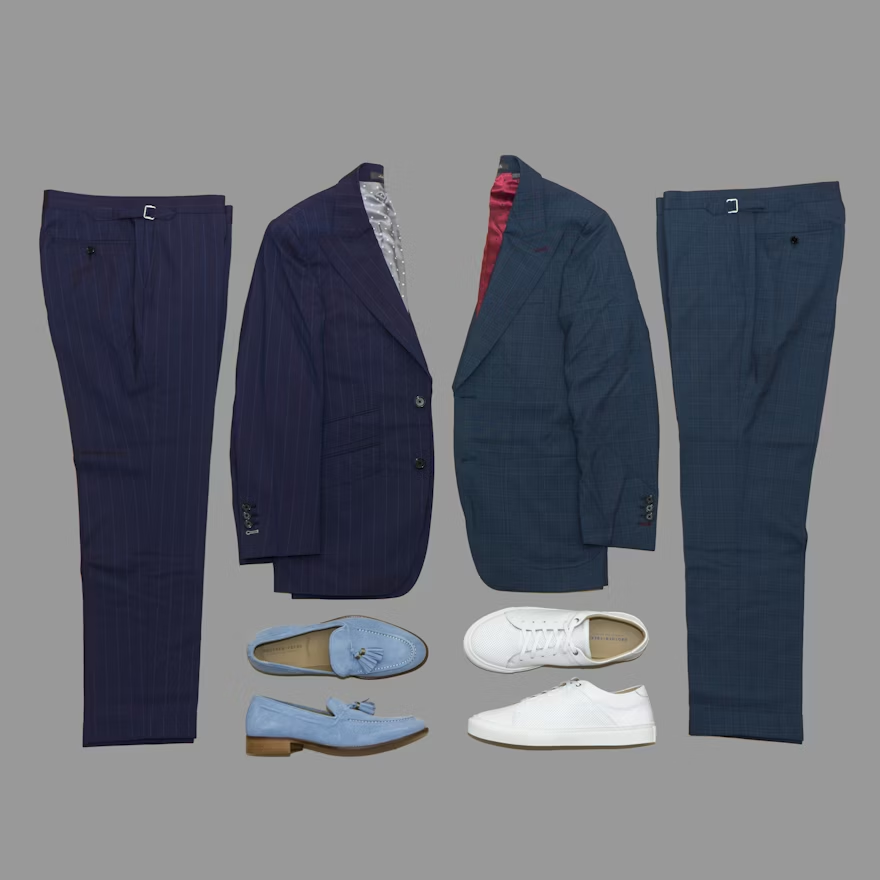
This step turns your capsule wardrobe into a system rather than just clothing pieces.
Try building outfit formulas:
Outfit formula table:
| Occasion | Formula Example |
|---|---|
| Work | Blazer + shirt + trousers + loafers |
| Casual | T-shirt + jeans + sneakers |
| Smart casual | Shirt + chinos + light jacket |
| Relaxed home | Soft tee + joggers |
| Evening out | Dress + statement jacket + boots |
When you pre-plan outfits, you eliminate daily decision stress.
You can even take photos of combinations for quick reference.
Step 6: Apply the “one in, one out” rule
To keep your capsule wardrobe stable, you need boundaries.
The rule is simple:
Every time you buy a new item, remove one existing item.
This prevents wardrobe expansion creep and forces mindful purchasing.
Comparison chart:
| Without Rule | With Rule |
|---|---|
| Constant clutter | Controlled wardrobe size |
| Emotional buying | Intentional purchases |
| Overflowing closet | Curated selection |
| Decision fatigue | Quick outfit choices |
Over time, this habit becomes automatic and extremely effective.
Step 7: Maintain and refine every season
A capsule wardrobe is not static. It evolves with your life, body, and preferences.
Seasonal maintenance checklist:
| Task | Frequency |
|---|---|
| Review worn items | Every month |
| Adjust seasonal pieces | Every 3 months |
| Donate unused clothing | Every season |
| Reassess color palette | Yearly |
Ask yourself:
- What did I actually wear most?
- What stayed untouched?
- What do I need more of?
This keeps your wardrobe aligned with reality instead of assumptions.
Bonus insight: the 80/20 wardrobe rule
In most wardrobes, 20% of clothes get worn 80% of the time.
Capsule wardrobes flip this problem into an advantage.
Usage distribution chart:
| Clothing Segment | Usage Rate |
|---|---|
| Favorite pieces | 70–80% |
| Occasional pieces | 15–20% |
| Rarely used items | 0–10% |
Your goal is to maximize the “favorite pieces” category.
Final thoughts
Starting a capsule wardrobe is less about restriction and more about clarity. You’re not limiting your style—you’re refining it.
By following these 7 steps, you gradually move from clutter to control, from confusion to confidence, and from excess to intentional living.
Even starting with just a few changes can make getting dressed feel easier within days.
FAQs
- How many clothes should a capsule wardrobe have?
A typical capsule wardrobe ranges between 25–40 pieces depending on lifestyle, climate, and personal needs. - Can I still follow fashion trends with a capsule wardrobe?
Yes, but selectively. You can add trend-based items as accents without changing your entire wardrobe. - Do capsule wardrobes work for all seasons?
Yes. Most people create seasonal mini-capsules (spring/summer and fall/winter). - Is a capsule wardrobe expensive to start?
Not necessarily. It often reduces spending over time because you buy fewer but better-quality items. - What if I get bored with a capsule wardrobe?
You can refresh it seasonally by rotating colors, accessories, or a few statement pieces. - Do I need to follow strict rules?
No. A capsule wardrobe is a framework, not a restriction. It should adapt to your life.