
A capsule wardrobe looks simple when you first hear about it: fewer clothes, more outfit combinations, and a cleaner closet. But in practice, most people only realize later that the real challenge isn’t reducing clothing—it’s building a system that actually works every day without frustration.
Many beginners focus on minimalism or aesthetics, but the real transformation happens when you understand structure, versatility, and personal lifestyle alignment. The ideas below are the ones most people wish they had known earlier, because they turn a capsule wardrobe from a restrictive idea into a flexible, practical system.
idea 1: build outfits, not just collections of clothes
One of the biggest early mistakes is thinking in terms of individual items instead of complete outfits. A capsule wardrobe doesn’t work when each piece exists in isolation. It works when items interact.
Instead of asking “Do I like this shirt?”, the better question is “How many outfits can I build with this shirt?”
outfit potential comparison table
| approach | average use per item | outfit flexibility |
|---|---|---|
| random buying | 3–5 uses | low |
| semi-planned wardrobe | 6–10 uses | medium |
| capsule system | 10–20+ uses | high |
A simple shift in thinking multiplies your wardrobe efficiency without adding more clothes.
practical example:
A white button-down shirt can become:
- work outfit with trousers
- casual outfit with jeans
- layered outfit under sweater
- summer outfit tied over a dress
The same single item transforms based on context.
idea 2: neutral base + controlled color accents
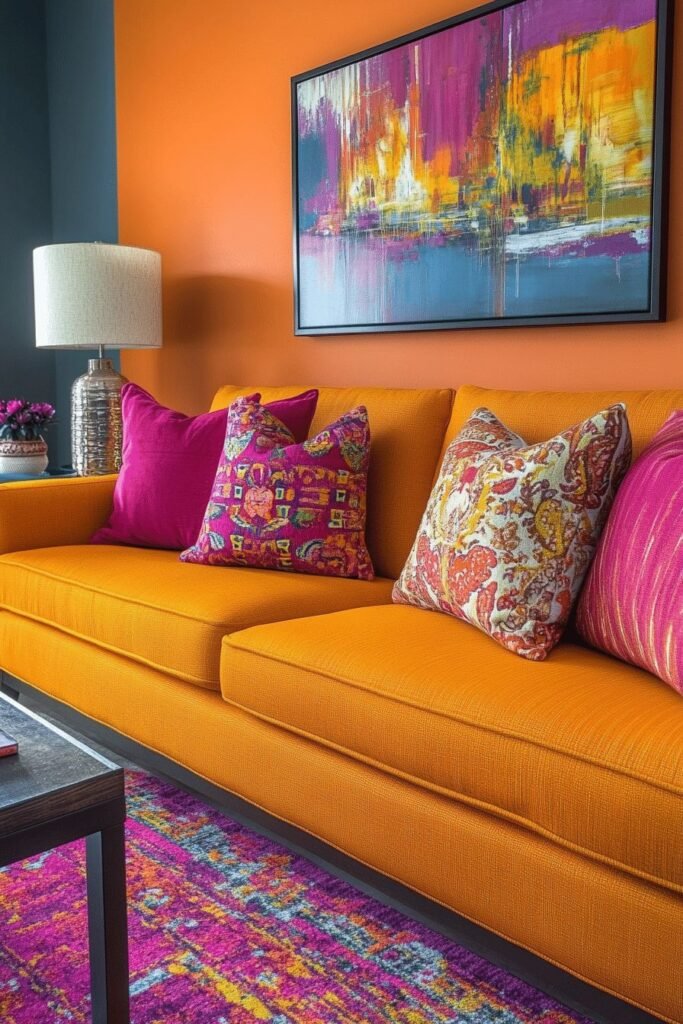
Many people either go fully neutral or fully colorful, and both extremes create problems. A better system is controlled contrast: neutrals as the base, accents as personality.
A strong capsule wardrobe usually follows a 70-20-10 or 60-30-10 structure.
color structure breakdown
| category | percentage | examples |
|---|---|---|
| base neutrals | 60–70% | black, white, beige, navy |
| secondary tones | 20–30% | denim, olive, grey, tan |
| accent colors | 10% | burgundy, mustard, teal, pink |
This structure makes mixing easier while still allowing individuality.
color combination efficiency chart
| palette type | outfit combinations | visual consistency |
|---|---|---|
| random colors | low | low |
| structured palette | high | high |
A controlled palette reduces decision fatigue every morning.
idea 3: repetition is not a weakness, it is a strategy
Many beginners feel guilty repeating outfits or using the same pieces often. This mindset leads to unnecessary buying.
In reality, repetition is the foundation of a capsule wardrobe.
Instead of owning 30 different shirts, owning 8 shirts that you actually wear repeatedly is the goal.
wear frequency guide
| item type | ideal weekly usage | wardrobe role |
|---|---|---|
| basic tops | 2–4 times | foundation |
| bottoms | 3–5 times | structure |
| outerwear | 2–3 times | layering |
| shoes | daily rotation | stability |
Repetition reduces clutter and improves clarity in style.
A capsule wardrobe is not about avoiding repetition—it is about refining it.
idea 4: the 3-layer outfit system
One of the most practical ideas that transforms a wardrobe is thinking in layers instead of outfits.
Most beginners think: shirt + pants = outfit
But a more powerful system is:
base layer + mid layer + outer layer
layer system breakdown table
| layer | purpose | examples |
|---|---|---|
| base layer | comfort + foundation | t-shirts, light shirts |
| mid layer | warmth + variation | sweaters, hoodies |
| outer layer | structure + protection | jackets, coats, blazers |
This system allows one outfit to become multiple variations.
example combinations:
- t-shirt + jeans (simple)
- t-shirt + cardigan + jeans (soft casual)
- t-shirt + blazer + jeans (smart casual)
- t-shirt + jacket + jeans (street style)
Same base, different expression.
idea 5: your wardrobe should reflect your real life, not your ideal life
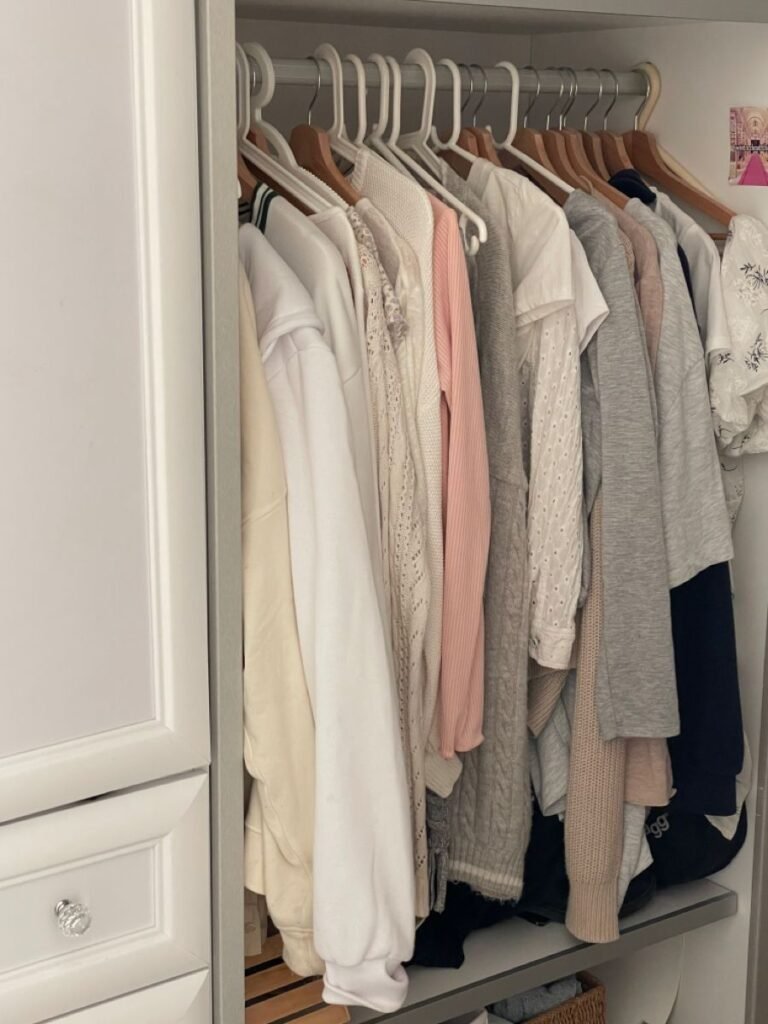
A major issue with capsule wardrobes is aspirational dressing. People buy clothes for the version of themselves they imagine, not the life they actually live.
If your daily routine is mostly casual, but your wardrobe is full of formal outfits, your capsule will fail.
lifestyle alignment chart
| lifestyle type | wardrobe focus |
|---|---|
| office-based | structured basics + layers |
| student life | comfort + versatility |
| remote work | casual + hybrid outfits |
| social lifestyle | statement + mixable pieces |
Before buying anything, analyze your weekly routine honestly.
time distribution example
| activity | weekly percentage |
|---|---|
| home wear | 35% |
| work/study | 40% |
| social outings | 15% |
| events | 10% |
Your wardrobe should match these proportions.
idea 6: quality over quantity is not about price—it is about usage
People often misunderstand “quality over quantity” as buying expensive clothes. That’s not the real meaning.
True quality in a capsule wardrobe means:
- durability
- comfort
- repeat usability
- versatility
cost per wear comparison table
| item type | price | wears per year | cost per wear |
|---|---|---|---|
| cheap fast item | $20 | 10 | $2.00 |
| mid-quality item | $50 | 50 | $1.00 |
| durable item | $100 | 150 | $0.67 |
Higher-quality items often become cheaper over time due to repeated use.
Focus on how often you will actually wear something, not just the initial price.
idea 7: accessories are the hidden multiplier
Many beginners ignore accessories, but they are the simplest way to expand outfit variety without adding more clothing.
Accessories can completely change the mood of an outfit.
accessory impact table
| accessory type | effect on outfit |
|---|---|
| belt | structure + definition |
| watch | sophistication |
| bag | personality + function |
| scarf | seasonal variation |
| jewelry | style identity |
Even a small wardrobe can feel large when accessories are used properly.
example transformation:
- plain white shirt + jeans → basic look
- same outfit + belt + watch → refined look
- same outfit + scarf + bag → styled look
Accessories act like “style modifiers.”
idea 8: rotation prevents boredom more than buying does
Many people think boredom comes from having too few clothes. In reality, boredom often comes from poor rotation, not lack of items.
If you wear the same combinations repeatedly without variation, even a large wardrobe feels small.
rotation strategy table
| strategy | effect on wardrobe experience |
|---|---|
| random wearing | repetitive, fast boredom |
| planned rotation | balanced usage |
| seasonal cycling | freshness maintained |
simple rotation system:
- divide clothes into weekly sets
- rotate combinations every 7–10 days
- reintroduce “forgotten” items regularly
This keeps your wardrobe feeling new without buying anything.
how all 8 ideas connect into one system
These ideas are not separate rules. They form a connected structure:
- outfit thinking creates purpose
- color structure creates consistency
- repetition creates efficiency
- layering creates flexibility
- lifestyle alignment creates realism
- quality creates durability
- accessories create variety
- rotation creates freshness
Together, they form a complete capsule wardrobe logic system.
visual system map
wardrobe efficiency = (versatility + comfort + alignment + rotation) × usability
example of a balanced capsule wardrobe system
Here is what a well-structured capsule might look like when these ideas are applied:
category breakdown table
| category | number of items | purpose |
|---|---|---|
| tops | 8–10 | layering + base |
| bottoms | 5–6 | structure |
| outerwear | 3–4 | seasonal adaptation |
| shoes | 3 | daily rotation |
| accessories | 5–7 | variation |
total: 24–30 items
outfit potential estimate:
- 30 items can create 60–120 outfit combinations when structured correctly
common misunderstanding recap
Many beginners struggle because they assume:
- capsule wardrobe = fewer clothes only
- capsule wardrobe = strict rules
- capsule wardrobe = aesthetic minimalism
But in reality:
- it is a system, not a limit
- it is flexible, not rigid
- it is functional, not purely visual
frequently asked questions
- how many clothes should a capsule wardrobe really have?
There is no fixed number, but most people function well between 20–35 items depending on lifestyle and climate. - do I need to throw away all my clothes to start?
No. It is better to start by organizing and identifying what you actually wear, then gradually refine. - can I still follow fashion trends with a capsule wardrobe?
Yes, but selectively. Trends should complement your base wardrobe, not replace it. - what if I get bored of a capsule wardrobe?
Boredom usually comes from poor rotation or lack of layering, not from limited clothing. - is a capsule wardrobe expensive to build?
Not necessarily. It often reduces spending because you buy fewer but more useful items. - can a capsule wardrobe work for different seasons?
Yes. Most people build seasonal capsules or adjust layers to adapt to climate changes.
final thoughts
A capsule wardrobe is not about reducing your clothing to the minimum possible number. It is about designing a system where every piece earns its place through use, flexibility, and purpose.
The ideas above shift the focus from restriction to structure. Once that shift happens, dressing becomes less about decision fatigue and more about quiet efficiency. Over time, your wardrobe stops feeling like a storage space and starts functioning like a tool that supports your daily life without unnecessary complexity.