

If your mornings feel like a race against the clock and your closet somehow makes it worse instead of better, you’re not alone. A capsule wardrobe isn’t about owning less for the sake of minimalism—it’s about owning smarter. For people who are constantly juggling work, family, errands, and everything in between, simplifying clothing choices can quietly transform daily life.
This guide isn’t theoretical. It’s grounded in real routines, real constraints, and the need for speed. You’ll find practical tips, structured frameworks, and useful tables to help you build a wardrobe that works without demanding constant attention.
why capsule wardrobes work especially well for busy people
The average person makes dozens of micro-decisions before leaving the house. Clothing is one of the most repetitive and draining. Reducing options doesn’t reduce style—it reduces friction.
Here’s what a capsule wardrobe actually solves:
- Decision fatigue
- Time wasted searching for outfits
- Money spent on impulse purchases
- Closet clutter that hides good pieces
A streamlined wardrobe becomes a system. And systems save time.
tip 1: define a personal uniform (and stop overthinking it)
A “uniform” doesn’t mean wearing the same thing every day—it means having a reliable formula.
For example:
- Dark jeans + neutral top + structured outerwear
- Trousers + button-up shirt + loafers
- Simple dress + sneakers or flats
Once you lock in 2–3 outfit formulas, dressing becomes automatic.
simple uniform formula chart
| Occasion | Formula Example | Time to Assemble |
|---|---|---|
| Work | Black trousers + white shirt + blazer | 2–3 minutes |
| Casual errands | Jeans + t-shirt + sneakers | 1–2 minutes |
| Social outing | Dress + denim jacket + flats | 3 minutes |
The trick is repetition with slight variation. Different colors, same structure.
tip 2: choose a tight color palette
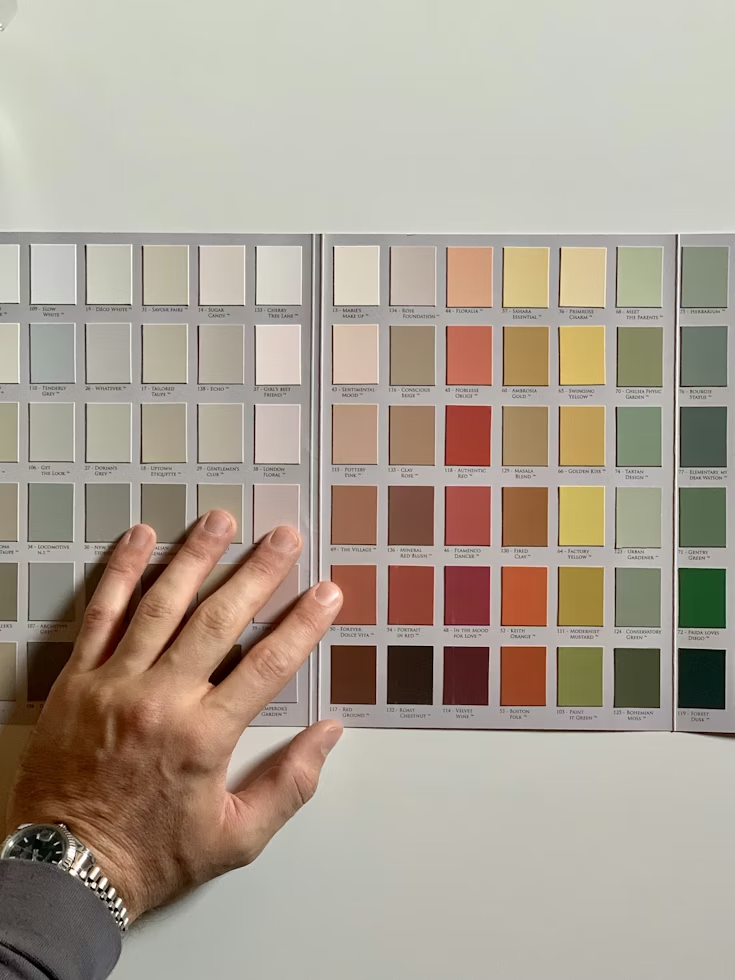
This is where most people either succeed or fail. A tight palette ensures everything matches everything else.
Start with:
- 2–3 base colors (black, navy, beige)
- 2 accent colors (muted tones work best)
- 1 optional statement color
example palette breakdown
| Category | Colors |
|---|---|
| Base | Black, white, navy |
| Accent | Olive green, rust |
| Statement | Mustard yellow |
When your wardrobe follows this structure, mixing outfits becomes effortless.
tip 3: prioritize versatility over trends
Busy people don’t have time to style complicated outfits. Every item should serve multiple purposes.
Ask yourself:
- Can this be worn in at least 3 different ways?
- Does it work for both casual and semi-formal settings?
- Can it pair with at least 5 other items I own?
versatility scoring table
| Item | Outfit Combinations | Versatility Score (1–5) |
|---|---|---|
| White shirt | 8+ | 5 |
| Trendy top | 2–3 | 2 |
| Black trousers | 7+ | 5 |
| Bright blazer | 3–4 | 3 |
If something scores low, it probably doesn’t belong in a fast wardrobe.
tip 4: build a weekly outfit rotation
Instead of deciding what to wear every morning, decide once per week.
This isn’t rigid planning—it’s light structure.
example weekly rotation
| Day | Outfit Type |
|---|---|
| Monday | Formal workwear |
| Tuesday | Smart casual |
| Wednesday | Repeat formula 1 |
| Thursday | Repeat formula 2 |
| Friday | Relaxed casual |
| Weekend | Flexible basics |
This cuts daily decision-making by up to 80%.
tip 5: limit your wardrobe size intentionally
More clothes don’t equal more options. They often create confusion.
A practical capsule for busy people:
capsule size guide
| Category | Recommended Pieces |
|---|---|
| Tops | 8–12 |
| Bottoms | 4–6 |
| Outerwear | 3–5 |
| Shoes | 3–5 |
| Accessories | Minimal (5–10) |
The key is constraint. When everything fits within limits, everything gets used.
tip 6: invest in time-saving fabrics
Clothing maintenance can quietly eat into your schedule. Wrinkle-prone or delicate items slow you down.
Look for:
- Wrinkle-resistant fabrics
- Machine-washable materials
- Durable blends
fabric comparison chart
| Fabric Type | Maintenance Level | Ideal for Busy People |
|---|---|---|
| Cotton | Medium | Yes |
| Polyester blend | Low | Excellent |
| Linen | High | Not ideal |
| Wool blends | Medium | Good |
Low-maintenance clothing saves time every single week.
tip 7: organize your closet for speed, not aesthetics
A visually pleasing closet is nice—but a functional one is better.
Organize by:
- Outfit type (work, casual, etc.)
- Color sequence
- Frequency of use
quick-access layout example
| Section | Placement Priority |
|---|---|
| Daily wear | Eye-level |
| Occasional wear | Upper shelves |
| Seasonal items | Storage bins |
When you can see everything clearly, you spend less time searching.
tip 8: adopt a one-in, one-out rule
Without a system, wardrobes grow uncontrollably.
The rule is simple:
For every new item, remove one existing piece.
benefits breakdown
| Benefit | Impact Level |
|---|---|
| Prevents clutter | High |
| Maintains clarity | High |
| Encourages quality | Medium |
| Reduces impulse buys | High |
This keeps your wardrobe efficient long-term.
how these tips save real time
Let’s quantify the impact.
time-saving comparison chart
| Activity | Before Capsule | After Capsule |
|---|---|---|
| Choosing outfit | 10–15 minutes | 2–5 minutes |
| Weekly laundry sorting | 45 minutes | 25 minutes |
| Shopping decisions | 2–3 hours | 30–60 minutes |
Over a month, this can save several hours—time you can spend elsewhere.
common mistakes busy people make
Even with good intentions, some habits slow things down:
- Keeping “just in case” clothes
- Buying duplicates without purpose
- Ignoring fit and comfort
- Overcomplicating outfit combinations
mistake vs solution table
| Mistake | Fix |
|---|---|
| Too many colors | Stick to defined palette |
| Rarely worn items | Remove after 90 days unused |
| Trend-driven purchases | Focus on versatility |
| Disorganized closet | Group by use and color |
building your capsule in 3 simple phases
phase 1: audit
Take everything out. Yes, everything.
Sort into:
- Keep
- Donate
- Maybe
phase 2: refine
Keep only items that:
- Fit well
- Match your palette
- Serve multiple purposes
phase 3: fill gaps
Only after refining should you buy anything new.
gap analysis example
| Missing Item | Priority | Reason |
|---|---|---|
| Neutral blazer | High | Completes work outfits |
| Everyday sneakers | Medium | Comfort for daily use |
| Seasonal jacket | Low | Weather-specific |
a realistic daily routine with a capsule wardrobe
Morning:
- Pick from pre-decided outfit formula
- No hesitation, no trial and error
Evening:
- Place outfit for next day (optional)
Weekend:
- Light maintenance and rotation
The system works quietly in the background.
minimal doesn’t mean boring
A common misconception is that fewer clothes mean less style.
In reality:
- Repetition creates identity
- Simplicity highlights quality
- Consistency looks intentional
You don’t need more options—you need better ones.
final thoughts
A capsule wardrobe isn’t about discipline for its own sake. It’s about removing unnecessary friction from your life. For busy people, time is more valuable than variety.
The goal isn’t perfection. It’s ease.
Start small. Even reducing your wardrobe by 20% can make a noticeable difference. From there, refine, adjust, and build a system that works without constant effort.
frequently asked questions
- how long does it take to build a capsule wardrobe
It can take anywhere from a weekend to a few weeks depending on how thorough you are. The initial audit is quick, but refining choices takes a bit more thought. - can i still follow trends with a capsule wardrobe
Yes, but selectively. Add trends as small accents rather than core pieces so your wardrobe remains functional. - how many outfits should a capsule wardrobe create
A well-built capsule can create 20–40 outfit combinations easily, even with a small number of items. - what if my job requires different dress styles
You can create micro-capsules for different parts of your life—work, casual, and formal—while still keeping each one minimal. - do i need to spend a lot of money to start
No. Start with what you already own. Replace items gradually as needed rather than buying everything at once. - how often should i update my capsule wardrobe
Review it every 3–6 months or at the start of a new season. Small adjustments keep it relevant without starting over.