

I still remember the morning I stood in front of my overflowing closet for fifteen minutes and still couldn’t figure out what to wear. Clothes were everywhere — piled on the chair, stuffed into shelves, hanging in layers. I had so much, yet somehow nothing felt right.
That’s when I realized the problem wasn’t my style. It was my habits.
Over the next few months, I started experimenting with a more minimal approach to my wardrobe. Not in a dramatic “I own 10 things” way — but in a practical, real-life way that actually made mornings easier. These nine habits changed everything for me, and honestly, they’re not complicated at all.
1. Do a “One In, One Out” Every Single Time
This was the first habit I adopted, and it’s the one I swear by the most.
The rule is simple: every time a new piece of clothing comes into your closet, one old piece has to leave. No exceptions.
It sounds strict, but it’s actually liberating. Before I started doing this, I’d buy something on sale “just because,” and it would sit there with the tags on for months. Now, whenever I’m tempted to buy something, I immediately think: what am I willing to let go of for this?
If the answer is nothing, I usually don’t buy it. That shift alone cut my impulse purchases by more than half.
Quick tip: Keep a small donation bag on the floor of your closet. The moment something comes in, something goes in the bag. Once it’s full, drop it off. No overthinking.
2. Stop Keeping “Maybe Someday” Clothes
We all have them. The dress you wore to one wedding three years ago. The jeans that almost fit. The shirt you liked in the store but never actually wore outside.
I had an entire section of my closet that I mentally labeled “when I lose the weight” or “when I have somewhere fancy to go.” Spoiler: that section just took up space and made me feel guilty every time I looked at it.
Here’s the honest truth — if you haven’t worn something in the last 12 months, you’re probably not going to. Life doesn’t suddenly create the perfect occasion for that item.
A useful mindset shift: ask yourself “Would I buy this today if I saw it in a store?” If the answer is no, it’s time to let it go.
3. Build Around a Core Color Palette
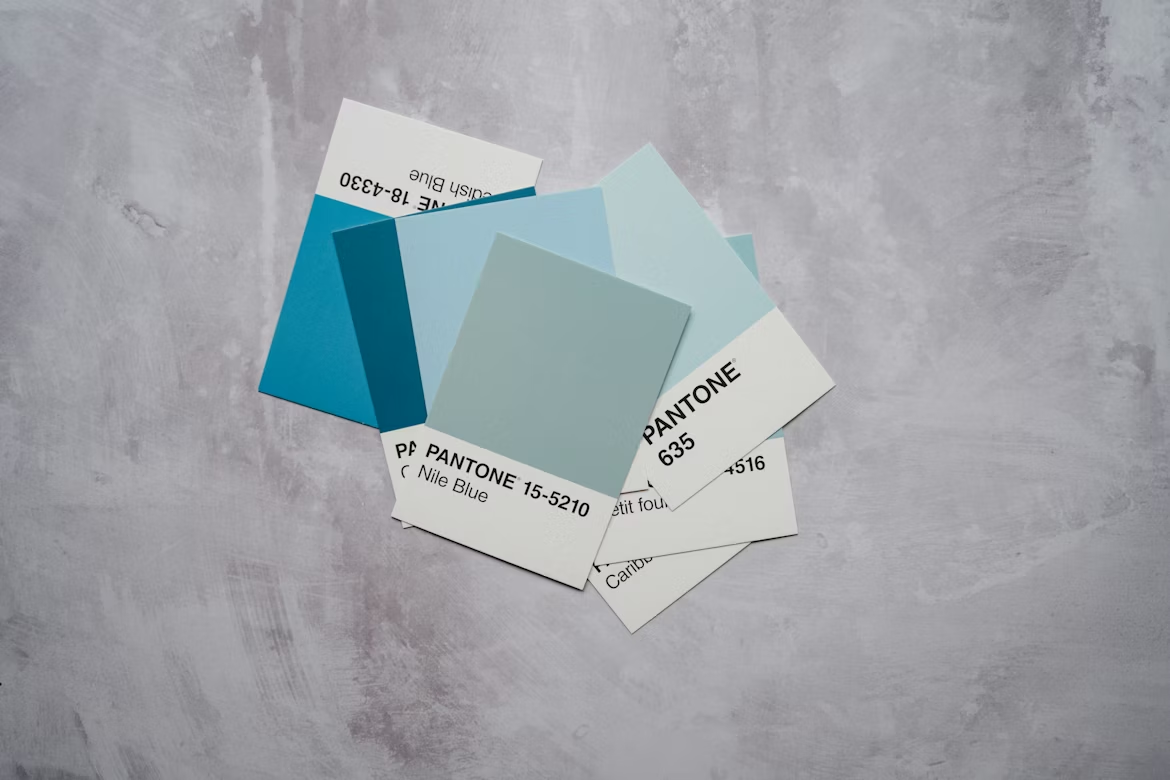
This one habit alone will make your closet feel twice as organized without removing a single item.
When I started paying attention to colors, I realized most of my wardrobe was a mess of random shades that didn’t work together. I had a bright orange top, a purple cardigan, a neon green jacket — nothing paired naturally.
I slowly rebuilt around a palette of navy, white, grey, and olive. Everything coordinates. Everything mixes. Getting dressed became almost automatic.
Sample Color Palette for a Minimal Wardrobe:
| Base Colors | Accent Colors | Avoid Mixing |
|---|---|---|
| White | Camel | Neon with neutrals |
| Navy | Rust | Too many bold prints |
| Grey | Dusty rose | Competing patterns |
| Black | Olive green | Clashing undertones |
You don’t have to be boring — accents add personality. But having a base structure means every piece “belongs.”
If you want help building your foundation wardrobe pieces, this guide on 11 simple capsule wardrobe building pieces every closet needs is genuinely useful.
4. Fold and Store Smarter, Not More
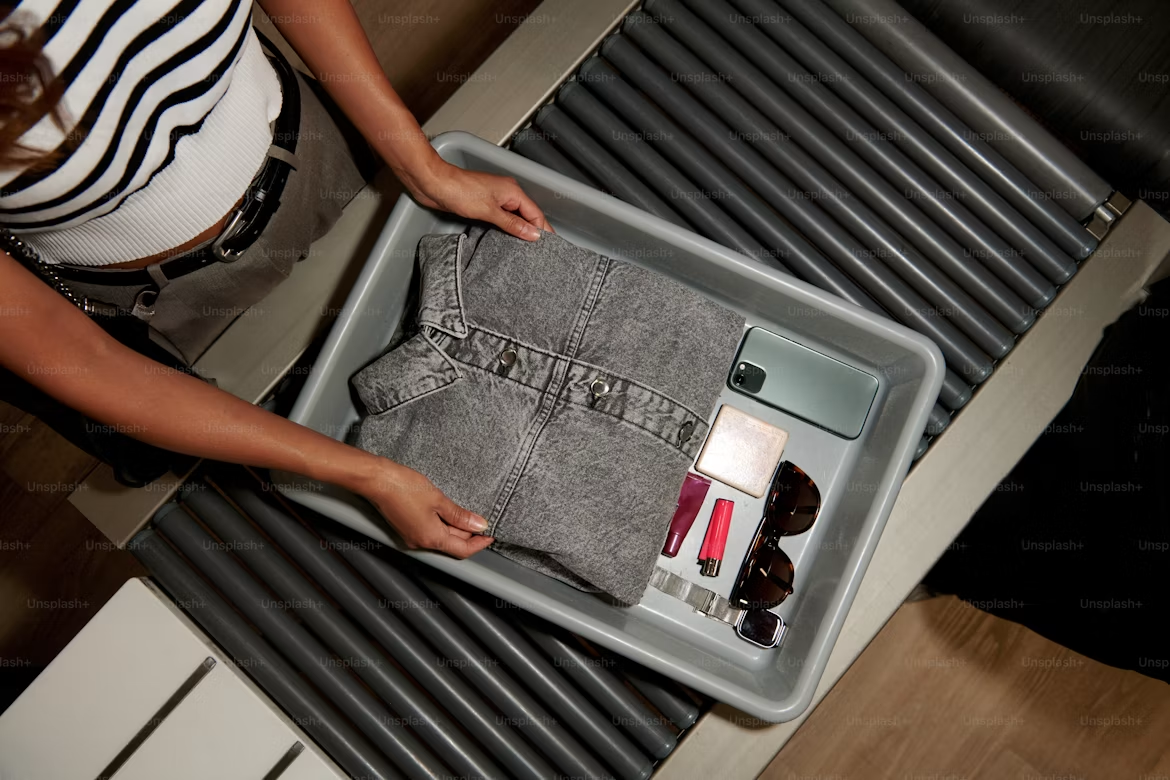
Here’s something nobody talks about enough: clutter isn’t always about how much you own. Sometimes it’s about how you store things.
I used to stack everything in tall piles. The bottom half of each pile was invisible, forgotten, and wrinkled. I’d only ever wear what was on top, which meant half my wardrobe was essentially invisible.
Switching to the KonMari-style vertical folding method changed things completely. Instead of stacking clothes in flat piles, you fold them into small rectangles and store them standing upright in a drawer — like files in a cabinet.
Benefits I noticed immediately:
- Every item is visible at a glance
- Nothing gets buried
- Less re-folding and searching
- Drawers actually close properly
It takes about 20 minutes to reorganize a drawer this way, and the difference is genuinely remarkable.
5. Schedule a Monthly 15-Minute Closet Edit
Most people do a massive closet cleanout once a year — and it’s exhausting, emotionally draining, and usually followed by buying a bunch of new stuff because suddenly everything feels worn out.
What works better is small, regular edits.
Once a month, I spend about 15 minutes going through one section of my closet. Just one. Tops one month, bottoms the next, shoes after that. I ask three quick questions about each item:
- Did I wear this in the last 30 days?
- Is it in good condition?
- Do I feel good in it?
If the answer to two or more is no, it goes in the donation bin.
This keeps the closet in a constant state of “edited” without requiring any big dramatic overhauls.
Approximate Closet Edit Schedule:
| Month | Section to Review |
|---|---|
| January | Tops & T-shirts |
| February | Bottoms (pants, skirts) |
| March | Outerwear & Jackets |
| April | Shoes & Accessories |
| May | Dresses & Formal wear |
| June | Full closet refresh |
Rotate and repeat every six months. Takes almost no effort once it becomes a habit.
6. Be Ruthless About Duplicates
I owned seven black t-shirts at one point. Seven. I thought having backups was smart. Turns out, I just wore the same two and ignored the rest.
Duplicates are sneaky clutter. They feel justified because “I wear that a lot” — but owning three of the same type of item rarely adds real value.
My rule now: keep two of anything at most. One to wear, one as a backup while the other is in the wash. That’s genuinely all you need.
Go through your closet right now and count how many similar items you own. You might be surprised.
Common duplicate offenders:
- White shirts (we all have five and wear one)
- Blue jeans in slightly different washes
- Black leggings
- Basic grey sweatshirts
- Striped tops
Pick the best two, donate the rest. Instant space, no real sacrifice.
7. Only Shop With a List
Browsing is the enemy of a minimal wardrobe. I can’t tell you how many times I went to a store “just to look” and came back with three things I didn’t need and couldn’t really afford.
Now I only shop with a specific list. Not a vague list like “need more basics” — an actual, specific list like “need one dark wash straight-leg jean to replace the pair with the broken zipper.”
This approach shifted my buying from emotional to intentional. And it’s amazing how often you go to buy something specific, can’t find exactly the right version, and just… don’t buy anything. That’s a win.
If you’re working within a tight budget, these 9 smart budget wardrobe tips on a tight budget have really practical advice for building intentionally without overspending.
Before shopping, ask yourself:
| Question | What It Reveals |
|---|---|
| What gap am I filling? | Whether the purchase is genuinely needed |
| Do I already own something similar? | Prevents duplicates |
| Will this work with 5+ items I own? | Tests versatility |
| Would I pay full price for this? | Filters out “just because it’s on sale” buys |
| Where will I actually wear this? | Grounds the decision in reality |
8. Do a “Wear It or Lose It” Challenge
I first tried this when I read about the concept of a capsule wardrobe experiment. The idea is simple: at the start of the month, turn all your hangers backward (hooks facing out). Every time you wear something, turn the hanger back to normal.
At the end of 30 days, everything still on a backward hanger? You haven’t worn it in a full month. That’s your edit list.
It sounds almost too simple, but it’s incredibly revealing. I thought I wore most of my wardrobe regularly. Turns out, I had about 35-40% of my hanging items that I never touched in an entire month.
Some of those were seasonal items — fair enough. But most were just things I thought I’d wear but never actually reached for.
This visual tracking method is powerful because it removes all the guessing and guilt. The data is right there on your closet rod.
9. Treat Your Wardrobe Like a Curated Collection, Not a Storage Unit
This is the mindset shift that ties everything else together.
Most of us treat our closets like storage — we put things in, forget about them, and occasionally dig through to find something wearable. But the moment you start thinking of your wardrobe as a curated collection of things you love and actually use, the whole dynamic changes.
You start being more selective about what gets “in.” You maintain what’s there. You let go of things without guilt because you’re protecting the quality of the whole.
A closet with 40 pieces you genuinely love and wear is infinitely more functional — and more enjoyable — than a closet with 120 pieces where you hate half of them and forgot about the rest.
This guide to building a minimal wardrobe and owning less to dress better captures this philosophy really well if you want to go deeper.
Common Mistakes People Make When Decluttering Their Closet
Even with the best intentions, a lot of people trip up in the same ways. Here are a few I’ve seen (and made myself):
Decluttering too fast: Pulling everything out at once and making rushed decisions leads to either keeping too much (because you’re overwhelmed) or regretting what you donated.
Replacing clutter with more clutter: Decluttering and then immediately “rewarding” yourself with a shopping trip defeats the whole purpose. Let the space breathe for a few weeks first.
Ignoring sentimental items: These deserve their own category. Don’t mix them in with functional clothing decisions — they play by different emotional rules.
Keeping things because of guilt: “But it was expensive” is not a reason to keep something you never wear. You’ve already spent the money. Keeping it won’t unspend it.
Not maintaining the system: Doing a big cleanout and then going back to old habits. The habits matter more than the one-time purge.
How These Habits Add Up Over Time
Here’s a rough idea of how applying even a few of these habits consistently can change your wardrobe over time:
| Timeline | What You’ll Likely Notice |
|---|---|
| After 1 week | Slightly easier mornings, less visual noise |
| After 1 month | Clearer sense of what you actually wear |
| After 3 months | Wardrobe feels intentional, not accidental |
| After 6 months | Shopping habits shift — more deliberate, less impulsive |
| After 1 year | Closet genuinely reflects your life and style |
None of this happens overnight. But it compounds quickly once the habits stick.
Final Thoughts
Building a minimal wardrobe isn’t about having less for the sake of having less. It’s about having exactly enough — and making sure everything you own earns its place.
The nine habits above aren’t rules you have to follow perfectly. They’re just tools. Start with one — the one that resonates most — and let it naturally lead you to the next.
For me, it started with the hanger trick and the donation bag. Two years later, my closet is genuinely one of my favorite parts of my home. Not because it’s Instagram-perfect, but because getting dressed is actually easy now.
That’s the whole point.
Also worth reading: The Ultimate Capsule Wardrobe Guide for Effortless Style — a solid deep-dive if you want to take the minimal wardrobe approach even further.
Frequently Asked Questions
Q1: How many items should a minimal wardrobe have? There’s no magic number, but most people find that 30–50 pieces (including shoes and outerwear) covers everything they need comfortably. The goal isn’t a specific count — it’s making sure everything you own gets worn and works together.
Q2: What’s the best way to start decluttering without feeling overwhelmed? Start small. Pick one drawer or one category (like t-shirts only) and spend 20 minutes on it. Don’t pull everything out at once. Small, consistent edits are far more effective than one exhausting marathon session.
Q3: Is it okay to keep seasonal clothes in a minimal wardrobe? Absolutely. Seasonal pieces are a real and valid part of any wardrobe. The key is storing off-season items separately (vacuum bags, under-bed storage, a separate box) so they don’t clutter your active closet space.
Q4: How do I stop buying clothes I don’t need? The shopping list habit is the most effective thing I’ve tried. Only shop when you have a specific item in mind, and give yourself a 48-hour waiting period before buying anything that wasn’t on your list. Most impulse urges disappear within a day or two.
Q5: What should I do with clothes I’m not sure about? Put them in a “maybe box.” Seal it, date it, and set a reminder for 3 months. If you haven’t thought about or reached for anything in that box, donate it without even opening it. The fact that you forgot about it is the answer.