

I still remember standing in front of my packed closet every single morning, feeling completely overwhelmed — and somehow still convinced I had “nothing to wear.” Sound familiar?
That was me three years ago. My wardrobe was a disaster zone. Clothes stuffed into every corner, hangers doubled up, random impulse buys I’d worn exactly once. And yet getting dressed felt like a chore every single day.
Then I stumbled into minimalism — not because I read some fancy book about it, but because I moved into a smaller apartment and physically didn’t have room for all that stuff. Forced minimalism, you could call it. And honestly? It changed everything.
If you’ve been curious about building a cleaner, simpler wardrobe but don’t know where to start, I’ve got you. Here are 9 real, practical minimal wardrobe ideas that actually worked for me — no fluff, no perfection required.
1. Do a Brutal Closet Audit First
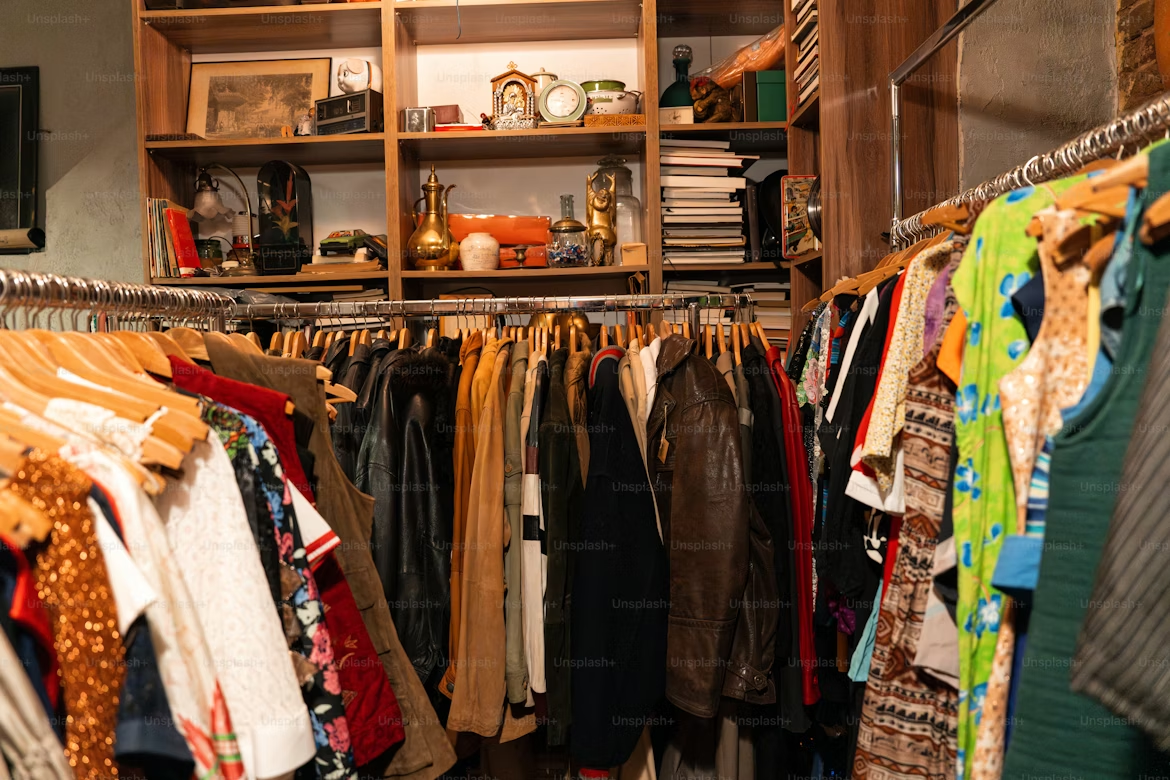
Before you add anything new, you need to see what you’re actually working with. I put this off for weeks because it felt overwhelming. Big mistake.
Set aside two hours, pull everything out, and sort it into three piles:
- Love and wear regularly
- Maybe (haven’t worn in 6+ months)
- Never touching this again
The “maybe” pile is where most people get stuck. Here’s the rule I use: if you’d feel excited packing it for a week-long trip, keep it. If you’d leave it behind without a second thought, donate it.
I ended up getting rid of about 60% of my wardrobe that first day. It felt terrifying for about ten minutes, and then incredibly freeing. The closet breathing room alone was worth it.
2. Build Around a Neutral Color Palette
This is probably the single biggest shift I made — and it had the most visible impact on how pulled-together I looked every day.
A neutral base means your pieces naturally work together. You’re not playing color-matching Tetris every morning. My personal palette is mostly white, cream, light grey, navy, and camel. Yours might be different — the key is consistency.
Here’s a simple breakdown of how a neutral palette can work across a minimal wardrobe:
| Color | Works With | Best Used For |
|---|---|---|
| White/Cream | Everything | Tops, shirts, sneakers |
| Navy | Grey, white, camel | Trousers, jackets, tees |
| Grey | Navy, white, black | Knitwear, trousers, outerwear |
| Camel/Tan | White, navy, black | Coats, shoes, bags |
| Black | Everything | Shoes, trousers, basics |
Once I committed to this palette, getting dressed became almost automatic. Grab a top, grab bottoms, they match. Done.
3. Invest in Fewer, Better Basics
I used to buy cheap basics constantly because they’d pill, fade, or fall apart quickly — so I’d replace them constantly. It was actually costing me more over time, and filling my wardrobe with mediocre stuff.
Switching to buying fewer, higher-quality basics completely changed the equation.
A solid minimal wardrobe of basics might look like this:
- 3-4 quality white/grey tees
- 2 well-fitting pairs of jeans (one dark, one light or black)
- 1-2 casual button-down shirts
- A good crew-neck or V-neck knit
- One versatile pair of chinos or tailored trousers
- A clean pair of white sneakers
- One neutral ankle boot or loafer
That’s genuinely enough to dress well most days. I know it sounds almost too simple, but check out 11 Simple Capsule Wardrobe Building Pieces Every Closet Needs — it breaks down exactly why these basics carry so much weight.
4. Master the “One In, One Out” Rule
This was the rule that actually kept my wardrobe minimal after I’d decluttered it. And I’ll be honest — I failed at it a few times before it stuck.
The concept is simple: every time you bring a new piece of clothing into your wardrobe, something else has to leave. No exceptions.
What makes this hard is when you find something you genuinely love on sale, or you get a gift. That’s when the rule gets tested. But it works because it forces you to be intentional. You start asking yourself, “Is this worth giving something up for?” More often than not, the answer is no.
I track my wardrobe in a basic Notes app on my phone — just a running list of what I own. It sounds a little extra, but it’s helped me avoid buying things I already have (which I used to do more than I’d like to admit).
5. Choose Pieces That Do Double Duty
A minimal wardrobe isn’t just about owning less — it’s about making each piece work harder.
Some of my most-worn items are ones that transition easily between settings. A white Oxford shirt works with jeans for a casual Saturday and tucked into tailored trousers for a work meeting. A simple navy sweater goes over a collared shirt, under a coat, or worn alone on a mild evening.
Ask yourself this before buying anything: “Can I wear this at least three different ways?”
If you’re struggling to come up with three outfits that include it, it probably doesn’t belong in a minimal wardrobe.
A quick example of a versatile piece doing its job:
Camel trench coat worn as:
- Office layer over a turtleneck and trousers
- Weekend outfit over a hoodie and white tees
- Evening throw-on over a simple dress
One coat. Three very different looks.
6. Limit Statement Pieces (But Don’t Eliminate Them)
Here’s something people get wrong about minimal wardrobes: they think it means boring. It really doesn’t.
I have two or three pieces in my wardrobe that have some personality — a patterned knit, a slightly interesting jacket, a pair of shoes in a non-neutral color. These work because everything else is simple. They stand out in a good way.
The mistake is going overboard on statement pieces. When everything is competing for attention, nothing actually stands out — and you’re back to the “nothing matches” problem.
Think of it like decorating a room. A gallery wall works when the rest of the room is calm and cohesive. Same principle.
7. Organize What You Have So You Can Actually See It
Even a perfectly curated wardrobe will feel chaotic if it’s badly organized. I learned this after my first declutter — I’d gotten rid of so much, but I still wasn’t finding things easily because nothing had a proper place.
A few things that made a genuine difference:
Matching hangers. This sounds almost too simple, but switching to uniform slim velvet hangers made my closet look ten times cleaner and gave me way more space. I used a mix of random hangers before — plastic, wire, those chunky ones from dry cleaners. What a mess.
Fold the same way every time. I use a basic file-folding method (sometimes called KonMari-style) for t-shirts and knitwear in my drawers. Everything stands upright so you can see it at a glance instead of digging through a pile.
Keep seasonal items accessible. In summer, my heavy winter coats go into a vacuum storage bag under the bed. In winter, my linen pieces go away. Only current-season items live in my main closet.
If you want a structured approach to this whole process, 9 Easy Capsule Wardrobe Building Steps to Simplify Your Closet walks through exactly this kind of system step by step.
8. Shop Seasonally and Intentionally — Not Impulsively
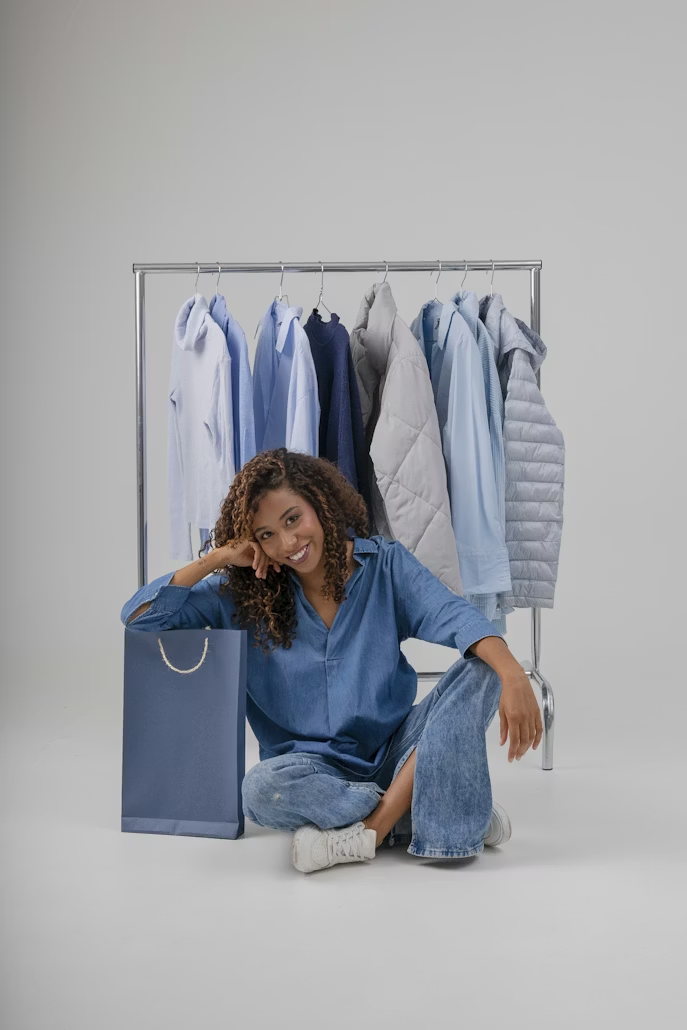
One of the biggest things that grew my old wardrobe into an out-of-control mess? Impulse shopping.
A sale email would arrive, I’d click, I’d find something “cute,” and I’d buy it without thinking about whether it actually fit my life. That piece would arrive, I’d wear it once or never, and it’d just… exist in my closet taking up space and making me feel vaguely guilty.
Now I shop maybe twice a year — once in early spring and once in early autumn. Before I shop, I write down exactly what I’m looking for (usually 2-3 specific items I’ve noticed gaps in my wardrobe). I stick to that list as much as possible.
It sounds restrictive but it’s actually liberating. Shopping becomes intentional rather than mindless. And I spend a lot less money.
A few practical tips:
- Keep a “wishlist” note on your phone. When you see something you want, add it. If you still want it in 30 days, consider buying it.
- Unsubscribe from retail email lists. They are literally designed to make you impulse buy.
- Shop with specific gaps in mind, not just “browsing.”
9. Let Go of the Guilt Around Getting Rid of Things
This one’s more mental than practical, but it might be the most important one.
A lot of people hold onto clothes because of guilt. “I spent so much on this.” “It was a gift.” “I might need it someday.” I know because I did all of this.
Here’s the thing: keeping something you never wear doesn’t undo the money you spent. That money is already gone. What you’re choosing now is whether it also costs you closet space, mental energy, and the daily friction of wading through stuff you don’t love.
Donating something that still has life in it is genuinely a good thing — someone else gets to use it. Clothes sitting in a box under your bed help nobody.
I had a jacket I’d bought for about £180 that I wore twice. Holding onto it for two years didn’t make me feel better about that purchase — it just reminded me of it every time I saw it. When I finally donated it, the relief was immediate.
Common Mistakes People Make When Going Minimal
Since I’ve now helped a few friends go through this process (they kept asking after seeing my closet), I’ve noticed some patterns in where people go wrong:
Decluttering too fast and then panic-buying. Going from 200 pieces to 20 overnight sounds satisfying in theory. In practice, people panic when they can’t find an outfit and immediately go shopping to fill the gap. Go slower. Live with the edited wardrobe for a few weeks before you buy anything new.
Confusing minimal with boring. Your minimal wardrobe should still feel like you. If you love color, build a minimal wardrobe in your favorite colors. Minimalism is about intention, not beige.
Buying cheap basics thinking quality doesn’t matter. It does. A poorly-fitted, thin white tee in a minimal wardrobe sticks out because there’s nowhere to hide it.
Not accounting for your actual life. I see this constantly — people build a Pinterest-perfect capsule wardrobe full of tailored trousers and blazers, but they work from home and spend weekends outdoors. Build for your real life, not an aspirational one.
A Quick Reference: Minimal Wardrobe Numbers
| Wardrobe Category | Recommended Range (Minimal) |
|---|---|
| Tops (tees, shirts, blouses) | 5–8 |
| Bottoms (trousers, jeans, skirts) | 3–5 |
| Outerwear (coats, jackets) | 2–3 |
| Shoes | 3–5 pairs |
| Knitwear / Layering pieces | 2–4 |
| Dresses / Jumpsuits | 1–3 |
| Accessories (bags, belts, scarves) | 3–5 |
These are ranges, not rules. The point is to give yourself a target to aim toward — having a number in mind makes the editing process much less abstract.
Where to Start If This All Feels Overwhelming
If you’ve read through this and you’re not sure where to begin, just start with the audit. That’s it. Don’t think about what you’ll buy or what your “color palette” should be. Just spend two hours one weekend pulling your clothes out and being honest about what you actually wear.
Everything else follows from that.
And if you find yourself wanting to go deeper into building a system that actually sticks, this guide is one of the most practical breakdowns I’ve found: 7 Easy Capsule Wardrobe Building Ideas for Cozy Fall Fashion — it’s written in a way that’s easy to apply no matter the season.
Your wardrobe doesn’t need to be a constant source of low-level stress. Once you get it to a place where everything you own is something you’d genuinely reach for — where getting dressed in the morning is quick and almost automatic — you’ll wonder why you waited so long to do this.
Trust me, the version of you who’s not digging through a chaotic closet every morning has a slightly better day. Every single day.