

Most wardrobes don’t fail because of lack of clothes. They fail quietly, in small decisions that seem harmless at first. A shirt that almost fits, a pair of jeans that “kind of works,” or basics bought in bulk without much thought—these tiny choices slowly shape how your entire wardrobe performs.
Wardrobe basics are supposed to make life easier. They’re the foundation. But when the foundation has cracks, everything built on top of it feels slightly off. You might not always notice it directly, but you feel it when outfits don’t sit right, when nothing feels “complete,” or when you keep repeating the same few combinations.
This is not about fashion trends. It’s about the quiet mistakes in your basics that affect everything else you wear.
Below are nine wardrobe basics mistakes most people don’t notice—and how they silently disrupt your everyday style.
- Buying basics without thinking about fabric behavior
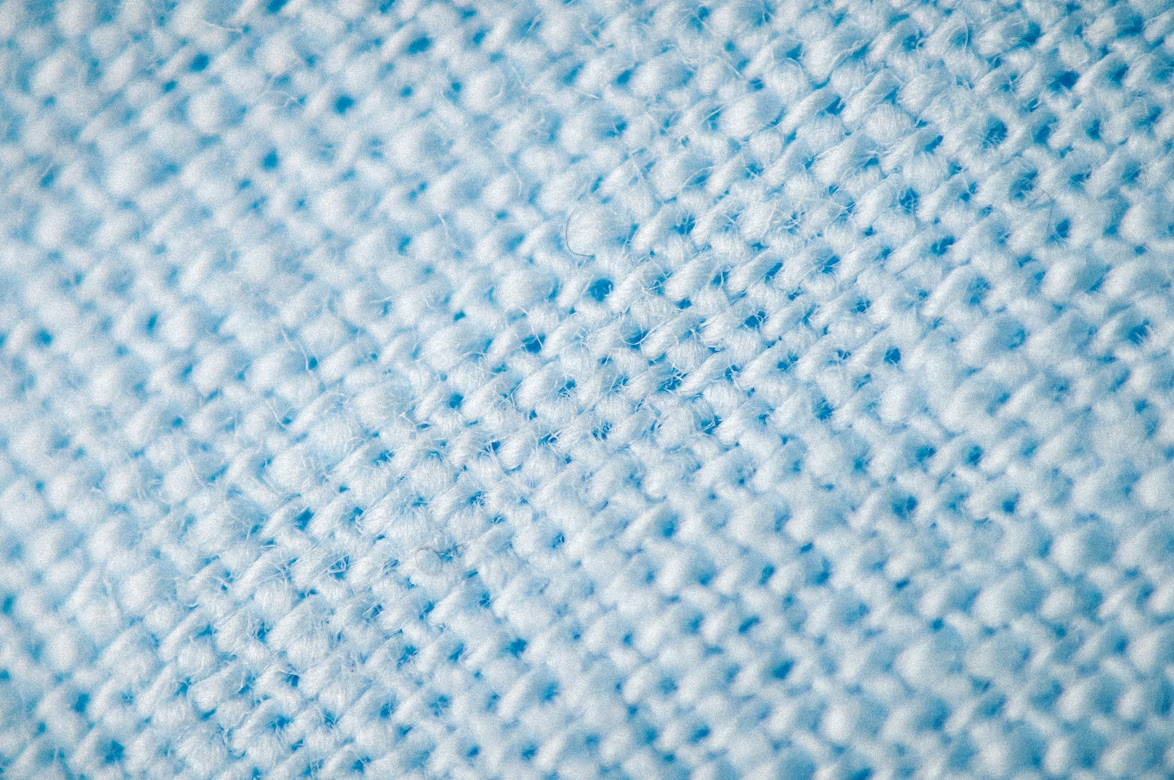
A basic T-shirt is not just a T-shirt. The fabric determines whether it holds shape, breathes well, or stretches out after two washes. Many people buy basics based only on color and price, ignoring how the fabric behaves over time.
A cheap cotton tee might look fine on day one but lose structure quickly. A synthetic blend might trap heat and feel uncomfortable. The issue isn’t the item—it’s the material logic behind it.
Fabric behavior comparison:
| Fabric Type | Breathability | Durability | Shape Retention | Best Use |
|---|---|---|---|---|
| 100% Cotton | High | Medium | Medium | Everyday tees |
| Cotton Blend | Medium | High | High | Workwear basics |
| Polyester | Low | High | High | Activewear |
| Linen | Very High | Low | Low | Summer basics |
| Ribbed Knit | Medium | High | High | Fitted basics |
When your basics don’t behave consistently, outfit building becomes unpredictable. One day your shirt fits well, the next day it feels slightly off—not because your body changed, but because the fabric is reacting differently.
- Ignoring fit consistency across basics
One of the most overlooked mistakes is owning basics in different fits without realizing it. A slim-fit T-shirt paired with relaxed-fit jeans and an oversized jacket can work—but only if intentional.
Most wardrobes fail because the fits are accidental, not coordinated.
Fit mismatch patterns:
| Item Type | Common Mistake | Resulting Issue |
|---|---|---|
| T-shirts | Mixing slim and oversized randomly | Disjointed silhouette |
| Jeans | Different rises and cuts | Uneven proportions |
| Shirts | Inconsistent shoulder fit | Poor layering structure |
| Jackets | Wrong length vs inner layers | Visual imbalance |
A simple rule many stylists use: your basics should belong to the same “fit family,” even if they differ slightly.
For example:
- Relaxed tee → relaxed jeans → relaxed overshirt
- Slim tee → straight jeans → fitted jacket
Without this consistency, outfits feel unintentionally chaotic.
- Over-relying on “safe” neutral basics
Neutral basics are essential, but overusing them creates visual fatigue. Many wardrobes become a rotation of black, white, grey, and navy—safe but repetitive.
The problem isn’t neutrals themselves. It’s when they replace intentional color use completely.
Neutral-heavy wardrobe breakdown:
| Color Type | Ideal Ratio | Common Mistake Ratio |
|---|---|---|
| Neutrals | 50–60% | 80–90% |
| Accent Colors | 30–40% | 5–10% |
| Statement Shades | 10% | Almost none |
When everything is neutral, nothing stands out. Outfits start blending into each other, making your style feel flat even if the pieces are high quality.
Adding just a few muted tones—olive, rust, dusty blue—can completely change how your basics interact.
- Treating all basics as interchangeable
A white T-shirt is not the same as another white T-shirt. A black hoodie is not automatically replaceable with any black hoodie.
Yet many people treat basics as if they are identical units.
Key differences that matter:
| Basic Item | Variation Factor | Impact on Outfit |
|---|---|---|
| T-shirts | Neckline, weight, drape | Changes overall silhouette |
| Jeans | Rise, taper, wash | Affects proportion balance |
| Shirts | Collar style, stiffness | Influences layering |
| Hoodies | Fabric thickness, structure | Alters outfit bulk |
Interchangeability is a myth. Small variations create completely different visual outcomes.
A wardrobe built on “similar but not identical” basics feels much more refined than one built on random duplicates.
- Not updating basics as your body or lifestyle changes
Basics are often treated as permanent. People continue wearing the same size, fit, or style for years without reassessing whether they still suit their current life.
Bodies change subtly over time. So do routines.
Lifestyle shift examples:
| Life Change | Impact on Basics |
|---|---|
| Office job | Need for structured shirts, cleaner fits |
| Remote work | More relaxed, comfort-focused basics |
| Fitness routine | Different sizing and stretch needs |
| Climate change | Fabric adjustments |
A common mistake is holding onto basics from a past version of yourself. This leads to discomfort that people often blame on “bad style” rather than outdated fit.
- Poor layering logic with basic items
Basics are the foundation of layering, but many wardrobes lack layering logic. People either layer too randomly or avoid layering altogether.
Layering isn’t just stacking clothes—it’s structuring them.
Basic layering structure:
| Layer | Purpose | Example |
|---|---|---|
| Base | Skin contact comfort | T-shirt, tank top |
| Mid | Warmth/structure | Shirt, thin sweater |
| Outer | Protection/style | Jacket, coat |
Common layering mistakes:
| Mistake | Result |
|---|---|
| Too many thick basics | Bulky silhouette |
| No mid-layer | Flat outfit |
| Mismatched lengths | Uneven proportions |
Good layering makes basics look intentional instead of accidental.
- Ignoring neckline and collar variation

Most people don’t think about necklines as part of wardrobe basics, but they significantly affect how an outfit frames the body.
A wardrobe full of only crew necks, for example, can feel repetitive and restrictive.
Neckline impact guide:
| Neckline Type | Visual Effect | Best Use |
|---|---|---|
| Crew neck | Structured, closed | Everyday wear |
| V-neck | Lengthens torso | Slimming effect |
| Henley | Casual texture | Layering base |
| Polo collar | Semi-formal | Smart casual |
Even small neckline variation can change the entire perception of your basics without adding new categories of clothing.
- Wearing basics beyond their structural lifespan
Basics are often kept far longer than they should be. Unlike statement pieces, they are used frequently, which means they degrade faster.
Yet people rarely evaluate their condition objectively.
Wear-and-tear indicators:
| Basic Item | Warning Sign | Effect on Outfit |
|---|---|---|
| T-shirts | Neck stretching | Looks sloppy |
| Jeans | Faded knees | Weak structure |
| Hoodies | Pilling fabric | Low-quality appearance |
| Shirts | Collar curling | Unpolished look |
There is a threshold where a basic item stops being “worn-in” and becomes “worn out.” Most wardrobes ignore that line.
- Buying basics in isolation instead of systems
Perhaps the biggest mistake is buying basics one by one without considering how they work together.
A wardrobe is not a collection of items. It is a system of combinations.
Basic wardrobe system example:
| Category | Minimum Items | Purpose |
|---|---|---|
| Tops | 5–7 | Rotation flexibility |
| Bottoms | 3–5 | Core structure |
| Outerwear | 2–3 | Seasonal control |
| Footwear | 3–4 | Outfit grounding |
When basics are bought in isolation, they often don’t match in tone, fit, or purpose. This leads to “orphan items”—clothes that look good individually but don’t work together.
System-based thinking eliminates this issue.
Wardrobe basics performance comparison table
| Wardrobe Type | Outfit Ease | Consistency | Style Clarity |
|---|---|---|---|
| Random basics | Low | Low | Weak |
| Partially planned basics | Medium | Medium | Moderate |
| System-based basics | High | High | Strong |
FAQs
- How do I know if my basics are actually working for me?
If you can create multiple outfits without feeling stuck or repetitive, your basics are working. If you constantly feel like you have nothing to wear despite having clothes, the system is off.
- How often should I replace wardrobe basics?
Most basics should be reviewed every 6–18 months depending on usage. Heavy-use items like T-shirts and jeans wear out faster than jackets or coats.
- Do expensive basics automatically improve style?
Not necessarily. Fit, fabric behavior, and coordination matter more than price. A well-fitted mid-range basic often outperforms an expensive poorly fitted one.
- How many basics does a functional wardrobe actually need?
There is no fixed number, but a balanced setup usually includes:
- 5–7 tops
- 3–5 bottoms
- 2–3 outer layers
- 3–4 footwear options
- Why do my outfits still look boring even with good basics?
The issue is usually lack of variation in fit, color tone, or layering structure. Even high-quality basics need contrast to create visual interest.
- What is the fastest way to improve my wardrobe basics?
Start by fixing fit consistency and removing worn-out items. Then adjust color balance slightly and ensure your basics can combine into multiple outfits easily.