
There is a quiet shift happening in the way people think about clothing. The overflowing closets, the impulse purchases, the “I have nothing to wear” feeling despite owning too much—these are being replaced by a more thoughtful approach. A minimal wardrobe is not about restriction. It is about clarity. It is about choosing fewer pieces that work harder, last longer, and reflect who you are without noise.
Owning less does not mean dressing boring. In fact, the opposite tends to happen. When your wardrobe becomes intentional, your outfits become sharper, more consistent, and more expressive. You stop chasing trends and start building a personal style that feels grounded.
This article walks through what a minimal wardrobe really means, what essentials you need, how to build one step by step, and how it changes not just your closet but your daily life.
what is a minimal wardrobe
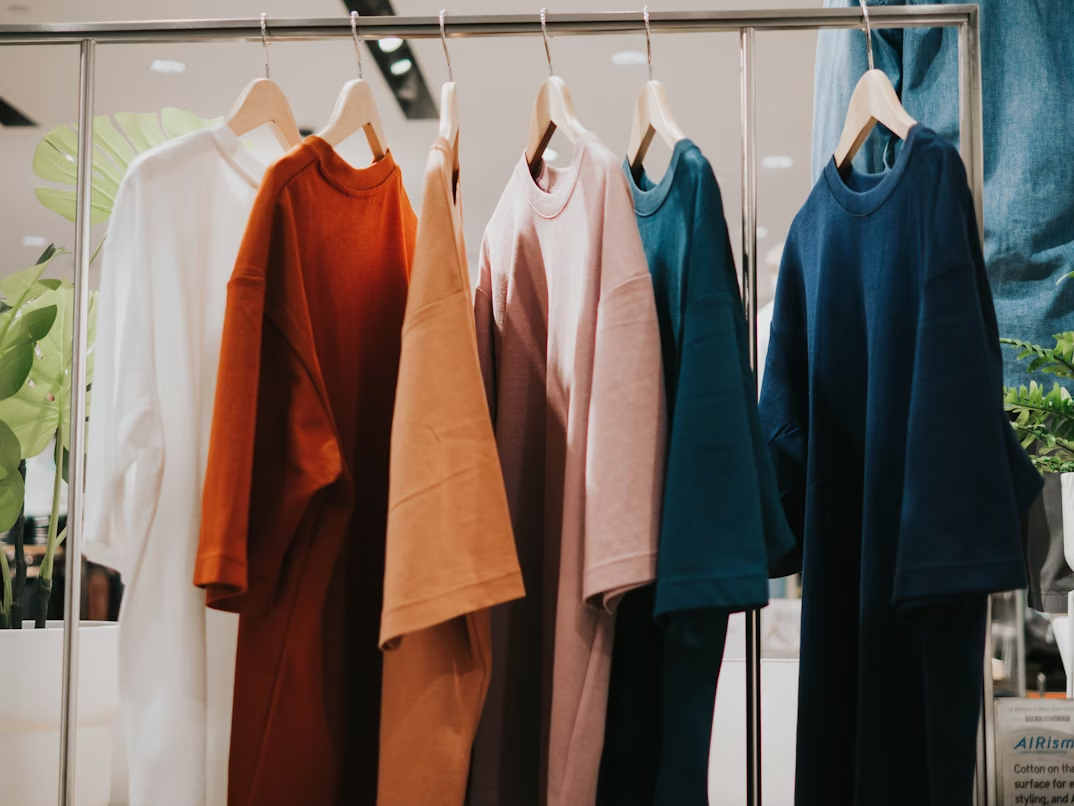
A minimal wardrobe is a curated collection of clothing that serves your lifestyle with maximum versatility and minimal excess. Instead of quantity, it focuses on quality, coordination, and purpose.
It is not defined by a strict number. Some people thrive with 25 items, others with 50. The real measure is this: every piece earns its place. Nothing sits unused for months. Everything can be mixed, matched, and worn in multiple ways.
A minimal wardrobe usually has these characteristics:
- neutral and cohesive color palette
- timeless silhouettes over fast trends
- high-quality fabrics that last
- multi-purpose items that work across occasions
- fewer duplicates (you don’t need five similar black shirts)
why owning less improves your style
At first, reducing options might feel limiting. But in practice, it simplifies decision-making and sharpens your sense of style.
Here is what changes when you own less:
clarity replaces overwhelm
Instead of scanning a packed closet, you see only pieces you love. Getting dressed becomes faster and more intuitive.
consistency builds identity
When your wardrobe aligns in color and style, your outfits naturally look cohesive. People start recognizing your aesthetic.
quality becomes visible
With fewer items, you invest in better ones. Fabrics drape better, colors stay rich, and the overall look improves.
decision fatigue disappears
You no longer spend mental energy choosing between dozens of options. This has a subtle but real impact on your daily productivity.
core categories in a minimal wardrobe
A well-balanced minimal wardrobe covers essential categories without redundancy. Below is a simple structure:
| Category | Purpose | Suggested Count |
|---|---|---|
| Tops | Everyday styling base | 6–10 |
| Bottoms | Foundation pieces | 4–6 |
| Outerwear | Layering and weather protection | 2–4 |
| Footwear | Function + style balance | 3–5 |
| Dresses (optional) | One-piece outfits | 2–4 |
| Accessories | Personality and variation | 5–10 |
This is not a rulebook. It is a starting framework that can be adjusted depending on climate, lifestyle, and personal taste.
minimal wardrobe essentials
Let’s break down the key items that form a strong minimal wardrobe. These are versatile, timeless, and easy to combine.
tops
- plain white t-shirt
- black or neutral t-shirt
- button-down shirt (white or light blue)
- lightweight knit sweater
- structured blouse or top for semi-formal occasions
These pieces can be layered or worn alone. They act as the base of most outfits.
bottoms
- well-fitted jeans (dark wash preferred)
- tailored trousers
- casual pants or chinos
- optional skirt (neutral tone)
The goal is flexibility. Each bottom should pair with most of your tops.
outerwear
- classic blazer
- casual jacket (denim or utility)
- coat suitable for your climate
Outerwear often defines the entire outfit, so these pieces should be chosen carefully.
footwear
- clean sneakers
- versatile flats or loafers
- formal shoes or heels
- weather-appropriate option (boots or sandals)
Shoes should balance comfort and style. Avoid owning multiple pairs that serve the same purpose.
accessories
- neutral belt
- simple jewelry
- functional bag
- scarf (optional but useful)
Accessories allow variety without expanding your clothing count.
building a color palette
A minimal wardrobe thrives on coordination. This is where color becomes important.
Start with a base palette:
| Base Colors | Accent Colors |
|---|---|
| Black | Olive |
| White | Rust |
| Beige | Mustard |
| Grey | Soft blue |
| Navy | Dusty pink |
Base colors form the majority of your wardrobe. Accent colors add personality without overwhelming combinations.
A simple rule: every item should match at least three other items in your wardrobe.
fabric and quality considerations
Minimalism does not work well with low-quality clothing. When you own fewer items, each one needs to last.
Look for:
- natural fibers like cotton, wool, linen
- strong stitching and construction
- fabric weight appropriate for use
- resistance to pilling and fading
Here is a quick comparison:
| Fabric Type | Pros | Cons |
|---|---|---|
| Cotton | Breathable, versatile | Wrinkles easily |
| Wool | Warm, durable | Requires care |
| Linen | Lightweight, breathable | Wrinkles quickly |
| Polyester | Durable, low maintenance | Less breathable |
A balanced wardrobe often includes a mix of these.
how to transition to a minimal wardrobe
Switching to minimalism does not require throwing everything away overnight. A gradual approach works better.
step 1: assess what you own
Take everything out. Yes, everything. This gives you a clear picture.
step 2: sort into categories
Keep, donate, repair, or discard.
step 3: evaluate usefulness
Ask simple questions:
- Have I worn this in the last year?
- Does it fit well?
- Does it match other items?
step 4: identify gaps
You may find you have too many tops but not enough bottoms, or no proper outerwear.
step 5: rebuild intentionally
Add only what is necessary, focusing on versatility.
wardrobe audit example
| Item Type | Owned | Actually Used | Keep | Remove |
|---|---|---|---|---|
| T-shirts | 15 | 6 | 6 | 9 |
| Jeans | 5 | 3 | 3 | 2 |
| Jackets | 4 | 2 | 2 | 2 |
This simple exercise often reveals how much excess exists.
styling more with less
The real power of a minimal wardrobe is in how you style it.
layering
A shirt under a sweater, a blazer over a t-shirt—layering creates new looks without new clothes.
tucking and draping
Small styling changes can transform the same piece into a different outfit.
mixing textures
Combine denim with knitwear, cotton with wool. Texture adds depth.
rotating combinations
Avoid wearing the same pairings every time. Experiment with all possible combinations.
outfit combination chart
| Top | Bottom | Outerwear | Result Style |
|---|---|---|---|
| White tee | Jeans | Blazer | Smart casual |
| Knit sweater | Trousers | Coat | Polished minimal |
| Shirt | Chinos | Jacket | Relaxed refined |
minimal wardrobe for different lifestyles
Your wardrobe should reflect how you live.
for professionals
Focus on tailored pieces, neutral tones, and structured outerwear.
for students
Comfort and versatility matter more. Include casual layers and durable fabrics.
for remote workers
Balance comfort with presentability. Soft fabrics with clean cuts work well.
for active lifestyles
Include functional clothing that transitions easily from activity to casual wear.
seasonal adjustments
A minimal wardrobe changes slightly with seasons but remains cohesive.
| Season | Key Additions |
|---|---|
| Summer | Light fabrics, sandals |
| Winter | Coats, boots, knitwear |
| Spring | Light jackets, layers |
| Autumn | Warm tones, transitional pieces |
Instead of separate wardrobes, think in layers.
common mistakes to avoid
buying too little too fast
Minimalism is not deprivation. You still need enough clothing for your lifestyle.
ignoring fit
Even the best piece fails if it does not fit well.
overcomplicating color schemes
Too many colors reduce versatility.
keeping “just in case” items
These often become clutter again.
choosing trends over timelessness
Trends fade. A minimal wardrobe is built to last.
cost vs value
A minimal wardrobe often shifts spending habits. You may spend more per item but less overall.
| Approach | Cost per Item | Total Items | Total Spend | Longevity |
|---|---|---|---|---|
| Fast fashion | Low | High | High | Low |
| Minimal wardrobe | Moderate | Low | Moderate | High |
Over time, fewer replacements mean better value.
psychological benefits
The impact goes beyond clothing.
- reduced stress from fewer decisions
- increased confidence from consistent style
- stronger sense of identity
- less attachment to material excess
People often notice that their mornings feel calmer and more intentional.
environmental impact
Fast fashion contributes heavily to waste. A minimal wardrobe reduces consumption and extends clothing life.
- fewer purchases mean less production demand
- higher quality means less disposal
- conscious choices support sustainable brands
Even small changes add up over time.
maintaining a minimal wardrobe
Once built, maintenance is simple but important.
regular audits
Every few months, reassess what you wear.
one in, one out rule
If you add something new, remove something old.
care properly
Wash gently, store correctly, repair when needed.
stay intentional
Avoid impulse buying. Ask if a new item truly adds value.
sample minimal wardrobe list
Here is an example of a balanced wardrobe:
| Item | Quantity |
|---|---|
| Basic t-shirts | 4 |
| Button shirts | 2 |
| Sweaters | 2 |
| Jeans | 2 |
| Trousers | 2 |
| Blazer | 1 |
| Casual jacket | 1 |
| Coat | 1 |
| Sneakers | 1 |
| Formal shoes | 1 |
| Boots or sandals | 1 |
Total: around 18–20 core pieces (excluding accessories).
This is enough for dozens of outfit combinations.
real-life transformation
Many people report a similar journey:
At first, there is hesitation. Letting go of clothes feels risky. But once the clutter is gone, something shifts. Getting dressed becomes easier. Shopping becomes intentional. Style becomes clearer.
Instead of chasing more, you refine what you have.
And that is the essence of dressing better.
frequently asked questions
- how many clothes should a minimal wardrobe have?
There is no fixed number. Most people find balance between 20 to 50 items depending on lifestyle and climate. The key is usefulness, not the number. - can a minimal wardrobe still be stylish?
Yes. In fact, it often improves style because every piece is chosen carefully and works well with others. - what if i get bored with fewer clothes?
You can create variety through layering, accessories, and different combinations. Boredom usually comes from repetition, not quantity. - is a minimal wardrobe expensive to build?
It can require some upfront investment in quality pieces, but overall spending often decreases because you buy less and replace less. - can i include trendy items in a minimal wardrobe?
Yes, but in moderation. Choose trends that align with your existing style and can be worn in multiple ways. - how often should i update my wardrobe?
Only when needed. Replace worn-out items, adjust for seasonal changes, or update pieces that no longer fit your lifestyle.