
A well-built wardrobe is less about quantity and more about clarity. It reflects how you live, how you move through your day, and how you want to be perceived—without requiring constant decision-making or endless shopping. When your closet is built on strong basics, everything else becomes easier: getting dressed, packing, shopping, even understanding your own style.
This is not about trends or rigid rules. It’s about assembling a core set of pieces that work together, evolve with you, and remove friction from your daily life.
why wardrobe basics matter more than you think
Most people don’t struggle with not having enough clothes. They struggle with having too many pieces that don’t work together.
Wardrobe basics solve three problems:
- Decision fatigue: fewer, better choices make mornings easier
- Inconsistency: basics anchor your style so outfits feel cohesive
- Waste: you buy less because you use more of what you already own
Think of basics as the “infrastructure” of your wardrobe. They aren’t always the most exciting pieces, but they make everything else possible.
the foundation principle: versatility over variety
Before listing items, it’s important to understand the guiding principle: versatility.
A basic item should meet at least three of these criteria:
- Works with multiple outfits
- Fits different occasions
- Layers easily
- Feels comfortable for long wear
- Stays relevant across seasons
If something only works in one very specific situation, it’s not a basic—it’s a specialty item.
core wardrobe essentials
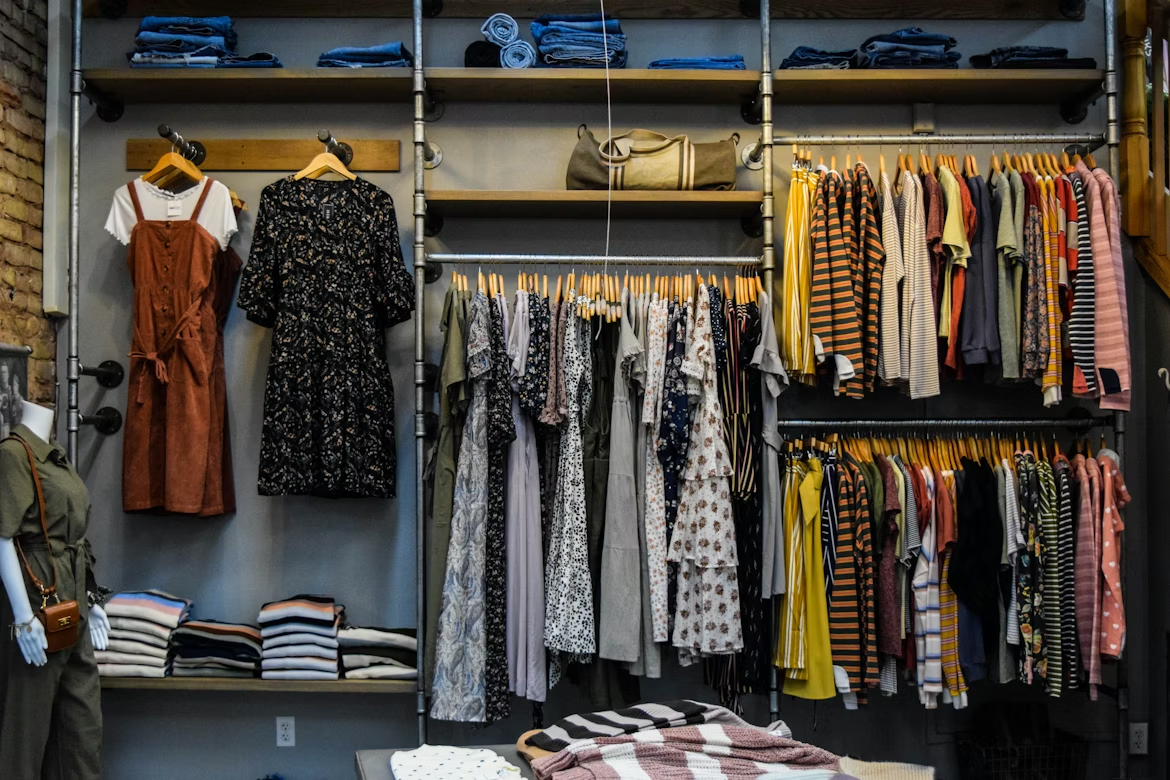
Below is a breakdown of essential wardrobe basics, organized by category.
tops: the everyday anchors
Tops are the most visible part of your outfit and often the easiest way to create variation.
Essential tops include:
- Plain white t-shirt
- Black or neutral t-shirt
- Button-down shirt (white or light blue)
- Neutral knit sweater
- Simple tank top
Why these matter:
They can be dressed up or down, layered under jackets, or worn alone. The simplicity allows you to pair them with almost anything.
informational table: top essentials overview
| Item | Best Fabric | Season Use | Styling Tip |
|---|---|---|---|
| White T-shirt | Cotton | All seasons | Pair with denim or layer under blazer |
| Button-down shirt | Cotton/linen | Spring/Fall | Wear tucked or open over a tee |
| Knit sweater | Wool/blend | Fall/Winter | Layer over shirts or dresses |
| Tank top | Cotton/ribbed | Summer | Base layer or standalone |
bottoms: structure and balance
Bottoms define the structure of your outfit. A strong rotation of bottoms ensures variety without chaos.
Key pieces:
- Dark wash jeans
- Black trousers
- Casual chinos
- Comfortable shorts (seasonal)
- A versatile skirt (if applicable)
Why they matter:
They anchor your look and determine how formal or casual your outfit appears.
chart: formality scale of common bottoms
Casual → Semi-Casual → Smart Casual → Formal
Shorts → Jeans → Chinos → Trousers
This simple scale helps you quickly decide what works for the occasion.
outerwear: the finishing layer
Outerwear is often overlooked, but it has a strong visual impact.
Must-have pieces:
- Structured blazer
- Neutral jacket (denim or lightweight)
- Warm coat (depending on climate)
Why they matter:
Outerwear is often the first thing people notice. It can instantly elevate a basic outfit.
example outfit transformation:
- T-shirt + jeans = casual
- Add blazer = polished
- Add coat = refined and seasonal
footwear: function meets style
Shoes complete the outfit and determine comfort throughout the day.
Essential footwear:
- White or neutral sneakers
- Classic loafers or flats
- Formal shoes
- Comfortable everyday sandals (warm climates)
table: footwear functionality
| Shoe Type | Primary Use | Comfort Level | Outfit Match Range |
|---|---|---|---|
| Sneakers | Daily wear | High | Very versatile |
| Loafers | Smart casual | Medium | Moderate |
| Formal shoes | Events/work | Low-Medium | Limited |
| Sandals | Casual/summer | High | Seasonal |
accessories: small details, big impact
Basics aren’t limited to clothing. Accessories define personality.
Core accessories:
- Neutral belt
- Minimal watch
- Structured bag
- Sunglasses
These items should be simple, durable, and adaptable.
color palette: the invisible structure
A strong wardrobe depends on a controlled color palette.
Base colors:
- Black
- White
- Grey
- Navy
- Beige
Accent colors:
- Soft pastels or muted tones
- One or two statement colors
chart: color coordination simplicity
| Base Color | Matches With |
|---|---|
| Black | Everything |
| White | Everything |
| Navy | White, beige, grey |
| Beige | White, brown, black |
| Grey | Almost all neutrals |
The idea is not to limit yourself, but to ensure everything can mix and match.
fit over fashion
Even the best basics fail if they don’t fit well.
Three key fit rules:
- Shoulders should align naturally
- Clothes should skim, not cling or hang
- Length matters more than tightness
A simple t-shirt that fits perfectly will look better than an expensive one that doesn’t.
fabric quality: the quiet difference
Basics are worn often, so fabric matters.
Preferred materials:
- Cotton for breathability
- Wool for warmth
- Linen for hot climates
- Blends for durability
table: fabric comparison
| Fabric | Strengths | Weaknesses |
|---|---|---|
| Cotton | Breathable, soft | Wrinkles easily |
| Wool | Warm, durable | Can feel heavy |
| Linen | Lightweight, cool | Wrinkles quickly |
| Blends | Durable, flexible | Less natural feel |
seasonal adjustments
Basics don’t change dramatically with seasons, but they adapt.
summer basics:
- Lightweight fabrics
- Breathable tops
- Minimal layering
winter basics:
- Layering pieces
- Heavier fabrics
- Neutral coats
The structure remains the same—the materials shift.
building your wardrobe gradually
Trying to build a perfect wardrobe overnight usually leads to mistakes.
A better approach:
step 1: audit your current closet
step 2: identify gaps
step 3: replace low-quality items
step 4: add essentials slowly
table: wardrobe building timeline
| Phase | Focus |
|---|---|
| Month 1 | Declutter + basics review |
| Month 2 | Replace key items |
| Month 3 | Add layering pieces |
| Month 4+ | Refine and personalize |
common mistakes to avoid
- Buying duplicates without purpose
- Ignoring fit
- Choosing trends over function
- Overcomplicating color choices
- Neglecting footwear
Each of these creates friction in daily dressing.
how basics define personal style
There’s a misconception that basics are boring. In reality, they amplify personal style.
Your style shows through:
- How you layer
- How you accessorize
- How you combine textures
Two people can wear the same white shirt and jeans and look completely different.
wardrobe efficiency formula
You can think of a functional wardrobe like this:
Outfit combinations = (number of tops) × (number of bottoms) × (layer options)
Even a small wardrobe can create dozens of combinations.
example:
5 tops × 4 bottoms × 3 layers = 60 outfits
That’s the power of basics.
maintenance and longevity
A wardrobe is only as good as its upkeep.
simple care habits:
- Wash less frequently
- Use proper storage
- Repair instead of replace
- Rotate usage
table: clothing care basics
| Item Type | Care Tip |
|---|---|
| T-shirts | Cold wash, air dry |
| Wool | Hand wash or gentle cycle |
| Denim | Wash sparingly |
| Shoes | Clean and air regularly |
the emotional side of basics
Clothing isn’t just functional. It’s tied to identity.
A stable wardrobe:
- Reduces stress
- Builds confidence
- Creates consistency
When you trust your clothes, you stop overthinking them.
minimalism vs practicality
You don’t need an extreme minimalist wardrobe. You need a functional one.
Minimalism asks: “How little can I have?”
Practicality asks: “What do I actually use?”
The second question is more useful.
evolving your wardrobe
Your wardrobe should change as your life changes.
Triggers for updates:
- New job
- Climate shift
- Lifestyle changes
- Personal growth
Basics remain—but their proportions shift.
final perspective
Wardrobe basics are not about restriction. They’re about freedom.
When your closet works, you don’t think about it. You just get dressed and move on with your life.
That’s the real goal.
frequently asked questions
- how many basic items should a wardrobe have?
There’s no fixed number, but most functional wardrobes have around 25–40 core pieces. The key is versatility, not quantity. - can basics include patterns?
Yes, but they should be subtle and easy to pair. Think stripes or small prints rather than bold graphics. - how often should i replace wardrobe basics?
It depends on wear, but high-use items like t-shirts may need replacing every 1–2 years, while coats can last much longer. - are expensive basics worth it?
Sometimes. Higher quality often means better fit and durability, but price alone doesn’t guarantee value. - how do i choose the right colors?
Start with neutrals, then add a few colors you naturally gravitate toward. Consistency matters more than variety. - what is the biggest mistake people make with basics?
Buying items that don’t truly match their lifestyle. A perfect wardrobe on paper doesn’t help if it doesn’t fit your daily routine.