

There was a point in my life where I owned close to 80 pieces of clothing and still texted my friend “I have nothing to wear” at least twice a week.
I’m not exaggerating. I counted once.
The issue wasn’t quantity. It was that nothing really worked together. I had a drawer full of tops that didn’t match my bottoms, jackets that went with exactly one outfit, and shoes I kept “saving for the right occasion” — an occasion that never came.
Then a friend of mine, someone who always looked effortlessly put together, came over and saw my chaotic closet. She laughed (kindly) and said, “You don’t need more clothes. You need the right five.”
I thought she was oversimplifying. She wasn’t.
That conversation sent me down the rabbit hole of capsule wardrobes — and what I found genuinely changed how I approach getting dressed every single day. Not because I became some minimalist monk who only owns 10 things, but because I finally understood what my closet was actually missing.
1. The Perfect-Fit White or Neutral Tee
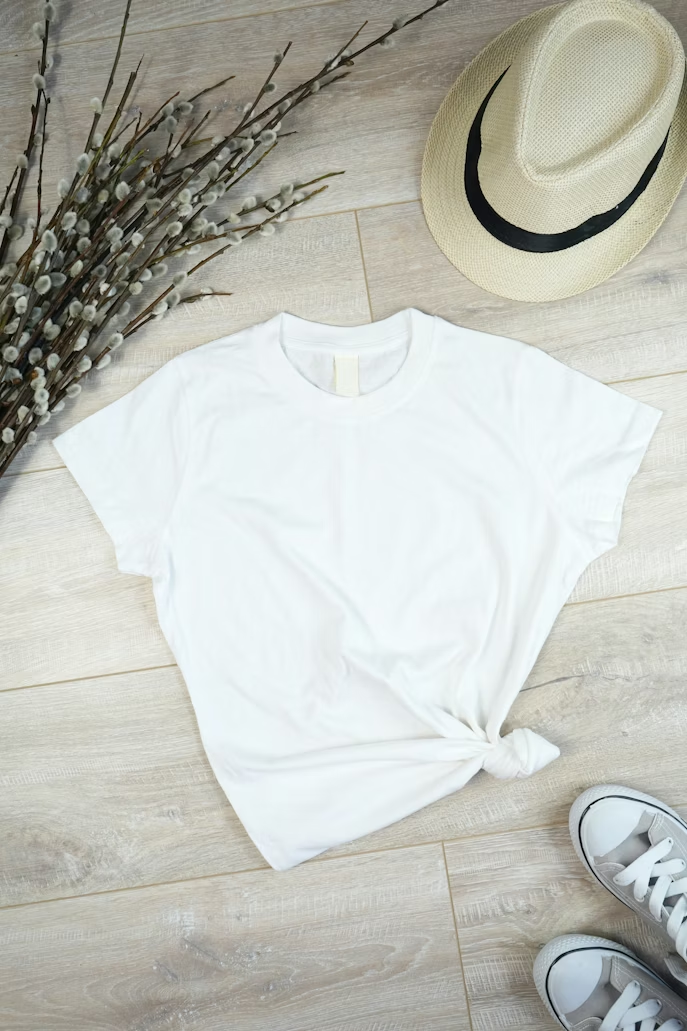
I used to dismiss the plain white tee as boring. Why wear something so basic when I could wear something with a print, a slogan, a ruffle, a something?
Here’s what I learned the hard way: basics aren’t boring. Basics are the foundation everything else sits on. And a white tee — or a neutral tee in cream, soft grey, or light tan — is the most versatile piece you can own.
But not just any white tee. The fit is everything.
I went through probably six or seven versions before I found one that worked for my body. Too boxy, too sheer, too stiff, too short. The one I finally landed on is a slightly heavyweight cotton with a relaxed but not sloppy fit. It tucks in nicely, looks clean under a blazer, and holds its shape after washing.
When I found that tee, I bought three of them. I wear one of those three almost every week.
What to look for:
- Medium-weight cotton (not too thin — sheerness is a nightmare)
- A neckline that sits right on your collarbone, not too deep, not too high
- Length that hits the hip and can be tucked or left out
- A fit that skims without clinging
How to style it across a week:
| Day | Outfit |
|---|---|
| Monday | White tee + dark jeans + loafers |
| Wednesday | White tee + trousers + blazer (work) |
| Friday | White tee tucked into a midi skirt + sneakers |
| Weekend | White tee + shorts + sandals |
| Evening out | White tee + tailored trousers + heeled mule |
One piece, five completely different looks. That’s the power of getting this right.
2. Dark-Wash Straight or Slim Jeans That Actually Fit Your Body
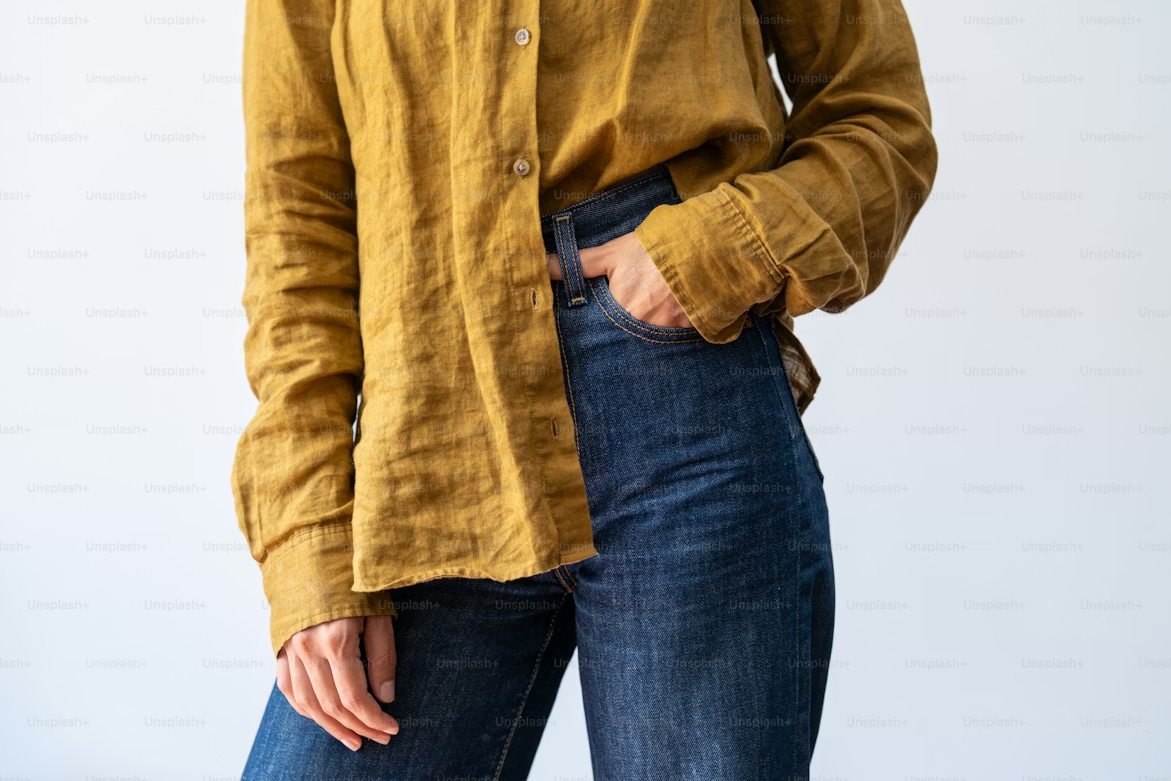
I spent years wearing jeans that were “fine.” I kept telling myself fit wasn’t that big a deal and that I was just being picky.
I was wrong. Fit is basically everything when it comes to jeans.
The jeans I used to wear — slightly too big in the waist, pooling at the ankle, a little saggy in the seat — made even my nicest tops look mediocre. Then I finally tried on a pair of dark-wash straight jeans that fit me properly and it was genuinely a shock. Same shirt. Same shoes. Completely different energy.
Dark wash is key here, by the way. It dresses up more easily than light or mid-wash, hides wear longer, and photographs well. Straight or slim-straight is the silhouette that tends to work across the most body types and occasions without being too casual or too formal.
You don’t have to spend a fortune. I’ve found great fitting jeans at mid-range stores and thrift shops alike. The investment isn’t necessarily in the brand — it’s in taking the time to actually find a pair that fits, which requires trying on a lot of options without getting frustrated.
And if a pair fits great but the length is off? A $10–$15 tailor hem is worth every penny.
If you’re still figuring out how to build your base wardrobe around pieces like this, the guide on 9 easy capsule wardrobe building steps to simplify your closet walks through the whole process in a practical, no-fuss way.
Common jeans mistakes that are worth avoiding:
- Keeping a pair because they “might fit after I lose weight” — wear what fits now
- Buying trendy cuts that don’t suit your proportions just because they’re popular
- Ignoring the waistband — if it gaps at the back, that’s not the right pair
- Assuming expensive means better fit — it doesn’t
3. A Structured Layer That Instantly Elevates Any Look
This is the piece that separates “I threw something on” from “I clearly thought about this outfit,” and the difference costs less than most people assume.
A structured layer — think a well-fitted blazer, a tailored longline cardigan, or a clean trench coat — is what takes a basic tee-and-jeans combo and makes it look like an actual outfit. It signals intentionality. It makes people assume you have style even on days when you spent 90 seconds deciding what to wear.
My personal capsule hero in this category is a blazer in a neutral — either camel, oatmeal, charcoal, or navy. These four shades work with almost every other neutral and most accent colors. I specifically avoid black blazers as my first pick because black can feel harsh and is harder to mix casually; camel or oatmeal reads as more effortless.
The mistake I made early on was buying cheap versions of this piece to “test the look.” Structured layers in low-quality fabric look obviously cheap — the shoulders sag, the front pulls, the material pills after a few wears. This is the one category where I’d suggest spending slightly more, or hunting thrift stores seriously, because quality-made blazers show up there regularly from people who bought them for one occasion and never wore them again.
I use apps like Depop, ThredUp, and Poshmark to search for specific items — you can filter by size, color, and brand, which makes thrift shopping online way more efficient than browsing racks in person.
A quick guide to finding your right structured layer:
- Decide on your occasion — primarily work, casual, or both?
- Pick a neutral that works with your existing wardrobe
- Try it on with a tucked shirt — the shoulder seams should sit at your shoulders
- Check the back for pulling or bunching when you move your arms
- Prioritize natural or blended fabrics over 100% synthetic
4. A Versatile Shoe That Goes With Almost Everything
Shoes were the last thing I optimized and genuinely one of the biggest style upgrades I made.
For years I had too many shoes that each went with very little. A pair of bold red heels (worn twice). Several pairs of nearly identical sneakers in different colors. Sandals that matched almost nothing. The result was that I was always either overdressing or underdressing because I didn’t have the right shoe for the middle ground.
The capsule approach to shoes is this: own fewer pairs, but make sure each one works with at least 70–80% of your wardrobe.
For everyday style, the single most versatile shoe I’ve found is a clean white leather sneaker or a simple loafer in tan or cognac leather. Both work with jeans, trousers, skirts, and dresses. Both dress up or down depending on what they’re paired with. Both are classic enough that they don’t go out of style in a single season.
If you want to go deeper on building a wardrobe that actually functions well across all four seasons, this article on 12 seasonal wardrobe essentials for year-round style covers the footwear angle really well alongside the rest of your closet.
The “capsule shoe” test — ask these before buying:
- Does this go with at least 5 outfits I already own?
- Is the color a neutral or does it require specific matching?
- Can I wear this for both casual and semi-dressed occasions?
- Will this still look good in 3 years?
If the answer to any of these is no, it’s probably not a capsule shoe. It’s a statement shoe — which you can own, but shouldn’t be your foundation.
Shoe care matters too. A pair of white sneakers that’s dingy and scuffed looks worse than a cheap pair that’s been properly cleaned and maintained. I wipe mine down every week or two with a sneaker cleaning kit. For leather, a conditioning product every couple of months keeps them looking expensive longer than a new pair would.
5. One “Goes With Everything” Bag in a Neutral Tone
I used to rotate between five bags depending on my outfit. It sounds organized. It was actually exhausting and I was constantly forgetting things between switches.
The single best thing I did was commit to one everyday bag for each category of my life: one medium tote for work/daily use, one crossbody for lighter days. That’s it.
And the non-negotiable rule I set for myself: both had to be in a neutral that worked with my entire wardrobe.
I went with a medium caramel-toned structured tote for daily use. It works with navy, white, grey, olive, black, beige — basically everything I own. It holds everything I need without being bulky. And because it’s structured leather (mine is genuine leather from a sale, but good faux leather works just as well visually), it looks more polished than a slouchy canvas bag even with very casual outfits.
Here’s the thing about bags that I wish someone had told me earlier: people notice them more than you think. A bag that’s visually chaotic, damaged, or mismatched with your outfit quietly drags the whole look down. A clean, simple, neutral bag silently elevates it.
What to look for in a capsule bag:
| Feature | What to aim for |
|---|---|
| Color | Tan, camel, cognac, black, or warm grey |
| Structure | Structured holds shape and reads as more polished |
| Size | Medium — fits daily essentials without being oversized |
| Material | Leather or quality faux leather |
| Hardware | Simple gold or silver — avoid overly branded hardware |
Thrift stores and secondhand platforms are especially good for bags because leather goods hold up well over time and people donate them for superficial reasons — a scratch, a slight color variation, boredom. I’ve found genuinely great quality bags for under $20 this way.
The Mistakes I Made Before I Got This Right
Getting to this simple, functional five wasn’t immediate. There were some detours.
Buying the aesthetic, not the reality. I bought pieces that looked great on a Pinterest board or on a model with different proportions than me. They didn’t translate to my life or my body and they sat unworn.
Treating capsule wardrobe as a one-time project. I did a big clear-out, bought five nice things, and then gradually let the clutter creep back in over six months. Now I do a seasonal audit — twice a year, everything gets reassessed. It takes two hours and keeps the system working.
Underestimating how much better “quality basics” feel. There’s a tactile difference between a well-made tee and a scratchy, shapeless one — and it affects how you feel wearing it all day. I thought it was snobbery until I tried it.
Skipping the “three-outfit rule” when shopping. Before I buy anything now, I mentally check whether it goes with at least three things I already own. If I can’t picture three outfits with it, I don’t buy it. This one habit has cut my impulse purchases almost entirely.
How This Actually Plays Out in Real Life
Let me paint you a picture of a typical week with these five essentials working together:
Monday morning, running slightly late. I grab the white tee, dark jeans, tan loafers, camel tote. Done in four minutes. I look put-together enough for a work meeting and comfortable enough to run errands after.
Thursday, slightly more effort needed. Same white tee tucked into trousers, blazer over the top, same bag, clean sneakers. I look like I planned the outfit for twenty minutes. I planned it for two.
Saturday, completely casual. Jeans again (they’re good jeans — I wear them a lot), white tee untucked, white sneakers, crossbody. Relaxed, clean, not trying too hard.
That’s the whole point. Less thinking, better results.
If you’re trying to take this further and figure out exactly which pieces to add beyond these five, check out the breakdown on 11 simple capsule wardrobe building pieces every closet needs — it’s a genuinely useful expansion of this list without overwhelming you with options.
One Last Thing Before You Go
You don’t have to overhaul your entire wardrobe this weekend. Start with whichever of these five you feel is the weakest link in your current closet.
For most people that’s either the jeans (wrong fit) or the bag (doesn’t match anything). Fix one. See how it changes your daily getting-dressed experience. Then keep going.
The goal isn’t to dress like a minimalist monk. It’s to make your closet actually work for you instead of against you — so that getting dressed takes five minutes instead of twenty, and the result is consistently better.
Small changes. Real difference.