

A closet reset sounds simple on paper: open your wardrobe, remove what you don’t wear, keep what you love. In reality, it’s closer to a slow audit of habits, identity, and everyday decision-making.
When I did my own reset, I expected to end up with “fewer clothes.” What I didn’t expect was how much it would change the way I think about time, repetition, comfort, and even self-expression. Minimalism in clothing isn’t really about owning less—it’s about needing less mental effort to get dressed.
Below are 11 lessons that came from that process, each shaped by trial, error, and a lot of “why did I even buy this?” moments.
lesson 1: clarity matters more than variety
Before the reset, I thought variety was the goal. More options meant better outfits. In practice, it meant indecision.
Once I reduced my wardrobe, something unexpected happened: outfits became clearer, not more limited.
comparison of wardrobe states:
| Factor | Before Reset | After Reset |
|---|---|---|
| Number of items | High | Moderate |
| Outfit decisions | Overwhelming | Simple |
| Daily confusion | Frequent | Rare |
| Favorite items worn | 20–30% | 70–90% |
The goal shifted from “having choices” to “having useful choices.”
lesson 2: your wardrobe should match your real life, not your ideal life
This was one of the biggest realizations. I owned clothes for situations that rarely happened: formal dinners, imagined events, “someday” versions of myself.
But my actual life was much simpler: routine work, casual outings, home time, and occasional social plans.
So I rebalanced everything.
wardrobe alignment chart:
| Lifestyle Activity | Actual Time Spent | Wardrobe Priority |
|---|---|---|
| Work / Study | 40% | High |
| Casual outings | 25% | High |
| Home / comfort | 20% | Medium |
| Special events | 15% | Low |
Once I aligned clothing with reality, unnecessary pieces became obvious.
lesson 3: repetition is not boring—it’s efficient
At first, repeating outfits felt uninspired. But over time, I realized repetition reduces friction.
Instead of reinventing outfits daily, I started refining a few reliable combinations.
example rotation system:
| Day | Outfit Formula |
|---|---|
| Monday | Shirt + trousers + sneakers |
| Tuesday | T-shirt + jeans + jacket |
| Wednesday | Knitwear + trousers |
| Thursday | Casual top + denim |
| Friday | Relaxed shirt + neutral pants |
The goal wasn’t novelty. It was consistency with flexibility.
lesson 4: neutral colors are a silent productivity tool
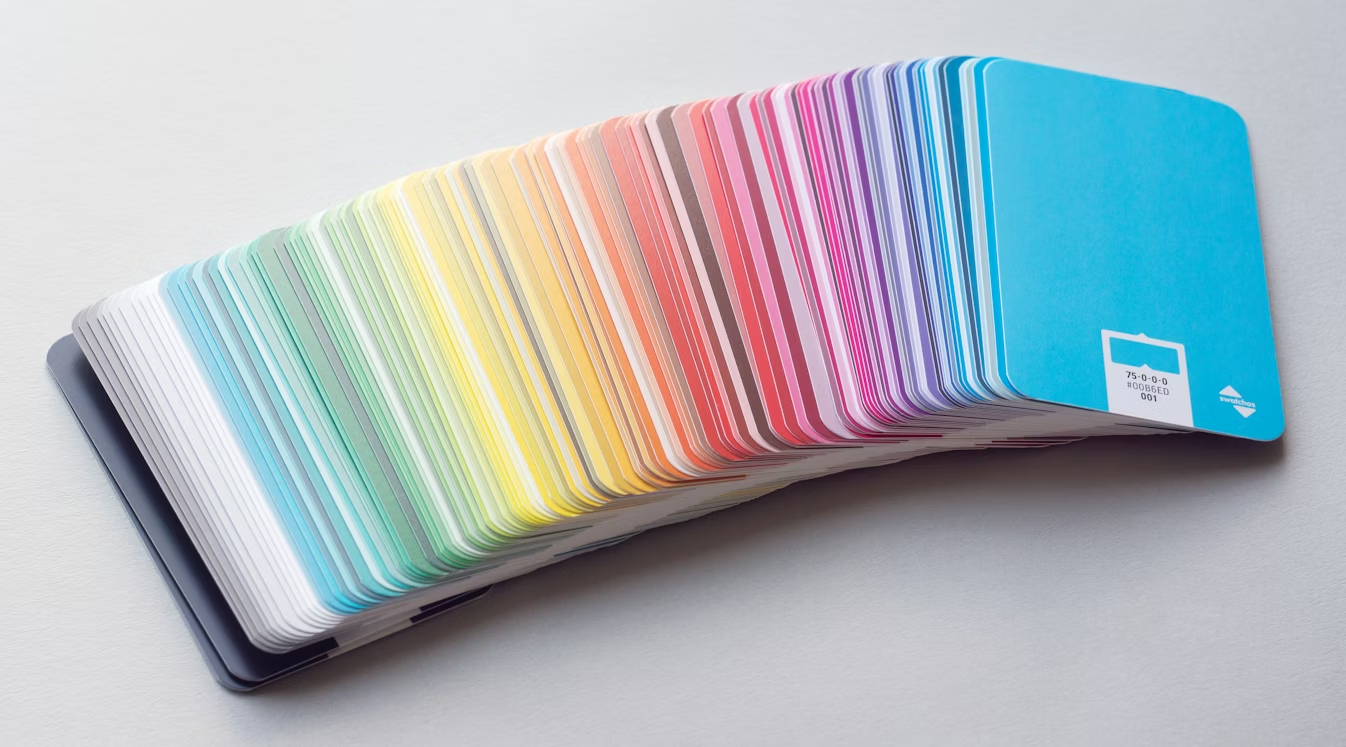
Color chaos creates decision fatigue. Once I shifted toward a neutral palette, everything started working together.
core palette:
- white
- black
- beige
- navy
- grey
accent colors (limited use):
- olive
- muted brown
- soft blue
color compatibility matrix:
| Base Color | Works With Most Items |
|---|---|
| Black | Yes |
| White | Yes |
| Beige | Yes |
| Navy | Yes |
When colors coordinate automatically, outfit planning becomes almost effortless.
lesson 5: fabric matters more than quantity
I used to judge clothes by appearance alone. After the reset, I started paying attention to fabric—and it changed everything.
Different fabrics behave differently in real life:
fabric comparison table:
| Fabric Type | Comfort | Durability | Formality | Use Frequency |
|---|---|---|---|---|
| Cotton | High | Medium | Low | Very High |
| Linen | High | Medium | Medium | Seasonal |
| Wool | Medium | High | High | Medium |
| Denim | Medium | High | Medium | High |
Better fabric = fewer replacements = more consistent wardrobe.
lesson 6: fit determines whether clothes “exist” in your wardrobe
Poor fit makes clothes invisible because you avoid wearing them.
After trying everything on, I noticed a pattern: even expensive items went unworn if the fit was slightly off.
fit checklist:
| Fit Area | Question to Ask |
|---|---|
| Shoulders | Does it align properly? |
| Waist | Is it too tight or loose? |
| Length | Does it feel balanced? |
| Movement | Can I wear it all day? |
If the answer isn’t yes, the item doesn’t stay.
lesson 7: accessories are force multipliers
Instead of buying more clothes, I started using accessories strategically.
simple outfit transformation table:
| Base Outfit | Accessory Change | Outcome |
|---|---|---|
| T-shirt + jeans | Watch + belt | Polished casual |
| Shirt + trousers | Sneakers | Relaxed smart |
| Same outfit | Formal shoes | Semi-formal |
Accessories increased outfit variety without increasing clothing volume.
lesson 8: “one good item” beats five average ones
This lesson reshaped my buying habits completely.
Instead of buying multiple “okay” pieces, I started waiting for one strong version of an item.
comparison:
| Strategy | Result |
|---|---|
| Multiple cheap | Clutter + fatigue |
| One quality item | Reliability |
The shift wasn’t about price—it was about usefulness per wear.
lesson 9: layering creates hidden wardrobe expansion
Layering gave me more outfit combinations without adding new items.
layering combinations:
| Base Layer | Top Layer | Result |
|---|---|---|
| T-shirt | Cardigan | Soft casual |
| Shirt | Jacket | Structured look |
| Tank top | Overshirt | Relaxed layering |
A small wardrobe became much more flexible through layering alone.
lesson 10: maintenance is part of the wardrobe system
A minimal wardrobe doesn’t stay minimal on its own. It requires maintenance.
weekly system I now follow:
| Task | Frequency |
|---|---|
| Laundry | Weekly |
| Decluttering | Monthly |
| Repairs | As needed |
| Seasonal review | Quarterly |
Maintenance ensures consistency over time.
lesson 11: your style will evolve—plan for it
One mistake I made early was trying to build a “final wardrobe.” That doesn’t exist.
style evolution tracking:
| Time Period | Style Shift |
|---|---|
| Year 1 | Casual basics |
| Year 2 | More structure |
| Year 3 | Cleaner minimal palette |
A good wardrobe adapts instead of resisting change.
complete minimal wardrobe structure
Here’s what a balanced minimal wardrobe might look like:
| Category | Recommended Range |
|---|---|
| Tops | 8–12 |
| Bottoms | 4–6 |
| Outerwear | 3–5 |
| Shoes | 3–4 |
| Accessories | 4–8 |
This structure isn’t strict—it’s flexible guidance.
outfit combination map
| Category Mix | Example Outfit |
|---|---|
| Casual | T-shirt + jeans + sneakers |
| Smart casual | Shirt + trousers + loafers |
| Layered comfort | Knit + trousers + jacket |
| Minimal travel outfit | Hoodie + pants + sneakers |
Even a small wardrobe can create dozens of combinations when structured properly.
cost-per-wear insight
One of the most useful mindset shifts was thinking in cost-per-wear terms.
| Item Type | Cost | Usage Frequency | Value Outcome |
|---|---|---|---|
| T-shirt | Low | High | Very high |
| Jeans | Medium | High | High |
| Jacket | Medium | Medium | High |
The more you wear something, the more valuable it becomes.
closing reflection
A minimal wardrobe isn’t about restriction. It’s about reducing unnecessary friction. The goal isn’t fewer clothes—it’s fewer problems when getting dressed.
After the reset, I didn’t feel like I had “less.” I felt like I had exactly what I needed, in a way that finally made sense for my life.
frequently asked questions
- how many clothes do I need for a minimal wardrobe?
Most people function well with 25–50 well-chosen items depending on lifestyle. - does a minimal wardrobe get boring?
Not if you focus on combinations instead of quantity. Layering and accessories help a lot. - should I throw everything away to start?
No. Start by identifying what you actually wear and build from there. - can I still follow trends with a minimal wardrobe?
Yes, but selectively. Trends should complement your base wardrobe, not replace it. - what’s the biggest mistake people make in wardrobe resets?
Keeping items “just in case.” This usually leads to clutter returning. - how long does it take to build a minimal wardrobe?
It varies, but most people refine it gradually over months, not days.