A “budget wardrobe” sounds like the smartest way to dress well without overspending. But in reality, many people trying to save money on clothing end up doing the opposite. They buy more, replace items faster, and constantly feel like they have “nothing to wear” despite a full closet.
The problem usually isn’t the budget itself—it’s how that budget is used. Small decision patterns quietly add up, turning “cheap shopping” into long-term waste. This article breaks down five of the most common mistakes that make your wardrobe more expensive over time, even when each individual purchase feels like a bargain.
mistake 1: buying cheap instead of cost-effective

One of the most common assumptions is that cheaper clothes automatically save money. In reality, low price often hides higher long-term cost. Poor stitching, weak fabric, and fast fading mean you replace items much more often.
A budget wardrobe is not about buying the cheapest option—it is about maximizing cost per wear.
cost comparison chart: cheap vs quality items
| item type | price | lifespan (months) | wears | cost per wear |
|---|---|---|---|---|
| fast fashion tee | $10 | 3 | 20 | $0.50 |
| mid-quality tee | $25 | 12 | 80 | $0.31 |
| durable tee | $45 | 24 | 160 | $0.28 |
At first glance, the cheap option seems better. But over time, it becomes the most expensive because it needs repeated replacement.
hidden cost breakdown
| factor | cheap clothing impact |
|---|---|
| durability | low → frequent replacement |
| color fading | fast → looks old quickly |
| stitching quality | weak → repairs or disposal |
| resale value | zero |
A budget wardrobe becomes expensive when items don’t last long enough to justify even their low price.
mistake 2: buying for the moment instead of the system
Impulse buying is one of the biggest budget killers. A discount, a sale, or a “good deal” often leads to purchasing items that don’t fit your wardrobe system.
The result: clothes that don’t match anything you own, so they rarely get worn.
wardrobe compatibility chart
| purchase type | wardrobe integration | usage frequency |
|---|---|---|
| planned purchase | high | frequent |
| impulse buy | low | rare |
| trend-based buy | medium-low | short-term |
A budget wardrobe works like a system, not a collection of isolated items.
example:
You buy a cheap green patterned shirt on sale. It looks good in the store but:
- doesn’t match your pants
- doesn’t fit your shoes
- doesn’t suit your usual style
Result: worn 2–3 times, then forgotten.
system thinking approach:
Before buying, ask:
- What 3 outfits will this work with?
- What items in my wardrobe already match it?
If you can’t answer, it’s not a budget purchase—it’s an expense.
mistake 3: ignoring fit and tailoring
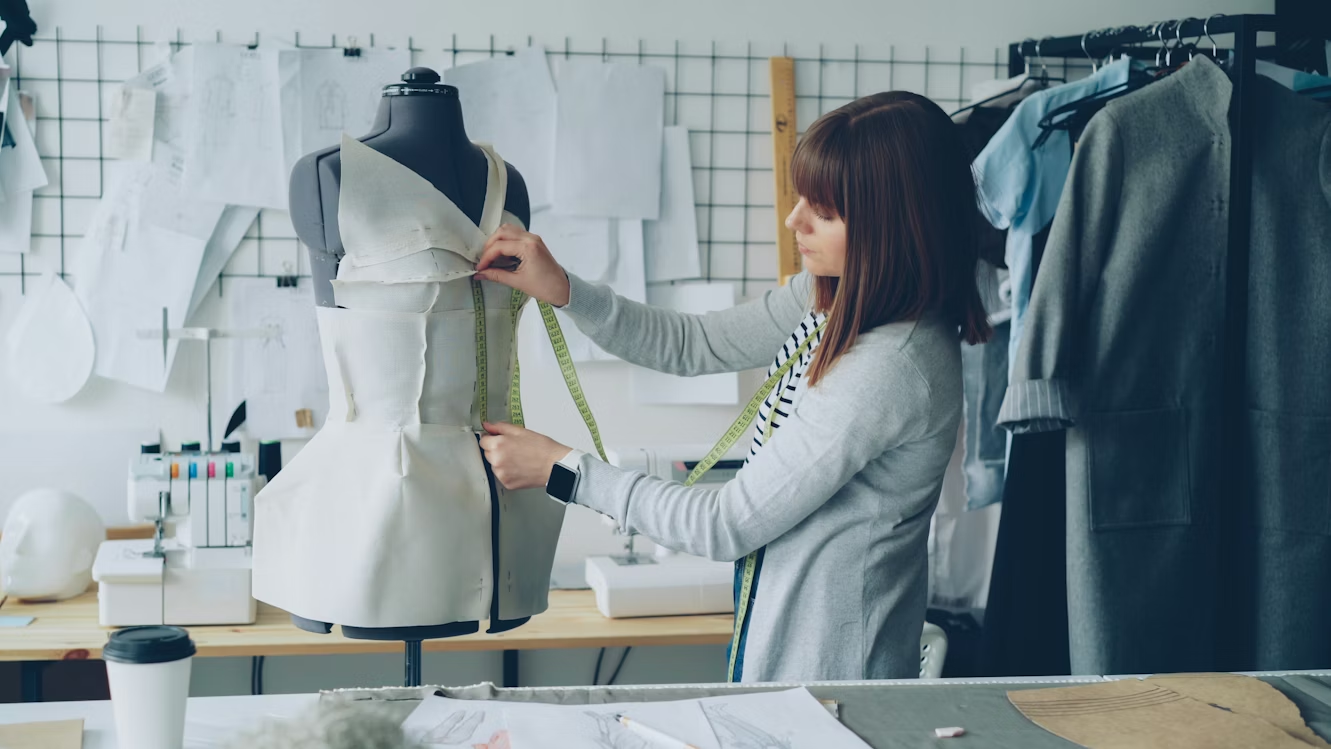
Many people focus only on price and fabric, ignoring fit. But poor fit makes even expensive clothing look cheap, and cheap clothing look worse.
A budget wardrobe becomes expensive when ill-fitting clothes sit unused in your closet.
fit impact table
| fit quality | visual appearance | usage likelihood |
|---|---|---|
| poor fit | uncomfortable | low |
| average fit | acceptable | medium |
| good fit | polished | high |
common fit issues that waste money:
- too long trousers
- tight shoulders
- loose waist
- awkward sleeve length
real-world impact:
You buy 5 cheap items, but only wear 2 because the rest don’t fit well. That means you’ve effectively doubled your cost per usable item.
simple tailoring value comparison
| item type | tailoring cost | improvement in usability |
|---|---|---|
| trousers | $5–$10 | very high |
| shirts | $3–$8 | high |
| jackets | $10–$20 | very high |
A small tailoring investment often increases usage by 2–3x.
mistake 4: not tracking wardrobe usage
Most people don’t realize how often they actually wear their clothes. Without tracking, it’s easy to assume everything is being used equally.
In reality, 20% of your clothes usually get worn 80% of the time.
usage distribution chart
| wardrobe segment | usage rate |
|---|---|
| favorite items | 70–80% |
| occasional items | 15–25% |
| unused items | 10–30% |
When you don’t track usage, you continue buying items you already don’t need.
hidden spending pattern:
- you buy 10 items
- wear 4 regularly
- forget 6 exist
- buy again thinking you “lack clothes”
simple tracking method:
| item category | worn this month | rating (1–5) |
|---|---|---|
| t-shirts | 6 | 5 |
| jeans | 10 | 5 |
| jacket | 2 | 3 |
After 2–3 months, patterns become clear:
- what you actually use
- what you never touch
- what needs replacement
This prevents repeat waste.
mistake 5: overbuying basics without strategy
Basics are essential in a wardrobe—but beginners often overbuy them thinking “basic = safe.” This leads to duplication and inefficiency.
You don’t need 10 white t-shirts if you only wear 3 regularly.
basic item saturation chart
| item type | ideal quantity | common mistake |
|---|---|---|
| white tees | 2–4 | 8–10 |
| black tees | 2–3 | 5–7 |
| jeans | 2–4 | 6–8 |
| hoodies | 1–3 | 5+ |
overbuying basics leads to:
- cluttered wardrobe
- repetitive outfits
- unused items piling up
- unnecessary spending
better approach: strategic basics system
| category | purpose | quantity rule |
|---|---|---|
| daily basics | high rotation | 3–5 |
| backup items | occasional use | 1–2 |
| seasonal | weather dependent | 1–3 |
Instead of buying multiple similar items, invest in slightly varied but functional pieces.
example variation strategy:
- 2 white t-shirts (different cuts)
- 1 off-white shirt
- 1 textured neutral top
This creates variety without excess.
how these mistakes connect
These five mistakes often reinforce each other:
- cheap buying leads to frequent replacement
- impulse buying leads to poor compatibility
- poor fit leads to unused items
- no tracking leads to repeated mistakes
- overbuying basics creates hidden clutter
Together, they create the illusion of “having clothes but nothing to wear.”
cycle of wardrobe waste
buy → regret → replace → clutter → repeat
Breaking this cycle requires structure, not more spending.
smarter budget wardrobe framework
A better system focuses on three pillars:
- usability
- durability
- compatibility
budget wardrobe optimization table
| principle | focus area | outcome |
|---|---|---|
| usability | how often worn | less waste |
| durability | how long it lasts | lower replacement |
| compatibility | outfit matching | higher efficiency |
When all three align, spending naturally decreases without sacrificing style.
realistic budget wardrobe structure
example balanced wardrobe setup:
| category | items | purpose |
|---|---|---|
| tops | 8–10 | rotation + layering |
| bottoms | 4–6 | structure |
| outerwear | 2–4 | seasonal use |
| shoes | 2–3 | daily function |
| accessories | 3–5 | variation |
total: 20–30 well-used items
key insight:
A smaller but functional wardrobe always outperforms a large, poorly planned one.
frequently asked questions
- is a budget wardrobe always cheaper in the long run?
Not automatically. It only saves money if purchases are strategic, durable, and compatible with your lifestyle. - how do I avoid impulse buying clothes?
Wait 24–48 hours before purchasing and ask how many outfits the item fits into. If you can’t name at least three, skip it. - should I always buy expensive clothes for better quality?
No. Focus on cost per wear, not price. Mid-range quality often provides the best balance of durability and affordability. - how many basic items do I actually need?
Most people only need 2–5 of each basic category depending on how often they do laundry and their lifestyle. - is tailoring worth it for budget wardrobes?
Yes. Small tailoring adjustments significantly improve fit and extend the usability of inexpensive clothes. - how do I know if my wardrobe is wasting money?
If you regularly feel like you have “nothing to wear” despite many clothes, or if many items go unworn for months, your system likely needs adjustment.
final thoughts
A budget wardrobe is not about spending less on every item—it is about spending smarter overall. The real cost doesn’t come from individual purchases, but from patterns: buying without planning, ignoring fit, overloading basics, and failing to track usage.
Once those patterns are corrected, your wardrobe naturally becomes more efficient. You stop buying duplicates, start wearing what you own more often, and reduce unnecessary spending without feeling restricted.
In the end, the goal isn’t just a cheaper wardrobe—it’s a wardrobe that quietly works better every single day.