

Okay, real talk — I used to spend way too much money on clothes I barely touched.
My closet was packed. Like, genuinely overflowing. Tops I bought because they were on sale, pants that “seemed like a good idea at the time,” and at least four versions of the same black dress because I kept forgetting I already owned one.
And yet, every single Monday morning I’d stand there thinking I have nothing to wear.
It took me an embarrassingly long time to figure out the problem. It wasn’t that I didn’t have enough clothes. It was that I had too many wrong ones — and almost none of the right ones.
Once I started actually tracking what I wore each week (I used the Stylebook app for a while, which is genuinely great for this), I noticed something kind of humbling: I was rotating through maybe 8–10 items on repeat. Everything else? Just taking up space and making me feel guilty.
So I stripped things back. I stopped chasing trends. I focused on pieces that actually worked for my real life — not my fantasy life where I attend rooftop parties in Milan.
These are the five pieces that made the cut. Every single one is budget-friendly, and every single one gets worn multiple times a week without fail.
1. A Plain White or Cream T-Shirt (The One You’ll Reach for Without Thinking)
I know. I know. You’ve heard this before. But hear me out, because I used to skip this one too — I thought plain white tees were boring, and besides, I already had like six of them that had gone yellow or weirdly stretched out in the wash.
The difference is finding the right one. And it took me three or four tries to get there.
The version I keep coming back to is a slightly heavier cotton tee — not the tissue-thin kind that goes see-through in sunlight. I found mine at Uniqlo (their Supima cotton tees hover around $15–$20) and honestly, it changed how often I actually reached for it.
Why it works so hard:
- Tuck it into wide-leg trousers for a clean, put-together look
- Layer it under an open button-down on cooler days
- Wear it with jeans and sneakers for errands and it still looks intentional
- Knot it at the waist with a midi skirt if you’re feeling creative
The mistake I made early on was buying cheap multipacks. They seem like a deal but they pill fast, lose shape after a few washes, and that slightly-off neckline will bother you every time you put it on. Spend just a little more on one good one. It’s worth it.
Price range to aim for: $12–$25
2. Dark Wash Straight-Leg Jeans (Not Skinny, Not Wide — Right in the Middle)
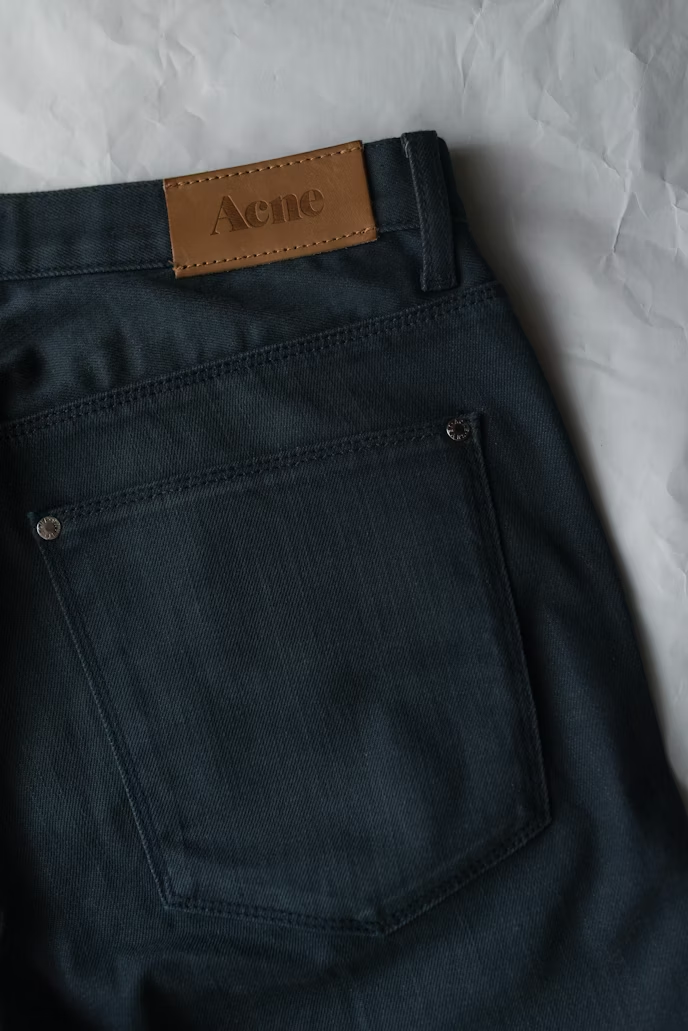
For years I was loyal to skinny jeans. Then I swung hard to wide-leg. Then I was confused and owned six pairs of jeans that all felt “almost right.”
The straight-leg dark wash jean was the thing that finally settled it.
I picked up a pair from Mango during a sale — paid about $35 — and I’ve worn them at least twice a week for the past eight months. They look dressy enough for a dinner out but casual enough for a weekend coffee run. They work with sneakers, loafers, ankle boots, even mules.
Dark wash specifically is the move here because it photographs better, looks cleaner on an off day, and doesn’t show wear as quickly as lighter denim. Building a wardrobe around versatile basics like this is genuinely one of the smartest things you can do — here’s more on that thinking.
| Jean Style | Dressiness Level | Versatility | Works with Sneakers? |
|---|---|---|---|
| Skinny | Medium | Medium | Yes |
| Wide-leg | Medium-High | Medium | Sometimes |
| Straight-leg dark wash | Medium-High | High | Yes |
| Distressed/light wash | Casual | Low | Yes |
The common mistake here: going a size down “because they’ll stretch.” Dark denim especially doesn’t always stretch the way you hope and you’ll spend the day uncomfortable. Size honestly. You’ll wear them more.
Price range to aim for: $25–$45
3. A Lightweight Layer (Cardigan, Overshirt, or Linen Blazer — Pick Your Flavor)
This is the piece that makes the whole outfit look like you tried, even when you didn’t.
I’ve cycled through different versions of this over the years. Right now I’m obsessed with a camel-colored knit cardigan I found at H&M for $22. Before that it was a striped oversized button-down from a thrift store. Before that it was a linen blazer I grabbed from Zara on clearance.
The specific item matters less than the function: it’s a layer you can throw over literally anything and immediately look more put-together.
The formula that never fails:
- Start with a simple base (your white tee or a fitted tank)
- Add your jeans or trousers
- Throw on the layer — leave it open, or do one button
- Add shoes that match the vibe (sneakers = casual, loafers = elevated)
Done. That’s an outfit. No stress, no mirror spiral.
What to avoid: buying a cardigan or blazer that only works with one or two things. You want something neutral — camel, cream, grey, navy, black — that plays well with everything else in your closet.
Also, thrift stores are genuinely incredible for this category. People donate blazers and cardigans all the time in great condition. I’ve found some of my best layers for under $8.
Price range to aim for: $15–$40 (or $5–$12 at thrift stores)
4. Black Straight-Leg or Tapered Trousers (The “I Look Like I Have My Life Together” Pants)
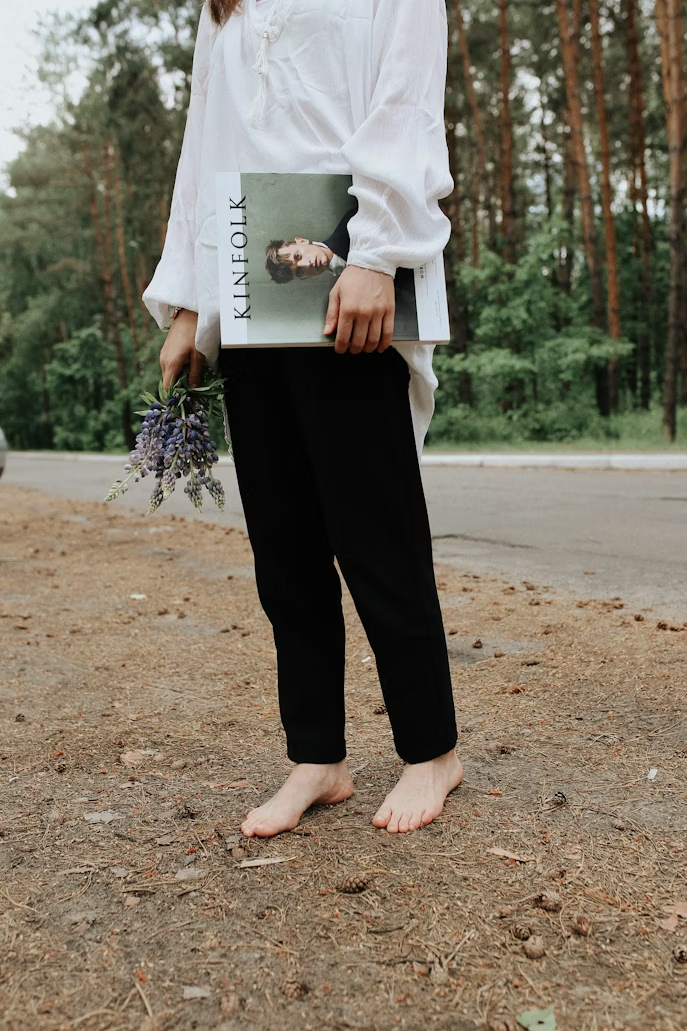
Jeans are great. But there are days when jeans feel too casual, and you don’t want to get dressed up in an actual dress or blazer situation. That gap? It’s filled entirely by a good pair of black trousers.
I found mine at Primark — yes, Primark — for about $18. They have a slight taper at the ankle, sit at the high waist, and they’re made from a fabric that doesn’t wrinkle too easily. I’ve worn them to client meetings, dinner dates, and also just to the grocery store on days I felt like being a little extra.
Ways I actually wear mine:
- With a white tee tucked in and loafers → looks like you’re a creative professional who has things figured out
- With a ribbed tank and sneakers → somehow still works, somehow still looks good
- With a fitted rollneck in winter → immediately feels very French and intentional
- With an oversized knit → cozy but structured
The mistake I made: I bought a pair with a tiny bit of stretch in the fabric thinking it would be more comfortable. The problem is stretch fabric in trousers tends to sag at the knees and butt area throughout the day and looks worn-out fast. Go for woven fabric without stretch if you can — you’ll actually look better and they’ll hold their shape longer.
Price range to aim for: $18–$40
5. A White Sneaker or a Simple Neutral Flat (The Shoe That Goes With Everything)
Okay, shoes are technically separate from clothing but they’re so central to how these outfits actually land that I had to include one here.
For years I bought shoes based on vibes — “oh these are cute” — without thinking about whether they’d actually work with what I owned. I had heeled boots that hurt my feet, sandals that only went with two things, and three pairs of almost-identical trainers.
The one I actually wear constantly: a clean white low-top sneaker. I have a pair of New Balance 574s I bought during a sale ($55, which felt like a lot but divided by how often I wear them is basically nothing) and a cheaper pair of white canvas plimsolls from ASOS for about $20 that hold up surprisingly well.
If sneakers aren’t your thing, a simple pointed-toe ballet flat in black or nude works the same way — pulls outfits together without competing with them.
What makes a shoe genuinely versatile:
| Feature | Why It Matters |
|---|---|
| Neutral colorway (white, black, tan, nude) | Works with any outfit palette |
| Simple silhouette | Doesn’t overpower the look |
| Comfortable enough for all-day wear | You’ll actually reach for it |
| Easy to clean | Stays looking fresh longer |
The mistake most people make: buying a “statement” shoe and then discovering it only goes with like 20% of your wardrobe. Save statement shoes for when you’re building more. Start with the reliable neutral.
Price range to aim for: $20–$60
A Quick Look at How These Five Actually Work Together
Here’s the thing — these pieces aren’t just good individually. They work together in a way that gives you way more outfits than five items should logically produce.
| Outfit | Pieces Used |
|---|---|
| Casual weekend | White tee + dark jeans + white sneakers |
| Smart casual | Black trousers + white tee + cardigan + loafers |
| Errand run | Dark jeans + cardigan + white sneakers |
| Dinner out | Black trousers + tucked white tee + blazer + simple flat |
| Cozy but intentional | Black trousers + oversized cardigan + sneakers |
That’s five distinct outfits from five items. Add a couple of extras — a tank top, a ribbed turtleneck, a denim jacket — and you’ve got two weeks of outfits without repeating.
The Mistakes I Made Before I Figured This Out
Since we’re being honest here:
Buying “aspirational” clothes. I once bought a silk midi skirt because I imagined the version of my life where I’d wear it. I wore it once. Don’t dress for the life you want in theory — dress for the life you actually have.
Prioritizing price over cost-per-wear. A $10 top you wear once is more expensive than a $40 one you wear forty times. This reframe genuinely changed how I shopped.
Chasing trends instead of knowing my style. Every time I bought something because it was everywhere on Instagram, I wore it for two months and then couldn’t stand it. The pieces I listed above? Timeless. They’ll work next year too.
Not trying things on (or checking return policies). Online shopping is great but fit is everything. If you’re buying online, stick to brands with easy returns and don’t talk yourself into keeping something that doesn’t fit right.
One Last Thing
Building a wardrobe that actually works doesn’t mean spending nothing. It means spending intentionally.
These five pieces — a white tee, dark jeans, a lightweight layer, black trousers, and a neutral shoe — cost me a combined total of maybe $120–$160 depending on where you shop. That’s one mid-range “occasion outfit” that I’d wear twice.
Instead, I have five things I wear every week, that mix and match endlessly, that make getting dressed genuinely easy.
That’s not minimalism for the sake of aesthetics. That’s just making your wardrobe work for your actual life.