

There was a point where opening my closet felt like a punishment.
Not because I didn’t have enough clothes — I had plenty. Shirts stuffed into corners, jeans folded three layers deep, random blazers from events I barely remember attending. Every morning I’d stand there for ten minutes, feel mildly stressed, and then grab the same three outfits I always wore anyway.
Sound familiar?
That closet reset I finally did two years ago changed everything. Not because I bought a fancy organizer system or followed some rigid minimalist manifesto — but because I started thinking about my wardrobe differently. The capsule wardrobe approach was the thing that finally clicked for me, and the biggest payoff wasn’t just better outfits. It was a genuinely cleaner, calmer closet that I actually enjoy opening every morning.
Here are the five tips that made the biggest difference. These aren’t abstract concepts — this is exactly what I did, in the order I did it.
1. Do a Ruthless “Wear Test” Before Keeping Anything
The first time I tried decluttering my closet, I made a classic mistake. I held up each item and asked myself, “Do I like this?” The problem? I liked a lot of things in theory. That embroidered jacket? Beautiful. Those linen trousers I bought on holiday? Lovely. Did I wear either of them in the past year? Not once.
The question you actually need to ask is: “Have I worn this in the last 90 days — and if not, why not?”
The “why not” is the important part. If the answer is “it doesn’t fit comfortably,” “it only goes with one thing I own,” or “I have to think too hard about styling it” — that’s your answer. Out it goes.
I went through my closet over a weekend and made three piles:
- Keep: Worn regularly, fits well, pairs with multiple things
- Maybe: Haven’t worn recently but have a clear, specific use
- Out: Hasn’t been touched, doesn’t fit, or requires too much effort
The “Maybe” pile is where people get stuck. My rule: if I couldn’t describe exactly when and how I’d wear something within thirty seconds, it moved to the “Out” pile. No exceptions.
I got rid of 40% of my wardrobe that weekend. The closet immediately breathed. And the surprising part? I didn’t miss a single thing.
Wear Test Decision Guide
| Question to Ask | Answer | Decision |
|---|---|---|
| Worn in the last 90 days? | Yes | Keep |
| Worn in the last 90 days? | No | Ask why |
| Does it fit comfortably right now? | No | Out |
| Does it pair with 3+ other items? | No | Out |
| Can you style it in 30 seconds? | No | Maybe/Out |
| Is it a duplicate of something better? | Yes | Out |
| Do you genuinely love wearing it? | Yes | Keep |
2. Build Around a Core Color Palette — And Actually Stick to It
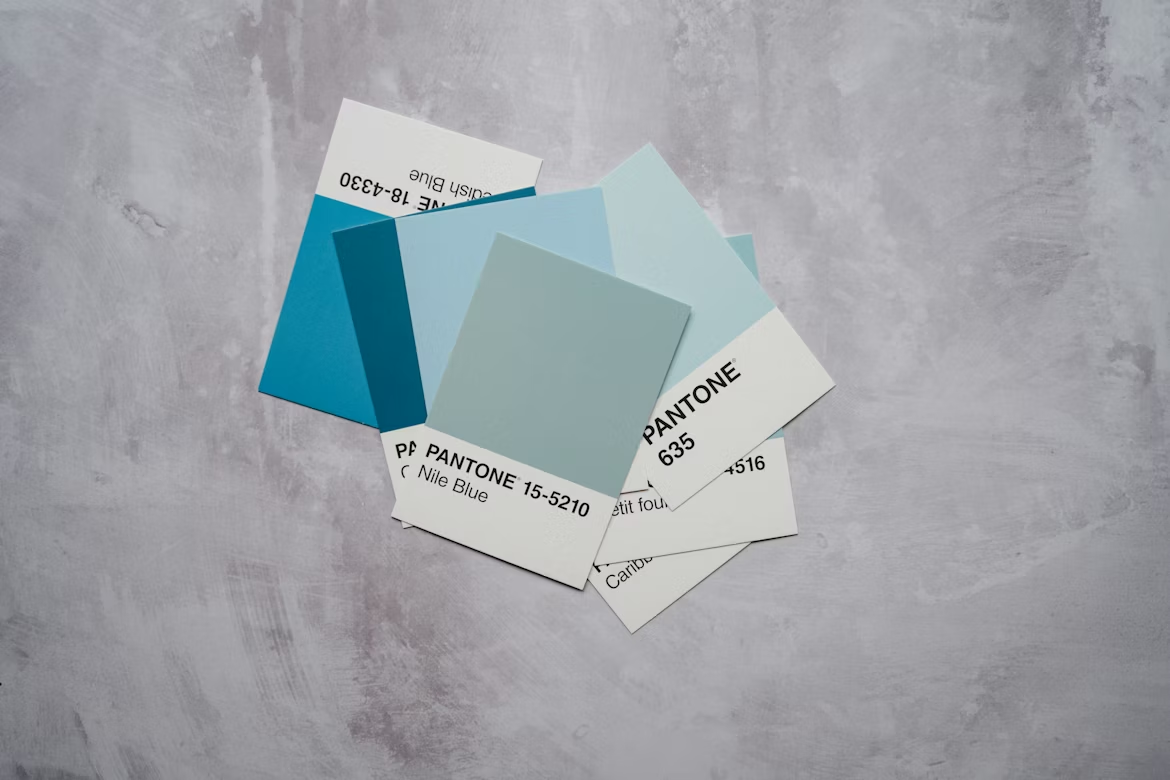
This was the tip that genuinely transformed my closet from a chaotic collection into something that felt intentional. Before I did this, my wardrobe was basically a rainbow explosion. Burgundy top. Mustard trousers. A teal jacket. All individually fine. Together? A mess.
A capsule wardrobe only works if the pieces actually talk to each other. That means picking a color palette of 3–4 neutrals and 1–2 accent colors, and buying nothing outside of it.
My personal palette: white, navy, olive, charcoal grey, with rust as my one accent. Everything I own now fits within that range. The result is that literally any top I grab works with any bottom I grab. No more “this doesn’t go with anything” problem.
How to find your palette:
- Pull out the clothes you actually wear most often and lay them on your bed
- Notice what colors keep repeating — those are your naturals
- Identify one or two accent pieces you love and keep coming back to
- Write it down — seriously, keep a note on your phone so you have it while shopping
The hardest part is saying no to impulse buys outside your palette. I failed at this twice — once with a bright orange tee that seemed cool in the store and once with a patterned shirt that “felt different.” Both sat unworn for months.
For those just getting started with this approach, 7 Essential Capsule Wardrobe Building Rules for Beginners lays out a really solid foundation — the color palette section especially resonated with where I was when I started.
Sample Capsule Color Palettes by Style
| Style | Neutrals | Accent Colors |
|---|---|---|
| Classic minimal | White, grey, black | Camel or navy |
| Warm earthy | Cream, olive, tan | Rust or terracotta |
| Cool & urban | Navy, charcoal, white | Cobalt or slate blue |
| Soft neutral | Beige, blush, off-white | Sage green or dusty rose |
| Bold minimal | Black, white, grey | One strong color only |
3. Set a Hard Number — and Keep to It
One of the things nobody tells you about building a capsule wardrobe is that you need to decide how many items you actually want to own. Without a number, the closet slowly fills back up again. I watched it happen to myself.
After my first declutter, I felt great. Then over the next six months, I picked up a few things here and there — “just a basic tee,” “just one more sweater,” “this was on sale so it doesn’t count.” Within eight months, I was halfway back to where I started.
Setting a firm number fixed this. For me, that number is 32 items total — not including formal wear, workout gear, or underwear/socks. Every category has a cap:
- Tops: 10
- Bottoms: 6
- Layering pieces: 5
- Shoes: 4
- Outerwear: 3
- Accessories: 4
When I want something new, I have to remove something first. This “one in, one out” rule sounds strict, but it’s actually really freeing. It forces me to evaluate what I’m buying instead of impulse shopping.
There are apps that can help you track this — Stylebook and Smart Closet are both worth a look if you want a digital inventory. I used a simple notes app with a numbered list for the first few months, which worked just fine.
Capsule Wardrobe Size Guide by Lifestyle
| Lifestyle | Suggested Total Items | Notes |
|---|---|---|
| Work from home | 20–28 | Fewer formal pieces needed |
| Office worker | 28–35 | Balance casual and professional |
| Frequent traveler | 25–32 | Prioritize versatile, packable pieces |
| Active/outdoorsy | 25–33 | Include performance basics |
| Social/events-heavy | 30–38 | A few elevated pieces make sense |
These are rough ranges — your number should feel challenging but not stressful. If 32 feels overwhelming, start with 40 and work down gradually.
4. Organize by Outfit, Not by Category

This one is a small change that made a surprisingly big difference in how clean my closet actually feels day to day.
Most people organize their closet by category — all shirts together, all trousers together, all jackets in one section. Makes logical sense. But what this does is force you to mentally assemble an outfit every single morning, which is exhausting before coffee.
I switched to organizing by outfit groupings instead. My most-worn combinations hang together: the white tee, dark jeans, and overshirt I grab three times a week are all in the same section. My “slightly smarter” cluster — the navy chinos, white Oxford, and loafers — are grouped together. My workout things are in a separate drawer entirely so they don’t clutter the main view.
The practical steps:
- Think about your 6–8 most-worn outfit combinations
- Group those pieces together in your closet or on the same shelf
- Keep your “less frequent” pieces (occasionwear, etc.) at the far end or in a separate area
- Store off-season items in a box or separate shelf — not in the main rotation
A useful reference here is 10 Smart Capsule Wardrobe Building Tips for a Clutter-Free Closet — there are some great ideas there on storage and visual organization that I ended up incorporating into my setup.
The visual impact alone is worth it. When your closet shows you complete outfits instead of a wall of individual items, it genuinely looks and feels cleaner — even if the item count is the same.
Outfit Grouping vs. Category Organization
| Approach | Morning Decision Time | Visual Clarity | Ease of Getting Dressed |
|---|---|---|---|
| Category organization | 5–10 minutes | Moderate | Requires mental effort |
| Outfit grouping | 1–2 minutes | High | Almost automatic |
| Mixed approach | 3–5 minutes | Good | Mostly easy |
| No system | 10–15+ minutes | Low | Stressful |
5. Do a Seasonal Swap — But Keep It Simple

The final tip is about maintenance, because a clean capsule closet isn’t a one-time project. It needs a light reset every season to stay manageable.
I do a mini audit four times a year — spring, summer, fall, and winter. Each session takes about an hour. Here’s exactly what I do:
Step 1: Pull out anything that doesn’t make sense for the upcoming season (heavy wool sweaters in spring, linen shorts in November) and store it in a labelled bin on the top shelf or under the bed.
Step 2: Look at what’s left and ask: “Is there anything here I didn’t reach for much this past season?” If yes, it goes into a donation pile rather than being stored and brought back next year.
Step 3: Identify if there are any genuine gaps. Not “I want something new” gaps — actual functional gaps. Did I need a lightweight jacket but not have one? That’s a real gap worth filling.
Step 4: If I’m filling a gap, I follow the “one in, one out” rule from Tip 3.
This process has stopped the slow closet creep that used to happen every year. Pieces don’t accumulate. The stored items get reviewed before they come back. And I never find myself pulling out a sweater from storage and going “why did I keep this?”
One thing I’d add: when you’re doing your seasonal swap, take five minutes to actually clean the closet itself. Wipe down shelves, vacuum the floor, air it out. It sounds trivial but it makes the closet feel fresh and signals — mentally — that you’re being intentional about your space.
If you want a more detailed breakdown of how to handle the seasonal wardrobe transition, 8 Smart Capsule Wardrobe Building Tips for Seasonal Outfit Planning is a genuinely practical guide with some ideas I hadn’t thought of myself.
Seasonal Swap Checklist
| Task | Spring | Summer | Fall | Winter |
|---|---|---|---|---|
| Store off-season heavy knits | ✅ | ✅ | ❌ | ❌ |
| Rotate lighter fabrics to front | ✅ | ✅ | ❌ | ❌ |
| Audit stored items before returning | ✅ | ✅ | ✅ | ✅ |
| Identify functional gaps | ✅ | ✅ | ✅ | ✅ |
| Donate anything unworn all season | ✅ | ✅ | ✅ | ✅ |
| Clean and air out closet | ✅ | ✅ | ✅ | ✅ |
Mistakes I Made That You Should Skip
Looking back, there are a few things that slowed me down or sent me in the wrong direction. Worth mentioning:
Trying to do it all in one day. The first big declutter is fine to do quickly. But trying to build your full capsule in one weekend shopping trip is a disaster. You’ll panic-buy things that seem right but aren’t. Build slowly and deliberately.
Buying “aspirational” pieces. I bought a gorgeous linen blazer because I imagined a version of myself who wore linen blazers. That person doesn’t exist. Only buy for who you actually are and the life you actually live.
Not accounting for your actual routine. If you work from home in joggers four days a week, your capsule should reflect that — not some idealized office wardrobe. Be honest about your real life.
Folding everything. This sounds weird, but I used to fold items I should have hung, which meant I couldn’t see them at a glance. Visible = wearable. Hidden = forgotten. Hang whatever you can see clearly.
Keeping “just in case” items. That formal suit for “maybe one day.” Those heels for “when I get invited somewhere fancy.” These items take up prime closet real estate for zero return. Rent or borrow for rare occasions — don’t store items for scenarios that might happen twice a decade.
The Real Payoff
Two years after I started doing this properly, here’s what my closet actually looks like: 31 items, all visible, all wearable, all things I genuinely like. Getting dressed takes under three minutes most mornings. I spend almost nothing on clothes now because I’m not constantly trying to fill gaps created by a chaotic, unfocused wardrobe.
The cleaner closet wasn’t really about the closet. It was about making a decision — what do I actually want to wear, and what am I keeping out of habit, guilt, or wishful thinking?
Once you answer that question honestly, the rest of it is just tidying up.
Also worth a read: 6 Proven Capsule Wardrobe Building Tricks to Reduce Closet Chaos — some clever angle on reducing visual clutter that pairs really well with everything covered here.
FAQs
Q1: How many items should a capsule wardrobe actually have?
There’s no universal number, and anyone who tells you “exactly 33 items” is giving you their number, not yours. A good starting range for most people is 25–40 items covering tops, bottoms, shoes, outerwear, and layering pieces. The real goal is that every single item gets worn regularly — the number is just a tool to enforce that.
Q2: What if I have a job that requires specific dress codes?
Totally valid concern. Most people with formal or uniform-adjacent jobs keep a separate mini-capsule for work — maybe 8–12 work-specific pieces — and treat it as its own system. Your casual capsule and work capsule can coexist without blurring into each other. Just keep them organized separately so one doesn’t bleed into the other.
Q3: How do I stop myself from shopping outside my capsule?
Honestly, the most effective thing I found was adding a 48-hour waiting period before buying anything. If I still wanted it two days later and it fit my palette and filled a real gap, I’d buy it. About 70% of the time, the urge passed completely. Also, unsubscribing from retail email lists eliminates a huge amount of temptation before it even starts.
Q4: Is it worth investing in better quality pieces even on a tight budget?
Yes, but strategically. You don’t need to upgrade everything at once. Start by identifying your two or three highest-wear items — the things you grab multiple times a week — and invest in quality there first. A well-made basic tee or a good pair of jeans that lasts three years is cheaper long-term than replacing budget versions every six months.
Q5: My closet looks cleaner now, but I still feel like I have nothing to wear. Why?
This usually means your pieces aren’t versatile enough — they don’t mix and match freely. Go back and check your color palette. If you’ve got pieces in five different color families, they won’t combine naturally. Narrow the palette further, and the “nothing to wear” feeling typically disappears pretty fast. It’s almost always a coordination problem, not a quantity problem.
Sonnet 4.6