

When I first heard about capsule wardrobes, I thought it was the most brilliant idea I’d ever come across. Fewer clothes, less stress, more style — sign me up, right?
So I did what most enthusiastic beginners do. I watched every YouTube video, saved every Pinterest board, read every blog post I could find. Then I dramatically emptied my closet, donated three garbage bags worth of clothes, and started “fresh.”
Three months later, I was frustrated, underdressed for half my week, and honestly a little resentful of the whole concept.
The problem wasn’t the capsule wardrobe idea. The problem was the mistakes I made building it — mistakes that nobody really warned me about upfront. And after talking to a lot of people who tried and struggled with the same thing, I realized these mistakes are incredibly common for beginners.
So let’s go through them honestly, one by one.
1. Copying Someone Else’s Capsule Wardrobe Instead of Building Your Own
This is probably the most widespread beginner mistake, and it makes total sense why it happens. You find a gorgeous flat-lay on Instagram — 30 perfectly curated neutral pieces, all minimal, all beautiful — and you think: “I’ll just build that.”
The problem? That person has a completely different life than you.
Maybe they work from home and you commute to an office five days a week. Maybe they live in San Francisco and you live somewhere it snows six months a year. Maybe their “casual Friday” looks nothing like yours.
I copied a capsule wardrobe from a popular blogger once. It was beautiful. It was also completely useless for my actual daily life. I had linen trousers and silk blouses and nowhere to wear any of it.
A better approach — ask yourself these questions before building your capsule:
- What does a typical Monday look like for me?
- What do I actually do on weekends?
- What’s my climate like for most of the year?
- Do I have any dress codes I need to meet regularly?
- What activities make up 80% of my week?
Build around your real life, not someone else’s aesthetic. That’s the whole point.
2. Going Too Minimal Too Fast
There’s this pressure in the capsule wardrobe community to own as few pieces as possible. Like it’s a competition. “I have a 20-piece wardrobe!” gets more praise than “I built something that works perfectly for me with 45 pieces.”
I fell for this hard.
I cut my wardrobe down to 22 pieces because some article said that was the ideal number. Then I had a week where I needed to attend a work event, a casual birthday dinner, a gym session, and a rainy day errands run — all in the same week. I had almost nothing appropriate for any of it.
The magic number for capsule wardrobes is the number that covers your actual life without overlap or gaps. For some people that’s 25 pieces. For others, it’s 50. Neither is wrong.
Capsule Size Guide by Lifestyle Type:
| Lifestyle | Suggested Range | Key Focus Areas |
|---|---|---|
| Work-from-home / student | 25–35 pieces | Comfortable basics, casual layers |
| Office job, moderate social life | 35–45 pieces | Business casual, versatile basics |
| Active lifestyle + office | 40–55 pieces | Activewear, smart casual, basics |
| Frequent travel or events | 45–60 pieces | Mix of formal, casual, packable pieces |
Use this as a rough guide, not a rulebook.
3. Buying Everything at Once

I get why this happens. You’ve just done the big closet purge, your wardrobe is looking sparse, and you feel this urgent need to fill the gaps immediately.
So you go out and spend a significant chunk of money replacing everything in one or two shopping sessions.
This almost always leads to regret.
When you buy everything at once, you’re shopping from a place of scarcity and urgency — not intention. You end up grabbing things that are “close enough” instead of waiting for pieces that are exactly right. And you miss the chance to discover, through actually living your life, what you truly need.
The better approach is to live with the gaps for a few weeks first.
Note what you reach for. Note what occasions you feel underprepared for. Build a specific wishlist — not a vague one, but an actual list that says things like “mid-rise straight leg jeans in a dark wash” or “white button-up that’s not too stiff for casual wear.”
Then shop from that list, slowly and deliberately. Apps like Stylebook are great for planning outfits digitally before buying new pieces, so you can see whether something actually adds value to your existing wardrobe.
4. Choosing Colors That Look Good on a Hanger, Not on You
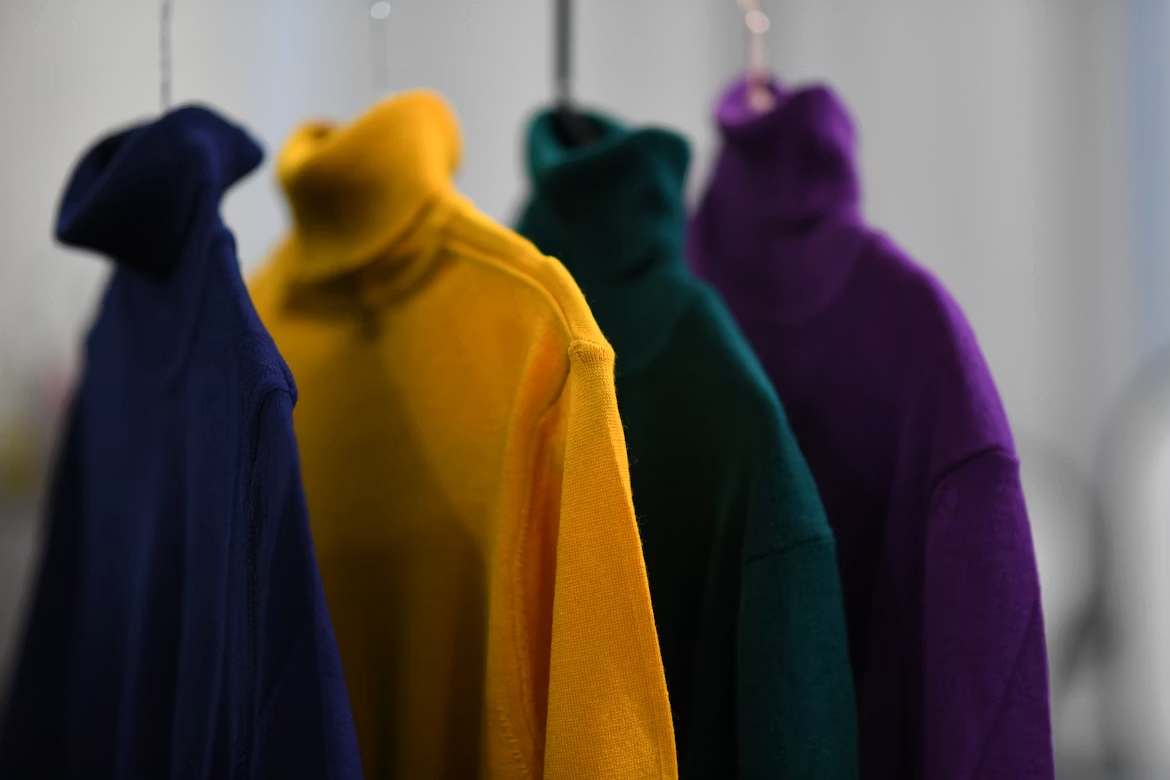
Neutrals are the foundation of almost every capsule wardrobe advice you’ll read. Beige, white, grey, black, navy — these all make sense in theory because they mix and match easily.
But here’s what nobody tells you clearly enough: not all neutrals work on every person.
I spent real money building a “perfect” neutral capsule in tones of camel, cream, and warm beige. Looked stunning in the store. On me — with my cool-undertone skin — I looked washed out and tired every single day.
Before locking in your color palette, figure out whether you have warm or cool undertones. It takes about five minutes with a simple test (hold a gold and silver accessory near your face in natural light — whichever makes you look more alive is your answer).
Then build your neutrals around what actually flatters you:
Color Palette Guide by Undertone:
| Undertone | Flattering Neutrals | Accent Colors That Work |
|---|---|---|
| Warm (golden/yellow skin tones) | Camel, cream, warm beige, brown, olive | Rust, mustard, terracotta, coral |
| Cool (pink/blue skin tones) | True white, grey, navy, charcoal, black | Cobalt, emerald, lavender, burgundy |
| Neutral (mix of both) | Most neutrals work | Wide range — experiment freely |
Getting this right means everything in your capsule will actually look good on you — not just good on the rack.
5. Ignoring Fit and Settling for “Good Enough”
This might be the single biggest mistake people make when building a capsule wardrobe on a budget, and it silently ruins the whole thing.
A capsule wardrobe works because every piece is supposed to be reliable and versatile. But a piece that almost fits — that’s slightly too long, or pulls across the shoulders, or gaps at the waist — will never be something you actually reach for with confidence.
I had a gorgeous camel blazer that I bought on sale. Beautiful color, quality fabric, perfect for a capsule. Except the shoulders were about half an inch too wide. Every time I put it on, I’d look at myself, feel slightly off, and change into something else.
That blazer sat unworn for almost a year before I finally took it to a tailor. For about $20, it became my most-reached-for piece. I wished I’d done it the day I bought it.
Basic alterations — hemming, taking in seams, adjusting shoulders — are usually inexpensive and completely transform how a garment looks and feels. Factor them into your budget.
Also, if you’re shopping online, check size charts obsessively, read reviews that mention fit, and only buy from places with easy returns. Platforms like ASOS and Nordstrom have generous return policies that make fit-testing much lower risk.
For a solid foundation to start from, 11 Simple Capsule Wardrobe Building Pieces Every Closet Needs gives you a great list of core items to prioritize getting the fit right on first.
6. Forgetting About Occasion Gaps

Most beginner capsule wardrobes are built for the average day. Which sounds logical — until an above-average day shows up.
You get invited to a wedding. You have a job interview. There’s a black-tie company dinner. Or just a fancy date night you weren’t expecting.
And suddenly your beautifully curated casual capsule has nothing that works.
I went through this exact panic when a last-minute work event came up and I’d donated every “dressy” piece during my purge. I ended up frantically buying something I didn’t love and have never worn since.
The fix is simple: build in at least 2–3 occasion-ready pieces even if you don’t use them often. A versatile dress that works for multiple event types, a blazer that can dress up or down, a pair of smart trousers — these pieces don’t take up much space but they save you in emergencies.
Occasion Coverage Checklist for a Balanced Capsule:
| Occasion Type | Minimum Pieces Needed | Examples |
|---|---|---|
| Everyday casual | 10–15 | Jeans, tees, casual tops, sneakers |
| Work / smart casual | 8–12 | Blouses, trousers, loafers, blazers |
| Active / outdoor | 4–6 | Leggings, sports bra, trainers, jacket |
| Formal / occasion | 2–4 | Dress, smart shoes, tailored pieces |
| Lounge / home wear | 3–5 | Comfortable basics you don’t wear outside |
Don’t leave any category completely empty — especially formal.
7. Treating It as a “Set and Forget” Project
Here’s the thing about capsule wardrobes that most beginners don’t anticipate: they’re not a one-time project. They’re an ongoing practice.
Your life changes. Seasons change. Your job changes. Your body changes. What worked perfectly in January might feel all wrong by September, and that’s completely normal.
I treated my first capsule wardrobe like a finished product. I was so proud of it that I didn’t want to touch it. So when my lifestyle shifted — I started going to the gym, I got a more formal job, I moved to a colder city — I kept trying to force the same wardrobe to work instead of evolving it.
A capsule wardrobe needs a seasonal review at minimum. Twice a year, go through what you actually wore, what you skipped, and what’s no longer serving you. This doesn’t mean rebuilding from scratch every time — it just means small, intentional adjustments.
You can make this easier by keeping a simple wear log. Even just a note on your phone where you jot down outfits you loved and ones that felt wrong. Over a few months, patterns become obvious.
This connects well with building smart seasonal habits — 8 Smart Capsule Wardrobe Building Tips for Seasonal Outfit Planning walks through exactly how to approach this without it feeling like a chore.
The Bigger Picture: Why These Mistakes Are So Easy to Make
Most capsule wardrobe content online is aspirational. It shows the beautiful end result — the perfectly organized closet, the effortless outfits, the “I got dressed in 5 minutes” morning — without showing the messy middle part of actually getting there.
That gap between the dream and the reality is where most beginners stumble.
Common Beginner Mistakes at a Glance:
| Mistake | Why It Happens | The Fix |
|---|---|---|
| Copying someone else’s capsule | Easier than starting from scratch | Audit your real lifestyle first |
| Going too minimal too fast | Pressure to hit a “magic number” | Build around your actual needs |
| Buying everything at once | Urgency after a big purge | Live with gaps, then shop intentionally |
| Ignoring personal color tones | Following generic neutral advice | Find your undertone, build accordingly |
| Settling for imperfect fit | Trying to save money upfront | Budget for basic tailoring |
| Leaving occasion gaps | Focused only on everyday wear | Include 2–4 occasion-ready pieces |
| Treating it as permanent | Pride in completion | Review and adjust every season |
The good news? Every single one of these mistakes is fixable. And most of them don’t require spending more money — just thinking more clearly before you spend.
Building It Right the Second Time
If you’ve already made some of these mistakes — welcome to the club, genuinely. Almost everyone does on their first attempt.
The key is not to abandon the whole concept just because your first version didn’t work. A capsule wardrobe is one of the most practical, money-saving, stress-reducing approaches to dressing that exists when it’s done thoughtfully.
Start over with just one question: what does my actual week look like?
Answer that honestly, and everything else becomes clearer. From there, check out 9 Smart Capsule Wardrobe Building Tips on a Tight Budget for practical help on building something that actually works without overspending.
Your capsule wardrobe should feel like relief — not another source of stress. Get the foundations right, and it genuinely will.
Frequently Asked Questions
Q1: How many pieces should a beginner capsule wardrobe actually have?
There’s no perfect number, despite what you’ll read online. Most beginners do well starting with 30–40 pieces that cover their main daily activities. You can always trim or add from there once you’ve lived with it for a season or two.
Q2: Do I have to stick to neutrals for a capsule wardrobe?
Not strictly. Neutrals make mixing and matching easier, but what matters more is that your pieces work together. A capsule built around navy, white, and a consistent pop of burgundy can be just as cohesive as an all-beige one — and much more flattering if those colors suit you.
Q3: What should I do with the clothes I removed during my purge?
Sell wearable pieces on Poshmark, Depop, or ThredUp to recoup some money. Donate what doesn’t sell to local shelters or charity shops. Only throw away items that are genuinely worn out and beyond donation. The money from selling can fund new capsule pieces.
Q4: How often should I update my capsule wardrobe?
A light seasonal review twice a year — once in spring, once in fall — is enough for most people. You’re not rebuilding it, just asking: what’s working, what’s not, and is there one or two things missing? Small tweaks beat big overhauls every time.
Q5: Can a capsule wardrobe work if my job has a strict dress code?
Absolutely — it might actually work even better. Strict dress codes make your “work” category very clear. Build that section first, then layer in your personal/casual pieces around it. Having defined categories makes the whole wardrobe feel more structured and easier to manage.