

I used to stand in front of a closet stuffed with clothes every single morning and still feel like I had nothing to wear. Sound familiar? There were shirts I’d bought on sale and never touched, jeans that almost fit, and three different black jackets I couldn’t tell apart. Getting dressed was genuinely stressful — and I was late more times than I’d like to admit because of it.
Then I started experimenting with a minimal wardrobe. Not because I’m some lifestyle guru, but because I was genuinely tired of the chaos. What happened next kind of surprised me — I actually started enjoying getting dressed. My mornings got faster, my outfits looked better, and I stopped spending money on things I didn’t need.
Here are the five rules that actually made a difference.
1. Stop Buying “Maybe Someday” Pieces
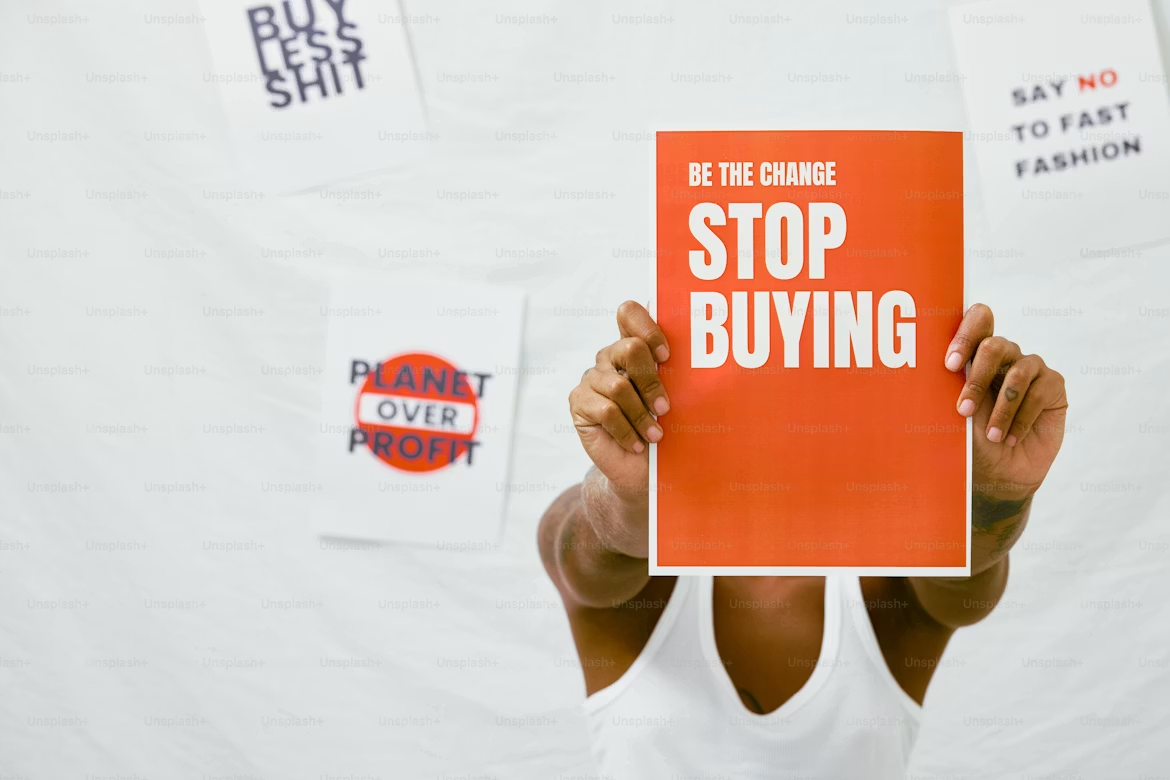
This was my biggest problem. I’d walk into a store, see something interesting, and convince myself I’d wear it eventually. A bold printed blazer. Wide-leg trousers in a color I’d never worn before. Shoes that were slightly uncomfortable but “so pretty.”
Spoiler: someday never came.
The first rule of a stress-free wardrobe is brutally simple — if you can’t picture yourself wearing it in the next two weeks, don’t buy it. Not next season. Not at a hypothetical dinner party. In the next two weeks.
This one shift alone cut my impulse purchases by probably 70%. I still window shop. I still admire things. But now I ask myself a concrete question instead of a dreamy one.
A quick checklist I use before buying anything:
| Question | Why It Matters |
|---|---|
| Can I wear this with 3 things I already own? | Ensures it actually fits your wardrobe |
| Have I wanted something like this for 30+ days? | Filters out impulse buys |
| Will I wear this in the next 2 weeks? | Keeps choices grounded in real life |
| Does it fit right now, today? | Avoids the “I’ll alter it someday” trap |
If I can’t answer yes to at least three of those, I leave it.
2. Build Around a Color Palette (and Actually Stick to It)
This sounds like advice from a fashion magazine, and honestly, I ignored it for years because it felt too rigid. But here’s what changed my mind: I took everything out of my closet one weekend and laid it all on the bed. The color spread was all over the place — mustard yellow, forest green, coral, navy, burgundy, gray. None of it talked to each other.
No wonder getting dressed felt like solving a puzzle every morning.
A minimal wardrobe works because everything in it mixes. And for things to mix easily, they need to come from a similar color universe. You don’t have to wear all neutrals (though that’s one option). You just need a base, a few accents, and some consistency.
My personal palette looks like this:
- Base colors: White, cream, charcoal gray, black
- Secondary colors: Olive green, navy blue
- Accent: Warm rust (just a few pieces)
That’s it. And the beautiful thing is — I can now grab almost anything from my closet, put it with anything else, and it works. No more “does this go together?” panic at 7 AM.
If you’re just starting out, check out this guide on capsule wardrobe building basics — it has a really practical walkthrough on choosing pieces that actually work together.
3. Own Fewer Pieces, But Make Them Better Quality
I’m not talking about dropping a fortune on designer clothes. I’m talking about the difference between a $15 t-shirt that falls apart after six washes and a $40 one that still looks great two years later.
For a long time, I thought buying more for less was the smart move. But I kept replacing things constantly. That $15 shirt I bought five times over the years? I spent $75 total. The $40 version I bought once? Still going strong.
The math usually works out in favor of fewer, better things — especially for pieces you wear all the time.
Here’s where quality matters most vs. where it matters less:
| Category | Worth Investing In | Budget-Friendly Fine |
|---|---|---|
| Everyday basics (tees, jeans) | ✅ Yes | Sometimes |
| Statement pieces | Not necessarily | ✅ Often fine |
| Outerwear (jackets, coats) | ✅ Yes | Only if rarely worn |
| Work/formal wear | ✅ Yes | Depends on frequency |
| Trendy items | ❌ No | ✅ Always |
The rule of thumb: how many times per month will I wear this? The more often, the more it’s worth spending a bit more on.
4. Do a Closet Audit Every Season — Not Just Once a Year
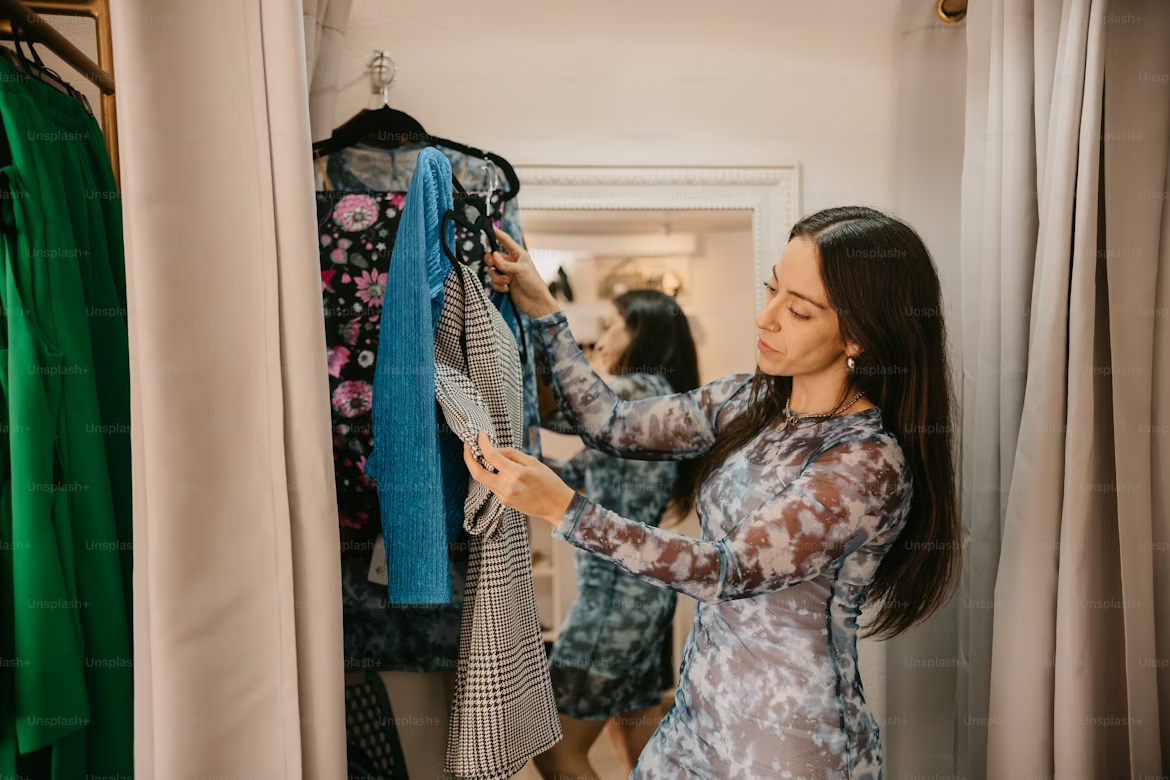
I used to do a big wardrobe cleanout once a year, usually when spring came around. The problem? By the time I was pulling things out, I’d already been wearing stuff I hated for months out of habit.
Doing a quick closet check every season — just 20 to 30 minutes — keeps things from piling up again. It also keeps you honest about what you’re actually wearing vs. what’s just taking up space.
A simple seasonal audit process:
- Pull everything out (yes, everything)
- Make three piles: Keep, Donate, Unsure
- Anything in “Unsure” goes into a box with a 30-day deadline — if you didn’t reach for it, donate it
- Look at what’s left and ask: do I have gaps? Do I have doubles?
- Only then, make a list of what you might actually need
That last step is important. Most people skip straight to shopping. But when you see your wardrobe laid out, you often realize you don’t need much at all — you just need to wear what you have more creatively.
This article on capsule wardrobe tricks for reducing closet chaos has some really solid advice on making this process less overwhelming, especially if you’re starting with a packed closet.
5. Dress for Your Actual Life, Not Your Fantasy Life
This one hit me harder than any of the others.
I had workout clothes for a level of fitness I wasn’t at. I had “networking event” clothes for events I rarely attended. I had beach cover-ups even though I go to the beach maybe once every two years. My wardrobe was built around a version of myself that existed mostly in my imagination.
A stress-free wardrobe is built around what you actually do. What’s your real week look like? If you work from home four days a week, you don’t need five office outfits. If you mostly wear jeans and a nice top, that’s not a failure of style — that’s efficiency.
A quick way to map your actual wardrobe needs:
Think about your last 30 days. What kinds of occasions came up?
| Occasion Type | Approximate % of Your Week |
|---|---|
| Casual / at-home | ___% |
| Work or office | ___% |
| Social (dinners, events) | ___% |
| Active / outdoor | ___% |
| Formal / special occasions | ___% |
Fill that in honestly, then look at your current closet. Is the distribution of clothes even close to matching? Most people find they have way too much in one category and not enough in another.
Once I did this, I realized I needed more comfortable, put-together casual pieces and fewer “just in case” formal things. My whole wardrobe shifted — and it finally felt like mine.
A Few Mistakes I Made Along the Way
No honest article about this would be complete without the embarrassing part.
Mistake #1: Going too minimal too fast. I got excited early on and donated a bunch of stuff in one weekend. Then I had gaps in my wardrobe and bought things quickly to fill them — not always great choices. Take your time.
Mistake #2: Buying “capsule wardrobe” pieces that weren’t actually me. I saw a minimalist wardrobe checklist online and bought a white button-down shirt, beige trousers, and a camel coat because that’s what the list said. I wore almost none of it. A minimal wardrobe should reflect your style, not an aesthetic board on Pinterest.
Mistake #3: Ignoring comfort. I kept some beautiful but slightly uncomfortable shoes for way too long because they were “good quality.” Clothes you don’t wear because they’re uncomfortable are just clutter in disguise.
Mistake #4: Not thinking about care instructions. Dry-clean-only pieces sound manageable until you’re skipping wearing them because you don’t want to deal with it. I stick almost exclusively to machine-washable items now.
If you want to avoid going down some of these rabbit holes from the start, this piece on capsule wardrobe mistakes beginners make is worth reading before you start decluttering.
What a Realistic Minimal Wardrobe Can Look Like
Here’s roughly what a functional minimal wardrobe might look like for everyday life. This isn’t a rigid template — just a rough shape to visualize:
| Category | Suggested Number of Pieces |
|---|---|
| Tops (tees, blouses, shirts) | 7–10 |
| Bottoms (pants, jeans, skirts) | 4–6 |
| Dresses or jumpsuits | 2–3 |
| Outerwear | 2–3 |
| Shoes | 4–6 |
| Accessories | A handful you actually use |
| Loungewear / activewear | 3–5 pieces each |
Total: roughly 30–40 pieces.
That’s it. Sounds like a lot less than what most people have — because it is. But when every piece works, you stop needing more. The paradox of a minimal wardrobe is that having less actually gives you more options, because everything goes together.
How Long Does It Actually Take?
I won’t pretend this happens overnight. For most people, getting to a genuinely minimal wardrobe that feels good takes about 3 to 6 months. You go through a few seasons, discover what you actually reach for, donate the rest gradually, and slowly fill in only what you truly need.
Rough timeline:
📅 Month 1 — First big declutter. Remove obvious clutter and anything you haven’t worn in a year.
📅 Month 2–3 — Live with what’s left. Notice what feels missing, what you avoid wearing.
📅 Month 3–4 — Intentional fills. Buy a few specific pieces that fill real gaps.
📅 Month 5–6 — Refine. Another smaller declutter. Your wardrobe should feel settled and easy by now.
Final Thoughts
Getting dressed shouldn’t be stressful. That sounds obvious, but most of us have spent years treating it like it’s fine when it’s not. A chaotic closet has a way of trickling into the rest of your morning, your confidence, your mood.
You don’t need to go full minimalist aesthetic. You don’t need to own 15 things or wear only gray. You just need a wardrobe that works for you — where every piece earns its spot and getting dressed takes minutes instead of emotional energy.
Start small. Pick one of these five rules and apply it this week. See what shifts.
Also worth reading: 10 Minimal Capsule Wardrobe Building Pieces for Effortless Style
Frequently Asked Questions
Q1: How many clothes do I actually need for a minimal wardrobe?
There’s no magic number, but most people find that 30 to 40 pieces (not counting underwear and socks) is a comfortable range for everyday life. The key isn’t hitting a specific number — it’s making sure everything you own gets worn regularly and works together.
Q2: Do I have to get rid of everything I love to go minimal?
Absolutely not. Minimalism in fashion isn’t about deprivation — it’s about intention. If you love something and wear it, keep it. The goal is to let go of things that are just taking up space, not the things that genuinely make you feel good.
Q3: What if my lifestyle changes — like I start a new job or move cities?
This is exactly why the seasonal audit (Rule 4) matters. When your life shifts, your wardrobe should shift with it. Give yourself permission to reassess every few months. It’s not a one-time project; it’s an ongoing practice.
Q4: Is a minimal wardrobe possible on a tight budget?
Yes — and in many ways it’s easier on a budget. When you’re selective about what you buy, you naturally spend less. Focus on thrift stores and second-hand platforms for quality basics, and prioritize buying fewer things rather than buying cheap things constantly. There are some really smart ideas here for building a budget capsule wardrobe if you want practical starting points.
Q5: What’s the hardest part of building a minimal wardrobe?
Honestly? The emotional stuff. Letting go of expensive mistakes (things you paid a lot for and never wore). Giving up clothes that represent who you thought you’d be. That’s where most people get stuck. The practical side is actually pretty easy — it’s the mental side that takes some work.