

I used to open my closet every single morning and feel completely overwhelmed — and somehow still feel like I had nothing to wear. Sounds dramatic, but honestly, it’s one of the most frustrating feelings when you’re already half-awake and rushing to get somewhere. Piles of clothes, mismatched colors, trendy pieces I bought impulsively that just… didn’t go with anything else I owned.
Then I stumbled across the concept of a minimal wardrobe, kind of by accident. I was moving to a smaller apartment and had to seriously pare down what I kept. What started as a stressful purge turned into the most freeing wardrobe decision I’ve ever made.
What I figured out — and what I want to share with you today — is that you don’t need dozens of pieces. You need the right pieces. Specifically, seven of them that carry you through every season without drama.
Let’s break it down.
1. The White or Cream Classic Tee
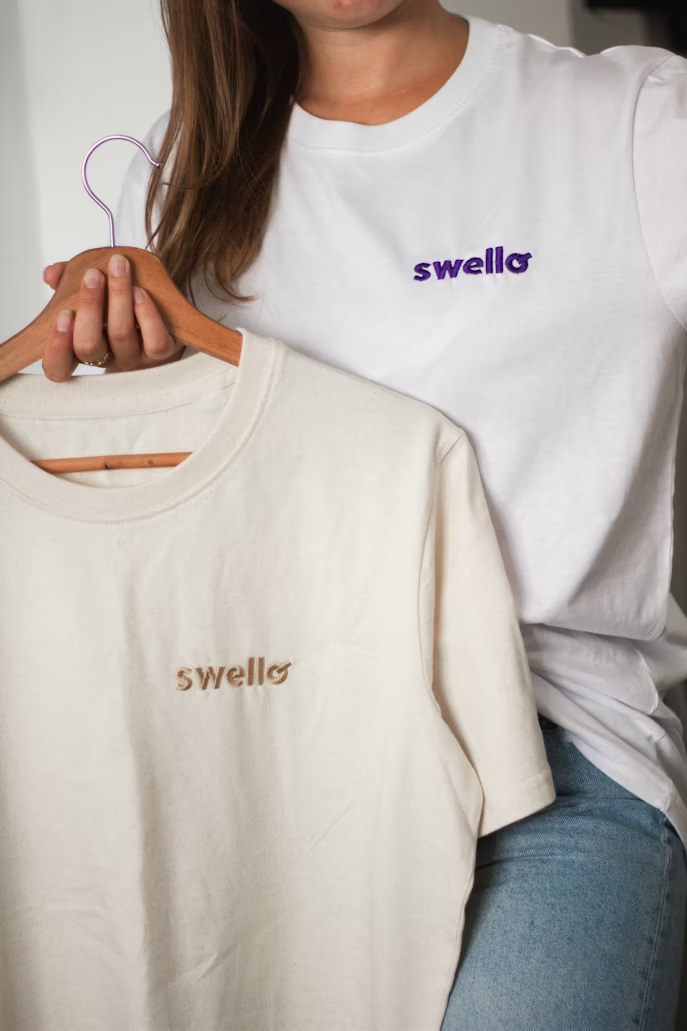
I know, I know. A basic tee. But hear me out — this is genuinely the one item I reach for every single day across all four seasons. In summer, it’s my main piece. In winter, it goes under sweaters or flannel shirts. In spring and fall, I layer it under a blazer or denim jacket.
The trick is to invest in a good one. Not a Rs. 300 pack-of-five situation. A well-cut, slightly heavier cotton tee in white or a warm cream tone does something incredible — it makes every other piece in your wardrobe look more intentional.
When I finally spent a little more on a quality tee, I stopped buying three mediocre ones every season. That’s how you end up saving money over time.
One mistake I made early on? Buying the super-thin, see-through ones because they looked sleek online. In real life? You’re layering anyway, and they look cheap fast. Go for a medium-weight fabric.
2. Well-Fitted Dark Jeans
Dark indigo or charcoal jeans are basically the Swiss Army knife of a minimal wardrobe. Dress them up, dress them down, wear them in October or February — they just work.
Here’s what nobody tells you though: the fit matters more than the brand. I spent years buying jeans that were fine but never quite right — slightly too long, a bit baggy in the wrong places. Once I got a pair tailored (cost me less than Rs. 500 locally), the transformation was ridiculous. Suddenly those same jeans looked like something out of a magazine.
For minimal wardrobe purposes, go dark wash. Light-wash denim is trickier to pair, fades unevenly, and often reads more casual in a way that limits your outfit options. Dark jeans, on the other hand, can genuinely pass in a semi-formal setting.
Avoid overly distressed versions if you want versatility. A small rip at the knee is fine, but jeans with heavy distressing are harder to season-hop with.
If you’re figuring out how to pair these smart pieces without overdoing it, this guide on capsule wardrobe building ideas covers some really smart outfit logic.
3. A Neutral Knit or Lightweight Sweater
This is the piece that really bridges seasons for me. A camel, oatmeal, stone, or soft grey knit sweater is genuinely one of those things that makes you look like you have your life together — even when you absolutely do not.
In spring, it’s a top layer over a shirt when evenings get cold. In summer (especially in air-conditioned offices — the bane of my existence), it’s a savior. In fall, it becomes your main layer. In winter, it goes under a heavier coat.
The weight matters here. I’d recommend a medium-weight knit — not a chunky cable-knit (that’s a winter specific piece) and not a tissue-thin cardigan (useful but limited). Something in between.
Cotton or a cotton-blend works brilliantly for warmer months. For something that crosses seasons better, merino wool is the gold standard. Yes, it costs more. But a single good merino knit will outlast five cheap ones.
Here’s a comparison of sweater fabrics and their seasonal range — just to give you a clearer picture:
V
visualize
V
visualize show_widget
https://bda9a123f2634cb5724fa86009f921e3.claudemcpcontent.com/mcp_apps?connect-src=https%3A%2F%2Fesm.sh+https%3A%2F%2Fcdnjs.cloudflare.com+https%3A%2F%2Fcdn.jsdelivr.net+https%3A%2F%2Funpkg.com&resource-src=https%3A%2F%2Fesm.sh+https%3A%2F%2Fcdnjs.cloudflare.com+https%3A%2F%2Fcdn.jsdelivr.net+https%3A%2F%2Funpkg.com+https%3A%2F%2Fassets.claude.ai&dev=true
4. A Structured Blazer in a Neutral Tone
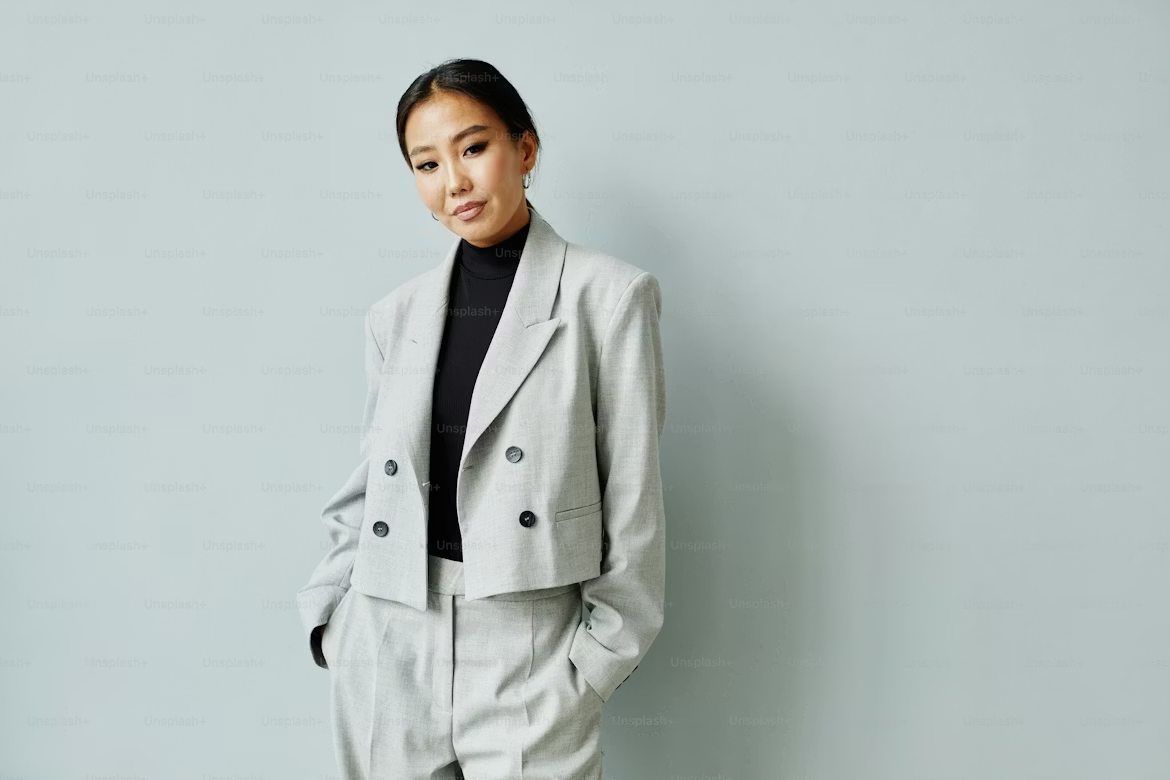
A blazer sounds very corporate and stiff — I get it. But hear me out, because this is the one piece that genuinely transforms any outfit in under thirty seconds.
A well-cut blazer in navy, camel, or soft grey works over literally everything. Over jeans and a tee? Suddenly you look polished. Over a casual dress? Elevated. Thrown over your shoulders on a summer evening? Effortlessly put-together.
The key is “structured but not stiff.” Avoid super padded shoulders or overly boxy cuts unless that’s your thing. A relaxed, slightly oversized blazer in a neutral tends to work better across body types and style preferences.
I bought mine — a camel linen blazer — during a sale and I’ve worn it in all four seasons. It goes over everything. Linen is particularly smart if you’re in a warmer climate because it breathes well and still looks intentional.
Avoid loud patterns or anything too trendy. The whole point is that this piece is still in heavy rotation three years from now.
5. Versatile Trousers (Not Jeans)
This one surprised me. I resisted non-denim trousers for the longest time because I thought they’d feel too formal for everyday life. Then I tried a pair of loose-fit straight-leg trousers in a warm stone color, and I haven’t looked back.
These work for everything from working from home to running errands to actual meetings. In summer with sandals, they look breezy and intentional. In winter tucked into boots with a knit — perfectly put together.
The silhouette that’s most universally flattering and versatile tends to be a mid-rise, straight or slightly wide leg. It works across body shapes, pairs with almost any top, and doesn’t read as either “too casual” or “too formal.”
Colors that cross seasons well: stone, olive, slate grey, and deep chocolate brown.
Avoid very loud patterns or bright trendy colors here. This is a foundational piece, and you want it working for you year after year.
You can find a really grounding breakdown of what foundational pieces actually look like in practice over at 11 simple capsule wardrobe building pieces every closet needs.
6. A Timeless Coat or Outerwear Layer
This is the big-ticket item in a minimal wardrobe, and it’s worth thinking about carefully.
One coat. But the right coat.
For most climates, a mid-length coat in camel, charcoal, or a warm deep navy is incredibly versatile. It works over casual outfits, over blazers, and in the weird in-between months when it’s not cold enough for a heavy puffer but definitely not warm enough to go without.
Now — in hotter climates (like much of South Asia, for example), a full-on winter coat might not make sense. In that case, your “outerwear layer” might be a linen kimono jacket or a structured denim jacket. The principle is the same: one outer layer that’s deliberate, neutral, and can go over most of what you own.
The mistake I made? Buying a trendy puffer in an eye-catching color because I loved it on the rack. Looked amazing. Went with approximately four things in my wardrobe. Don’t do that.
Here’s a visual guide to how your 7 pieces stack up across seasons:
V
visualize
V
visualize show_widget
https://bda9a123f2634cb5724fa86009f921e3.claudemcpcontent.com/mcp_apps?connect-src=https%3A%2F%2Fesm.sh+https%3A%2F%2Fcdnjs.cloudflare.com+https%3A%2F%2Fcdn.jsdelivr.net+https%3A%2F%2Funpkg.com&resource-src=https%3A%2F%2Fesm.sh+https%3A%2F%2Fcdnjs.cloudflare.com+https%3A%2F%2Fcdn.jsdelivr.net+https%3A%2F%2Funpkg.com+https%3A%2F%2Fassets.claude.ai&dev=true
7. A Simple White Shirt or Easy Dress
This is the piece I almost left off the list — and would have seriously regretted it.
A crisp white button-down shirt is one of those things that somehow always looks like you tried. Tucked into trousers, half-tucked over jeans, layered under a knit, worn open over a white tee — the combinations are endless.
If dresses are more your style, a simple slip dress or shirt dress in black, white, or a warm neutral does the same work. Easy to layer under a knit for fall, easy to wear solo in summer, easy to throw a blazer over for a more polished look.
The common mistake here is overcomplicating it. People go for the slightly sheer version, the one with ruffles, the printed one. Those are fine for variety, but if this is your one foundational piece, go clean and simple. You can always add interest with accessories, footwear, or a layer.
Building a wardrobe this way doesn’t happen overnight. If you’re just starting, 9 easy capsule wardrobe building steps to simplify your closet is a genuinely helpful place to get your footing.
Common Mistakes People Make When Starting Out
Let’s be real — most of us come to a minimal wardrobe after already making some expensive mistakes. Here are the ones I see (and made) the most:
Buying all neutrals with no texture variation. When everything is beige, cream, and grey in the same flat cotton fabric, outfits start looking boring fast. Mix in different textures — linen, cotton, a bit of knit — to keep things interesting without adding color chaos.
Choosing aspirational pieces instead of realistic ones. I once bought a gorgeous structured coat that I planned to wear to events. I am not an events person. It sat in my closet for two years. Buy for the life you actually live.
Ignoring fit and betting on “I’ll get it altered.” You won’t. Or at least, most of us don’t. Buy things that fit well enough off the rack, or factor the tailoring cost into your decision upfront.
Treating the purge as the hard part. It’s not. Anyone can throw things out. The real discipline is not refilling your closet immediately after. Give yourself 30 days before buying anything new.
Going too seasonal too fast. The whole point of a minimal wardrobe is that most of it works year-round. If you find yourself building a separate “fall capsule” and a “summer capsule,” you’ve drifted from the goal.
A Quick Summary Before You Shop
Here’s the shortlist one more time, with a brief note on what to prioritize:
| # | Piece | Priority Color/Style |
|---|---|---|
| 1 | Classic Tee | White or cream, medium-weight |
| 2 | Dark Jeans | Indigo or charcoal, well-fitted |
| 3 | Neutral Knit Sweater | Oatmeal, camel, or stone |
| 4 | Structured Blazer | Navy, camel, or grey |
| 5 | Versatile Trousers | Stone, olive, or slate |
| 6 | Timeless Coat/Outer Layer | Camel, charcoal, deep navy |
| 7 | White Shirt or Easy Dress | Clean, minimal, unfussy |
The beautiful thing about building a wardrobe this way is that you stop thinking about clothes so much. Sounds counterintuitive, I know. But when everything works with everything, getting dressed becomes a completely non-event — and that’s actually the goal.
You’re not becoming boring. You’re becoming intentional.
And if you want to go deeper on building this out sustainably and without blowing your budget, this one’s worth bookmarking: