

Okay, real talk — I used to spend way too much money on clothes and still feel like I had nothing to wear.
My closet was full. Like, embarrassingly full. Clothes piled on chairs, shoved into corners, hanging tags still on things I bought “just in case.” And yet every single morning I’d stand there staring at it all and reach for the same three outfits.
Sound familiar?
It wasn’t until I hit a point where I genuinely couldn’t afford to keep shopping impulsively that I was forced to get smart about my wardrobe. I had a tight budget and a growing frustration with looking sloppy. So I started making small, intentional changes — not buying more, but buying better.
These six upgrades didn’t cost a fortune. Some of them cost almost nothing. But together? They completely changed how I look and — honestly — how I feel when I leave the house in the morning.
1. I Stopped Buying “Maybe” Pieces and Started Investing in Proven Basics
The first and biggest shift I made was ruthless: I stopped buying things I kind of liked and started only buying things I absolutely loved and could wear with at least three other things I already owned.
Sounds simple. It’s shockingly hard when you’re standing in a store and something is 60% off.
But here’s what I noticed — my “maybe” purchases almost never got worn. A funky printed blouse that I thought was “fun.” Wide-leg trousers in a color that didn’t match anything. Cute shoes that hurt after 20 minutes. These were budget killers disguised as deals.
Once I switched my focus to basics — a well-fitted white tee, a clean navy crewneck, dark-wash straight jeans — my cost-per-wear dropped dramatically. I was spending less overall because I stopped throwing money at things that just sat there.
A rough look at how this changed my spending:
| Category | Before (monthly avg) | After (monthly avg) |
|---|---|---|
| Impulse “sale” buys | $80–$120 | $0–$10 |
| Intentional basics | $20–$40 | $60–$80 |
| Items actually worn | ~30% of closet | ~85% of closet |
| “Nothing to wear” mornings | 4–5x/week | Almost never |
The math is embarrassing in hindsight. I was spending more and wearing less.
If you want a solid starting point, check out this guide on how to build a stylish budget wardrobe without overspending — it helped me figure out which basics to actually prioritize.
2. I Got One Pair of Dark Jeans That Actually Fit
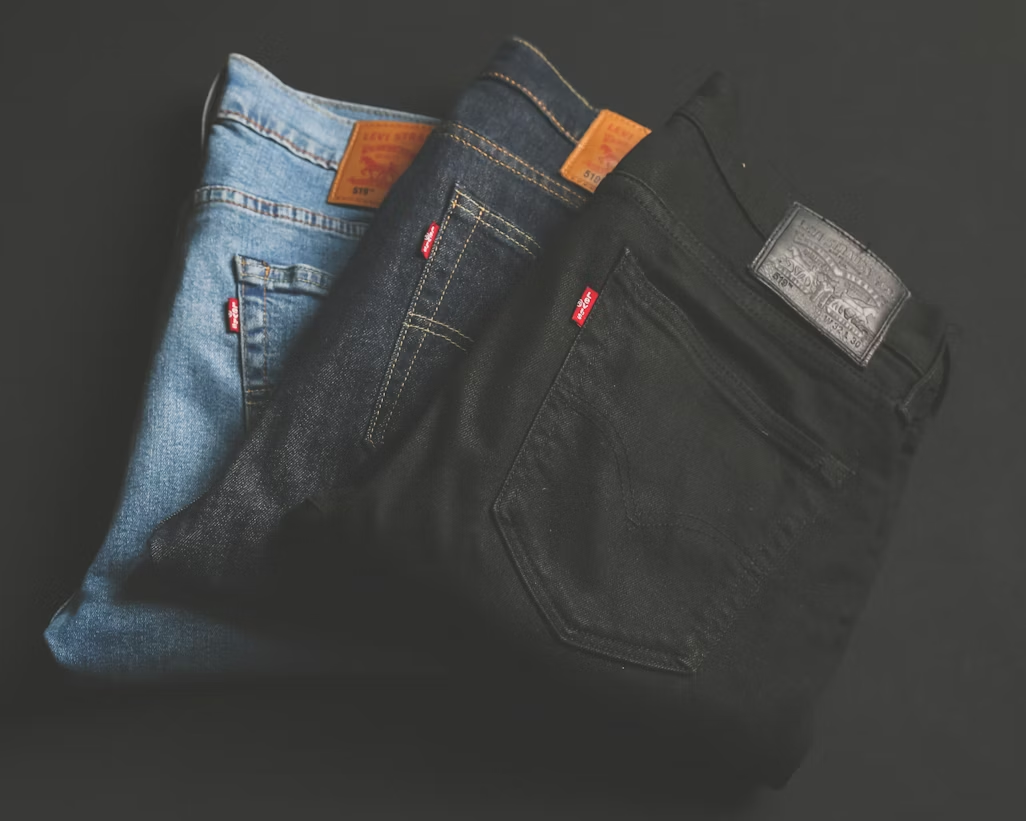
I know. Everyone says this. But I didn’t truly believe it until I experienced it myself.
For years I was wearing jeans that were fine. Not bad, not amazing — just fine. They bagged a little in the seat, pulled weird at the waist, and were slightly too long so I always stepped on them. But they were from a sale rack and I convinced myself fit didn’t matter that much.
It matters so much.
I finally spent time (not money — time) trying on dark-wash straight-leg jeans at multiple stores until I found a pair that actually fit my body without alterations. I ended up paying $38 at a mid-range chain store. Nothing fancy.
But the difference in how I looked was startling. Same shirts. Same shoes. Suddenly I looked put-together in a way I never did before. My partner noticed. A coworker asked if I’d “done something different.” I hadn’t — I’d just stopped wearing jeans that didn’t fit.
Tips for finding the right pair on a budget:
- Try before you buy — always, even if it takes longer
- Look for a mid-rise straight or slim straight as your base
- Dark wash hides wear longer and dresses up or down easily
- Check out thrift stores first — brand-name jeans show up constantly
Tailoring is also underrated. A $10 hem can turn a $15 thrift-store pair into something that looks custom.
3. I Built Around a Two-Color Neutral Base (And Stopped Fighting My Closet)
This one sounds like fashion advice from a magazine, but it genuinely made my mornings easier and my outfits better.
I picked two main neutrals — in my case, navy and camel/tan — and started building almost everything around them. That doesn’t mean I eliminated color entirely. It means my foundational pieces (trousers, jackets, bags, shoes) are all in those two tones, so they automatically work together.
Before this, I had a brown bag, black shoes, a grey coat, navy trousers, and an olive jacket. Nothing really went. Getting dressed was a puzzle I rarely solved well.
Now? I can grab almost anything in my closet and it goes with almost everything else. The mental load of getting dressed dropped significantly. And because I stopped buying random colors that didn’t fit my palette, I stopped making wasteful purchases.
You can read more about how a minimal wardrobe can actually help you own less and dress better — this concept is at the heart of that whole approach.
Quick guide to picking your neutral base:
- Look at what you reach for most often right now
- Identify the 2 colors that appear most in your most-worn pieces
- Those are your neutrals — build from there
- Add 1–2 accent colors in smaller pieces (scarves, tops, accessories)
4. I Added One “Elevating” Layering Piece Per Season
Here’s a subtle upgrade that made a big difference: I started making sure I always had one piece in my wardrobe that could instantly elevate a basic outfit.
In summer, that’s a linen blazer in oatmeal. In fall and winter, it’s a camel-colored wool-blend coat I found at a thrift store for $22 (original retail was somewhere around $180 — the tag was still on it).
The thing about these pieces is that they do heavy lifting. Throw the blazer over a white tee and jeans and suddenly it looks intentional. Like you planned it. People genuinely assume you’re more stylish than you are because your outerwear or layering piece signals effort.
I made the mistake for a long time of buying cheap jackets that looked cheap — you know the kind, shiny synthetic material, weird fit, falls apart after a season. I’ve learned that if you’re going to spend slightly more anywhere, it’s outerwear and layering pieces, because they’re visible in almost every outfit and they last.
That said, thrift stores are your best friend here. People donate barely-worn coats constantly, especially at the end of winter. I check mine every few weeks during transition seasons.
5. I Stopped Ignoring My Shoes and Bags
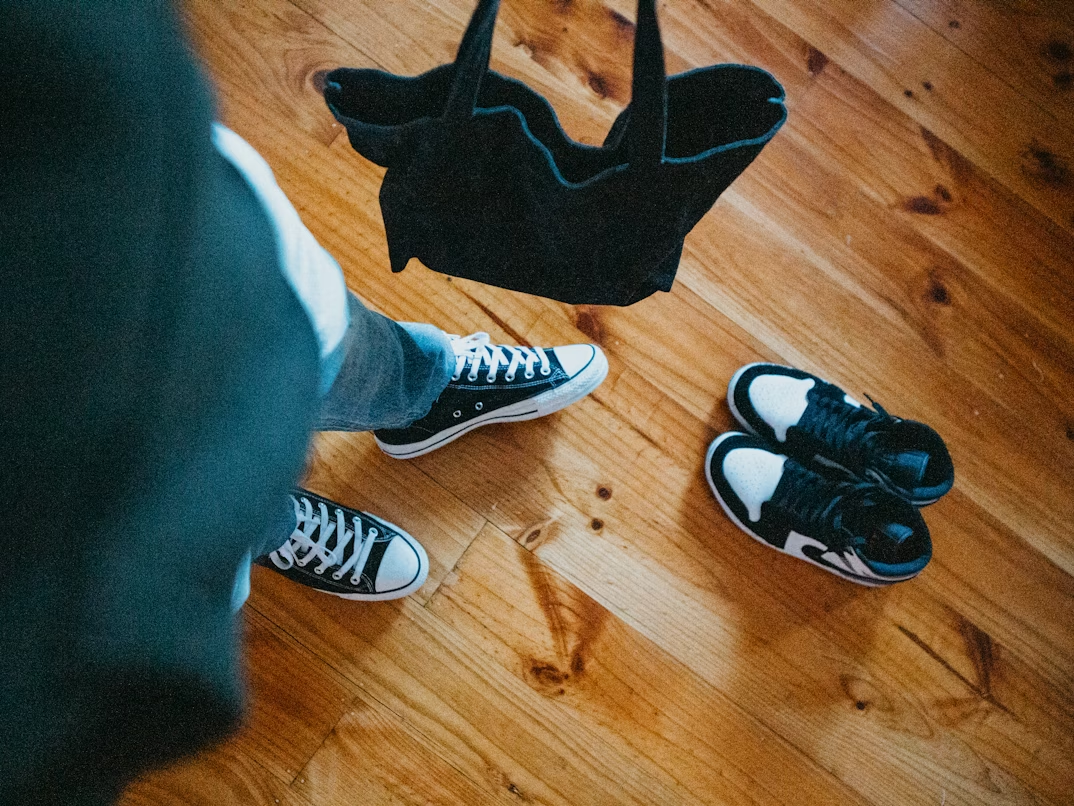
I used to put all my focus on clothing and treat accessories as an afterthought. Big mistake.
Shoes and bags are what people notice. They anchor an outfit. And worn-out, mismatched, or low-quality shoes can drag down even a great outfit.
I’m not saying buy expensive. I’m saying be more strategic.
I pared down to three pairs of shoes that cover most situations:
- White leather sneakers (clean, not dingy — I wipe them down weekly)
- A pair of simple tan/cognac leather loafers or Chelsea boots
- One neutral sandal for warmer months
That’s it. Those three pairs go with everything in my closet because of the neutral base I built. I retired the random shoes that matched nothing and donated them.
For bags, I did the same thing. One medium-sized tote in a neutral color, one crossbody for days I don’t need to carry much. Both are leather or good-quality faux leather — I’ve found that structured bags in neutral tones look far more expensive than slouchy nylon ones, even if the price tags are similar.
This is where I’d recommend checking out a breakdown of capsule wardrobe essentials for a perfect closet — shoes and bags factor into that more than people realize.
Common shoe and bag mistakes to avoid:
- Keeping worn-down heels — get them resoled or replace them
- Owning too many in too many colors that match nothing
- Buying trendy styles that date quickly (classic shapes last longer)
- Ignoring care — leather conditioner and sneaker cleaning wipes extend life significantly
6. I Started Treating My Wardrobe Like a Seasonal System, Not a Static Pile
This last one is more of a mindset shift than a purchase — but it’s probably the upgrade that’s had the most lasting impact.
Twice a year (spring and fall), I now do a full wardrobe reset. I pull everything out, try things on, and assess honestly. Does this still fit? Is it worn out? Have I actually worn it in the past 6 months?
Anything that’s worn out gets tossed. Anything I haven’t worn and don’t genuinely love goes to the thrift store or gets sold on Depop or Poshmark. (I’ve made back a decent amount of money on pieces I thought I’d wear but didn’t.)
Then I look at what gaps I actually have — not gaps I imagine or feel vaguely — and I shop to fill those specific holes. That’s the only time I shop intentionally for new pieces.
This system stopped the cycle of “closet full, nothing to wear.” Because now my closet only contains things I wear, and I know exactly what I have and what I need.
My seasonal reset process (takes about 2 hours):
- Pull everything out onto the bed — all of it
- Try on anything you’re unsure about
- Make three piles: Keep, Donate/Sell, Toss
- Put back only the Keep pile, organized by type
- Note any specific gaps (e.g., “no warm layer for the office”)
- Shop only for those gaps over the next few weeks
Pair this with the right seasonal thinking and you’ll never feel underdressed for the weather again. This overview on how to approach a seasonal wardrobe reset is a great companion read if you want to go deeper on the process.
The Mistakes I Made Along the Way
I didn’t get here without some missteps. A few that cost me:
Buying cheap to “test” a style — I told myself I’d buy an affordable version first and upgrade later. Mostly I just ended up with a cheap version that reinforced why I needed to buy better quality.
Ignoring fit because something was on sale — Marked-down clothes that don’t fit are still a waste of money. I had to learn this multiple times.
Decluttering and then re-filling immediately — The first time I cleared out my closet, I got excited about the space and filled it back up within a month. The seasonal system fixed this because it gave structure to when and why I shop.
Shopping without a list — Going into a store or browsing online without knowing exactly what I need is how I ended up with a closet full of random pieces that didn’t work together.
What This Actually Looks Like Day-to-Day
An average weekday morning now takes me maybe five minutes to get dressed. Not because I’m throwing on anything — because everything in my closet works together and I know what I have.
I spend less money on clothes annually than I did before, even though what I own now is better quality and in better condition. I feel more confident. I get more compliments. And I genuinely enjoy getting dressed, which I never really did when my closet was chaotic.
None of this required a massive budget overhaul. The biggest investments were time and intentionality — figuring out what I actually needed, what actually fits, and what actually works for my life.
Start with one upgrade. The jeans. The neutral base. The seasonal reset. Just one. See how it changes things. Then keep going.