
Most people think “having good style” means owning more clothes, following trends, or constantly updating their wardrobe. In reality, the most stylish outfits usually come from a very small set of reliable basics. The kind you can throw on without overthinking, and still look put together.
If you’ve ever stood in front of your closet thinking “something feels off” even though you’re wearing perfectly fine clothes, the issue is rarely the outfit itself. It’s usually the absence of balance, structure, or contrast. That’s where wardrobe basics come in—not as boring essentials, but as problem-solvers.
These are the pieces that rescue outfits that feel too plain, too loud, too messy, or just incomplete. Think of them as tools rather than clothes. Once you understand how they work together, dressing becomes less about guessing and more about adjusting.
Below are seven wardrobe basics that consistently fix almost any outfit situation.
- The Classic White T-Shirt
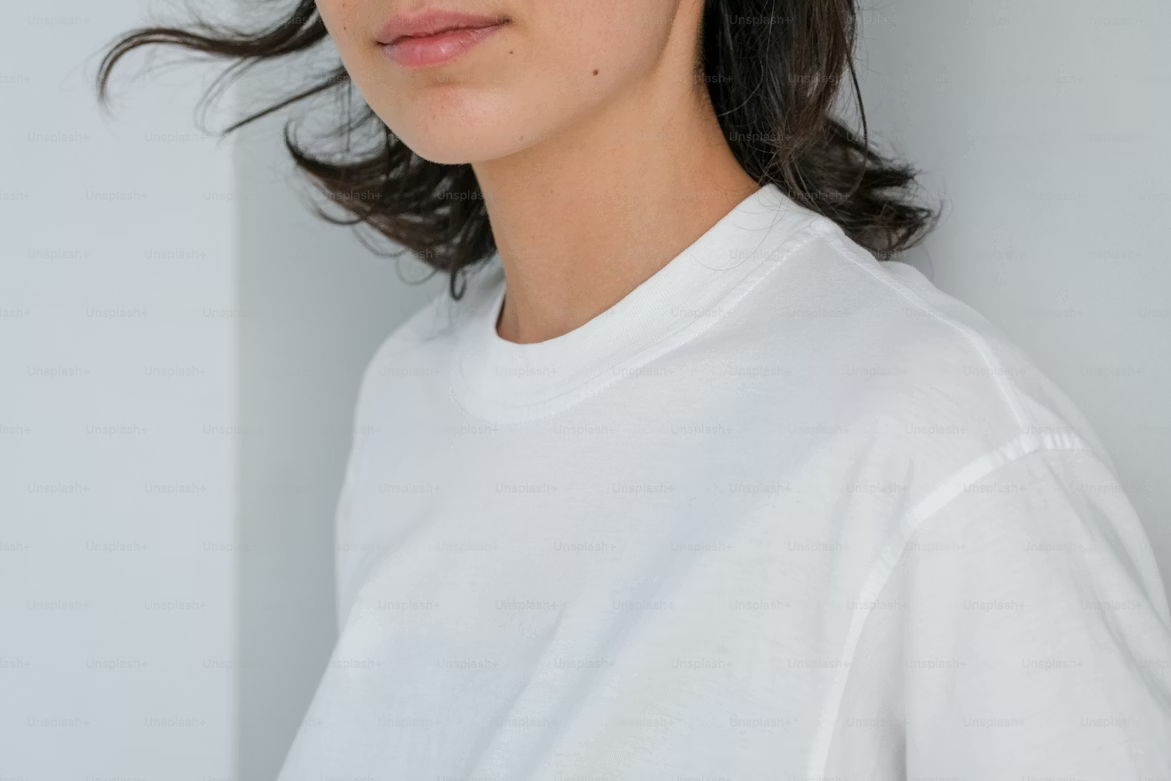
A white T-shirt is one of the most underestimated items in fashion. It looks simple, almost too simple, but it has the ability to reset an outfit instantly. If something feels too complicated or too dark or too “trying too hard,” a white tee brings balance.
It works because it acts as a neutral foundation. It softens bold pieces, lightens dark outfits, and adds breathability to layered looks.
How it fixes outfits:
- Breaks up heavy layers
- Lightens dark color combinations
- Makes formal pieces feel casual
- Adds balance to busy prints
White T-Shirt Usage Chart
| Outfit Problem | How White Tee Helps |
|---|---|
| Outfit feels too formal | Adds casual contrast |
| Outfit looks too dark | Introduces brightness |
| Outfit feels cluttered | Simplifies visual noise |
| Outfit lacks layering | Acts as base layer |
Styling tip:
A slightly relaxed fit works better than a tight one. It gives a more natural drape and avoids looking like an undershirt.
- Well-Fitted Jeans
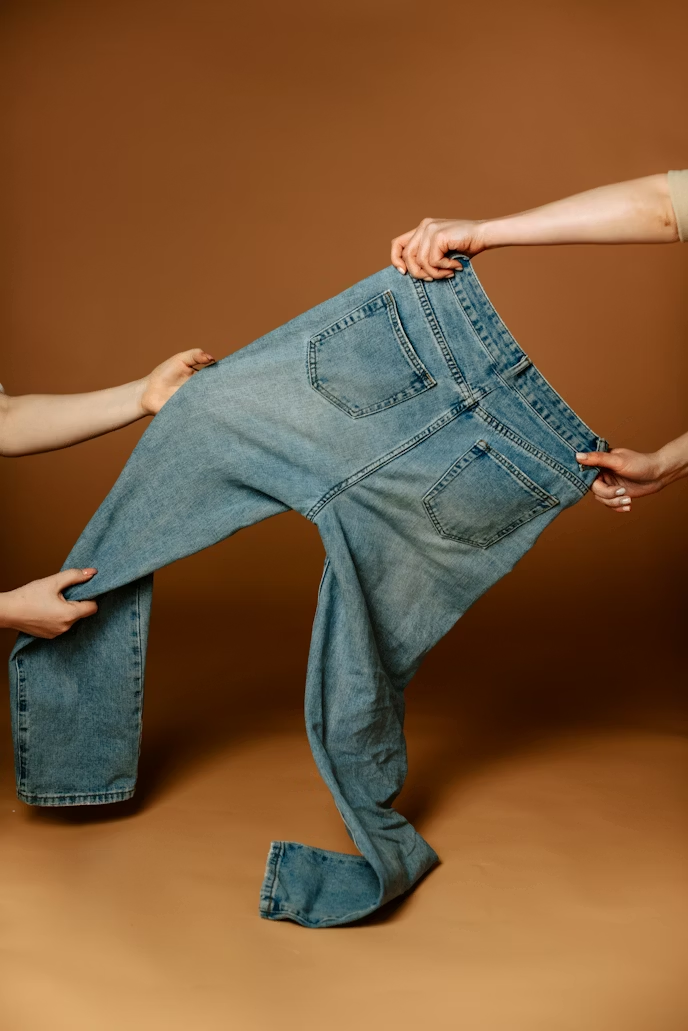
Jeans are not just pants—they’re stabilizers. A good pair of jeans can hold together an otherwise unpredictable outfit. Whether the top is oversized, fitted, colorful, or minimal, jeans ground everything.
The key is fit. Not trend. Not brand. Fit.
How it fixes outfits:
- Balances oversized tops
- Grounds bold colors or patterns
- Adds structure to soft silhouettes
- Works in casual and semi-formal settings
Jean Fit Comparison Table
| Fit Type | Best For | Outfit Effect |
|---|---|---|
| Skinny jeans | Long tops, tunics | Sleek, streamlined |
| Straight leg | Most outfits | Balanced, timeless |
| Wide leg | Fitted tops | Dramatic contrast |
| Relaxed fit | Casual wear | Effortless, laid-back |
Styling tip:
If an outfit feels “off,” jeans are often the quickest fix. Swap bottoms before changing anything else.
- Structured Blazer
A blazer is the quickest way to make an outfit feel intentional. Even if you’re wearing a simple T-shirt and jeans, adding a blazer changes the entire perception.
It introduces structure where there is none. It sharpens silhouettes and creates contrast between casual and formal elements.
How it fixes outfits:
- Elevates casual clothing
- Adds shape to loose outfits
- Makes simple looks feel complete
- Creates visual structure instantly
Blazer Impact Table
| Outfit Base | With Blazer Effect |
|---|---|
| T-shirt + jeans | Smart casual |
| Dress (simple) | Polished and structured |
| Hoodie + pants | Street-style elevated |
| Monochrome outfit | Depth and layering |
Styling tip:
An unstructured blazer works best for everyday outfits because it keeps comfort while still adding shape.
- Neutral Button-Down Shirt
A button-down shirt is one of those pieces that quietly fixes proportion issues. It can be worn open, closed, layered, tucked, or tied. That flexibility makes it a problem solver for almost any outfit imbalance.
How it fixes outfits:
- Adds vertical structure
- Breaks up tight silhouettes
- Softens overly formal looks
- Works as layering piece or main item
Button-Down Versatility Chart
| Style Method | Effect on Outfit |
|---|---|
| Open over tee | Casual layering depth |
| Fully buttoned | Clean, structured look |
| Half tucked | Relaxed asymmetry |
| Tied at waist | Casual proportion balance |
Styling tip:
Light fabrics like cotton or linen make this piece more adaptable across seasons.
- Simple Black Pants
Black pants are the quiet fix for almost every outfit dilemma. When jeans feel too casual, and something more structured is needed, black pants step in.
They provide contrast, lengthen the silhouette, and instantly make an outfit feel more intentional.
How it fixes outfits:
- Upgrades casual tops
- Smooths visual clutter
- Adds elegance without effort
- Works across seasons
Black Pants Comparison Table
| Type | Outfit Style Impact |
|---|---|
| Tailored pants | Formal, polished |
| Straight fit | Everyday versatility |
| Wide leg | Modern and relaxed |
| Slim fit | Clean and minimal |
Styling tip:
Black pants are especially powerful when paired with lighter tops—they create natural contrast.
- Lightweight Layering Jacket
A layering jacket is not about warmth alone—it’s about finishing an outfit. Sometimes an outfit feels incomplete not because something is missing, but because it lacks a final layer.
A lightweight jacket solves that instantly.
How it fixes outfits:
- Adds depth to flat outfits
- Completes simple combinations
- Balances proportions
- Creates outfit cohesion
Layering Jacket Function Chart
| Situation | Jacket Effect |
|---|---|
| Basic top + pants | Adds structure |
| Monochrome outfit | Introduces contrast layers |
| Oversized outfit | Defines silhouette |
| Minimal outfit | Adds visual interest |
Styling tip:
Denim jackets, utility jackets, or lightweight bombers work across most wardrobes.
- Neutral Sneakers or Everyday Shoes
Shoes are often the final missing piece in an outfit. Even when everything else works, the wrong shoes can throw off the entire look.
Neutral sneakers or simple everyday shoes act as stabilizers. They either tone down an outfit or unify it.
How it fixes outfits:
- Grounds bold outfits
- Makes formal pieces more casual
- Adds consistency to color palette
- Improves comfort without sacrificing style
Shoe Impact Table
| Outfit Type | Shoe Effect |
|---|---|
| Dress + sneakers | Casual balance |
| Jeans + blazer | Modern contrast |
| Wide-leg pants | Proportional grounding |
| Simple outfit | Clean, cohesive finish |
Styling tip:
White, beige, or black sneakers are the most versatile options for everyday use.
How These Basics Work Together
Each of these seven items works individually, but their real power appears when they’re combined. They act like a system rather than separate pieces.
Outfit Fix System Overview
| Problem Type | Best Fix Combination |
|---|---|
| Outfit feels boring | White tee + blazer |
| Outfit too casual | Black pants + structured jacket |
| Outfit too loud | Jeans + neutral top |
| Outfit feels incomplete | Layering jacket + sneakers |
| Outfit lacks balance | Button-down + jeans |
Instead of rebuilding your wardrobe, you’re adjusting it in real time.
Common Outfit Problems and Quick Fixes
Here’s a practical breakdown of frequent style issues and how these basics solve them instantly.
Outfit Problem Solver Chart
| Problem | Fast Fix |
|---|---|
| Nothing feels right | Switch shoes first |
| Outfit feels flat | Add blazer or jacket |
| Too many colors | Add neutral base layer |
| Too plain | Add structured piece |
| Too formal | Add white tee or sneakers |
These fixes are not about replacing outfits—they’re about adjusting them.
Why Wardrobe Basics Matter More Than Trends
Trends change constantly, but wardrobe basics stay functional. The reason some people always look “put together” isn’t because they follow every trend—it’s because they rely on consistent foundations.
Basics reduce decision fatigue. They simplify combinations. They make getting dressed faster and more reliable.
A strong wardrobe isn’t large. It’s stable.
Wardrobe Efficiency Comparison
| Wardrobe Type | Decision Time | Outfit Consistency |
|---|---|---|
| Trend-heavy | High | Inconsistent |
| Minimal basics | Low | Consistent |
| Balanced wardrobe | Medium | Reliable |
How to Build Around These Basics
Instead of buying everything at once, think of your wardrobe in layers:
Step-by-step approach:
- Start with jeans and neutral tops
- Add structured layering pieces
- Introduce versatile shoes
- Add one or two statement items
The goal is flexibility, not volume.
FAQs
- How many basics do I really need for a functional wardrobe?
Around 7–10 strong basics are enough if they are versatile and well-fitted. - Can wardrobe basics still look stylish or fashionable?
Yes. Basics are the foundation of most stylish outfits. The styling matters more than complexity. - What if I prefer colorful or bold clothing?
Basics actually help bold pieces stand out by balancing them rather than competing with them. - Do wardrobe basics need to be expensive?
No. Fit and quality matter more than price or brand name. - How often should I update my basics?
Only when they wear out or no longer fit properly. They are meant to be long-term pieces. - Can I use these basics in formal settings?
Yes. Items like blazers, button-down shirts, and black pants transition easily into semi-formal or formal environments.