

A few years back, I visited a friend who always looked effortlessly put-together. You know the type — never over-dressed, never sloppy, just consistently right for every occasion. I’d always assumed she had a massive wardrobe packed with options.
Then I saw her closet.
It wasn’t huge. It wasn’t overflowing. It was actually pretty small — maybe 40 pieces total. But every single thing in there was intentional. No impulse buys hanging with tags still attached. No “maybe someday” items taking up space. Just clean, versatile, well-chosen pieces that all worked together.
That visit changed how I thought about getting dressed entirely. It wasn’t about having more. It was about having the right things.
After years of experimenting, donating mistakes, and slowly rebuilding my own wardrobe with intention, I’ve landed on the 10 basics that genuinely make everything easier. These aren’t glamorous. Some of them sound almost boring. But they’re the foundation every stylish person quietly relies on — whether they talk about it or not.
1. A Well-Fitting White Shirt

Every stylish person I’ve ever noticed — regardless of gender, age, or personal aesthetic — seems to own at least one good white shirt. And I mean a genuinely well-fitting one, not the oversized one from a sale rack that sort of works.
The white shirt is probably the single most versatile piece of clothing that exists. It goes under blazers, over swimwear, tucked into trousers, knotted over jeans, layered under sweaters. It works at a job interview and at a weekend brunch.
I went through about four white shirts before I found the right one. Too boxy, too sheer, wrong collar, wrong length. When I finally found one that fit properly across the shoulders and had a fabric that didn’t go see-through in sunlight, I wore it constantly.
What to look for in a good white shirt:
| Feature | What to Check |
|---|---|
| Fabric weight | Not too thin — should be opaque |
| Shoulder fit | Seam should sit exactly at shoulder edge |
| Length | Long enough to tuck but not overwhelmingly long |
| Collar | Clean, structured, lays flat without ironing constantly |
| Fabric type | Cotton or cotton-blend washes well and ages well |
Budget pick: Uniqlo’s Oxford shirts are consistently good quality for the price. Investment pick: a linen-cotton blend from a smaller brand that cuts properly for your body type.
2. Dark Wash Straight-Leg Jeans
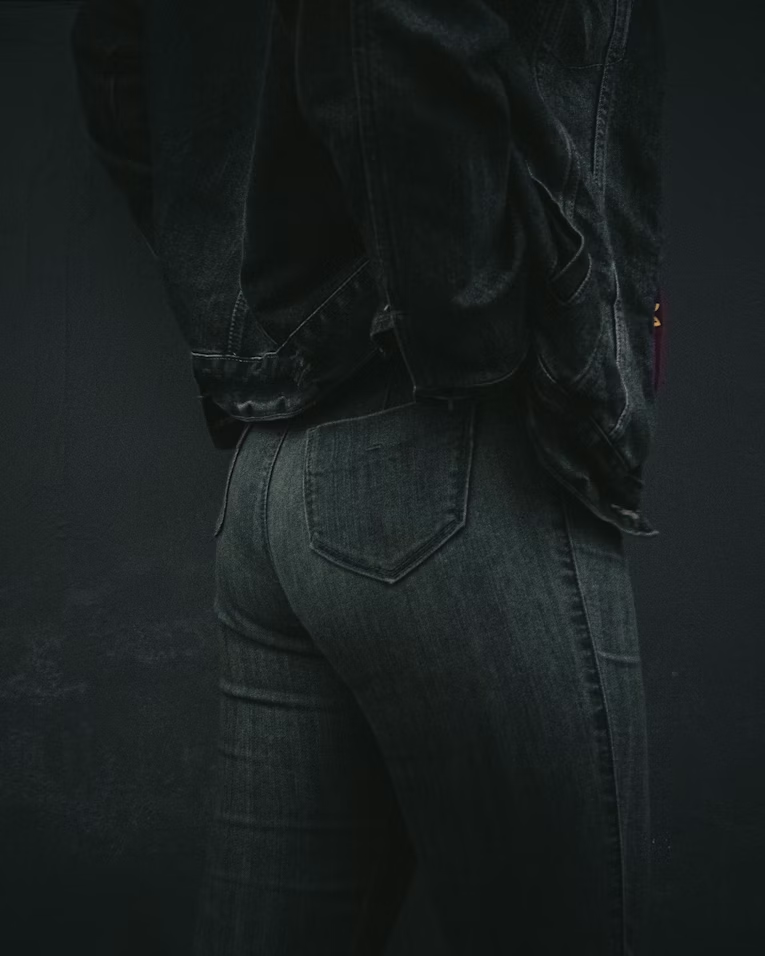
Jeans are interesting because everyone owns them, but not everyone owns the right ones. And the wrong pair of jeans can make a whole outfit fall flat.
Dark wash straight-leg jeans are the sweet spot. They read more formal than lighter washes, which means they can dress up more easily. Straight-leg works across body types and doesn’t go out of style the way skinny or ultra-wide cuts do.
I wore skinny jeans exclusively for about six years and genuinely thought I’d never switch. Then I tried a straight-leg pair and within a week I’d barely touched anything else. The silhouette is just cleaner and more effortlessly stylish.
The key things to avoid: excessive fading, distressing, or any kind of graphic embellishment. The more understated, the more versatile.
Denim versatility by wash:
| Wash Type | Dressiness Level | Best For |
|---|---|---|
| Dark indigo | Smart casual to dressy | Dinner, work, events |
| Medium blue | Casual to smart casual | Everyday, weekends |
| Light wash | Casual | Relaxed outings, summer |
| Black denim | Smart casual to dressy | Evening, polished looks |
| Distressed | Casual only | Weekend, relaxed settings |
Dark wash gives you the most range. It’s the one pair worth investing in if you’re only buying one.
3. A Neutral Knit Sweater
Not a hoodie. Not a statement print. A clean, neutral-toned knit sweater in a colour like oatmeal, camel, charcoal, or navy.
This is the piece that makes casual outfits look intentional. Throw it over a collared shirt, layer it under a coat, wear it with the dark jeans mentioned above — it immediately elevates whatever’s underneath.
I made the mistake for years of buying sweaters with interesting textures or patterns because they seemed more exciting in the shop. They sat in my wardrobe barely touched because they only worked with very specific outfits. The plain camel crewneck I bought almost as an afterthought became one of my most-reached-for pieces.
Mid-weight merino wool is ideal if budget allows — it regulates temperature well, doesn’t pill easily, and drapes nicely. Cotton knits work well for milder climates.
4. Tailored Trousers in a Neutral Colour
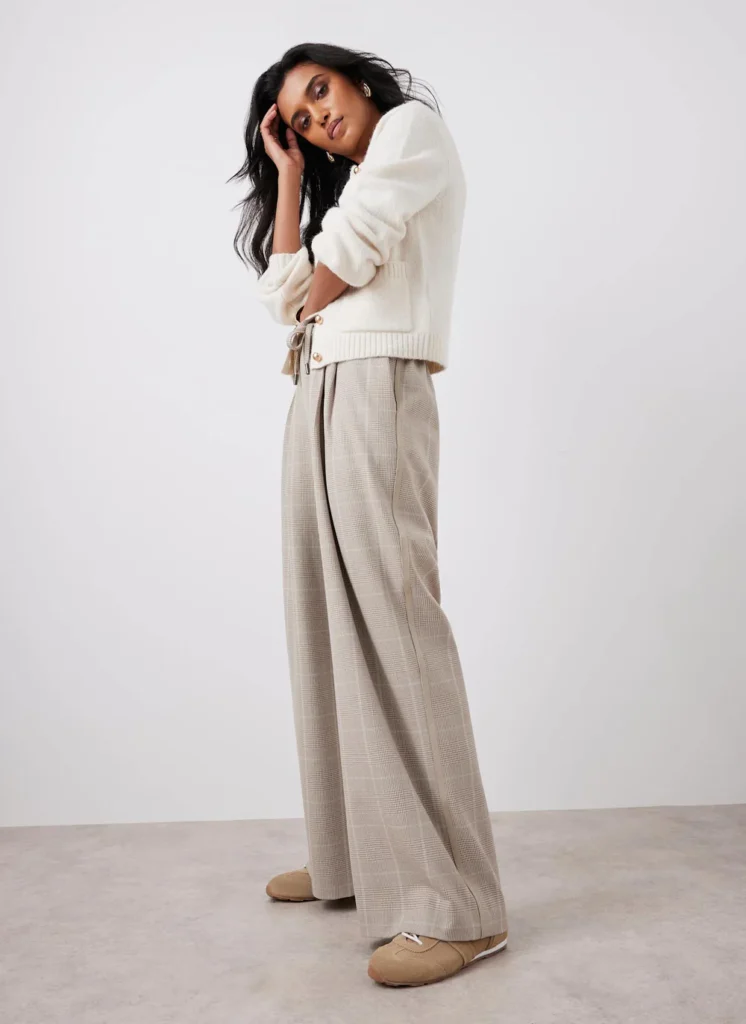
This is the one piece most casual dressers skip, and it’s the one piece that would instantly upgrade their wardrobe if they added it.
Tailored trousers — in black, navy, camel, or stone — bridge the gap between smart and casual better than almost anything else. They make a simple t-shirt look considered. They pair with trainers and still look put-together.
The fit matters enormously here. Trousers that are slightly too long, too baggy in the seat, or pulling across the hips will undermine the whole effect. If you find a pair that’s close but not quite right, a tailor can usually fix the length for under £15 and it’s absolutely worth it.
If you’re building your wardrobe basics from scratch and want a structured approach, the guide on wardrobe basics every closet should have is genuinely helpful for prioritising what to buy first.
5. A Classic Trench Coat or Structured Jacket
Outerwear is the first and last thing people see in an outfit, and a good coat or jacket can make even the most basic outfit underneath look intentional and polished.
A trench coat is the obvious classic — it works across seasons, adds structure, and has a timeless quality that means it never really dates. But if a trench isn’t your style, a well-fitted structured jacket (think a single-breasted wool coat or a clean bomber) does the same work.
The mistake I see constantly is people investing in interesting pieces underneath and then pairing them with a bulky, shapeless winter coat that undoes everything. A good outer layer is worth spending real money on because it gets enormous wear across many years.
Outerwear investment guide:
| Coat Type | Seasons | Style Range | Investment Level |
|---|---|---|---|
| Trench coat | Spring, Autumn | Casual to formal | High — worth it |
| Wool overcoat | Autumn, Winter | Smart casual to formal | High — worth it |
| Denim jacket | Spring, Summer | Casual to smart casual | Medium |
| Leather or vegan leather jacket | Spring, Autumn | Casual to edgy | Medium–High |
| Light bomber | Spring, Summer | Casual | Medium |
Buy one great outer layer before you buy five mediocre ones. The math always works out in the long run.
6. Simple White or Black Trainers
Footwear trends cycle constantly, but a clean pair of simple white or black trainers never really goes out of style. They make jeans look sharper, casual dresses look grounded, and tailored trousers look modern rather than stuffy.
The key word is clean. A scuffed, yellowed pair of white trainers pulls everything down. Keeping them clean is part of the commitment — a Magic Eraser works surprisingly well on rubber soles, and a suede brush keeps fabric panels looking fresh.
Brands like Veja, New Balance (specifically the 574 or 550), Adidas Stan Smiths, and Nike Air Force 1s have all held their position as reliable classics because they’re low-profile, versatile, and age gracefully when cared for.
You don’t need five pairs of trainers. You need one really good pair in white or black that goes with almost everything.
7. A Versatile Midi or Wrap Dress
This one applies regardless of whether you wear dresses regularly or only occasionally. A single great dress — particularly a wrap style or a simple midi — covers a huge range of occasions and is one of the easiest “complete outfit in one piece” solutions that exists.
Wrap dresses are particularly brilliant because they’re adjustable, flattering across body types, and easy to layer with a belt, cardigan, or jacket to completely change the look.
I used to avoid dresses because I thought I “wasn’t a dress person.” Then I bought one simple black midi dress for an event and wore it no fewer than 12 times in the following four months in completely different ways. Lesson learned.
For building this kind of versatile, season-friendly wardrobe foundation, the 12 seasonal wardrobe essentials for year-round style covers the full picture really well.
8. Quality Basic T-Shirts in Neutral Colours
This sounds like the most obvious thing in the world, and yet most people own a collection of t-shirts that are subtly wrong — slightly too thin, faded unevenly, a weird fit across the shoulders, or a colour that doesn’t mix well with anything else.
A good basic t-shirt — in white, black, grey, or navy — in a proper fabric weight (not the flimsy kind that goes see-through after six washes) is one of the hardest-working pieces in any wardrobe.
The brands that consistently get this right: Uniqlo (Supima cotton range), COS, Arket, and ASKET. These aren’t the cheapest options but they wash well, keep their shape, and last for years.
What separates a great basic tee from a mediocre one:
| Factor | What Good Looks Like |
|---|---|
| Fabric weight | Substantial, opaque, not clingy |
| Neckline | Sits flat, doesn’t stretch out |
| Shoulder seam | Sits right at the shoulder, not drooping |
| Hem length | Consistent all the way around |
| Wash durability | Keeps shape and colour after 20+ washes |
Own three to five of these in rotation. Replace them when they start to look tired, not years after.
9. A Leather or Leather-Look Belt
Belts are the most overlooked wardrobe basic and the one that quietly ties everything together — literally and aesthetically.
A clean, simple belt in black or tan leather (or quality vegan leather) adds finish to trousers, defines a waist over a long shirt or dress, and makes a whole outfit look more intentional. It’s one of those details that people notice without knowing why — the difference between “she always looks put together” and something slightly off that you can’t place.
I owned a cheap plastic belt for years that had a slightly wrong finish and would crack after six months. Replacing it with one good leather belt that I’ve now owned for four years changed things noticeably. Sometimes the small things matter more than the big ones.
Belt basics:
- Black leather: works with navy, grey, black, white
- Tan/cognac: works with camel, white, olive, brown, navy
- Width: medium width (around 3cm) works across trousers and jeans
- Buckle: keep it simple — a clean rectangle or rounded metal buckle is timeless
10. A Structured Tote or Shoulder Bag in a Neutral Tone
The bag you carry is part of your outfit, whether you think about it or not. A structured tote or shoulder bag in a neutral colour — black, tan, camel, or navy — is the foundation bag that works across most occasions.
It doesn’t need to be expensive. It needs to look clean, hold its shape, and not be covered in logos or hardware that fights with everything else you’re wearing.
I went through a phase of buying cheap bags every few months because I wanted variety. Eventually I invested in one good structured tote and one smaller shoulder bag — and I haven’t bought a bag since because they cover everything.
Bag type by occasion:
| Bag Style | Best Occasions | Avoid For |
|---|---|---|
| Structured tote | Work, errands, travel | Formal evening events |
| Shoulder bag | Everyday, casual, smart casual | Heavy carry days |
| Clutch | Evening, formal events | Practical daily use |
| Crossbody | Travel, weekends, casual | Formal or polished settings |
| Backpack | Commuting, travel | Smart casual or above |
Start with a tote and a shoulder bag. That genuinely covers most of what real life requires.
The Basics Working Together — Mix and Match Chart
One of the best things about these 10 pieces is how fluidly they combine. Here’s a rough idea of how many distinct outfits these basics can build:
| Outfit Combination | Pieces Used |
|---|---|
| White shirt + dark jeans + white trainers | 3 pieces |
| Knit sweater + tailored trousers + leather belt + loafers | 4 pieces |
| Midi dress + trench coat + shoulder bag | 3 pieces |
| Basic tee + dark jeans + structured jacket + white trainers | 4 pieces |
| White shirt + tailored trousers + belt + tote | 4 pieces |
| Knit sweater + midi dress (as skirt) + ankle boots | 3 pieces |
That’s already six solid outfits from the same 10 pieces. In practice, the combinations go much further — easily 20 to 30 distinct looks depending on how you layer and accessorise.
Common Mistakes People Make With Wardrobe Basics
Even with the right intentions, there are a few traps worth knowing about:
Buying basics in the wrong fit first: A white shirt in the wrong cut isn’t a basic — it’s a problem piece. Always try basics on (or check return policies carefully when buying online) before committing.
Going too cheap on high-wear items: Basics like t-shirts, jeans, and belts get enormous use. This is where buying slightly better quality pays off in longevity. The £8 t-shirt that needs replacing every three months costs more annually than the £30 one that lasts two years.
Choosing trendy versions of classics: Dark wash jeans with a fashionable cut that’ll look dated in two seasons defeat the purpose. When buying basics, go as classic and understated as possible.
Ignoring care instructions: Basics survive longer with proper care. Washing jeans inside out, air-drying knitwear flat, and properly conditioning leather belts makes a significant difference in how long things last and how they look.
Thinking basics are boring: The most stylish people aren’t wearing the most interesting individual pieces. They’re wearing simple, well-chosen, well-fitting basics — and that’s exactly what makes them look so good.
For more on building a foundation wardrobe that actually works for your daily life, the 10 essential capsule wardrobe building basics for stylish living is a great companion read with practical next steps.
How These 10 Basics Perform Over Time
| Timeframe | What You’ll Notice |
|---|---|
| Week 1 | Getting dressed feels noticeably easier |
| Month 1 | You reach for the same pieces constantly |
| Month 3 | You stop buying things that “almost” work |
| Month 6 | Your wardrobe feels smaller but more functional |
| Year 1+ | You spend less, look better, stress less |
The cumulative effect is real. Fewer, better basics genuinely outperform a closet full of random pieces every single time.
Wrapping It Up
There’s something almost counterintuitive about the idea that owning less — or at least owning better — makes you look more stylish. But spend any time around people who consistently dress well and you’ll notice the pattern: they rely on the same core pieces, over and over, in different combinations.
It’s not about having money for expensive clothes. It’s about being deliberate with what you choose and making sure everything earns its place.
Start with one or two of these basics if you don’t already have them. Find versions that genuinely fit and that you’d wear happily, not just settle for. Build from there. The wardrobe you end up with will be smaller and more useful than anything you could achieve by just buying more.
Also worth a read: How to Build a Stylish Budget Wardrobe Without Overspending — a practical guide for putting these basics together without breaking the budget.
Frequently Asked Questions
Q1: Do I need to buy all 10 basics at once? Not at all — and honestly, trying to buy everything at once usually leads to rushed decisions and wrong choices. Start with the two or three pieces that are most obviously missing from your wardrobe right now and add one new basic every month or two. Slow and intentional always beats fast and random.
Q2: How much should I spend on wardrobe basics? There’s no single right answer, but a useful guide is to spend more on high-wear, high-visibility pieces (coat, jeans, shoes) and you can be more budget-conscious with things like plain t-shirts. Think cost-per-wear rather than upfront cost — a £90 pair of jeans worn 150 times costs far less per wear than a £25 pair worn 10 times.
Q3: What if I work from home — do I still need tailored trousers and structured pieces? The basics shift slightly for remote workers, but tailored trousers and a good shirt still earn their place for video calls, occasional in-person meetings, and any time you leave the house and want to feel put-together. Even one pair of well-fitting trousers changes how you feel when you do need them.
Q4: Can these basics work for any style or aesthetic? Yes — that’s exactly what makes them basics. A white shirt reads preppy in one combination and minimal in another. Dark jeans work in vintage-inspired outfits and in clean modern looks. The basics are neutral enough to anchor almost any personal style. You build your aesthetic on top of them, not instead of them.
Q5: How do I know when a basic needs replacing? When it starts to look tired rather than clean. Pilling on knitwear, yellowing on white shirts, fraying hems, faded denim — these are the signals. A wardrobe basic that looks worn undermines the whole point. Replace basics before they become a problem, not long after.