

I still cringe thinking about a photo from three years ago. I’m standing at a friend’s birthday dinner, wearing what I thought was a well-put-together outfit — a button-down shirt that was slightly too big in the shoulders, dark jeans that had faded unevenly from too many washes, and shoes I’d owned since college that had seen better days. I genuinely believed I looked fine. Everyone else was too polite to say otherwise.
It wasn’t until I started intentionally rebuilding my wardrobe — piece by piece, with some actual thought — that I realized the problem wasn’t my style. It was the foundation. My wardrobe basics were quietly sabotaging everything I wore.
Here’s the thing nobody really tells you: you don’t need more clothes. You need the right clothes, maintained and worn correctly. Most people make the same handful of mistakes with their basics, and those mistakes have a ripple effect on every single outfit they put together.
Let’s break down the four biggest ones.
1. Buying “Basics” Without Thinking About Fit
This is the one that gets almost everyone. We walk into a store, see a plain white tee or a simple pair of trousers on sale, and think — it’s just a basic, fit doesn’t matter as much. Wrong. Fit matters more for basics than for anything else.
Here’s why: a statement piece — a patterned jacket, a bold dress — draws the eye. Minor fit issues get overlooked because the design is distracting. But a plain white shirt? There’s nothing to distract from the way it’s pulling across your chest or hanging off your shoulders like a potato sack.
I used to buy the same size across every brand without trying things on. A medium is a medium, right? Not even close. Sizing is wildly inconsistent, and even within a brand, cuts vary by style. A “relaxed fit” medium and a “slim fit” medium are entirely different garments.
What actually helps:
- Try on basics before committing, always. Even if it’s boring. Especially if it’s boring.
- Focus on the shoulders first — shoulder seams should sit exactly at the edge of your shoulder. Everything else can be tailored; shoulder structure usually can’t be.
- For trousers, check the seat and thighs before the length — length is an easy fix, the rest isn’t.
- Find a good local tailor. Seriously. A £10–£15 hem or sleeve adjustment can make a £20 shirt look like a £60 one.
I’ve got a simple white Oxford shirt I paid almost nothing for at a high-street store. Took it to a tailor, got the sleeves shortened slightly and the body taken in a touch — it now gets more compliments than anything else I own.
The goal isn’t expensive basics. It’s well-fitting basics. That’s a completely different thing.
2. Ignoring Fabric Quality (And Then Wondering Why Things Look Cheap)
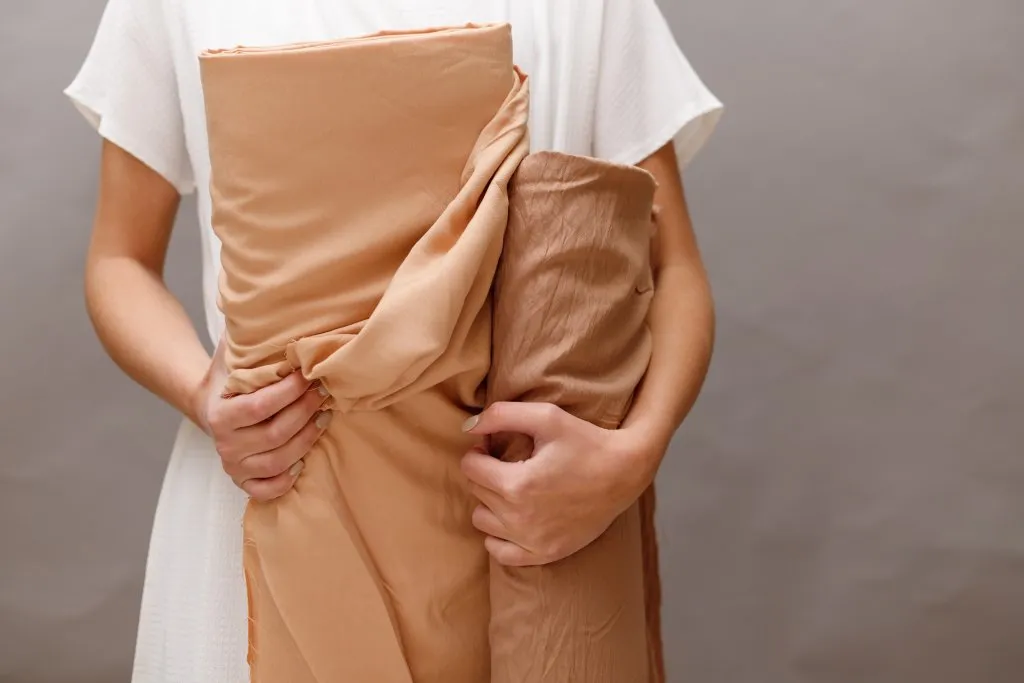
Here’s a table that might put things in perspective:
Fabric Quality vs. Longevity & Appearance
| Fabric Type | Typical Lifespan | Appearance After 20 Washes | Cost Range |
|---|---|---|---|
| 100% Cotton (quality) | 3–5+ years | Holds shape well | Mid |
| Polyester blend | 1–2 years | Pilling, shine, distortion | Low–Mid |
| Linen | 5–10 years | Softens, improves with age | Mid–High |
| Fast fashion mixed blends | 6–12 months | Fading, stretching, pilling | Low |
| Merino Wool | 5+ years | Excellent retention | High |
The cheap polyester shirt might look identical to a cotton one on the hanger. Three months in? They’re worlds apart.
I went through a phase of building my “basics wardrobe” almost entirely from budget fast-fashion pieces because the price per item was so low. Within a year, I had a closet full of clothes that all looked slightly off — faded colors, strange sheen under lighting, shapes that had stretched or shrunk in ways I couldn’t fix. I was constantly replacing things and spending more overall than if I’d just bought fewer, better things from the start.
You don’t have to spend a fortune. But you do need to read labels.
What to look for:
- T-shirts and casual shirts: 100% cotton, or at least 95%+. Look for a weight of around 180–200 gsm (grams per square meter) — that’s the sweet spot between durability and comfort.
- Trousers: Cotton twill, chino fabric, or wool blends for smarter options. Avoid anything with more than 5–10% synthetic unless it’s for stretch.
- Knitwear: Merino wool or cotton — not acrylic. Acrylic pills almost immediately and looks cheap fast.
- Denim: Higher cotton content, medium–heavy weight. Stretch jeans are fine but look for elastane content under 3%.
If you’re working with a tight budget, check out 10 Proven Capsule Wardrobe Building Tricks to Save Money — there are genuinely smart ways to get better quality without spending more.
Also — learn to shop charity shops and secondhand apps (Vinted, Depop, thredUP if you’re in the US). You can find excellent quality basics for almost nothing because someone else already paid full price.
3. Treating Basics Like They Don’t Need Care
This one stings because I was very guilty of it.
The mindset is: it’s just a basic. It’s meant to be simple, easy, low-maintenance. I’ll throw it in the wash however, dry it on full heat, iron it occasionally — it’ll be fine.
It won’t be fine.
Basics take a beating because you wear them constantly. That’s their whole point — you reach for them again and again. Which means they need more care, not less, to stay looking good.
Here’s what typically goes wrong:
Washing on too high a temperature. Cotton shrinks. Colors fade. Fabric breaks down faster. Most basics do perfectly well on a cool or warm wash (30°C). Anything higher is usually unnecessary and damaging.
Tumble drying everything. Again — shrinkage, fabric breakdown, elastic deterioration in waistbands. Where possible, air dry. It takes longer but your clothes last significantly longer too.
Ignoring pilling. That fuzzy, bobbled surface that appears on t-shirts and knitwear is called pilling, and it happens from friction. You can remove it with a fabric shaver (they cost about £8–12 and are absolutely worth owning). Most people just… keep wearing pilled clothes, wondering why they look scruffy.
Not storing things properly. Knitwear stretched out on hangers goes misshapen — it should be folded. Shirts left crumpled develop permanent creasing in fabric. Button your buttons before hanging shirts so the collar keeps its shape.
A simple care routine that works:
→ Wash in cool or warm water, gentle cycle → Turn t-shirts and dark items inside out before washing → Air dry wherever possible — use a drying rack → Use a fabric shaver monthly on anything prone to pilling → Iron or steam cotton shirts properly before wearing (wrinkled basics look sloppy immediately) → Store knitwear folded, shirts hung with buttons done up
It sounds like a lot written out, but it takes maybe 10 extra minutes a week. The payoff is that your basics consistently look sharp instead of gradually declining into “around the house” territory.
4. Building a Wardrobe of Basics That Don’t Actually Work Together
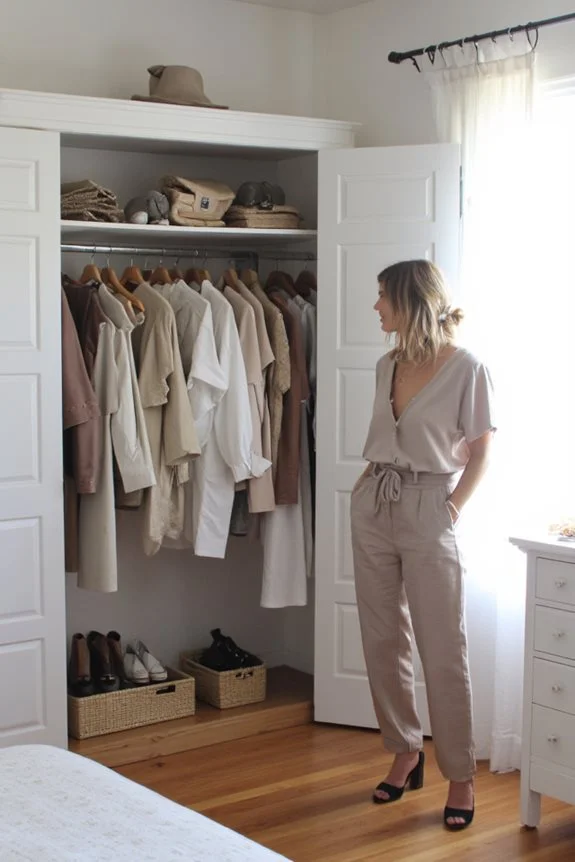
This is the most subtle mistake, and in some ways the most frustrating — because you can do everything else right and still end up with a closet full of clothes that don’t combine into proper outfits.
Picture this: you have a navy blue t-shirt, a grey crewneck, a white shirt, black jeans, blue jeans, grey jeans, white trainers, and brown boots. Sounds like solid basics, right?
Now try to get dressed. The navy tee looks odd with the blue jeans (too matchy, not in a good way). The brown boots don’t really work with the black jeans. The grey crewneck and grey jeans feels flat and unintentional. Suddenly you’ve got a wardrobe of individual pieces that don’t create a coherent wardrobe.
This is what people call a “capsule wardrobe” problem — and getting it right comes down to thinking about your basics as a system rather than individual items.
Here’s a simple visual of how a cohesive basics system should work:
A Basics Wardrobe Compatibility Map
TOPS                    BOTTOMS              SHOES
─────────────────────────────────────────────────────────
White T-shirt    →      Navy chinos      →   White trainers
                 →      Grey jeans       →   White trainers / White leather
                 →      Black jeans      →   White trainers / Clean boots

Grey Crewneck    →      Navy chinos      →   White trainers / Suede loafers
                 →      Khaki chinos     →   White trainers / Suede loafers
                 →      Black jeans      →   White trainers / Chelsea boots

Navy Shirt       →      Grey trousers    →   Brown leather / Derby shoes
                 →      Khaki chinos     →   White trainers / Loafers

Black Jeans      →      Works with most tops    →   White, black, or brown shoes
Navy Chinos      →      Works with most tops    →   Avoid black shoes
The key principles here are:
Stick to a consistent color family. Most well-functioning basic wardrobes rotate around 2–3 neutrals (navy, grey, white, black, camel, khaki) with one accent color if anything. Every time you add a piece, ask whether it works with at least 3 other things you already own.
Think in odd numbers for shoes. White trainers (casual), a clean leather or suede shoe (smart casual), boots (autumn/winter). Three pairs of shoes can cover most situations if they’re the right three pairs.
Avoid accidental doubles. Three pairs of very similar blue jeans, or four almost-identical grey t-shirts — you’re not actually giving yourself more options, you’re just eating wardrobe space. One great version of each basic beats three mediocre versions.
For a deeper dive into this, 7 Easy Wardrobe Basics That Fix Any Outfit is a brilliant starting point for thinking about pieces that genuinely pull a whole look together.
Quick Reference: The 4 Mistakes at a Glance
| # | Mistake | Why It Hurts | Quick Fix |
|---|---|---|---|
| 1 | Ignoring fit | Makes expensive clothes look cheap | Try on everything, use a tailor |
| 2 | Cheap fabric | Clothes degrade fast, look low-quality | Read labels, buy natural fibres |
| 3 | Poor maintenance | Basics look worn and scruffy | Gentle wash, air dry, fabric shaver |
| 4 | No cohesion | Can’t build outfits from what you own | Buy in a colour system, test combinations |
The honest truth is that most style problems aren’t about needing a bigger wardrobe or more fashion sense. They’re about the foundation being slightly off in one or more of these four ways.
Fix the fit. Care about the fabric. Actually take care of what you own. And build pieces that work together as a system rather than a collection of individual items.
Once those four things click into place, getting dressed stops feeling like a chore and starts feeling genuinely easy — and that’s really the whole point of getting your basics right in the first place.
If you want to take this further and build something really cohesive from scratch, 9 Easy Capsule Wardrobe Building Steps to Simplify Your Closet walks through the full process in a way that actually makes practical sense.
Frequently Asked Questions
Q1. How many wardrobe basics do I actually need to start with?
Honestly? Less than you think. A solid starting point is around 10–15 pieces total — 4–5 tops, 3 bottoms, 2–3 pairs of shoes, and a couple of layering pieces. The goal is quality and cohesion, not quantity. You can always add as you go.
Q2. Is it really worth spending more on basics vs. statement pieces?
Yes — and this is actually the opposite of what most people do. Statement pieces rotate in and out of style and get worn less frequently. Your basics are what you reach for every single week. Investing more in those per-wear cost goes way down.
Q3. How do I know if two basics “go together” if I’m not great at styling?
A simple test: if both pieces are neutrals (white, grey, navy, black, beige, khaki), they almost always work together. Trouble starts when you mix multiple different accent colors or very similar but slightly-off shades of the same color (like navy and royal blue). Stick to neutrals and you’ll rarely go wrong.
Q4. My basics always seem to shrink after washing — what am I doing wrong?
Almost certainly washing on too high a temperature and/or tumble drying on high heat. Switch to a 30°C wash and air dry wherever possible. If you must tumble dry, use low heat and remove clothes while slightly damp, letting them finish air drying. Pre-washed or “pre-shrunk” fabrics are also less prone to this issue.
Q5. Can I build a great basics wardrobe on a tight budget?
Absolutely — but be strategic. Prioritize the pieces you wear most (usually t-shirts, jeans, one good shoe) and spend a little more on those. For everything else, look secondhand first. Charity shops, Vinted, and local thrift stores regularly have quality basics for a fraction of retail prices. The key is knowing what to look for — fabric, fit, and condition — rather than just buying cheap.
Want to go even deeper on building a wardrobe that actually works for you? Check out 10 Wardrobe Basics Every Closet Needs Today — it covers the non-negotiable pieces that make everything else in your closet easier to wear.