
I remember standing in front of a packed closet thinking, “I have nothing to wear.” Sound familiar? I had clothes everywhere — impulse buys, sale grabs, things that seemed like a great idea at the time — but nothing actually worked together. Every week I was either rewearing the same two outfits or buying something new out of frustration.
That’s when I decided to stop the cycle and get serious about building a budget wardrobe that actually made sense. Not a wardrobe of cheap throwaway pieces, but smart, intentional buys that stretched every rupee (or dollar) I spent.
Here’s what I found: you don’t need a big budget. You need the right pieces. These 9 picks changed how I dress — and how much I spend.
1. The Classic White or Black T-Shirt
This sounds too basic, right? That’s exactly what I thought before I started tracking my outfits for a month. Turns out, my plain white tee showed up in more combinations than anything else in my wardrobe.
A well-fitted white or black t-shirt works under blazers, over trousers, tucked into skirts, or layered under a denim jacket. It’s the backbone of an outfit, not an afterthought.
What to look for:
- 100% cotton or cotton-modal blend for durability
- Slightly structured collar (cheap tees lose shape after 3 washes)
- Mid-weight fabric — not see-through, not boxy
Budget tip: Brands like Uniqlo, H&M Basics, or even local market finds can hit the sweet spot. Avoid ultra-cheap ones that turn yellow after a few washes. Spend a bit more here — you’ll wear it 3x a week.
2. Dark Wash Straight-Leg Jeans
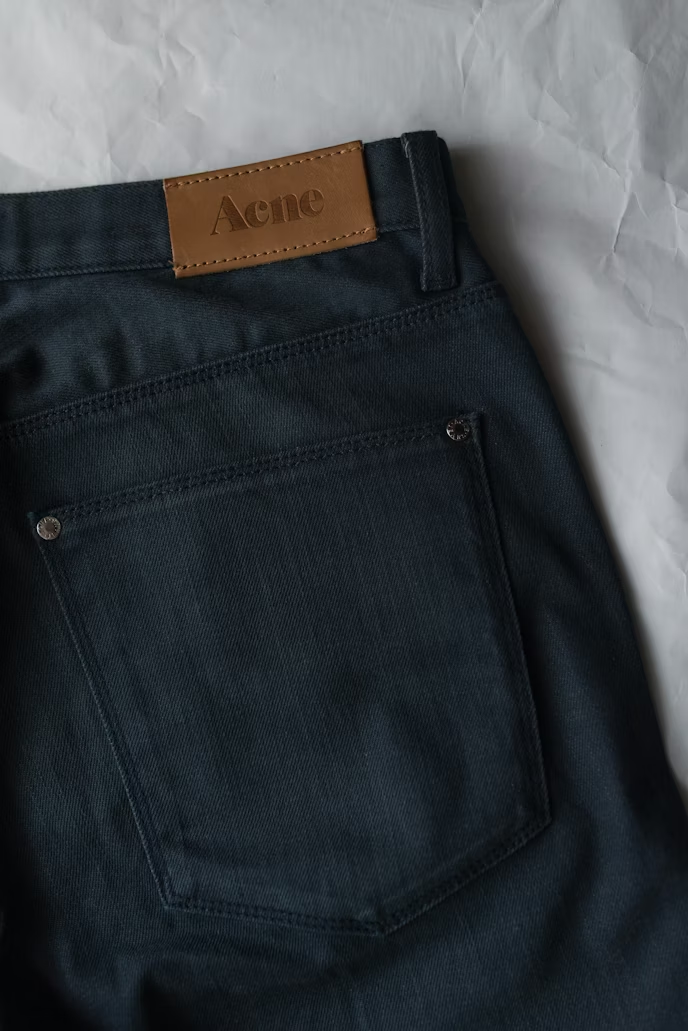
Not skinny jeans. Not distressed. Not the ones with embroidery on the pockets.
Dark wash straight-leg jeans.
I made the mistake of buying trendy jeans for years — the kind that looked great in early 2019 and embarrassing by 2021. Dark straight-leg denim is the one cut that’s been flattering across decades and body types. It dresses up with a tucked blouse, dresses down with sneakers and a hoodie.
One pair, worn multiple ways, saves you from buying five mediocre alternatives.
| Style Pairing | Occasion |
|---|---|
| White tee + white sneakers | Weekend casual |
| Button-down shirt + loafers | Smart casual / work |
| Blazer + heels or boots | Evening out |
| Oversized knit + ankle boots | Fall/winter layering |
The table above? That’s literally one pair of jeans doing the work of four outfits. If you’re just starting to build a smarter closet, this is where I’d recommend putting your money first. You can read more about the foundation of this approach over at 9 Easy Capsule Wardrobe Building Steps to Simplify Your Closet.
3. A Neutral-Toned Blazer
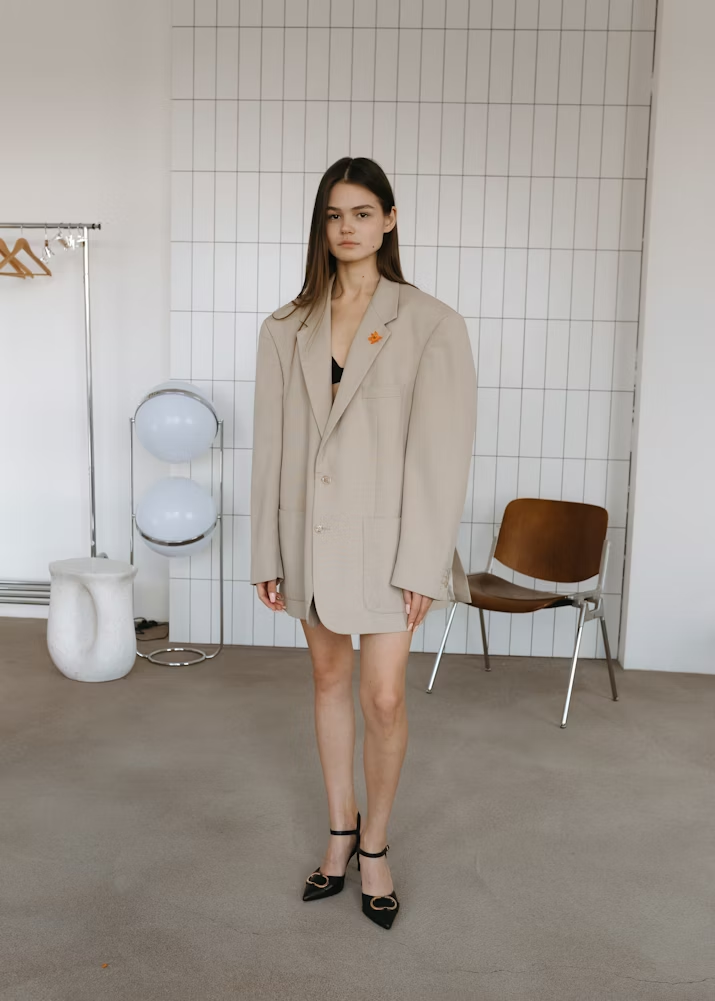
I avoided blazers for years because I thought they were “office clothes.” Big mistake. A beige, grey, or camel blazer is one of the most transformative pieces you can own on a budget.
Throw it over a basic tee and jeans — suddenly you look polished. Put it over a slip dress — you’ve got an evening look. Even rolled-up sleeves over a white shirt give off that effortless “I didn’t try too hard” energy that’s hard to achieve otherwise.
Where I found mine: Thrift stores are goldmines for blazers. People donate barely-worn work blazers all the time. I picked up a structured camel blazer for next to nothing from a second-hand store — still one of my most-worn pieces three years later.
Fit is everything here. A blazer that fits in the shoulders is non-negotiable. Everything else (length, waist) can be altered cheaply.
4. White or Cream Button-Down Shirt
The second white piece on this list — and I’m not sorry about it.
A classic button-down in white or cream works harder than almost any other top. Half-tucked with jeans, fully buttoned as a layer over a slip dress, open as a beach coverup, tied at the waist with wide-leg trousers — it’s basically a wardrobe multi-tool.
The mistake I made early on was buying cheap polyester versions. They look shiny, wrinkle weirdly, and feel awful in warm weather. Spend a little more on cotton or linen blends.
Pro tip: Get a slightly oversized fit. It’s more versatile, more forgiving, and instantly looks more intentional than something too fitted.
5. A Good Pair of White Sneakers
I tracked my outfit photos for 60 days once (yes, I’m that person). White sneakers appeared in 38 out of 60 looks. That’s over 60% of my outfits handled by one pair of shoes.
They go with:
- Jeans of any cut
- Midi skirts
- Flowy dresses
- Tailored trousers
- Shorts
White sneakers are also incredibly easy to find on a budget. Brands like Vans (the Authentic), New Balance 327, or even generic canvas sneakers from local markets can all do the job well. Just make sure the sole isn’t too chunky or too flat — a medium sole photographs well and feels balanced in most outfits.
Cleaning hack: Old toothbrush + baking soda paste + white vinegar = white sneakers that look almost new. I do this every 2-3 weeks.
6. A Lightweight Knit or Cardigan
This is the piece that bridges seasons — and saves you from buying a whole new wardrobe every few months.
A simple, lightweight cardigan in oatmeal, grey, or camel adds warmth and texture without overwhelming an outfit. In summer, it’s an evening layer. In fall, it’s a main piece. In winter, it goes under coats. In spring, it’s back to being a light layer.
One piece. Four seasons.
I used to buy separate “summer tops” and “winter sweaters” like they were completely different categories. That was expensive and inefficient. Transitional pieces like a thin knit do the heavy lifting all year, which is exactly the thinking behind 6 Proven Capsule Wardrobe Building Tricks for All Seasons.
What to avoid: Avoid super chunky or heavily textured knits if you want maximum versatility. The more relaxed and simple the knit, the more outfit combinations you’ll find.
7. Black Trousers (Mid-Rise, Straight or Slim Cut)
If jeans are the casual MVP, black trousers are the smart-casual MVP.
A well-cut pair of black trousers can replace multiple “occasion-specific” buys. They work for job interviews, dinner dates, office Fridays, or even elevated weekend looks. Pair with a tee for casual, swap in a silk top for dressy.
Common mistake I see constantly: People buy cheap polyester trousers that pill after one month and look flat in photos. Look for a wool blend, ponte fabric, or thick crepe — they drape better, last longer, and hold their shape.
Budget-friendly find: Check out end-of-season sales at mid-range stores. Black trousers are a perennial item, which means they often end up heavily discounted just to clear stock.
8. A Versatile Tote or Structured Bag
Bags are accessories, yes — but the wrong bag can make an otherwise good outfit look cheap, and the right one can elevate even the simplest look.
You don’t need an expensive designer bag (I definitely don’t own one). What you need is one clean, structured bag in a neutral tone — tan, black, cream, or dark brown. Something with enough room for your daily essentials that doesn’t scream “fast fashion.”
What works:
- Canvas totes (look for reinforced handles — cheap ones snap)
- Structured faux leather bags from local or online mid-range brands
- Thrifted leather bags — this is where you can find gems
I spent months using a €12 canvas tote from a market stall before upgrading to a thrifted genuine leather bag for about $20. The difference in how finished my outfits looked was embarrassingly obvious.
If you’re building your wardrobe on a real budget, this kind of intentional, quality-focused shopping is the whole game. 10 Smart Budget Wardrobe Hacks That Actually Work lays out that exact mindset if you want to go deeper.
9. A Simple Midi or Wrap Dress in a Neutral or Subtle Print
A good dress is a complete outfit. No mixing and matching required. No wondering if things go together. Just — done.
A midi-length wrap dress or simple A-line in navy, olive, rust, or a small floral print is the single most effortless piece in my wardrobe. It dresses up with block heels and a clutch. It goes casual with white sneakers and a denim jacket. On bad days when nothing seems to go together, the dress saves me.
Why midi specifically? It’s the most universally flattering length across body types, and it photographs well — which matters if you’re using style apps or tracking your outfits.
Where to find them on a budget: ASOS Sale, Shein (stick to simple silhouettes — complex ones look cheaper), local thrift stores, or even Facebook Marketplace. I found my current favourite dress at a charity shop for the equivalent of $3. Worn it at least 40 times.
Mistakes I Made That Cost Me More in the Long Run
Let me save you from repeating my wardrobe errors:
Buying “cheap” multiples instead of one quality piece. I once bought four $5 tank tops instead of one good $20 one. The $5 ones all faded, stretched, and were gone in 3 months. The $20 one I eventually bought is still going two years later.
Chasing trends on a budget. Trendy pieces look great for one season and then feel dated. Budget fashion made for trends is also made to last exactly one season. It’s a trap.
Ignoring fit. No budget piece looks good if it doesn’t fit. A $10 blouse that fits perfectly looks more expensive than a $60 one that’s slightly off. Learn your measurements. Use a tailor occasionally — small adjustments are cheap and make a huge difference.
Not tracking what you wear. The app “Stylebook” or even just outfit photos on your phone can show you exactly which pieces you reach for and which ones collect dust. If something hasn’t been worn in 3 months, it’s not earning its space.
A Quick Budget Breakdown
Here’s roughly what I’d suggest spending if you were building this list from scratch:
| Piece | Suggested Budget Range |
|---|---|
| White/Black T-Shirt | $10–$25 |
| Dark Wash Jeans | $25–$60 |
| Neutral Blazer | $20–$50 (thrift is ideal) |
| White Button-Down | $15–$35 |
| White Sneakers | $30–$70 |
| Lightweight Knit/Cardigan | $15–$40 |
| Black Trousers | $20–$55 |
| Tote or Structured Bag | $15–$40 |
| Midi/Wrap Dress | $15–$45 |
| Total | ~$165–$420 |
That range sounds wide, but even hitting the lower end gives you a solid, working wardrobe that covers the vast majority of your daily outfit needs. Compare that to what most people spend impulsively over the same period — usually far more, with far less to show for it.
The Real Mindset Shift
Here’s what nobody tells you about budget dressing: it’s not about spending less. It’s about spending smarter.
The goal isn’t to own fewer things because you’re being frugal. The goal is to own fewer things because each one works harder. When every piece in your wardrobe goes with 5 or 6 other things, getting dressed becomes faster, less stressful, and actually more creative — because you’re mixing and matching with confidence instead of staring at a pile of random stuff.
Once you internalize that, you stop impulse-buying the thing on sale that “might work” and start only buying things that definitely work with what you already own.
That shift alone will save you more money than any specific piece on this list.