

I used to spend a solid 20 minutes every single morning standing in front of my closet, genuinely stressed out. I had clothes everywhere — a packed rail, a chair piled with “maybe later” outfits, and drawers I couldn’t fully close. And yet, every morning I’d stare at all of it and think: I have nothing to wear.
Sound familiar?
It wasn’t a shopping problem. It was a system problem. Or honestly, a lack of system problem.
The shift didn’t come from some dramatic closet overhaul or hiring a stylist. It came from five small, almost embarrassingly simple changes I made over a few months. And I’m not exaggerating when I say those changes completely transformed how I get dressed in the morning.
Here’s what actually worked.
1. I Stopped Keeping Clothes I “Might Wear Someday”
This was the hardest one to admit. I had clothes with tags still on them. A blazer I bought three years ago for a dinner that never happened. Jeans from two sizes ago that I was “definitely going to fit into again.” A silk blouse that needed dry cleaning — which I’d been putting off since 2021.
All of that stuff was taking up real estate in my closet and, weirdly, taking up mental space too. Every time I opened my wardrobe, my brain had to sort through all of it just to find what I actually wear.
The rule I finally set for myself: if I haven’t worn it in the last 12 months, it goes. No exceptions, no “but what if.” The only caveat was genuinely seasonal items — like a heavy coat or a wedding guest outfit.
Once I cleared out the dead weight, something interesting happened. Getting dressed became faster because I could actually see what I had. Everything left in my closet was something I liked and actually wore. No more fishing through things that don’t fit or don’t suit me anymore.
Quick tip: If you’re not sure about an item, flip the hanger the opposite direction. After 30 days, if you haven’t touched it, that’s your answer.
2. I Built Around a Color Palette (Not a Trend)
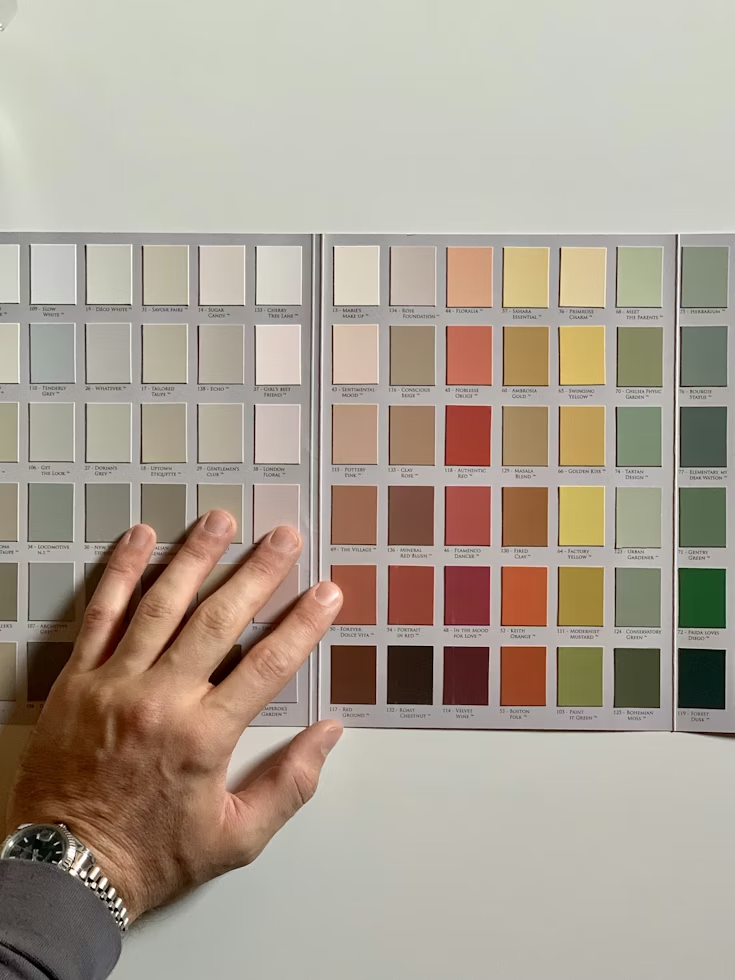
This is the one change that had the biggest ripple effect.
Before, I bought things because they were on sale, or because they were cute in isolation, or because a certain color was “in” that season. The result? A wardrobe full of pieces that didn’t actually go with each other. A mustard yellow top that matched nothing. Graphic tees that clashed with everything I owned. A pair of wide-leg plaid trousers that looked amazing in the store and homeless in my closet.
I spent an afternoon pulling out everything I owned and grouping it by color. What I found was that the stuff I actually wore most often was almost entirely made up of navy, white, grey, and camel. That was it. That was my actual color palette — I just hadn’t been intentional about it.
So I stopped buying outside those colors unless something genuinely excited me and worked with what I already had.
The difference was immediate. Almost everything in my wardrobe started working together. I could grab any top and any bottom and they’d go. No more staring at a shirt thinking, “but what do I even wear this with?”
| Before (Random Buying) | After (Color Palette) |
|---|---|
| 40+ items, few combinations | 25 items, 100+ combinations |
| Daily outfit stress | Dressed in under 5 minutes |
| Frequent “nothing to wear” feeling | Confident in every choice |
| Impulse purchases monthly | Intentional buys quarterly |
If you’re not sure what your natural palette is, check out these capsule wardrobe building ideas — they walk you through exactly how to identify what actually works for your lifestyle and taste.
3. I Identified My “Uniform” and Leaned Into It
There’s this idea floating around that having a “uniform” — basically a go-to outfit formula — is boring or uncreative. I used to believe that. Now I think it’s one of the smartest things you can do.
Mine is embarrassingly simple: a fitted neutral top, straight-leg trousers or dark jeans, and a layer (either a linen jacket or a cardigan depending on the weather). That’s it. That’s the formula.
I didn’t come up with it by being clever. I noticed it by looking at photos of myself on days when I felt like I looked good. Almost every single time, I was wearing some version of that combination. So instead of fighting it, I just… leaned in. I made sure I had multiple versions of each component, in slightly different colors and fabrics.
The result? Every morning I’m essentially picking from a curated menu, not starting from scratch. It sounds restrictive but it actually feels freeing. I spend zero energy on “what should I wear” and redirect that energy to everything else.
A note on creativity: You can still express yourself within a formula. Different textures, proportions, accessories, or shoes change the whole vibe. The formula is just the skeleton.
4. I Got Ruthless About Fit
This is the one I wish someone had told me years earlier: ill-fitting clothes make every outfit look worse, no matter how nice the piece is.
I had so many things that almost fit. A shirt that was slightly boxy. Trousers that were just a touch too long. A dress that fit my shoulders but gaped slightly at the waist. I kept wearing them because they weren’t wrong exactly, just… not quite right.
Once I started paying attention to fit, I realized how much it was affecting how I looked and felt. A $20 pair of jeans that fits perfectly looks better than a $150 pair that’s slightly off.
Two things helped me here:
First, I started getting basics tailored. Not everything — just the things I wore most. A tailor hemming a pair of trousers costs almost nothing and completely transforms them. My most-worn jeans look like they were made for me, and it cost me less than lunch.
Second, I stopped buying things that “almost fit” with the hope that I’d alter them later. I know myself. Later never comes. If it doesn’t fit properly in the store, it goes back.
This change alone reduced my wardrobe by about 15 pieces — items I’d been holding onto despite never actually wearing them because the fit was off. And the stuff that was left? I actually wore it, all of it.
If you’re building from scratch or doing a reset, it helps to start with the right foundation pieces. These 9 easy capsule wardrobe building steps are a solid starting point — especially if you’re figuring out which categories of clothing to prioritize.
5. I Organized My Closet So the Best Stuff Was Always Visible
This one sounds obvious, but hear me out — the way your closet is organized has a huge impact on what you actually wear.
When I had everything crammed in together, I’d always reach for the same 10 things that happened to be at the front. The rest of it was technically there, but invisible. Out of sight, genuinely out of mind.
I spent one weekend rearranging everything, and here’s what changed:
- I organized by category first (tops, bottoms, layers), then by color within each category. Light to dark, left to right. It sounds fussy but it makes scanning the closet incredibly fast.
- I moved my most-worn pieces to eye level and center, not buried at the ends of the rail.
- I got rid of mismatched hangers. This sounds trivial but uniform hangers make the closet look calmer and it’s easier to see individual pieces when they’re not all different heights and widths.
- I folded bulky items (knitwear, hoodies) instead of hanging them — hanging stretches them out and takes up double the space.
After this, I started actually wearing things I’d forgotten I owned. Not because they were new, but because I could finally see them. A few pieces I’d written off suddenly felt fresh again just because they were visible and accessible.
One more thing: I added a small basket on the shelf for things that are worn but not dirty — the jeans I wore yesterday, the cardigan I layered over a work outfit. This stopped the “chair pile” situation entirely. Things go in the basket, not on the chair, and get folded back into the closet when the basket fills up.
The Mistakes I Made Along the Way
Since we’re being real here, let me also share what didn’t work:
Trying to do it all in one day. The first time I attempted a “wardrobe reset,” I pulled everything out onto my bed at 10am and by 2pm I was so overwhelmed I just shoved it all back in. The overwhelm is real. Doing it category by category — one weekend for tops, another for bottoms — was much more manageable.
Replacing everything at once. After my first big clear-out, I had gaps in my wardrobe and panicked. I bought a bunch of stuff quickly to “fill the holes” and half of it was wrong. Gaps are okay. They’re meant to be filled slowly and intentionally, not in one anxious shopping trip.
Being too strict about the color palette early on. I initially decided I was going to wear only black, white, and grey. Very chic in theory. In practice, I looked like I was always dressed for a funeral and felt weirdly flat. Having one or two accent colors — for me, a warm camel and occasional olive green — made the whole thing feel more like me and less like a uniform for a tech startup.
Ignoring lifestyle. Early on I kept a lot of “going out” pieces that were gorgeous but had no place in my actual day-to-day life. Your wardrobe should reflect your real life, not your aspirational one. If you work from home and mostly meet friends casually on weekends, your closet should mostly reflect that — not the hypothetical version of you who attends gallery openings.
What a Simpler Wardrobe Actually Feels Like
Here’s what nobody tells you: it doesn’t feel like deprivation. That was my biggest fear — that owning less would feel like having less.
It feels like the opposite. When every item in your closet fits, suits your life, and works with everything else, getting dressed feels easy and even enjoyable. You stop dreading the morning routine. You stop feeling guilty about clothes you never wear. You stop making panic-buy decisions because you’ve got nothing “for that thing next week.”
There’s also something genuinely calming about opening a closet that’s organized and edited. It sounds like the kind of thing a lifestyle influencer says, but I mean it practically — a calm closet means one fewer source of low-level daily stress.
If you’re thinking about building something more intentional from the ground up — especially if budget is a concern — this guide on capsule wardrobe building tips on a tight budget is genuinely useful. You don’t need to spend a lot to build something that works well.
The Honest Truth About “Minimal”
Minimal doesn’t mean owning 10 items and living like a monk. It just means owning intentionally. It means your wardrobe is full of things you actually want to reach for, not things you settled for or forgot about.
The five changes above aren’t complicated or expensive. They don’t require a complete lifestyle overhaul or a massive budget. They just require a bit of honesty — about what you actually wear, what actually fits, and what your life actually looks like day to day.
Start with one change. Clear out the “someday” pieces, or identify your natural color palette, or sort your closet by category. Just one thing. The momentum builds faster than you’d expect.
And honestly? The best part isn’t the wardrobe itself. It’s the 20 minutes you get back every morning.