

There was a time when my wardrobe felt like a collection of mismatched decisions rather than a system that actually worked. Clothes piled up, trends came and went, and every season felt like starting from scratch. Over time, I realized the problem wasn’t a lack of clothes—it was a lack of strategy. The moment I began making intentional seasonal adjustments, everything changed. Getting dressed became easier, my outfits felt more cohesive, and I stopped wasting money on items I barely wore.
What follows are eleven seasonal wardrobe changes I made that genuinely worked. These aren’t theoretical ideas; they’re practical shifts tested through trial, error, and real-life routines. Along the way, I’ve included tables and structured breakdowns to make the process easier to follow and apply.
understanding seasonal transitions before changing anything
Before diving into specific changes, I had to rethink how I approached seasons. I used to treat them as hard resets—pack away everything and start fresh. That approach was inefficient and expensive.
Instead, I started viewing my wardrobe as a year-round system with seasonal adjustments.
Here’s a simple framework that changed everything:
| Season | Core Items (Year-Round) | Rotating Items | Storage Strategy |
|---|---|---|---|
| Winter | Jeans, basic tees, boots | Coats, knits, scarves | Store summer fabrics |
| Spring | Jeans, shirts, sneakers | Light jackets, florals | Rotate heavy knits out |
| Summer | Shorts, tees, sandals | Linen, breathable fabrics | Store layers |
| Autumn | Jeans, boots, shirts | Sweaters, jackets | Reintroduce layers |
This perspective helped me stop overhauling my wardrobe every few months.
- I stopped packing everything away each season
The first major shift was resisting the urge to completely rotate my wardrobe. I realized that many items could work across multiple seasons with minor styling tweaks.
For example:
- A summer dress layered with a sweater works in autumn
- A winter shirt worn alone fits spring
- Denim is practically seasonless
Result: I reduced the “hidden wardrobe” problem—where good clothes sit unused for months.
- I invested in transitional pieces
Transitional pieces became the backbone of my wardrobe. These are items that adapt easily between weather conditions.
Examples include:
- Lightweight jackets
- Neutral sweaters
- Mid-weight trousers
- Button-down shirts
Here’s how I categorized them:
| Item Type | Seasons Covered | Why It Works |
|---|---|---|
| Denim jacket | Spring, Autumn | Perfect layering weight |
| Neutral sweater | Autumn, Winter, Spring | Works solo or layered |
| White shirt | All seasons | Styling flexibility |
| Chinos | Spring, Summer, Autumn | Breathable yet structured |
This reduced the need for constant shopping.
- I built a consistent color palette
Previously, each season had a completely different color identity. That made mixing outfits difficult.
I switched to a unified palette:
- Base colors: black, white, beige, navy
- Accent colors: seasonal tones (rust in autumn, pastels in spring, etc.)
Benefits:
- Easier outfit combinations
- Fewer “orphan” pieces
- More visual consistency
Color coordination chart:
| Base Color | Works With | Seasonal Accent Examples |
|---|---|---|
| Black | Everything | Deep red, olive |
| Beige | White, brown | Soft pink, sage |
| Navy | Grey, white | Mustard, coral |
| White | Universal | Any seasonal shade |
- I prioritized fabric over trends
One of the biggest mistakes I made earlier was choosing style over comfort. Seasonal dressing depends heavily on fabric.
Key shifts:
- Summer: cotton, linen, bamboo blends
- Winter: wool, fleece, heavier knits
- Transitional: denim, light wool, blends
Fabric comparison table:
| Fabric | Best Season | Pros | Cons |
|---|---|---|---|
| Cotton | Summer | Breathable | Wrinkles easily |
| Linen | Summer | Lightweight | Creases quickly |
| Wool | Winter | Warm | Can feel heavy |
| Denim | All | Durable | Less breathable |
Once I focused on fabric, comfort improved dramatically.
- I reduced duplicate items
I used to own:
- 6 similar black t-shirts
- 5 nearly identical jeans
- Multiple jackets serving the same purpose
Now, I follow a simple rule: each item must have a clear role.
Wardrobe audit method:
| Category | Ideal Quantity | My Old Count | New Count |
|---|---|---|---|
| T-shirts | 5–7 | 12 | 6 |
| Jeans | 2–3 | 7 | 3 |
| Jackets | 3–4 | 9 | 4 |
Result: less clutter, better choices.
- I created seasonal outfit formulas
Instead of deciding from scratch every day, I built simple outfit formulas.
Examples:
Winter:
- Sweater + coat + jeans + boots
Summer:
- T-shirt + shorts + sneakers
Autumn:
- Shirt + sweater + jeans + boots
Spring:
- Shirt + light jacket + chinos + sneakers
Formula efficiency chart:
| Season | Avg. Time to Dress (Before) | After |
|---|---|---|
| Winter | 20 min | 8 min |
| Summer | 15 min | 5 min |
| Autumn | 18 min | 7 min |
| Spring | 15 min | 6 min |
This alone saved a lot of time.
- I rotated shoes more intentionally
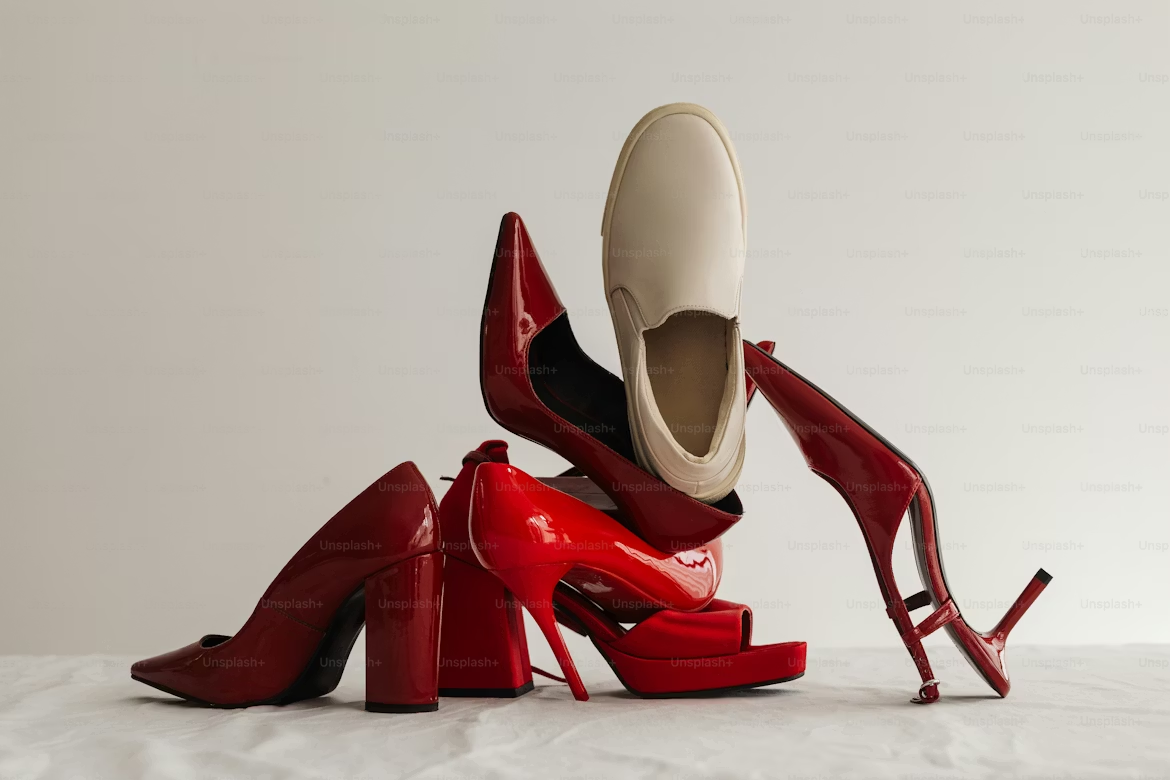
Shoes used to pile up, and I wore the same few pairs constantly.
Now I assign seasonal roles:
| Season | Primary Shoes | Secondary Options |
|---|---|---|
| Winter | Boots | Sneakers |
| Spring | Sneakers | Loafers |
| Summer | Sandals | Lightweight sneakers |
| Autumn | Boots | Casual shoes |
This extended the life of each pair and improved outfit balance.
- I layered smarter, not heavier
Layering used to mean bulk. Now it means efficiency.
Layering system:
| Layer Type | Purpose | Example |
|---|---|---|
| Base | Comfort | T-shirt |
| Mid | Warmth | Sweater |
| Outer | Protection | Jacket |
Key insight: three light layers work better than one heavy piece.
- I planned outfits weekly
Instead of daily decision fatigue, I started planning weekly outfits based on weather forecasts.
Simple planning table:
| Day | Weather | Outfit |
|---|---|---|
| Monday | Cool | Shirt + sweater |
| Tuesday | Warm | T-shirt + chinos |
| Wednesday | Rain | Jacket + boots |
This reduced stress and improved consistency.
- I tracked what I actually wore
This was surprisingly powerful. I kept a simple log of outfits.
Findings:
- I wore 20% of my clothes 80% of the time
- Some items were never used
Usage tracking:
| Item | Times Worn (Month) | Keep or Remove |
|---|---|---|
| Black jeans | 12 | Keep |
| Printed shirt | 1 | Remove |
| Hoodie | 8 | Keep |
This helped refine my wardrobe over time.
- I embraced fewer, better pieces
The final and most impactful change: quality over quantity.
Instead of buying frequently, I invested in fewer, durable items.
Cost comparison:
| Approach | Annual Spend | Items Bought | Cost per Wear |
|---|---|---|---|
| Fast fashion | High | Many | High |
| Intentional wardrobe | Moderate | Few | Low |
The math was clear—buying better saved money long-term.
what changed after these adjustments
After implementing these changes, the differences were noticeable:
| Area | Before | After |
|---|---|---|
| Closet clutter | High | Minimal |
| Outfit stress | Frequent | Rare |
| Spending | Impulsive | Controlled |
| Style consistency | Low | High |
Getting dressed became routine rather than a daily puzzle.
common mistakes to avoid when making seasonal wardrobe changes
Even with a system, mistakes can happen. Here are a few I learned to avoid:
- Over-purging too quickly
- Buying seasonal trends without thinking long-term
- Ignoring comfort for appearance
- Not considering climate variations
- Keeping items “just in case”
Awareness of these helped me stay consistent.
practical checklist for your own wardrobe reset
Use this as a starting point:
| Step | Action |
|---|---|
| 1 | Identify core year-round items |
| 2 | Remove duplicates |
| 3 | Build a color palette |
| 4 | Choose seasonal fabrics |
| 5 | Create outfit formulas |
| 6 | Track usage |
frequently asked questions
- how often should I update my wardrobe each season?
You don’t need a full update every season. A small refresh—adding or replacing a few items—is usually enough if your core wardrobe is strong. - what’s the ideal number of clothes for a seasonal wardrobe?
There’s no fixed number, but a functional wardrobe often includes 25–40 versatile pieces per season, depending on lifestyle. - how do I choose the right seasonal colors?
Start with neutral base colors, then add 2–3 seasonal accent colors that complement your skin tone and existing items. - should I follow fashion trends when updating my wardrobe?
Trends can be fun, but they shouldn’t dominate your wardrobe. Focus on timeless pieces first, then add trends selectively. - what’s the best way to store off-season clothes?
Clean them, fold properly, and store in breathable containers. Avoid plastic bags for long-term storage. - how long does it take to build a functional seasonal wardrobe?
It can take a few months to a year, depending on how gradually you transition and refine your choices.