

There’s a quiet kind of confidence that comes from opening your wardrobe and knowing—without second-guessing—that whatever you pull out will work. Not just for today’s weather, but for your lifestyle, your mood, and your sense of identity. Trends may surge and fade, but certain wardrobe pieces hold their ground across seasons, climates, and years.
This article explores six such pieces. These aren’t theoretical staples you see repeated in fashion magazines—they are practical, field-tested items that adapt, layer, and evolve. Whether you live somewhere with dramatic seasonal swings or mild transitions, these pieces earn their place by doing more than one job well.
Along the way, you’ll find breakdown tables, usage charts, and real-life applications that go beyond surface-level advice.
the philosophy behind “always working” wardrobe pieces
Before diving into the list, it helps to define what “always works” actually means.
A piece qualifies if it:
- Transitions across at least three seasons
- Works in both casual and semi-formal contexts
- Layers easily without bulk
- Doesn’t rely on trend cycles
- Ages well in both fabric and style
In short, these are not just clothes—they’re tools.
table 1: criteria for a timeless wardrobe piece
| Criteria | Description | Importance Level |
|---|---|---|
| Versatility | Can be styled multiple ways | High |
| Layering Capability | Works under or over other garments | High |
| Fabric Durability | Maintains structure after repeated use | Medium |
| Neutral Styling | Not trend-dependent | High |
| Comfort Across Weather | Breathable or adaptable | High |
Now, let’s get into the six pieces.
- the tailored blazer
There’s a reason the tailored blazer refuses to disappear. It’s not about corporate formality anymore—it’s about structure.
A well-fitted blazer instantly organizes an outfit. Throw it over a t-shirt and jeans, and suddenly the look feels intentional. Pair it with a dress, and it becomes refined without being stiff.
Seasonal adaptability:
- Spring: lightweight cotton or linen blazer
- Summer: worn loosely over tank tops during cooler evenings
- Autumn: layered over knits
- Winter: worn under coats for added insulation
fabric comparison chart:
| Fabric Type | Best Season | Breathability | Structure Level |
|---|---|---|---|
| Linen | Summer | High | Low |
| Cotton | Spring | Medium | Medium |
| Wool | Winter | Low | High |
| Blends | All-season | Balanced | Medium-High |
Practical tip: Slightly oversized blazers extend usability because they accommodate layering.
- the classic white shirt
If there’s one piece that has survived every fashion reinvention, it’s the white shirt. Crisp, adaptable, and surprisingly expressive depending on how it’s styled.
Why it works:
- Reflects heat in summer
- Layers seamlessly in winter
- Works tucked, untucked, knotted, or oversized
styling variations chart:
| Style Method | Occasion Type | Season Fit |
|---|---|---|
| Fully tucked | Formal | All |
| Half-tucked | Smart casual | All |
| Open layer | Casual layering | Spring/Summer |
| Knotted | Relaxed/casual | Summer |
Material matters here. Cotton poplin gives structure, while linen blends offer breathability.
A good white shirt becomes a blank canvas—it doesn’t compete, it supports.
- dark denim jeans
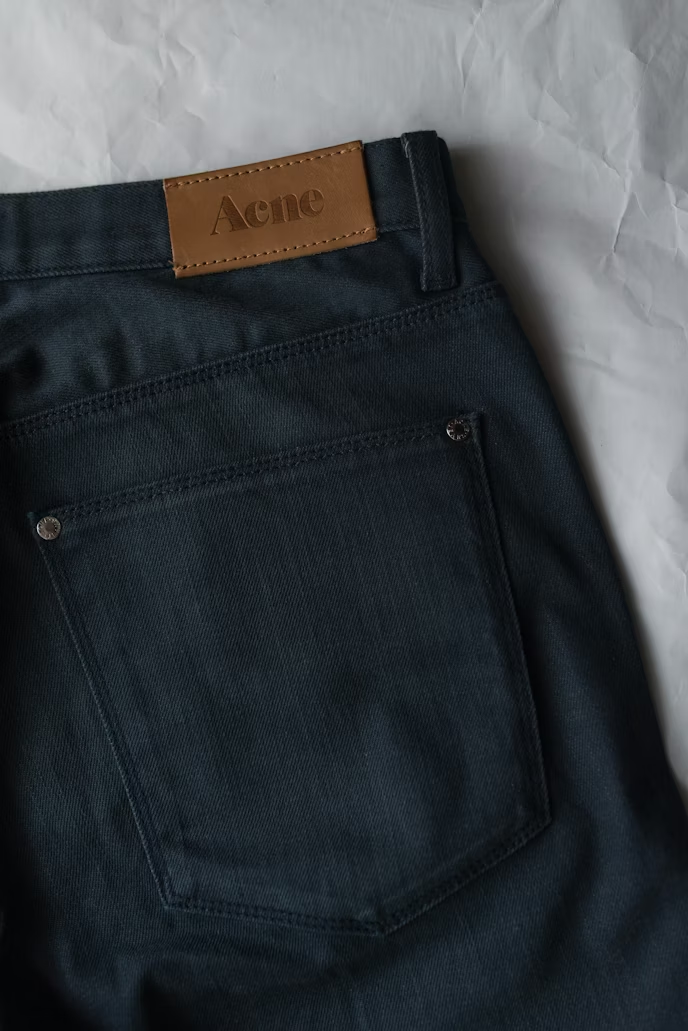
Dark denim is the quiet workhorse of modern wardrobes. Unlike lighter washes, it leans slightly dressier, making it more flexible.
Why dark denim stands out:
- Minimal fading keeps it looking polished
- Pairs well with both casual and formal pieces
- Hides wear better over time
seasonal pairing chart:
| Season | Top Pairing | Footwear |
|---|---|---|
| Spring | Light sweater | Sneakers |
| Summer | T-shirt | Loafers/sandals |
| Autumn | Flannel or blazer | Boots |
| Winter | Heavy knit + coat | Leather boots |
Fit is crucial. Straight-leg or slightly tapered fits tend to last longer style-wise than ultra-skinny or exaggerated cuts.
- neutral knit sweater
Few things are as universally useful as a neutral sweater. Beige, grey, navy, or black—these tones slide into any outfit without friction.
Why it works year-round:
- Lightweight knits for layering in spring/summer nights
- Mid-weight for autumn transitions
- Thick wool for winter insulation
knit weight guide:
| Knit Type | Thickness | Best Use Case |
|---|---|---|
| Fine knit | Thin | Layering, mild weather |
| Mid-weight | Medium | Daily wear, autumn |
| Chunky knit | Thick | Cold climates, winter |
A neutral sweater isn’t meant to stand out—it’s meant to stabilize your wardrobe.
- versatile midi dress
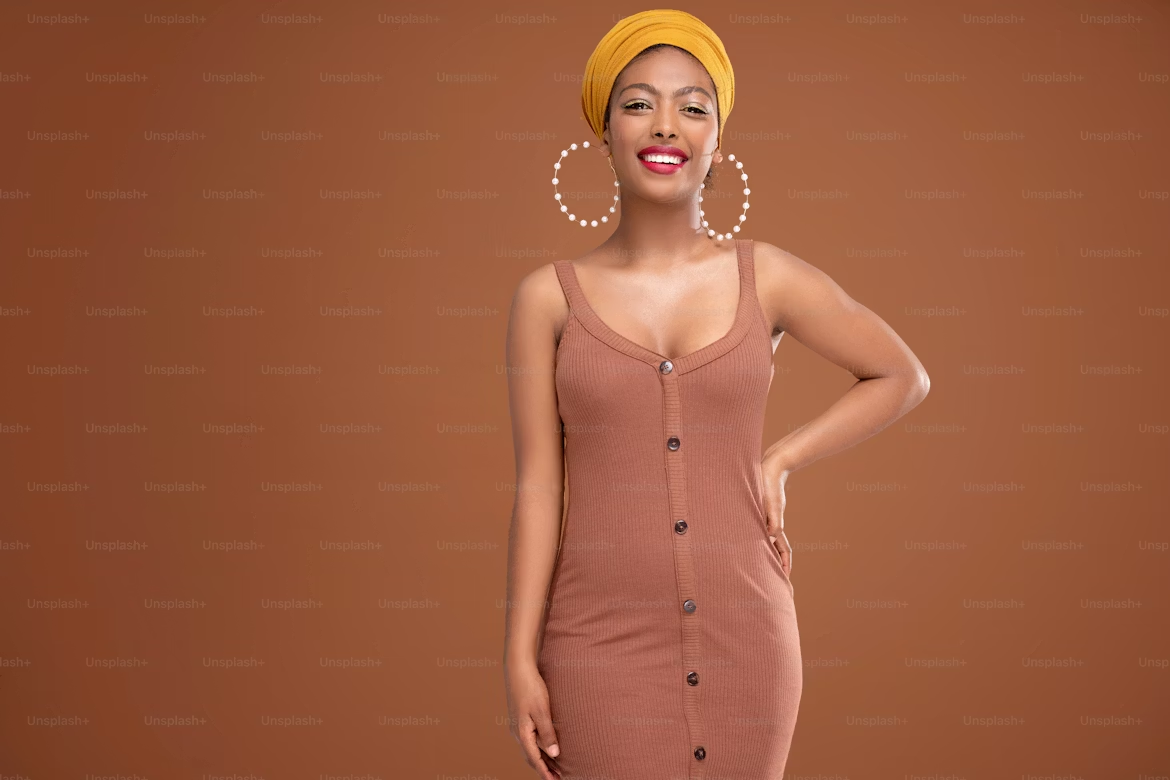
The midi dress hits that sweet spot between casual and formal. Not too short, not overly dramatic—it adapts.
Why it’s essential:
- Can be worn alone in warm weather
- Layers with jackets and sweaters
- Works with sneakers, heels, or boots
seasonal transformation chart:
| Season | Layering Element | Style Outcome |
|---|---|---|
| Spring | Light cardigan | Soft, transitional |
| Summer | No layers | Airy and relaxed |
| Autumn | Leather jacket | Structured contrast |
| Winter | Turtleneck + coat | Warm and refined |
Look for fabrics that drape well—viscose blends or soft cotton often perform best.
- all-purpose outerwear (trench or utility jacket)
Outerwear is often overlooked as a “year-round” piece, but certain styles—like a trench coat or utility jacket—defy that limitation.
Why it works:
- Acts as a top layer in mild weather
- Fits under heavier coats in winter
- Instantly elevates simple outfits
outerwear comparison:
| Type | Best Climate | Style Impact |
|---|---|---|
| Trench coat | Mild to rainy | Classic/elegant |
| Utility jacket | Mild to cool | Casual/functional |
| Lightweight coat | Transitional | Balanced |
The key is weight and layering room. A slightly roomy cut increases versatility dramatically.
how these six pieces interact together
Individually, each item is useful. Together, they form a system.
combination matrix:
| Item 1 | Item 2 | Resulting Style |
|---|---|---|
| Blazer | Dark denim | Smart casual |
| White shirt | Midi dress | Layered elegance |
| Knit sweater | Denim | Relaxed classic |
| Outerwear | Any combination | Elevated finish |
This is where efficiency shows up—you don’t need dozens of clothes when a few pieces multiply each other’s potential.
visualizing wardrobe efficiency
Imagine each piece as a node in a network. The more connections it has, the more valuable it becomes.
simplified outfit generation chart:
| Number of Pieces | Possible Outfits |
|---|---|
| 3 | 6–8 |
| 4 | 12–16 |
| 6 | 30+ |
This is why these six pieces matter—they don’t just add options, they compound them.
common mistakes to avoid
Even with the right pieces, a few missteps can limit their effectiveness:
- Choosing overly trendy cuts (limits longevity)
- Ignoring fabric quality (reduces lifespan)
- Buying poor fits (kills versatility)
- Sticking to one styling method (wastes potential)
Think of these pieces as frameworks—you bring them to life through variation.
maintenance and longevity tips
A piece that “always works” also needs to last.
care chart:
| Item | Key Care Tip |
|---|---|
| Blazer | Dry clean occasionally |
| White shirt | Wash separately to avoid dulling |
| Denim | Wash less, air dry |
| Knit sweater | Fold, don’t hang |
| Midi dress | Gentle cycle or hand wash |
| Outerwear | Spot clean + seasonal storage |
Small habits extend usability by years.
real-life wardrobe example
Let’s say you have:
- 1 blazer
- 1 white shirt
- 1 pair of dark denim
- 1 knit sweater
- 1 midi dress
- 1 trench coat
With just these, you can create:
- Office outfits
- Weekend looks
- Travel combinations
- Dinner-ready styles
That’s the power of intentional selection.
faqs
- how many of these pieces should I own?
Start with one of each. Once you understand how you use them, you can expand thoughtfully—perhaps adding a second blazer or another knit in a different weight. - can these pieces work in very hot climates?
Yes, but fabric choice becomes critical. Linen, lightweight cotton, and breathable blends make a big difference. - what colors are safest for maximum versatility?
Neutrals—white, black, navy, beige, and grey—offer the most flexibility. You can always add color through accessories. - how do I avoid looking repetitive?
Change styling details: roll sleeves, switch footwear, layer differently. The base pieces stay the same, but the presentation shifts. - are these pieces suitable for both men and women?
Absolutely. The categories remain the same, though cuts and styling may vary slightly. - what’s the biggest investment piece here?
Typically, the blazer or outerwear. Spending more here often pays off in longevity and fit.