

There’s a particular kind of frustration that hits when you open your closet on the first genuinely cold morning of autumn and realize your warm layers are still buried somewhere in storage. Or worse — you packed away your light clothes too early and then a random warm week shows up in late October and you’re sweating through a turtleneck.
I’ve been there more times than I can count. Weather transitions are genuinely unpredictable, and for years my wardrobe was completely unprepared for them. I’d either freeze, overheat, or spend twenty minutes trying to piece together something that worked for a day that started at 10°C and ended at 22°C.
What finally helped wasn’t buying more stuff. It was getting smarter about which pieces I kept accessible year-round — the ones that actually pull their weight no matter what season is doing whatever it wants outside.
Here are the five essentials that changed how I dress through every weather shift.
1. A Lightweight Layer You Can Carry Everywhere

This is the piece I reach for more than anything else, and it’s the one most people underestimate. Not a heavy jacket. Not a thick cardigan. Something genuinely lightweight — like a fine-knit sweater, a linen overshirt, or a light zip-up — that you can fold into a bag and forget about until you need it.
The reason this matters so much during seasonal transitions is that temperature swings within a single day are massive. Early mornings in spring can feel like winter. Afternoons in autumn can feel like summer. Without a packable middle layer, you’re constantly either too hot or too cold.
I spent two winters relying on a bulky coat that I’d have to carry around like luggage every time the afternoon warmed up. Switching to a packable down jacket for milder days and saving the heavy coat for genuinely cold weather changed my whole routine.
What makes a good lightweight layer:
| Feature | Why It Matters |
|---|---|
| Packs flat or rolls up | You’ll actually carry it instead of leaving it at home |
| Works over a t-shirt or under a coat | Maximum flexibility for temperature swings |
| Neutral color | Pairs with everything in your existing wardrobe |
| Machine washable | You’ll wear it constantly, so easy care is essential |
| Doesn’t wrinkle badly | Looks good even after sitting in a bag all morning |
The specific item matters less than those qualities. A good linen overshirt, a merino wool cardigan, a lightweight quilted jacket — any of these work. The point is to always have something in your bag when the weather can’t make up its mind.
2. Transitional Trousers That Work in Multiple Temperatures
Bottoms are weirdly the hardest part of dressing for weather shifts. It’s easy to add or remove a top layer — but you can’t really swap your trousers mid-day. So what you put on in the morning has to work all day, even if temperatures change by 10 or 15 degrees.
For years I wore either full-on winter jeans or summer shorts, with almost nothing in between. That “in between” period — which is actually several months of the year — was always awkward and uncomfortable.
The fix was finding two or three pairs of trousers that genuinely work in a wide temperature range. For me, that ended up being mid-weight chinos in a neutral color and a pair of straight-leg trousers in a slightly heavier fabric. Neither is purely summery nor purely wintery. Both work with sandals in mild weather and boots when it gets cold.
This guide on seasonal wardrobe essentials for year-round style has a really helpful breakdown of how to think about fabrics across seasons — worth reading if you’re trying to figure out where to invest.
Fabric guide for transitional bottoms:
| Fabric | Best For | Avoid When |
|---|---|---|
| Mid-weight cotton chino | Spring, autumn, mild winter | Very hot summer days |
| Linen blend | Spring, summer, early autumn | Cold or rainy days |
| Wool blend trousers | Autumn, winter, cool spring | Humid or very warm weather |
| Denim (mid-weight) | Almost year-round | Extreme heat or cold |
| Corduroy | Autumn, winter | Summer — too warm |
The goal isn’t to find one magical pair that works in all conditions. It’s to have two or three pairs that together cover the full year without needing a different pair for every single month.
3. Footwear That Bridges the Gap Between Seasons
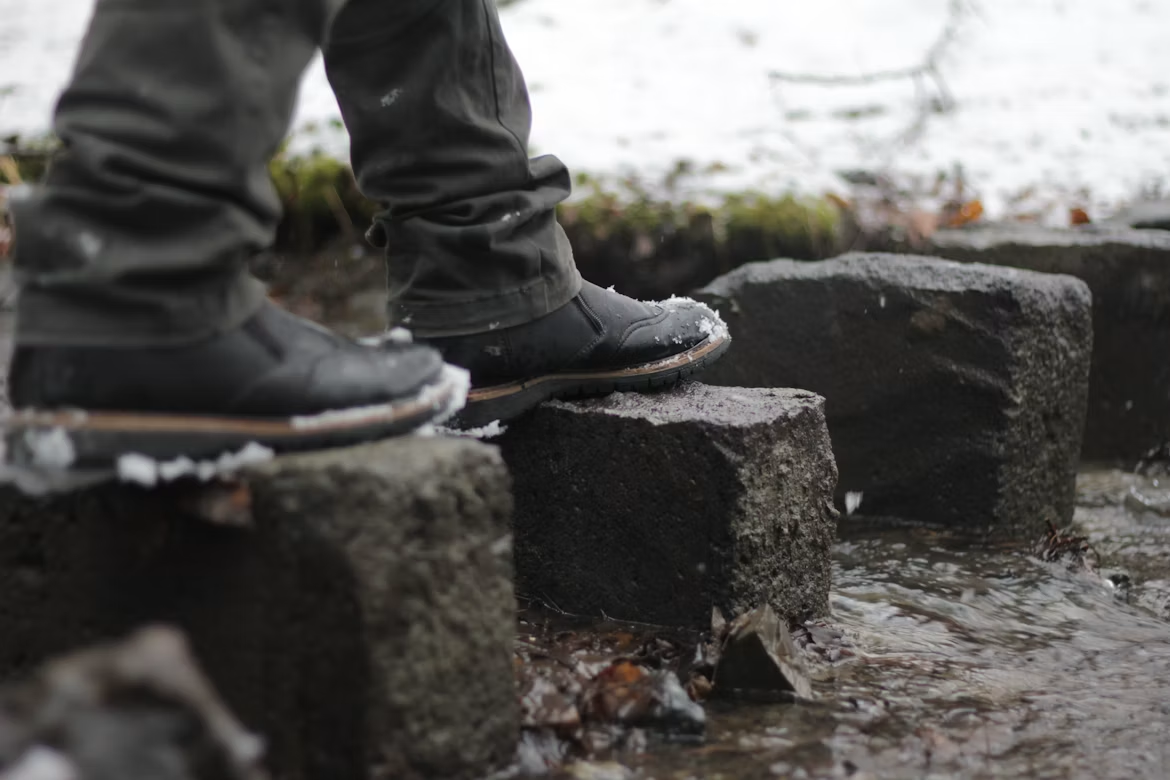
I’ve made some real mistakes here. I owned flip-flops for summer, heavy winter boots for cold months, and basically nothing usable in between. Every spring and autumn I’d find myself in completely wrong shoes — either freezing in sandals because I was in denial about the temperature drop, or sweating in thick boots because I didn’t want to admit summer was over.
Transitional footwear is genuinely its own category and it deserves more attention than it gets.
What I’ve found works best: a clean, simple sneaker in a neutral color, and a versatile ankle boot or Chelsea boot that’s not too heavy. Those two cover probably eight months of the year between them. The sneaker handles mild, dry weather. The ankle boot handles everything wet, cold, or between-seasons.
A few things worth knowing from experience:
A white sneaker looks great in photos but becomes a liability the second it rains or you walk through mud. Go for off-white, gray, or tan — you’ll actually wear them without anxiety.
For boots, waterproofing matters more than aesthetics during transition seasons. I’ve ruined a couple of “nice” pairs by wearing them through autumn rain before realizing they weren’t waterproof. A can of waterproof spray applied before the season starts has saved me many times since.
Seasonal footwear coverage chart:
| Footwear Type | Spring | Summer | Autumn | Winter |
|---|---|---|---|---|
| Light sneakers | ✅ | ✅ | ✅ (dry days) | ❌ |
| Sandals / slides | ✅ (warm days) | ✅ | ❌ | ❌ |
| Ankle / Chelsea boots | ✅ | ❌ | ✅ | ✅ (mild) |
| Heavy winter boots | ❌ | ❌ | ✅ (late) | ✅ |
| Loafers / mules | ✅ | ✅ | ✅ | ❌ |
With just three pairs — sneakers, ankle boots, and sandals — you can cover the full year reasonably well. That’s it. No need for ten pairs for “every occasion.”
4. A Year-Round Base Layer That Actually Breathes
Base layers don’t get nearly enough credit. Most people think of them as winter-only — thermal undershirts, heavy tees, that kind of thing. But a good base layer is actually one of the most season-spanning pieces you can own.
The secret is fabric. A thin merino wool t-shirt, for example, works in summer because it breathes and wicks moisture, and in winter because it retains warmth even when layered. Cotton basics work fine in mild weather but get cold and clammy when wet, which makes them genuinely uncomfortable in unpredictable transition weather.
I switched to merino basics a few years ago after getting caught in unexpected rain on an autumn day while wearing a cotton tee under a light jacket. I was cold and damp all afternoon. A merino layer in the same situation stays comfortable even if it gets a bit damp — because the fiber structure keeps it insulating.
You don’t need to go all-in on merino for everything. Even having two or three merino or moisture-wicking tees for the transition months makes a real difference.
Base layer comparison by season:
| Fabric | Spring | Summer | Autumn | Winter | Moisture Performance |
|---|---|---|---|---|---|
| 100% Cotton | ✅ | ✅ (dry weather) | ⚠️ | ❌ | Absorbs, stays wet |
| Merino Wool | ✅ | ✅ (thin weight) | ✅ | ✅ | Wicks, stays warm when damp |
| Synthetic (polyester blend) | ✅ | ✅ | ✅ | ✅ | Wicks fast, less breathable |
| Linen | ✅ | ✅ | ⚠️ | ❌ | Very breathable, cool |
| Bamboo blend | ✅ | ✅ | ✅ | ⚠️ | Soft, good wicking |
If you’re building out a wardrobe that handles seasonal shifts well, these minimal wardrobe tips for seasonal outfit planning cover the layering logic in more detail — particularly useful if you live somewhere with dramatic temperature swings.
5. One Versatile Outer Layer for Rain and Wind
This is probably the single piece that does the most work across the entire year — and the one most people either don’t have, or have in the wrong version.
A good transitional outer layer isn’t a heavy winter coat. It’s not a rain poncho either. It sits right in the middle: something that blocks wind, handles light to moderate rain, and works when layered over a thin sweater or a chunky knit depending on the temperature.
For most climates, a water-resistant trench coat or a packable rain jacket fills this role perfectly. I used to think trench coats were too formal for daily life, but a modern unstructured trench in a neutral color is genuinely one of the most versatile pieces I own. It works over a t-shirt in mild autumn weather, over a wool jumper in cold spring rain, and even over a light dress on a breezy summer evening.
The key word is water-resistant, not waterproof. Full waterproof shells tend to be bulky and don’t breathe well — they’re great for hiking but a bit much for everyday use. Water-resistant means you stay dry in most real-world situations (a sudden shower, a damp morning commute) without feeling like you’re wearing a garbage bag.
What to look for in a transitional outer layer:
| Feature | What It Does for You |
|---|---|
| Water-resistant treatment | Handles rain without bulk |
| Wind-blocking fabric | Useful on cold, blustery days |
| Lightweight enough to pack | Can travel with you everywhere |
| Neutral or classic color | Works with your whole wardrobe |
| Layering-friendly cut | Fits comfortably over a thick sweater |
| Belt or adjustable fit | Adapts to different styling needs |
One mistake I made: buying a rain jacket that was too sporty for anything other than outdoor activities. It technically worked in rain but looked completely out of place in a work or social context. A more versatile silhouette — something slightly tailored or at least not aggressively athletic — means you’ll actually wear it everywhere instead of leaving it in your car.
This resource on seasonal wardrobe swaps that refresh your look is genuinely helpful if you’re trying to figure out when to rotate pieces in and out rather than keeping everything accessible at once.
How These Five Pieces Work Together
The reason these five essentials work so well isn’t magic — it’s that they cover the full range of what your body needs during a weather shift without requiring you to build a completely separate wardrobe for each season.
Seasonal coverage at a glance:
| Essential | Spring | Summer | Autumn | Winter |
|---|---|---|---|---|
| Lightweight packable layer | ✅ | ✅ (evenings) | ✅ | ✅ (under coat) |
| Transitional trousers | ✅ | ✅ | ✅ | ✅ (mild days) |
| Versatile footwear | ✅ | ✅ | ✅ | ✅ (ankle boots) |
| Breathable base layer | ✅ | ✅ | ✅ | ✅ |
| Water-resistant outer layer | ✅ | ✅ | ✅ | ✅ (mild winter) |
When every piece in your wardrobe scores that kind of coverage, getting dressed stops being a weather-dependent puzzle. You stop having “I have nothing to wear for this weather” moments because everything you own handles multiple conditions.
Mistakes That Keep People Stuck in the Weather Trap
Even with the right intentions, a few habits will undermine your seasonal wardrobe every time.
Storing everything seasonally. A lot of style advice tells you to rotate your wardrobe twice a year — pack summer stuff away in autumn, winter stuff away in spring. But weather doesn’t cooperate with that schedule. Keep your transitional pieces accessible year-round. Only truly extreme-season items (heavy ski gear, summer swimwear) need to go into storage.
Buying for aesthetics over function. That beautiful but non-waterproof leather jacket. The gorgeous suede boots you can’t wear when it drizzles. Pieces that look amazing but fail in real weather conditions are frustrating to live with. It’s fine to have a few purely beautiful things — but your everyday transitional pieces need to actually work outdoors.
Thinking layering is complicated. Some people avoid layering because it feels fussy. But layering doesn’t mean wearing seven things at once. It just means having one thing you can add or remove. That’s it. One packable layer in your bag changes everything.
Buying season-specific pieces at full price. Autumn jackets in autumn are expensive. Buy them in late winter when they’re marked down. Summer transitional pieces in mid-summer are full price — buy them in early spring or end-of-summer sales. Timing your purchases saves real money without sacrificing quality.
A Simple Seasonal Wardrobe Check: How Prepared Are You?
Here’s a quick self-assessment. For each item, mark whether you currently own something that fits the description:
| Essential | Do You Have It? | Notes |
|---|---|---|
| A packable lightweight layer | Yes / No / Kind of | Should fit in a bag |
| Transitional trousers (2–3 pairs) | Yes / No / Kind of | Works in 3+ seasons |
| Versatile footwear for transitions | Yes / No / Kind of | Sneakers + ankle boots minimum |
| Breathable base layers | Yes / No / Kind of | Merino or moisture-wicking |
| Water-resistant outer layer | Yes / No / Kind of | Not too sporty, not too formal |
If you said “kind of” to most of these, that’s actually good news. It means you’re close — you just need a few tweaks rather than a full overhaul.
Final Thoughts
Weather is always going to be unpredictable. That’s just reality, especially now when seasons seem to do whatever they want. But feeling unprepared for it every year doesn’t have to be your reality too.
The shift I noticed most after building out these five essentials wasn’t even about clothes — it was about how much mental energy I stopped spending on getting dressed. No more panicking about a forecast. No more packing backup outfits “just in case.” No more arriving somewhere overdressed or underdressed because the weather changed after I left the house.
These five pieces aren’t glamorous. They’re not the most exciting things to shop for. But they are the backbone of a wardrobe that genuinely works every day, through every weather shift, without drama.
Start with the one gap that frustrates you most — whether that’s always being cold, always carrying the wrong shoes, or never having the right layer — and fill that gap first. The rest follows naturally.
Also worth reading: 9 Seasonal Wardrobe Ideas for Stress-Free Styling
Frequently Asked Questions
Q1: How many seasonal pieces do I actually need for year-round dressing?
Fewer than you’d think. If your transitional pieces are genuinely versatile, you can cover most of the year with 30 to 35 items total — including seasonal specifics. The trick is choosing pieces that work across at least two or three seasons rather than exactly one. Quality over quantity really does apply here.
Q2: Is it worth spending more on transitional pieces vs. season-specific ones?
Generally, yes. A piece you wear nine months of the year earns its cost much faster than something you pull out for six weeks. Your lightweight layer, transitional trousers, and water-resistant outer layer are worth investing in because they get heavy use. Purely seasonal items — heavy winter coats, summer-only sandals — are worth spending less on.
Q3: How do I know when to swap out seasonal pieces vs. keeping them accessible?
A simple rule: if there’s more than a 50% chance you’ll need it in the next 30 days, keep it accessible. Only pack things away when you’re genuinely confident they won’t be needed for several months. In practice, this means most transitional pieces stay out almost year-round, and only extreme-weather items rotate in and out.
Q4: What’s the single best investment for someone starting a seasonal wardrobe from scratch?
A good water-resistant outer layer — specifically a versatile trench coat or lightweight rain jacket in a neutral color. It covers more seasons than anything else, works over any outfit, and solves the most common weather-related wardrobe problem: getting caught in unexpected rain with no protection. After that, focus on a packable middle layer.
Q5: My climate barely has seasons — does any of this apply to me?
Absolutely. Even climates with minimal seasonal variation usually have a rainy season, temperature swings between morning and afternoon, or air-conditioned indoor environments that require layering. The specific pieces might shift — you might not need heavy wool or snow boots — but the principle of versatile, layerable, weather-adaptable basics applies everywhere.
Sonnet 4.6