

Every year, without fail, the same thing happens to me. The weather shifts — maybe it gets suddenly cold, or that first warm week hits in spring — and I open my closet and feel completely lost. Like, where did I even put my light jackets? Why do I own four scarves but none of them go with anything? And why, every single season change, does it feel like starting from scratch?
I went through this cycle for years. Drag out the “seasonal box” from under the bed, realize half of it doesn’t fit or looks tired, panic-buy a few things, and then feel vaguely stressed about getting dressed for the next three months until the cycle starts again.
What finally broke the pattern wasn’t buying more — it was thinking about my wardrobe differently. Seasonally, but also systemically. These nine ideas are what actually stuck. Some of them took trial and error to figure out. A couple of them I resisted for way too long. But together they’ve made seasonal dressing genuinely low-effort for the first time ever.
1. Do a Seasonal “Audit” Before You Buy Anything New
This sounds obvious but almost nobody actually does it properly. Before any season starts — I usually do mine about two weeks before the weather actually shifts — I pull out everything relevant and go through it properly.
Not just a quick flip through the hangers. I mean actually try things on.
Because here’s what happens if you skip that step: you assume you have enough basics, the season starts, and then you discover the white linen shirt you were counting on has a stain that didn’t come out, your go-to sandals have a broken strap, and the one pair of trousers that fit perfectly last summer is now mysteriously snug.
The audit takes maybe 45 minutes, but it saves weeks of daily frustration. I go through everything for that season and ask three questions: Does it fit? Is it in good condition? Do I actually want to wear it?
Anything that fails those questions gets set aside. What’s left is your actual starting point — not your imaginary one.
What I keep track of after the audit:
| Category | What I Have | What I Need | Notes |
|---|---|---|---|
| Tops | 6 | 0 | All good |
| Bottoms | 3 | 1 light trouser | Lost one to shrinkage |
| Layers | 2 | 0 | — |
| Shoes | 4 pairs | 1 flat sandal | Strap broken |
| Accessories | Plenty | — | — |
That table above is basically the format I use. Simple, boring, and genuinely useful.
2. Build Each Season Around 3 “Anchor Pieces”
This idea changed how I shop for seasonal clothes entirely.
An anchor piece is something that basically holds your outfits together — a piece that you’ll reach for constantly and that works with almost everything else. For summer, mine are usually a linen overshirt, one great pair of shorts, and a simple slip dress. For winter, it’s a wool coat, a chunky knit, and dark straight-leg trousers.
Everything else I own for that season orbits around those three things.
The mistake I made for years was buying lots of interesting individual pieces that didn’t connect to anything else. A printed co-ord set. A trendy color-block top. Stuff that looked great on its own but required very specific other things to work. And those very specific other things? I usually didn’t have them.
When you start with anchors — versatile, reliable, works-with-everything pieces — every other item you add has context. You know it needs to work with the linen overshirt or the chunky knit. That filter alone makes shopping much more intentional.
If you’re figuring out which anchor pieces make the most sense for your style and season, these seasonal wardrobe must-haves for every weather give you a really practical breakdown by season.
3. Create a “Transition Capsule” for the In-Between Weeks
The trickiest time of year for getting dressed isn’t deep winter or peak summer — it’s the weeks in between. That weird October stretch where it’s cold in the morning and warm by afternoon. The March days that feel like spring but then drop to near-freezing by evening.
Most people handle this by just feeling chaotic for a few weeks. I used to do the same thing.
What actually helped was creating a small, dedicated transition capsule — about 8 to 10 pieces specifically chosen for layering and temperature variability. These aren’t full winter pieces or full summer pieces. They’re the in-between things that work when the weather can’t make up its mind.
My transition essentials tend to include:
- A lightweight turtleneck (can go under a jacket or stand alone)
- A denim jacket or unlined blazer
- Mid-weight trousers (not linen, not heavy wool — something in between)
- Ankle boots that work for slightly cooler temps
- One or two long-sleeve shirts that aren’t too heavy
These pieces live together in my closet, separate from the “full season” stuff. When the transition hits, I know exactly where to look. No more standing there in October holding a summer dress in one hand and a puffer jacket in the other.
4. Use the “10 Outfit Challenge” to Test Your Wardrobe Before the Season Starts
This is something I started doing a couple of years ago and it’s become non-negotiable.
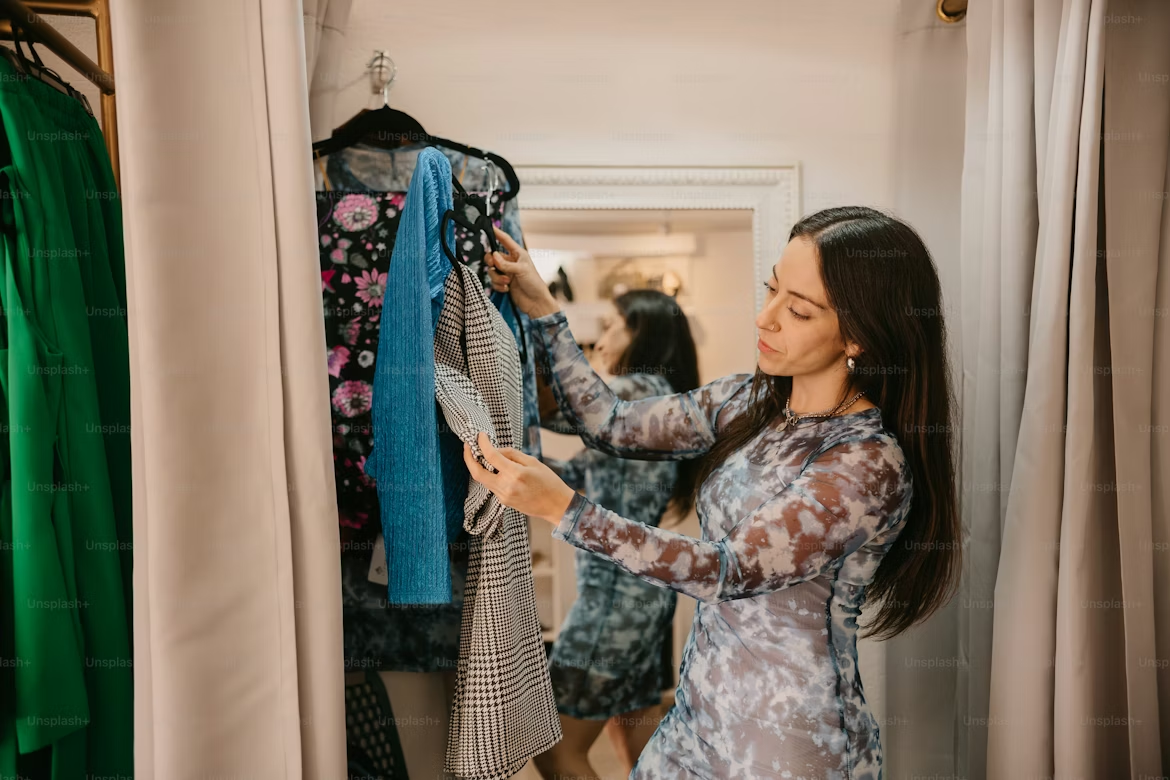
Before a new season officially starts, I sit down and try to write out — just on paper or in the Notes app on my phone — 10 distinct outfits using only what I already own for that season. Not my whole wardrobe, just the pieces I’ve already confirmed are in good shape from my audit.
If I can easily get to 10 outfits, I know I have enough. If I get stuck at 6 or 7, I can see exactly where the gap is. Maybe I have plenty of tops but only one or two bottom options. Maybe everything I own requires a specific shoe I don’t have. The exercise surfaces the real gaps instead of letting me assume.
It also stops impulse buying. When you’ve done this exercise and know your wardrobe works, you don’t panic-shop when the season starts.
Pro tip: Apps like Whering or Stylebook let you photograph and catalogue your wardrobe digitally and then “plan” outfits on screen. It takes a bit of setup but it’s genuinely useful if you’re someone who thinks visually. Some people swear by it. I personally do mine the old-fashioned way with a notebook, but either works.
5. Rotate, Don’t Store
For the longest time I did the classic seasonal wardrobe swap — box everything up, swap it out, put the boxes under the bed. It felt very organized and satisfying.
And then I’d spend September frustrated because my one light cardigan was apparently in the winter box which was now inaccessible behind three other boxes, and I desperately needed it for an unseasonably warm autumn evening.
The better approach — at least for me — is a rotation rather than a hard swap. I keep my full wardrobe accessible year-round, but I organize it by relevance. Current season gets the prime real estate: eye level, front and center. Off-season pieces move to the sides, the higher shelves, the back of the rail. Still accessible, just not in the way.
This sounds minor but it matters a lot in practice. You can still grab that summer dress in November if there’s a warm spell. You’re not locked out of things you might actually need.
It also means the transition into a new season is gradual rather than a dramatic box-swap event. The spring pieces start creeping forward as the weather shifts. The winter coats slowly move back. The whole process is calmer.
These seasonal wardrobe swaps you’ll love have some really smart ideas on making this rotation feel effortless — worth a read if you’re rethinking how you store things.
6. Set a Realistic “Seasonal Budget” and Shop in One Go
Seasonal shopping without a plan is how you end up spending more than you meant to, buying things that don’t go with anything, and then feeling like you have nothing to wear despite having spent money.
What changed things for me was setting a specific seasonal budget before the season starts — not just a vague “I’ll try not to spend too much” intention, but an actual number — and then doing one focused shopping session instead of scattered purchases throughout the season.
Here’s why the one-session approach works: when you sit down and shop for several things at once, you’re automatically thinking about how they work together. You’re less likely to buy a top that goes with nothing you own because you’re holding the bottoms in mind at the same time.
Compare this to random shopping throughout the season — you buy a top one week, trousers another week, and six weeks in you realize the top doesn’t really go with the trousers and you’re back to feeling stuck.
My typical seasonal budget breakdown looks something like this:
| Season | Planned Budget | Priority |
|---|---|---|
| Spring | Medium | 1-2 new tops, light layer |
| Summer | Lower (basics only) | Swimwear refresh, sandals if needed |
| Autumn | Higher | Key layer or outer piece |
| Winter | Higher | One quality piece (coat or knitwear) |
Winter gets more budget because a good coat or quality knitwear is genuinely worth investing in — you wear it constantly for months.
7. Learn Which Colors Work Across Multiple Seasons

One of the biggest time-wasters in seasonal dressing is buying things that only work in one season. Bright coral looks great in summer and practically nowhere else. A very dark burgundy reads very “winter” and feels out of place come May.
When you buy pieces in colors that work across at least two seasons, you dramatically increase the usefulness of everything you own.
The crossover colors I’ve found most versatile:
- Camel / tan — works spring, autumn, and winter
- Navy — honestly works all year round
- Olive green — great in autumn and spring equally
- Off-white / cream — summer and spring, with the right fabric weight
- Stone / sand — summer through early autumn
This doesn’t mean you can never own a coral top or a burgundy sweater. It just means your anchor pieces and most-worn basics should probably live in these crossover zones. The seasonal-specific stuff is fine for accent pieces.
8. Plan for Your Actual Season, Not a Stylized One
This is the mistake I see most often — including in myself — and it’s sneaky because it happens at the inspiration stage.
You spend a weekend scrolling Pinterest or Instagram, saving autumn outfit ideas. Chunky knits on cobblestone streets. Layered scarves and camel coats. It all looks incredible. And then you build your autumn wardrobe around that aesthetic.
But your actual autumn involves commuting, sitting at a desk, grocery shopping in the rain, and maybe one weekend walk. Not cobblestone streets in Tuscany.
The styled wardrobe and the real-life wardrobe are two different things, and building for the former while living the latter is a fast way to feel perpetually underdressed and like your wardrobe “doesn’t work.”
The question to ask yourself when planning each season: what does a typical week in this season actually look like for me? Not the ideal week. The real one. Build for that. You can dress it up when the occasion calls for it — but your base wardrobe should serve your real, daily life.
If you find yourself constantly falling into this trap, these seasonal wardrobe mistakes that ruin your outfits are worth going through — several of them are things I had to unlearn the hard way.
9. End Each Season With a Quick Review, Not Just the Start
Most people only think about their wardrobe at the beginning of a season. You do a refresh, plan a bit, and then just coast through until the next season starts.
What’s actually more valuable is a quick review at the end of each season — while things are still fresh.
A 10-minute end-of-season review asks:
- What did I wear constantly?
- What did I barely touch?
- What did I wish I had but didn’t?
- What broke, wore out, or stopped fitting?
- What felt wrong even though I kept trying to make it work?
Write it down. Somewhere simple — the Notes app is fine. Because when the season rolls around again six months later, you will absolutely not remember. And you’ll make the same purchases, feel the same gaps, and repeat the same frustrations.
This review is also where you decide what needs replacing before next year. A pair of sandals that lasted one more summer but are genuinely done now. The linen shirt that’s become too worn to wear out. Better to know that now than to discover it again next May.
The Mistakes That Slowed Me Down
A couple of things that seemed like good ideas but weren’t:
Buying the whole season at once from one brand. The “shop the look” approach feels efficient but often produces a very one-note wardrobe. Everything matches each other too perfectly and it ends up feeling like you’re wearing a uniform — not in the liberating way, in the boring way.
Following seasonal trend reports too closely. There’s genuinely useful information in trend forecasting, but I spent a season overhauling my wardrobe around “the colors of the season” and most of it felt dated within six months and wrong for my personal style. Trends are a reference point, not a shopping list.
Keeping “aspirational” seasonal pieces. Every spring I used to keep a collection of floaty, maximalist summer pieces I’d seen on people who clearly lived a different life than mine. I never actually wore them. They just made my wardrobe feel chaotic.
Pulling It All Together
Seasonal dressing doesn’t have to feel like a quarterly crisis. The nine ideas above aren’t about having a perfect, magazine-ready wardrobe — they’re about removing the daily friction that comes from a closet that isn’t quite working.
Start with the audit. Build around anchor pieces. Plan for your real life, not the idealized version of it. Review at the end so you’re not starting from zero every year.
It genuinely gets easier once the system is in place. The first season you approach this way might take some effort to set up. After that, it mostly runs itself.