

Every year, without fail, I open my closet at the start of a new season and feel completely stuck. Not because I have nothing to wear — quite the opposite. It’s because everything feels stale. The same pieces I’ve been rotating for months suddenly feel tired, like I’ve seen them too many times in the mirror.
Last autumn, I did something I’d been putting off for two years. I actually sat down, pulled everything out, and figured out why getting dressed felt so uninspiring. Turns out, it wasn’t about needing new clothes. It was about not making the right swaps at the right time.
Seasonal wardrobe swaps aren’t about buying a whole new wardrobe every few months. They’re small, intentional shifts — a fabric here, a layer there, a different shoe — that make your existing pieces feel completely fresh. Once I started doing this properly, my whole relationship with my wardrobe changed.
Here are the eight swaps that made the biggest difference for me.
1. Swap Heavy Knits for Lightweight Layering Pieces
This is the one I resisted the longest, and I genuinely don’t know why.
For years, I’d go straight from my winter chunky knits to summer t-shirts with nothing in between. The transitional weeks — that awkward stretch where mornings are cold and afternoons are warm — would leave me either sweating by noon or freezing at 8 AM.
The fix was embarrassingly simple: lightweight layering pieces. Think fine-gauge cotton cardigans, linen overshirts, and thin zip-up sweaters. These sit between your base layer and your outer layer without adding bulk or making you overheat.
I picked up a couple of cotton-knit zip-ups and a linen shirt-jacket last spring, and they got worn more than almost anything else in my wardrobe. The linen shirt especially — over a white tee in the morning, tied around the waist by afternoon. Effortless transition.
The swap: When temperatures start shifting, box up your heavy knits and pull out your lightweight layers. They don’t need to be fancy. Even a thin cotton hoodie does the job.
2. Swap Your Boot Cut for a Clean Sneaker or Loafer
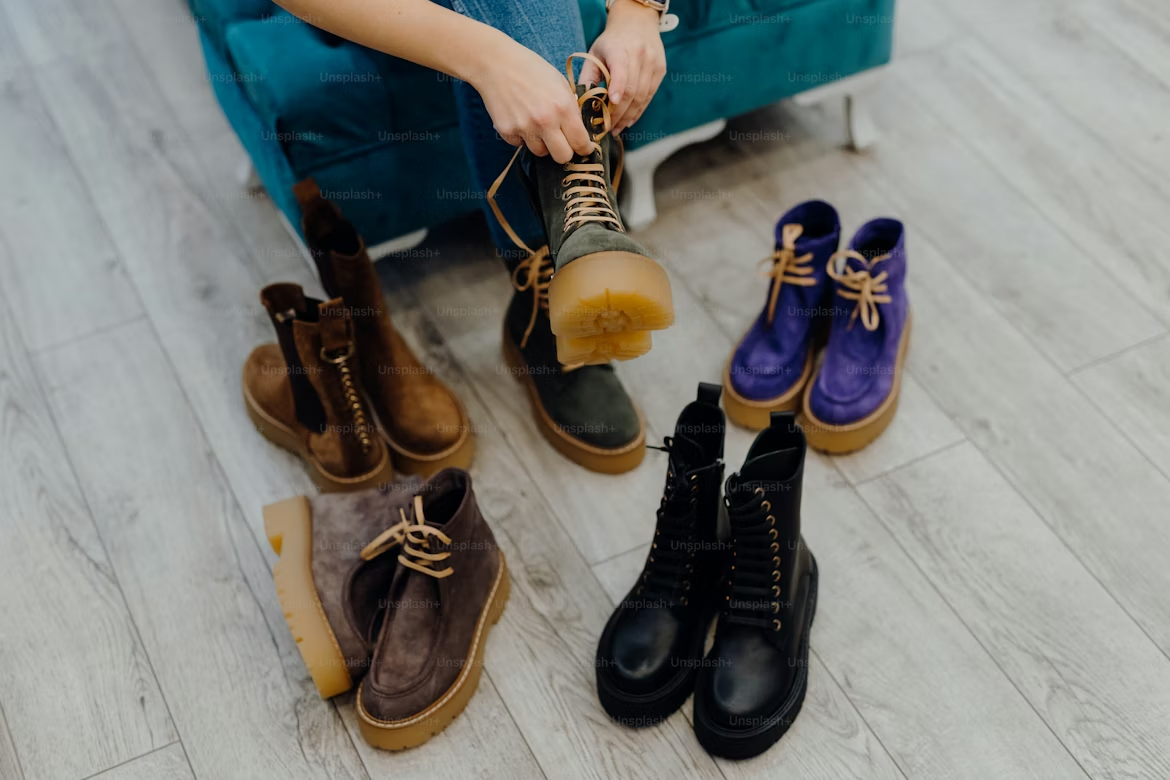
Shoes are the fastest way to change the entire mood of an outfit — and one of the most overlooked seasonal swaps.
I used to wear the same chunky boots from October straight through to April, even as the weather warmed up. They were comfortable, sure, but they were making every outfit feel heavier and more wintery than the season called for.
When I finally swapped them out for a clean white sneaker in early spring, it was like a completely different wardrobe. Same jeans, same top, completely different vibe. Lighter, fresher, more awake somehow.
The loafer is another brilliant transitional shoe. It works with cropped trousers, straight-leg jeans, midi skirts — pretty much anything. In leather or suede for cooler months, in a woven or canvas version as things warm up.
Seasonal shoe swap guide:
| Season | Swap Out | Swap In |
|---|---|---|
| Winter → Spring | Chunky boots, heavy ankle boots | Clean sneakers, loafers, ballet flats |
| Spring → Summer | Closed-toe shoes | Sandals, mules, espadrilles |
| Summer → Autumn | Sandals, open-toe | Ankle boots, Chelsea boots, loafers |
| Autumn → Winter | Light sneakers | Knee-high boots, chunky boots, lined shoes |
One practical tip: when you rotate shoes out, give them a proper clean before storing. Nothing worse than pulling out a pair of sandals in May to find last summer’s dust all over them.
3. Swap Dark, Heavy Fabrics for Lighter Textures
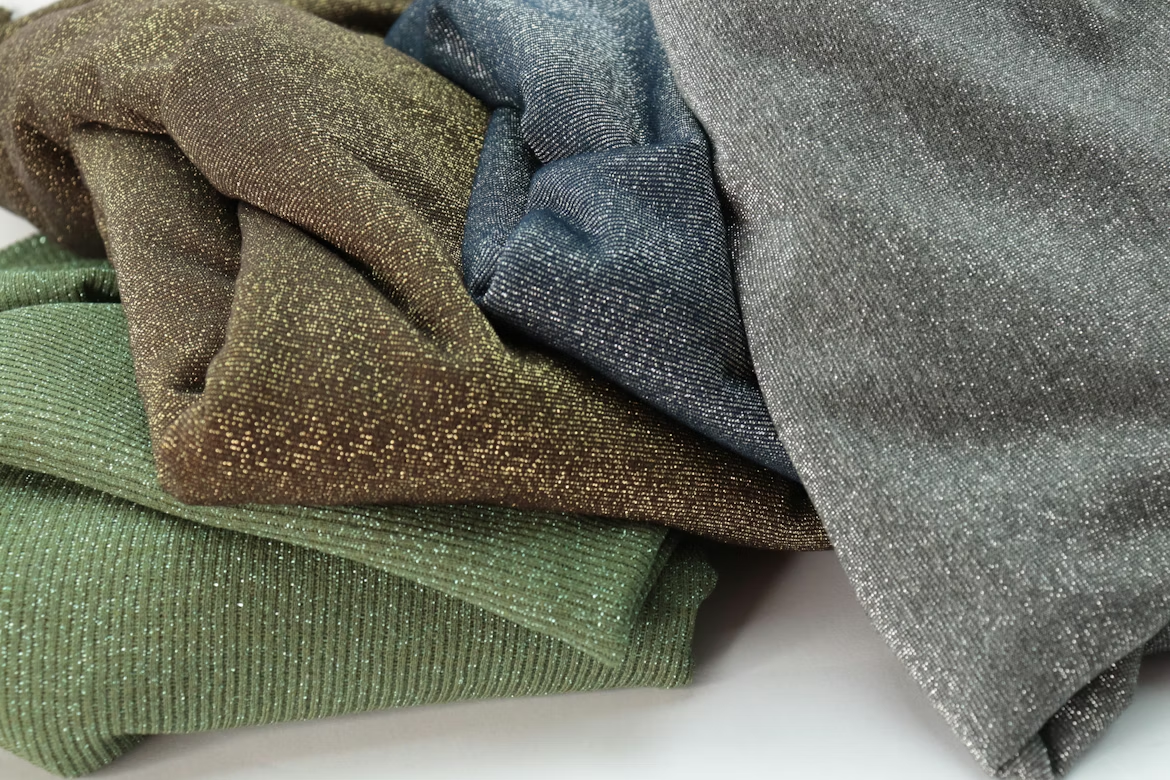
Fabric weight matters more than most people realise, and swapping it seasonally makes a huge visual and physical difference.
Dark denim, wool trousers, and heavyweight cotton all read “winter” to the eye, even if the colour is technically neutral. As the seasons shift, swapping in linen, cotton poplin, chambray, and lightweight satin can completely transform your look without changing a single silhouette.
I have a pair of straight-leg trousers in both heavyweight wool blend and lightweight linen. Same cut, same neutral colour, completely different seasonal energy.
The linen ones get a bad rep for wrinkling, which — fair, they do. But honestly, I’ve come to accept a slight crinkle as part of the texture. It looks intentional if the rest of the outfit is clean. And there are now loads of linen-blend options that hold their shape better than pure linen.
Fabrics to bring in and out by season:
- Spring/Summer: Linen, cotton poplin, chambray, light viscose, jersey
- Autumn/Winter: Wool, tweed, heavyweight denim, corduroy, flannel
If you want a deeper dive into building a wardrobe around seasonal fabrics without overcomplicating it, this seasonal wardrobe reset guide is worth bookmarking.
4. Swap Your Bag — It Changes Everything
I used to think bags were an afterthought. Something you grabbed on the way out the door without thinking. Then I swapped my winter structured tote for a woven summer bag one April morning and genuinely felt like a different person.
Bags carry a seasonal signal that’s surprisingly powerful. A big structured leather tote reads as serious, professional, wintery. A woven straw bag or a canvas tote reads as relaxed, warm-weather, effortless. Neither is better — they just belong to different seasons.
The swaps don’t have to be expensive. I found a great woven raffia bag at a market for almost nothing, and it got more compliments than bags I’d spent real money on.
Quick seasonal bag swaps:
- Spring: Canvas totes, structured crossbody in light colours
- Summer: Woven/straw bags, mini bags, lightweight bucket bags
- Autumn: Leather or faux leather totes, saddle bags, slouchy hobo bags
- Winter: Structured satchels, oversized totes in dark tones, quilted bags
The rule I follow: when I swap my shoes for the new season, I swap my bag at the same time. It keeps the whole look coherent without me having to overthink individual outfit choices.
5. Swap Opaque Layers for Sheer or Open-Weave Ones
This one took me a while to figure out, but it’s become one of my favourite warm-weather tricks.
As it gets warmer, the instinct is to just remove layers entirely. But removing layers completely can leave outfits feeling unfinished — especially if you’ve built your style around the visual interest that layering creates.
The solution is to swap opaque layers for sheer or open-weave alternatives. A sheer button-down over a slip dress instead of a blazer. An open-knit crochet cardigan over a simple top. A lightweight mesh long-sleeve under a linen overshirt.
You get the same visual complexity and coverage without the heat. And sheers in particular have had a real fashion moment recently, so you’ll look intentional rather than transitional.
I started doing this after a trip somewhere warm where I noticed how locals dressed — they layered constantly, but in fabrics that breathed. Open weaves, loosely knitted cover-ups, sheer linen shirts. It completely changed how I thought about warm-weather dressing.
The swap in practice:
- Wool blazer → linen blazer → sheer oversized button-down
- Opaque cardigan → lightweight open-knit cardigan → mesh top
- Thick scarf → thin silk scarf worn loosely → no scarf but a printed neckerchief
6. Swap Your Colour Story — Not Your Whole Wardrobe
One of the easiest and most overlooked seasonal refreshes is simply leading with different colours from what you already own.
Most people’s wardrobes have a mix of shades across seasons. The mistake is wearing them all randomly, year-round, instead of intentionally shifting the emphasis as seasons change.
In winter, I naturally reach for my darker pieces — navy, charcoal, forest green, burgundy. In spring and summer, I pull forward the lighter, warmer tones — cream, warm white, terracotta, dusty blue. The pieces are the same. Just the colour story changes.
Try this: take everything out and separate it loosely into “lighter/warmer” and “darker/cooler” piles. As spring arrives, physically move the lighter pile to the front of your rail and box the darker pieces away. You’ll feel like you have a fresh wardrobe without spending a thing.
This is also where one or two seasonal accent pieces can do a lot of work. A single terracotta linen shirt in spring, or one deep plum sweater in autumn, can shift the whole colour narrative of your outfits even if everything else stays the same.
For more ideas on how to use colour intentionally throughout the year, these capsule wardrobe tips for seasonal outfit planning are genuinely practical.
7. Swap Out Accessories — Scarves, Hats, Jewellery
Accessories are the budget-friendly version of a wardrobe refresh, and I don’t think enough people use them strategically by season.
A chunky knit beanie and a wool scarf belong in winter. A lightweight silk scarf tied in your hair or around a bag handle belongs in summer. A straw hat changes an entire beach or market outfit. A baseball cap gives a casual, sporty energy to an otherwise simple look.
I keep my accessories in clear boxes sorted by season now. When I rotate clothes, I rotate these too. It takes about ten minutes and makes a noticeable difference in how finished my outfits feel.
Jewellery by season — what I’ve noticed works:
- Winter: Layered gold chains, chunky rings, stud earrings that don’t catch on scarves
- Spring/Summer: Delicate hoops, shell or beaded pieces, colourful resin jewellery
- Autumn: Mixed metals, warm-toned stones, layered necklaces over knits
None of this is rigid — wear whatever you like. But having a seasonal direction for accessories means you’re not defaulting to the same pieces every day regardless of the weather outside.
8. Swap Your “Default Outfit” — Break the Autopilot Loop
This one is less about specific pieces and more about habits. And it’s probably the most honest swap on this list.
Almost everyone has a default outfit. The combination you reach for without thinking because it’s safe, comfortable, and requires zero effort. Mine was skinny jeans, a plain tee, and a white trainers. For like two years straight.
There’s nothing wrong with having a reliable formula. The problem is when it becomes the only formula, season after season, until getting dressed feels completely robotic.
The seasonal swap here is to deliberately break your autopilot at the start of each new season and try a new “default.” A different trouser silhouette. A new top-and-shoe combination. A colour you haven’t tried in a while.
I started doing this by picking three new combinations at the start of each season and wearing each one twice before deciding if they work. Most of the time, at least one becomes a new regular. And the process of experimenting shakes off the staleness better than any shopping trip.
A practical way to do this: use the Stylebook app or even just the camera roll on your phone to photograph outfits you’ve worn. Scroll back three months and notice what you’ve been wearing on repeat. That’s your autopilot. Now swap it.
This approach pairs really well with these smart capsule wardrobe building tips for a clutter-free closet — especially if you want to make your default outfits feel more intentional without adding more clothes.
Mistakes I Made Before Getting This Right
Mistake #1: Doing it all at once, once a year. I used to do one massive seasonal swap every six months — a full wardrobe overhaul in one exhausting afternoon. Now I do small rolling swaps as the weather changes, which is far less overwhelming and more responsive to what I actually need.
Mistake #2: Storing things without cleaning them first. Packed away a linen dress one summer without washing it first. Pulled it out a year later to find a faint stain that had set completely. Always wash before storing.
Mistake #3: Swapping everything, keeping nothing. Early on, I’d box up every single winter piece the moment it hit spring. Then we’d get a cold snap in April and I’d have nothing. Now I keep a small “bridge box” of two or three heavier pieces accessible through transition months.
Mistake #4: Buying new instead of swapping creatively. The first few years, whenever a season changed and I felt uninspired, I’d go shopping. Nine times out of ten, the answer was already in my wardrobe — I just needed to rearrange, re-layer, or try new combinations rather than add more.
A Realistic Seasonal Swap Timeline
Here’s roughly how I now structure this across the year — not perfectly, but as a loose guide:
| Month | Action |
|---|---|
| Late February / March | Bring lightweight layers forward; swap heavy boots for loafers/sneakers |
| April / May | Full spring swap — linen, lighter fabrics, lighter bags and accessories |
| June / July | Summer swap — sheers, sandals, woven bags, fresh colour story |
| August / September | Transition — add ankle boots back, bring in one or two richer colours |
| October / November | Autumn swap — heavier fabrics, darker palette, structured bags |
| December / January | Full winter swap — knits, boots, warm accessories |
You don’t have to follow this exactly. Adjust it to your actual climate. If you’re somewhere that barely has a winter, your swap rhythm will look completely different — and that’s fine. The point is to have some rhythm so your wardrobe stays fresh without constant shopping.
The Bigger Picture
Seasonal wardrobe swaps are really just a way of staying in a relationship with what you already own. Instead of ignoring your wardrobe until it drives you crazy enough to buy more, you revisit it intentionally a few times a year and work with what you have.
It takes a couple of hours per season, tops. And the payoff — feeling like your wardrobe is always somewhat fresh, always relevant to the season you’re actually in — is genuinely worth it.
Start small if this feels like a lot. Just swap your shoes and your bag this weekend. See how different your existing outfits feel. Go from there.