

A few years back, a friend of mine moved into a tiny apartment and had to downsize everything — including her wardrobe. She went from a walk-in closet stuffed with clothes to a single rail and two drawers. I expected her to be miserable about it.
Instead, she told me it was the best thing that ever happened to her style.
“I finally know what I have,” she said. “And somehow I look better every day than I did before.”
That stuck with me. Because at the time, I had a full wardrobe and still felt like I had nothing to wear. I’d stand there every morning, overwhelmed, and end up grabbing the same three things on autopilot anyway.
What my friend had figured out — and what took me another year to understand — is that a simple closet built around the right basics is infinitely more useful than a packed one built around random impulse buys.
Here are the seven wardrobe basics that actually make a simple closet work. Not a list of trendy pieces. Not expensive investments. Just the foundational items that make everything else easier.
1. A White or Cream Top That Fits Perfectly
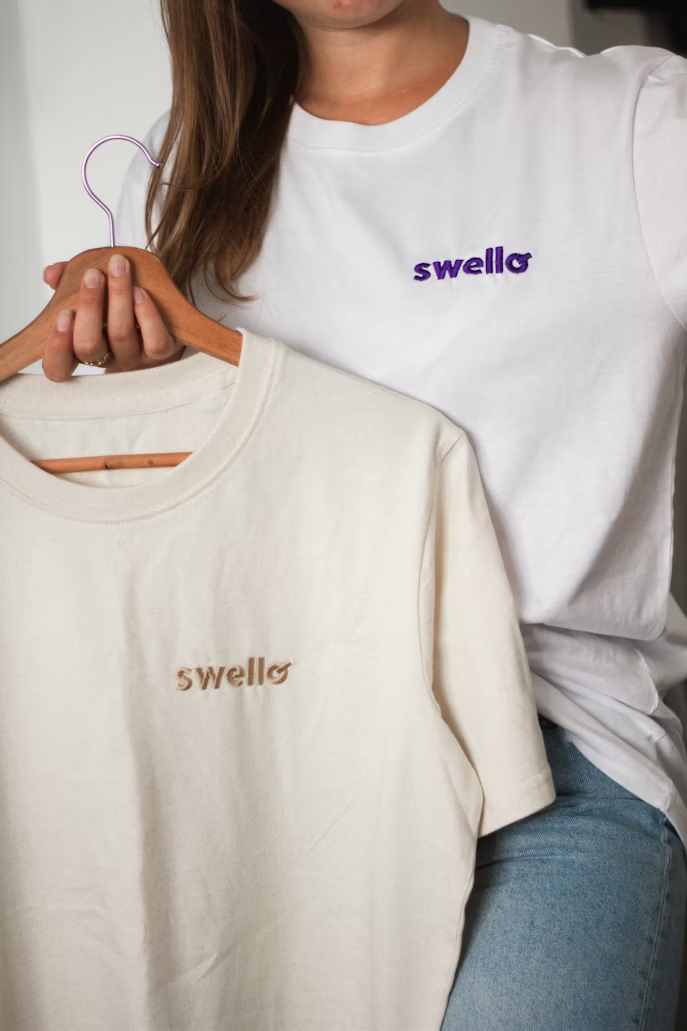
I know. You’ve heard this one before. But hear me out, because most people get it wrong — including me, for a long time.
The white top isn’t just about having something neutral. It’s about having one that fits so well it becomes the piece you reach for when you’re not sure what to wear. The trouble is, most people have three or four white tops that are all slightly off — a bit boxy, a bit sheer, a bit too long — and none of them feel quite right.
The fix is to be ruthless. Try on every white or cream top you own. Keep only the one (or two, maximum) that makes you think “yes, that’s it” when you look in the mirror. Donate the rest.
The right white top should work with jeans, trousers, skirts, and under blazers or overshirts. It should feel like it belongs to you, not like something you’re settling for.
What to look for:
- A neckline that flatters your face and neck shape
- A hem length that works tucked and untucked
- Fabric that doesn’t go see-through in bright light
- A fit that’s neither boxy nor too tight across the shoulders
I spent years cycling through cheap white tees before I finally invested in one well-made cotton poplin shirt that fit me properly. I’ve had it for three years and still reach for it at least twice a week.
2. Dark or Mid-Wash Straight-Leg Jeans
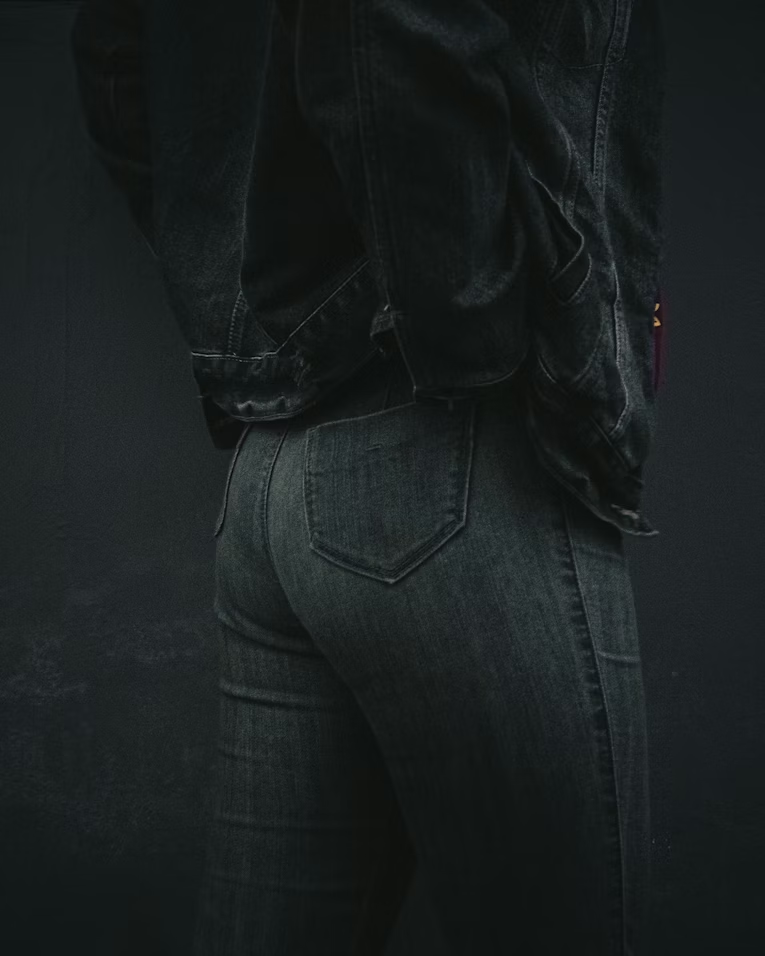
Jeans are controversial in the minimalist wardrobe world because there are so many options — skinny, wide-leg, bootcut, boyfriend, barrel. And honestly, different silhouettes suit different people.
But if you’re building a simple closet and you want one pair of jeans that does the most work, straight-leg is almost universally flattering and the most versatile cut for mixing with different tops and shoes.
Dark wash reads as more polished — you can wear it to a casual dinner or a weekend errand and it works either way. Mid-wash is more relaxed but still clean and intentional. Either works. What matters is the fit through the waist and thigh — the leg length can always be hemmed.
I had a long phase of wearing only skinny jeans because I thought they were the “safe” choice. Then I tried a straight-leg pair on a whim and immediately understood why everyone was talking about them. The silhouette is just more balanced — it grounds the outfit in a way that skinny jeans don’t always manage.
The jeans test: Can you wear them with trainers, loafers, and ankle boots and have each combination look intentional? If yes, they’re a keeper.
One thing I always recommend: get them hemmed properly to your height. Nothing undermines a good pair of jeans like dragging them along the floor or having them pool at the ankle awkwardly. Most dry cleaners do it cheaply.
3. A Tailored Blazer in a Neutral Tone
A well-fitted blazer is probably the hardest-working piece in any simple wardrobe. And I say that as someone who resisted blazers for years because I thought they were “too formal” for my everyday life.
I was wrong. The right blazer — in a relaxed, slightly oversized cut in cream, camel, grey, or navy — is one of the most versatile pieces you can own. It makes jeans look pulled-together. It works over a slip dress. It layers over a hoodie in a way that’s become genuinely fashionable. It goes from a coffee meeting to an evening out without changing anything else.
The key word is tailored, not tight. There’s a difference. A blazer that fits well through the shoulders and chest but has a bit of room in the body is far more flattering and versatile than one that’s either boxy all over or structured like a suit jacket.
For a simple closet, I’d recommend one blazer in a neutral — whichever neutral dominates the rest of your wardrobe. If most of your clothes are in cool tones, go navy or grey. If you lean warm, camel or oatmeal.
If you’re not sure where to start with building around a blazer, this guide on wardrobe basics every closet should have has some practical outfit starting points that are worth looking through.
How to wear one blazer multiple ways:
| Outfit | Bottom | Shoes |
|---|---|---|
| Casual polish | Dark straight jeans | White sneakers |
| Smart casual | Tailored trousers | Loafers |
| Weekend relaxed | Wide-leg linen trousers | Sandals |
| Evening out | Slip skirt | Heeled mules |
| Layered look | Hoodie + jeans | Chunky trainers |
4. A Quality White or Crew-Neck Knit
Not a hoodie. Not a chunky cable knit. A simple, fine-to-medium gauge knit in white, cream, grey, or navy — the kind that sits flat, looks neat, and doesn’t add bulk.
This is the piece I underestimated the most before I built a simpler wardrobe. I thought knits were purely functional — something you grabbed when you were cold. But a well-chosen knit is actually one of the most polished-looking things you can wear.
A fitted crew-neck knit tucked into tailored trousers looks more put-together than most outfits I tried to construct with fancier pieces. It’s clean, unfussy, and works across all sorts of contexts.
The fabric matters here. Wool or wool-blend knits are worth the extra cost because they hold their shape, don’t pill as quickly, and drape better than acrylic alternatives. Merino wool is particularly good — it’s soft, temperature-regulating, and machine washable in most cases.
One mistake I made: Buying too many knits in slightly different shades of the same colour. I had four grey knits. Two were almost identical. Pick one great grey knit and stop there. Use that space for a different colour or piece.
5. A Simple Midi or Straight-Leg Trouser
If jeans are your everyday go-to, having one pair of non-denim trousers is the thing that quietly elevates your whole wardrobe.
It doesn’t need to be complicated. A mid-rise straight-leg trouser in a neutral — black, navy, camel, or stone — gives you something to reach for when jeans feel too casual but you don’t want to think too hard about getting dressed.
I resisted trousers for a long time because I thought they required more effort — more formal shoes, more structured tops. But that’s not actually true. A pair of straight-leg trousers with a simple tee and loafers is genuinely one of the easiest, most complete-looking outfits you can put together.
For warmer months, a wide-leg linen trouser does the same job with an airier feel. These are the two trouser formats I’d recommend for a simple closet — one for cooler months, one for warmer.
Quick fit guide for trousers:
| Fit Area | What to Check |
|---|---|
| Waist | Sits comfortably without gaping or digging |
| Hip/thigh | Enough room to move naturally |
| Leg | Straight through the leg, not pulling at the knee |
| Length | Hits at or just above the ankle — hem if needed |
This also pairs really well with these capsule wardrobe building tricks for simple daily outfits if you want to build more complete outfit formulas around your basics.
6. A Flat Shoe That Goes With Everything
Shoes are often where wardrobe simplicity breaks down. People keep ten pairs “just in case” and end up rotating between two.
For a simple closet, you need one flat shoe that genuinely does most of the daily work. And the best candidates for this role, in my experience, are:
Clean white or cream leather sneakers — the kind with a thin sole and minimal branding. These work with jeans, trousers, casual dresses, and even tailored outfits when worn intentionally. Brands like Veja, Common Projects, or even Zara’s basics line have great options at different price points.
Loafers in a neutral leather or suede — slightly more elevated than trainers, but still relaxed enough for everyday use. A penny loafer or a simple slip-on leather loafer in tan, black, or white is almost endlessly versatile.
The mistake most people make is buying flat shoes in colours or styles that only work with specific outfits. A bright red flat is fun but narrow. A navy loafer is limiting. A tan suede loafer or a white leather sneaker works with nearly everything.
I went through years of buying interesting flats that I loved individually but never wore because they were too specific. The moment I invested in a pair of simple white leather sneakers and a good pair of tan loafers, I stopped thinking about shoes every morning. They just worked.
My flat shoe priority ranking for a simple closet:
- Clean white/cream leather sneaker
- Tan or black leather loafer
- Simple leather or leather-look ballet flat
- Sandal in a neutral (for warmer climates or seasons)
You don’t need all four — pick the one or two that suit your lifestyle and climate best.
7. One Outer Layer That Works for Most Days
The outer layer question trips a lot of people up. Coats and jackets are bulky to store, expensive to buy well, and people often end up with several that each only work for specific weather or occasions.
For a simple closet, the goal is one main outer layer that handles the majority of your year — and then one heavier backup for genuinely cold days if your climate requires it.
The best all-rounder outer layers, depending on where you live, tend to be:
A trench coat — works in spring, autumn, and mild winter days. In a neutral (camel, stone, navy), it elevates almost any outfit underneath. A classic shape never really goes out of style.
An oversized wool or wool-blend coat — for colder climates, this is the winter workhorse. In camel, grey, or cream, it works over everything from jeans to a dress. The oversized silhouette is comfortable and currently very wearable.
A lightweight quilted or puffer jacket — more casual than either of the above, but incredibly practical if you’re outdoors a lot or live somewhere with unpredictable weather.
Pick whichever of these suits your actual climate and lifestyle. The mistake is keeping all three when you really only reach for one.
I used to have six jackets and coats. Trench, denim jacket, oversized wool coat, waterproof anorak, puffer, leather jacket. I wore maybe three of them regularly. When I pared down to two — a camel wool coat and a lightweight puffer for genuinely rainy days — getting dressed in the morning became so much simpler.
For practical guidance on building outerwear into a seasonal wardrobe plan, these seasonal wardrobe essentials for year-round style cover the outer layer question really well across different climates.
The Real Reason Basics Fail People
Most people have these basics — technically. They own a white top, a pair of jeans, something resembling a blazer. But the basics don’t feel like basics because they don’t actually work together.
Here’s why that happens:
They’re in the wrong colours. You can’t build a simple, interchangeable wardrobe if your “neutral” jeans are actually dark burgundy, your blazer is forest green, and your knit is a warm beige that clashes with both. Pick a colour palette first, then buy basics within it.
They don’t fit right. A basic that doesn’t fit isn’t a basic — it’s a placeholder you’re tolerating. Fit is what makes a piece feel like a wardrobe staple rather than something you’re making do with.
There are too many of them. Three white tops, four pairs of black jeans, two navy blazers. When there are multiples of everything, nothing feels essential. Narrow it down. One great version of each.
They’re mixed with too many non-basics. If your closet is 30% basics and 70% trend pieces, the basics get lost. In a simple wardrobe, the ratio should flip.
A Simple Closet Checklist
Here’s what a functional wardrobe built around these seven basics actually looks like in practice:
| Category | Item | Quantity |
|---|---|---|
| Tops | White/cream fitted top | 1–2 |
| Bottoms | Dark straight-leg jeans | 1 |
| Bottoms | Neutral trouser (non-denim) | 1 |
| Layering | Fine-knit crew-neck sweater | 1–2 |
| Layering | Tailored neutral blazer | 1 |
| Shoes | Clean flat everyday shoe | 1–2 pairs |
| Outerwear | Main-season coat or jacket | 1 |
That’s it. Seven categories, roughly ten to twelve pieces total. Everything mixes with everything else. You can get dressed in five minutes and look like you thought about it.
What to Do This Weekend
If reading this has made you want to do something about your wardrobe, here’s a simple starting point that doesn’t require an entire day:
Pull out just the seven categories above. Look at what you currently have in each. Ask yourself honestly: does this piece actually fit well? Does it work with the rest of my wardrobe? Do I reach for it regularly?
Anything that gets three “no” answers, put in a donation bag.
Then look at what’s missing. Maybe you have four tops but no good trouser. Maybe you have three coats but no reliable flat shoe. That gap tells you what to actually shop for — one intentional thing, not a browsing trip.
Apps like Whering or Stylebook are great for photographing what you have and spotting the gaps visually, if you want a digital layer to this process.
Wrapping It All Up
A simple closet isn’t about owning as little as possible for the sake of it. It’s about owning the right things — pieces that earn their place every week, that work with each other effortlessly, and that make getting dressed feel easy instead of exhausting.
These seven basics won’t look exactly the same in everyone’s wardrobe. Your version of a “perfect white top” will be different from mine. Your climate will change which outer layer makes sense. Your lifestyle will shift what counts as a “daily trouser.” That’s fine. Use these as a framework, not a prescription.
The goal is a closet you actually trust. And that starts with getting the basics right.