

Every time a new season rolls around, there’s this weird itch. You open your closet, stare at the same clothes you’ve been wearing for months, and think — I need something new. But your bank account disagrees. And honestly? So does your common sense, because deep down you know you don’t actually need more clothes.
I’ve been there more times than I’d like to admit. I used to do this full seasonal shopping haul every few months — spring hits, I buy a new wardrobe. Fall comes, another haul. I was spending money, accumulating stuff, and somehow still not feeling like my wardrobe was working for me.
Then I started paying attention to something interesting: the people whose style I admired most weren’t buying new stuff every season. They were doing something smarter. They were updating — not replacing.
That realization changed everything for me. These five seasonal updates are what I now swear by. Not a single one requires buying an entirely new outfit, and every single one will make your existing wardrobe feel like it just got a refresh.
1. Swap Out Your Accessories First — It Changes Everything
Okay, I want to start here because this is the update most people completely overlook, and it might be the most impactful one on the list.
Think about it this way: the same white tee, dark jeans, and clean sneakers look completely different in summer versus fall — if you’re wearing the right accessories. In summer, a delicate gold chain and a woven tote bag feel breezy and intentional. Come autumn? Swap those for a chunky layered necklace, a leather structured bag, and a knit scarf, and suddenly you’re in a whole different season — with the same exact outfit underneath.
I tested this once, just for fun. I wore the same outfit five days in a row and changed only the accessories each day. The difference was genuinely surprising. People actually asked if I’d bought something new.
Here’s what I rotate seasonally, specifically:
Warmer months: Delicate jewelry, straw or woven bags, canvas totes, light scarves in linen or cotton, sandal-friendly footwear.
Cooler months: Chunkier jewelry, leather or structured bags, wool or knit scarves, beanies, boots or loafers.
The cost per swap is usually low too. A good scarf from a local market, a simple bag, a few layered necklaces — these don’t have to break the bank. And the visual shift they create is disproportionately large compared to what you spend.
One mistake I made for years: I had a single bag I used year-round. One bag. It was a medium-sized structured black bag, and while it was technically “versatile,” it made all my seasonal outfits feel like the same outfit. Introducing even a second bag — a slouchy canvas one for summer and a warm-toned leather one for fall — genuinely doubled how fresh my wardrobe felt.
If you’re building from scratch with accessories in mind, 8 smart capsule wardrobe building tricks for simple daily outfits has a good framework for thinking about how pieces interact.
2. Introduce One New Texture, Not a New Color Palette
This one took me a while to figure out, and once I did, I felt a little embarrassed it took so long.
Every season, I used to think I needed to shift my whole color story. Winter = dark, muted tones. Summer = bright, punchy colors. I’d go out and buy pieces in “seasonal colors” that didn’t actually mix with the rest of my wardrobe. The result? Clothes that only worked for one season, that I wore three times, and that I eventually donated.
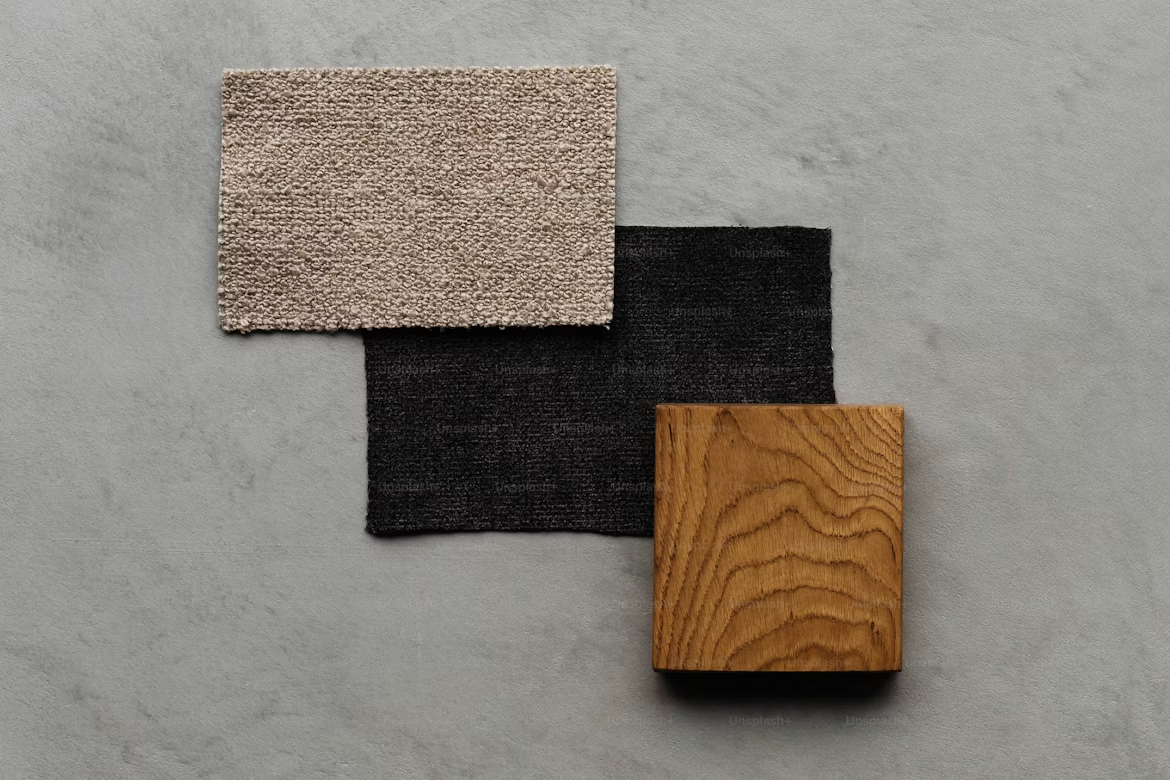
The smarter move — and this is genuinely what stylists do — is to keep your color palette stable and shift your textures instead.
Here’s what that looks like in practice:
- Spring/Summer: Linen, cotton voile, lightweight jersey, chambray
- Fall/Winter: Wool, flannel, corduroy, velvet, ribbed knits, faux suede
Same neutral colors — cream, navy, olive, stone — but the fabric shifts completely change how your clothes feel and read visually. A cream linen top in summer feels breezy and warm-weather-appropriate. A cream ribbed knit in fall feels cozy and season-appropriate. Same color family. Totally different vibe.
The key is to introduce just one new texture piece each season rather than trying to overhaul everything. Buy one ribbed knit jumper for fall. One linen shirt for summer. That single piece changes the entire feel of what you already own when you start mixing it in.
Here’s a quick visual reference for which textures photograph and layer best across each season:
visualize show_widget
The mistake I see most often: people go for “seasonal colors” — burnt orange for fall, pastels for spring — and end up with pieces that clash with their existing wardrobe. Texture is quieter and blends more naturally with what you already own.
3. Re-Style What’s Already Hanging There
This one is free. Completely, 100% free. And it’s the update most people skip because it doesn’t feel like doing something.
Every season, I do what I call a “styling audit.” I take out everything I haven’t worn in the past two months and try to style each piece differently than I normally would. The results are always surprising.
For example — I had a white button-down shirt I’d been wearing strictly tucked into trousers, always with the buttons done up. Classic, slightly stiff. I wasn’t reaching for it much. One day I tried it half-tucked, open over a fitted white tee, with the sleeves rolled. Suddenly it became one of my favourite pieces again.
A few re-styling moves that consistently refresh a wardrobe:
Layer things differently. A dress worn as a skirt under a knit. A long-sleeved top worn under a short-sleeved one. An oversized shirt worn as a light jacket.
Change how you tuck. Full tuck vs. half tuck vs. French tuck — these look genuinely different and change the silhouette of the whole outfit.
Try different footwear pairings. Your favourite jeans probably always get the same shoes. Try them with boots, then loafers, then clean sneakers and see which feels most exciting right now.
Belt it. A loose dress or oversized sweater belted at the waist becomes a completely different outfit. I didn’t own a belt for two years and then bought a simple tan leather one for a few hundred rupees — suddenly half my wardrobe felt new.
There’s an app I’ve found genuinely useful for this: Stylebook (iOS) and Smart Closet (both iOS and Android) let you photograph and catalogue your wardrobe, then experiment with digital outfit combinations before physically pulling things out. It sounds like extra work, but it’s actually really satisfying, especially when you discover pairings you’d never have thought of.
4. Do a Strategic Colour Swap With One Key Piece
Earlier I said not to shift your whole colour palette seasonally — and I stand by that. But there’s a more targeted version of colour updating that genuinely works: swapping out one key piece in a different seasonal tone.
Let me explain what I mean.
My usual outfit formula: neutral top, dark jeans, and a layer. I have a navy blazer I use as my layer in spring. When fall rolls around, I swap that single layer piece — the blazer — for a caramel or rust-toned knit. The core outfit stays identical. But the warm-toned outer layer immediately reads as “fall” in a way that feels intentional without being loud.
This works because you’re not redressing from scratch. You’re shifting one accent piece to do the seasonal signalling while everything else remains stable. It’s the wardrobe equivalent of repainting one wall in a room — transformative without being chaotic.
The best pieces to do this with:
- The outer layer (blazer, cardigan, light coat)
- Your bag
- A scarf or wrap
- Your shoes (sandals → loafers → boots is almost a full seasonal journey on its own)
| Season Shift | Swap This Piece | Suggested Seasonal Tone |
|---|---|---|
| Spring to Summer | Outer layer | Soft sage, sky blue, warm white |
| Summer to Fall | Bag + scarf | Rust, caramel, warm olive |
| Fall to Winter | Knit or coat | Deep burgundy, charcoal, forest green |
| Winter to Spring | Shoes | Nude, tan, warm taupe |
The mistake here is doing this with multiple pieces at once. If you change the bag and the outer layer and the shoes, it starts feeling like a new outfit entirely — which sounds good but actually loses the coherence of what you’ve built. One piece. Let it carry the seasonal shift.
If you’re interested in understanding seasonal wardrobe planning at a deeper level, seasonal wardrobe reset: what to wear all year round is a genuinely useful read.
5. Edit Down Before You Add Anything New
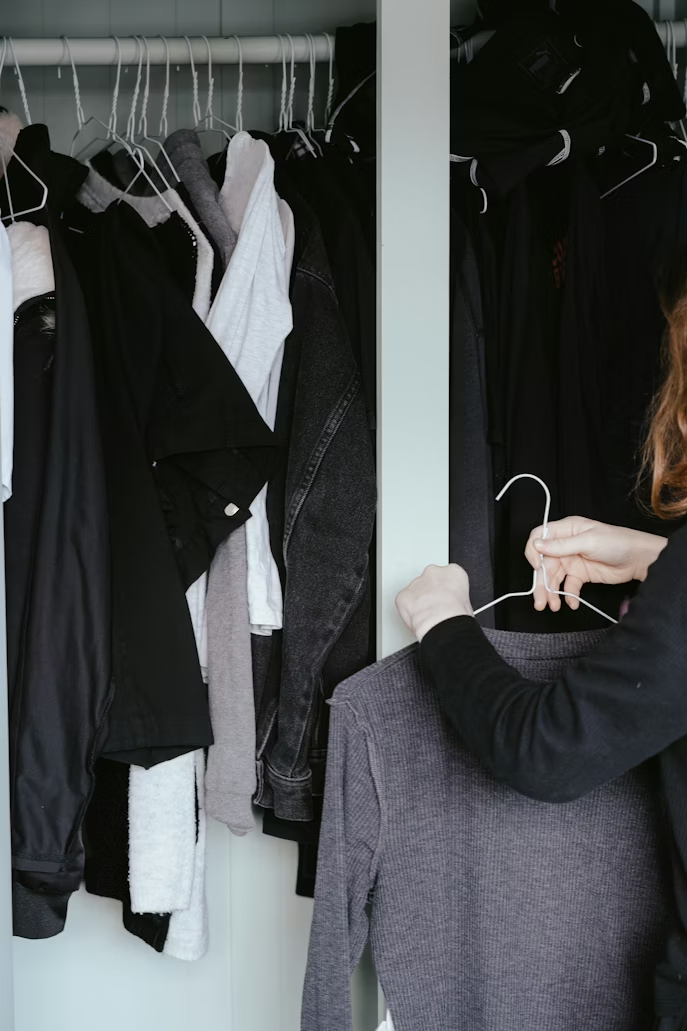
This is less about what you add and more about what you remove — and it consistently makes my wardrobe feel the most refreshed out of anything on this list.
Here’s the dynamic that most people don’t notice: when your closet is packed, your brain stops seeing things clearly. Everything blurs together. You overlook pieces you actually love because they’re buried under things you’ve been meaning to deal with for six months.
Every seasonal transition, I do a quick pull-out edit. Not a massive declutter — I’m not going full minimalist every three months. Just a specific check:
Step 1: Pull out anything you haven’t worn in the past season. Be honest.
Step 2: For each piece, ask one question — “Would I buy this again today?” Not “Is it still good?” Not “Was it expensive?” Just: would you buy it right now, knowing what you know?
Step 3: Anything that gets a “no” or a “hmm, maybe” goes into a box. Not donated immediately — just removed from your daily rotation for thirty days.
Step 4: After thirty days, if you haven’t gone looking for a single thing in that box, donate it. If you missed something, bring it back.
What happens after a good edit is kind of remarkable. Suddenly you can actually see your wardrobe. Pieces you forgot about resurface. Combinations that were invisible before become obvious. It’s genuinely like going shopping — in your own closet.
I did this before last fall and found a caramel-coloured knit I’d bought and somehow buried under other things. I wore it at least twelve times that season. It was already mine. I just couldn’t see it.
Here’s a rough look at how the “edit-first” approach affects wardrobe usability over time:
V
visualize
V
visualize show_widget
https://bda9a123f2634cb5724fa86009f921e3.claudemcpcontent.com/mcp_apps?connect-src=https%3A%2F%2Fesm.sh+https%3A%2F%2Fcdnjs.cloudflare.com+https%3A%2F%2Fcdn.jsdelivr.net+https%3A%2F%2Funpkg.com&resource-src=https%3A%2F%2Fesm.sh+https%3A%2F%2Fcdnjs.cloudflare.com+https%3A%2F%2Fcdn.jsdelivr.net+https%3A%2F%2Funpkg.com+https%3A%2F%2Fassets.claude.ai&dev=true
The numbers above are based on my own personal tracking using the Stylebook app — I started logging outfits about two years ago and the pattern is pretty consistent. When I edit first, I wear a significantly higher percentage of what I own. When I just add things, the opposite happens.
And here’s the part nobody talks about: editing is the thing that tells you what you actually need to buy. After a good edit, the gaps are obvious. “I have five tops but only two bottoms that work.” “I have no layer for this temperature range.” That clarity makes you a much smarter, more intentional shopper when you do decide to add something.
For a practical breakdown of how to identify what your wardrobe is actually missing, 7 essential capsule wardrobe building rules for beginners walks through the logic clearly.
The Mistakes That Undo All of This
You can do all five of these updates perfectly and still end up back at square one if you fall into a couple of common traps.
Panic buying during seasonal sales. Sales create urgency, and urgency kills intentionality. If you’re buying something because it’s 70% off and you might need it, you probably won’t wear it. The “might use it” purchase is the enemy of a wardrobe that feels fresh.
Updating everything at once. One of these updates per season is enough. Seriously. Doing all five simultaneously is overwhelming and tends to make your wardrobe feel chaotic rather than refreshed. Pick the one that’s most relevant to where you are right now.
Skipping the edit because it feels like “not doing anything.” This is the big one. Adding feels productive. Editing feels neutral. But the edit is what makes everything else work. Don’t skip it.
Buying trendy textures or accessories that don’t mix with your existing palette. That bright red woven bag might photograph beautifully on its own. If nothing else you own is warm-toned, it’ll sit unused. Any update — accessory, texture, accent colour — needs to be able to “talk to” at least four other things you already own. That’s the test.
A Simple Seasonal Update Checklist
| Update | Cost Level | Time Required | Impact |
|---|---|---|---|
| Swap accessories | Low | 20 minutes | High |
| Introduce one new texture | Mid | 1 shopping trip | High |
| Re-style existing pieces | Free | 1 hour | Medium–High |
| Strategic colour swap in one key piece | Low–Mid | 30 minutes | Medium |
| Edit down first | Free | 1–2 hours | Very High |
None of this is complicated. It’s just a different way of thinking about what “new season” means for your wardrobe. You don’t owe fast fashion your money every few months. You owe your wardrobe a bit of attention — and that’s a very different thing.