

I used to stand in front of a jam-packed closet every morning and still feel like I had nothing to wear. Sound familiar? I had dozens of tops, a pile of jeans in different washes, and more shoes than I could count — and yet, getting dressed felt like solving a puzzle with missing pieces every single day.
It wasn’t until I had one particularly chaotic morning — running late for a work meeting, trying on my fourth outfit in 10 minutes — that I finally sat down and asked myself: What’s actually missing here?
Turns out, it wasn’t more clothes. It was the right clothes. Specifically, a handful of wardrobe basics that I’d been overlooking for years because they seemed too boring, too simple, or just not exciting enough to buy.
Once I finally invested in them? Getting dressed became genuinely easy. Like, embarrassingly easy.
Here are the 6 wardrobe basics I wish I’d owned years earlier — and why each one changed the game for me.
1. A Well-Fitted White Button-Down Shirt

I know, I know. A white shirt sounds like the most obvious, least exciting recommendation ever. But hear me out — because I avoided this one for years, and it cost me a lot of unnecessary outfit stress.
My issue was always the fit. Every white button-down I tried either ballooned out at the sides, gaped at the chest, or had sleeves that were too long. So I gave up and told myself it just wasn’t “my thing.”
Then a friend showed up to a casual dinner looking effortlessly put-together in a simple white shirt tucked into wide-leg trousers, and I asked where she got it. She named a brand I’d heard of but never tried, said she’d had the shirt for three years, and wore it at least once a week.
That was my wake-up call.
I spent actual time finding one that fit my body — not just grabbing a random one off the rack. The difference was night and day. A properly fitted white button-down can be:
- Worn open over a tank as a casual layer
- Tucked into tailored trousers for work
- Knotted at the waist over jeans for a weekend look
- Worn under a sweater with just the collar peeking out
The key is fit. Don’t settle for “close enough.” Try several brands, different cuts (relaxed vs. slim vs. oversized), and find the one that makes you feel like yourself.
What I wish I’d known: Go for 100% cotton or a cotton-linen blend. Synthetic fabrics look cheap fast and wrinkle in the worst ways.
2. Dark Wash, Straight-Leg Jeans
For most of my twenties, I wore skinny jeans exclusively. It’s what everyone was wearing, they felt “safe,” and I never questioned it. Meanwhile, I watched years of outfits fall flat because skinny jeans, as much as I loved them, are genuinely hard to style up.
The moment I tried a straight-leg dark wash pair, I understood what I’d been missing.
Dark wash jeans read as almost dressy — they can go from a casual coffee run to a dinner without missing a beat. And straight-leg silhouettes are universally flattering in a way that’s hard to explain until you try them on.
Here’s a quick breakdown of why this specific combination works so well:
| Feature | Why It Matters |
|---|---|
| Dark wash | Looks polished, hides wear, pairs with everything |
| Straight leg | Flatters all body types, balances proportions |
| Mid to high rise | Works with both tucked and untucked tops |
| Minimal distressing | More versatile across casual and smart-casual occasions |
I wore my first pair of straight-leg dark jeans to a work event, a birthday dinner, and a grocery run in the same week — all styled differently. They were the most-worn item in my wardrobe that month.
Mistake I made: Buying a pair that was slightly too long because I thought I could just “hem them later.” I never did, and the dragging hem ruined them within a year. Get them hemmed immediately, or buy the right inseam length.
3. A Neutral-Tone Knit Sweater
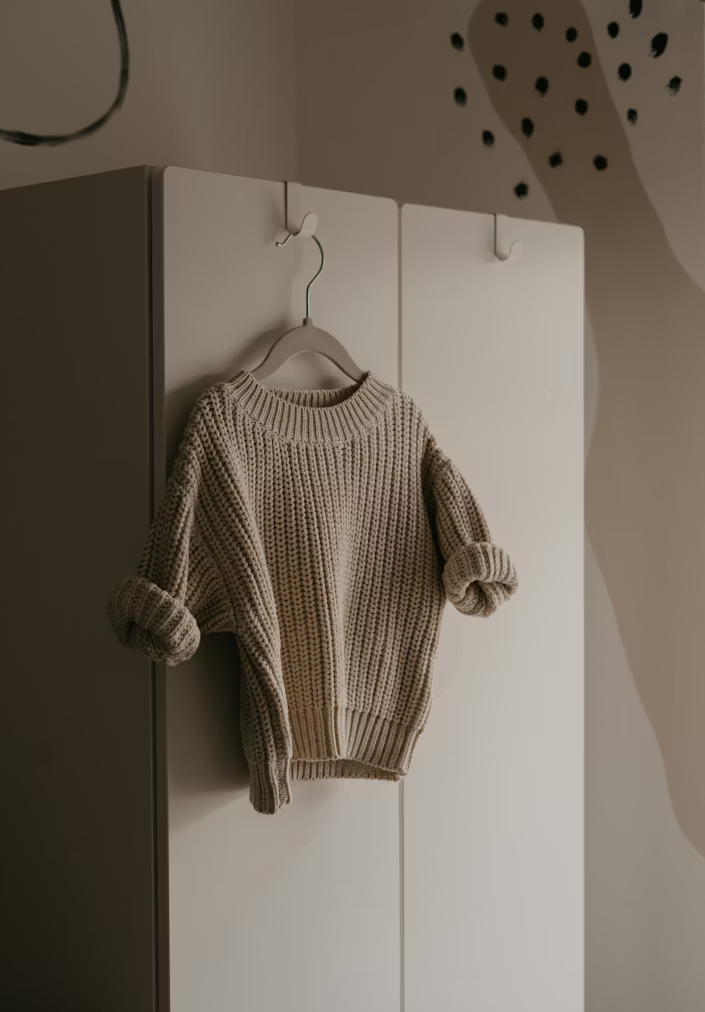
Not a hoodie. Not a graphic sweatshirt. A knit sweater — in a neutral color like oatmeal, camel, soft grey, or off-white.
This one genuinely surprised me. I thought of knit sweaters as something my grandmother wore, which is a completely unfair association. But once I started seeing them styled on real people (and honestly, a lot of that credit goes to Pinterest deep-dives and a few fashion accounts I follow), I got curious.
I bought a chunky oatmeal-colored crewneck knit, half-expecting it to sit in my wardrobe untouched. Instead, it became my most-reached-for cold weather item.
It works over collared shirts. It works tucked into a midi skirt. It works alone with jeans. It even works on its own as a dress-style layer over leggings when you’re working from home and need to feel slightly human.
The neutral color is everything here. A bright red or bold patterned knit limits where you can wear it. A neutral goes with your whole wardrobe.
If you’re building a more streamlined closet, check out this guide on 10 Minimal Wardrobe Essentials for a Clean Style — it goes deeper into why neutrals are the backbone of any easy-to-wear wardrobe.
What worked for me: I went with a mid-weight knit (not too thick, not flimsy) so I could wear it in autumn, winter, and even cool summer evenings. Merino wool is worth the investment if your budget allows — it doesn’t pill as fast and regulates temperature better than acrylic blends.
4. A Tailored Blazer in a Versatile Color
Okay, so I used to think blazers were strictly for office settings or job interviews. I was so wrong.
A well-cut blazer in a neutral — think beige, black, navy, or even a soft grey — is one of the most transformative pieces you can own. I bought my first “real” blazer (not a cheap polyester one from a fast fashion haul) about two years ago, and it’s changed how I approach getting dressed entirely.
Here’s the thing about blazers that nobody told me: they make almost any outfit look more intentional. Throw one over a white tee and jeans? Suddenly you look like you planned your outfit. Layer it over a simple dress? Instantly elevated. Even wearing it with joggers in a relaxed, oversized fit gives you that effortless editorial look.
Some practical tips for finding the right one:
- Try before you buy if possible. Blazers are very fit-dependent. The shoulder seam should sit at the edge of your shoulder — if it droops or pulls, it’s the wrong fit.
- Go for a mid-length. Hip-grazing blazers are the most versatile — they work with skirts, trousers, shorts, and dresses equally well.
- Structured fabric > floppy fabric. A blazer that holds its shape looks expensive. Something that collapses when you take it off looks cheap, regardless of price.
- Neutral over trendy. A camel blazer will still look great in five years. An electric yellow blazer? Maybe not.
I initially resisted spending more money on a blazer when I could buy three from a fast fashion site for the same price. But after going through those three cheaper blazers in 18 months — shoulders that warped, linings that frayed, colors that faded — I finally bought one quality piece and never looked back.
5. A Classic White or Cream Sneaker
This might sound like a no-brainer, but you’d be amazed how many people (including past-me) have a shoe collection full of very specific shoes — strappy heels, chunky boots, statement loafers — and no simple, clean, everyday sneaker.
A white sneaker is the footwear equivalent of the white shirt. It’s not exciting on its own, but it makes everything else work.
I spent years wearing dingy old trainers I’d had for ages because I kept telling myself “sneakers are sneakers.” Then I bought a clean pair of minimalist white leather sneakers — no logos, no chunky soles, just a sleek low-profile design — and suddenly I was wearing them with everything.
Dresses. Jeans. Wide-leg trousers. Midi skirts. Tailored shorts.
They even made my more “dressed up” outfits feel more modern and approachable, which is a vibe I genuinely love.
My honest advice: You don’t need a premium designer pair. There are great white sneakers at mid-range price points that clean up well and hold their shape. The most important thing is keeping them clean — a quick wipe down with a damp cloth every few days goes a long way. I also use a foam sneaker cleaner once a week which takes about two minutes and makes them look nearly new.
For more ideas on building a practical, stylish wardrobe without spending a fortune, this article on how to build a stylish budget wardrobe without overspending is genuinely helpful — solid practical advice without the fluff.
6. A Simple, Structured Tote or Shoulder Bag in a Neutral Tone
This one took me the longest to figure out, and I think it’s because bags feel personal in a way that clothes don’t always.
For years I rotated between a very large, slightly chaotic canvas tote (that swallowed everything I put in it), a tiny crossbody that barely fit my phone and keys, and a statement bag I bought impulsively that only matched about 30% of my wardrobe.
What I was missing was a medium-sized, structured bag in a neutral color — something that could hold my actual daily essentials, look polished, and work with multiple outfits.
When I finally bought one — a camel leather-look shoulder bag with a top handle and a crossbody strap — it became my everyday bag almost immediately. It goes with my jeans, my work outfits, my weekend looks. It’s not exciting to talk about, but it quietly makes every outfit look more put-together.
Here’s a simple comparison I wish someone had laid out for me earlier:
| Bag Type | Best For | Limitation |
|---|---|---|
| Oversized tote | Carrying a lot | Looks casual, hard to dress up |
| Tiny crossbody | Going out, traveling light | Not practical for daily use |
| Statement/bold bag | Special outfits | Clashes with most everyday looks |
| Medium structured neutral bag | Everything | None, honestly |
One thing I’d add: Pay attention to strap length options. A bag that can switch between a shoulder bag and a crossbody gives you way more flexibility day-to-day. It’s a small feature but a genuinely useful one.
A Few Common Mistakes to Avoid
Before you go shopping for any of these, let me save you from a few traps I fell into:
Buying cheap versions just to “try it out.” I did this with the white shirt and the blazer. The cheap versions didn’t fit well, looked worse with wear, and convinced me the item “wasn’t for me” — when really the item just wasn’t good quality.
Buying the trendy version instead of the classic. Every year there’s a “cool” version of each of these basics — an embellished sneaker, an oversized exaggerated blazer, a statement-sleeve button-down. Resist the urge. The classic, simple version will still be wearable in five years.
Not thinking about your existing wardrobe. Before buying any new basic, ask yourself: does this actually work with what I already own? A camel tote won’t work if 90% of your wardrobe is warm tones and browns. A black blazer might be redundant if you already have three black jackets.
Skipping the “wear it around the house” test. When I buy something new, I put it on at home for an hour or two before committing to keeping it. If it’s uncomfortable, stiff, or I’m constantly adjusting it — it goes back.
What These Basics Actually Do for Your Wardrobe
The honest truth is that none of these items are glamorous on paper. A white shirt. Dark jeans. A knit sweater. A blazer. White sneakers. A neutral bag.
But together, they create the foundation that makes everything else in your closet easier to wear. They’re the items you reach for without thinking. The ones that make you feel put-together on a low-effort day. The ones that make your “exciting” pieces look even better because they have something solid to work alongside.
I used to buy clothes impulsively — drawn to prints, bold colors, interesting textures — without having the basics underneath them. It’s like building a house and skipping the foundation. Everything looks fine until it doesn’t.
If you’re working on simplifying your closet or just want to feel better about getting dressed in the morning, building on a foundation of well-chosen basics is genuinely the move. For seasonal wardrobe planning ideas that work around these kinds of core pieces, this seasonal wardrobe reset guide is worth a read — especially if you find yourself feeling “stuck” each time the weather changes.
Start with one item from this list. Wear it for a week. See what happens.
Chances are, you’ll wonder why you waited so long too.