

Every year, without fail, I’d go through the same exhausting ritual. Spring rolls around, I dig through my storage boxes, realize half of what I packed away no longer fits right or feels dated, and then spend way too much money “refreshing” for the new season.
Sound familiar?
I did this for years. Different box for every season, a wardrobe that somehow never felt complete, and a bank account that took a hit every time the weather shifted. It wasn’t until I started paying attention to which pieces I kept reaching for — regardless of the season — that things finally clicked.
Turns out, there’s a small handful of items that just work, season after season, with barely any styling effort. Once I identified them and stopped replacing them with trendy alternatives that lasted one season, everything got simpler.
These are the 6 seasonal wardrobe essentials I now keep on permanent rotation — and why they’ve genuinely earned their closet space.
1. A Lightweight Layer That Goes Over Everything
I used to underestimate how much a good transitional layer could carry an outfit. For the longest time, I’d either reach for a heavy winter coat or nothing at all — no in-between. Then I discovered the magic of a lightweight overshirt or a fine-knit open cardigan, and honestly, I wear it roughly nine months of the year.
In spring, it’s thrown over a plain tee on cool mornings. In summer, it’s the layer I keep at my desk when air conditioning turns the office into a refrigerator. In autumn, it sits under a heavier jacket. Even in mild winter days, it works under a coat as an extra warm layer without adding bulk.
The key is to pick one in a neutral — oatmeal, stone, light grey, or navy work best. Avoid anything too chunky or too thin. You’re looking for that sweet spot: substantial enough to feel like a real layer, light enough to scrunch into a bag without a second thought.
What to look for:
- Natural or blended fabric (cotton-linen blend or merino wool)
- Simple silhouette with no fussy details
- A color that plays well with most of what you already own
I’ve had my current light grey cardigan for about two years now. I’ve washed it probably 80+ times. Still looks great. That’s the kind of ROI a good transitional layer gives you.
2. Well-Fitted Dark Wash Jeans
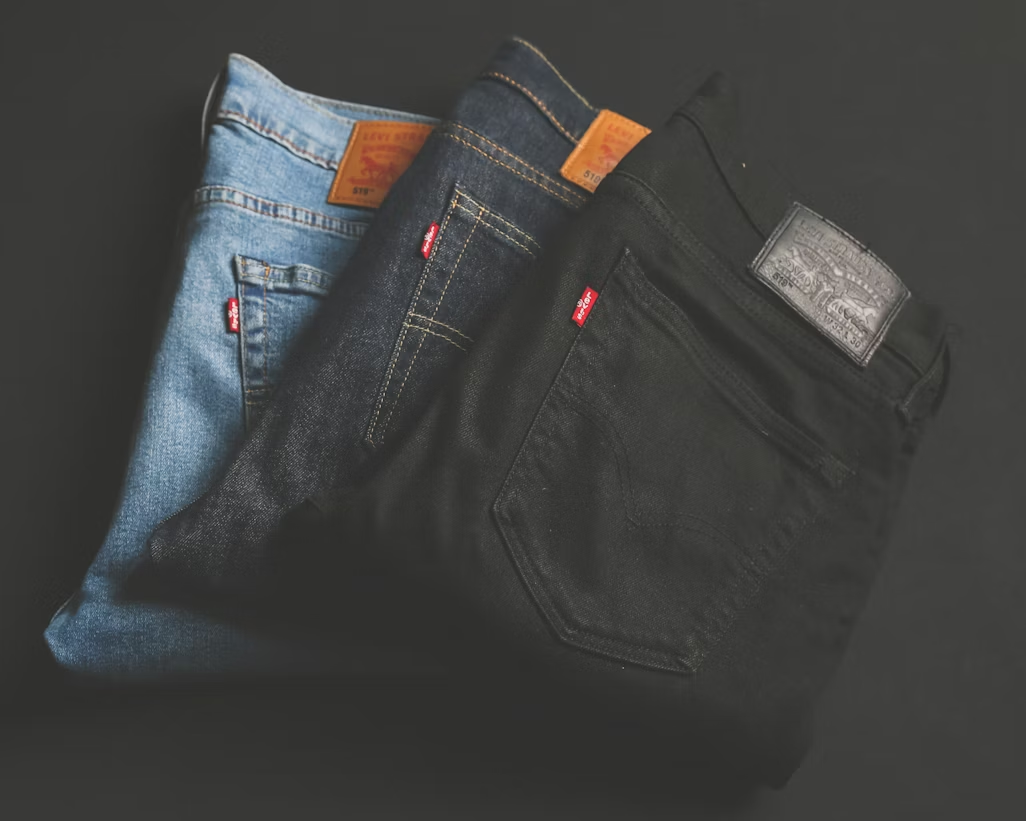
Before you roll your eyes — hear me out, because I spent years avoiding dark jeans thinking they were too “formal” for casual wear and not formal enough for anything else. I was wrong.
A well-fitted pair of dark wash jeans is genuinely one of the hardest-working pieces in any wardrobe. The dark wash keeps them looking clean and put-together even when you haven’t made much effort with the rest of your outfit. They read more elevated than mid-wash or distressed options, which means they cross-over between casual and semi-formal more easily.
I wear mine with:
- Chunky white sneakers on weekends
- A blazer and clean leather shoes for low-key professional settings
- A tucked linen shirt on a warm evening out
- Boots and a knit in autumn
One pair. Four completely different contexts. That’s the whole point.
The single most important thing here is the fit. Not the brand, not the price, not the exact shade of navy. The fit. A pair of £25 jeans that fits well will always outperform a £150 pair that doesn’t sit right on your body. If you need to get them tailored at the hem, do it. It costs almost nothing and makes a noticeable difference.
For more help picking the right foundational pieces, 6 Proven Capsule Wardrobe Building Rules for Simple Fashion is worth a read — it covers the logic behind choosing pieces that stay relevant across seasons.
3. A White or Off-White Relaxed Shirt

Okay, I know what you’re thinking — a white shirt is the most obvious, boring suggestion imaginable. But stay with me, because the type of white shirt matters enormously, and most people get this wrong.
I’m not talking about a stiff formal dress shirt. I’m talking about a relaxed, slightly oversized, breathable white shirt — something with a bit of structure but not too much. Cotton poplin, linen, or a cotton-linen blend. Collar that’s not too stiff.
This piece earns its place in every season:
| Season | How to Style It |
|---|---|
| Spring | Tucked into wide-leg trousers, sandals |
| Summer | Worn open over a simple tank as a cover-up |
| Autumn | Layered under a knit sweater, collar peeking out |
| Winter | Under a blazer or wool coat, top button undone |
The reason this works so well is that it acts as a neutral canvas that lets other pieces do the talking. Bold trousers? The white shirt lets them breathe. Great shoes? The white shirt doesn’t compete.
One mistake I made early on: buying white shirts that were too thin and too fitted. They became see-through by summer and unflattering when tucked in. Go for a slightly relaxed cut — not oversized to the point of looking like you borrowed it from someone larger, just a little room to breathe.
4. A Quality Knit in a Solid Neutral
I have a deep, probably unreasonable love for a good knit sweater. But this specific type of love came with some expensive lessons.
For years I’d buy cheap acrylic knitwear that looked fine in the shop, pilled within three washes, and went bobbbly around the elbows by mid-season. I replaced them constantly without realizing I was spending more in the long run than if I’d just bought one decent one to begin with.
A quality knit — cotton for milder months, merino or lambswool for colder ones — is the piece I reach for more than almost anything else in my wardrobe across autumn, winter, and spring.
What makes a knit worth keeping:
- Natural or natural-blend fiber (merino, cotton, cashmere if budget allows)
- Simple silhouette — crew neck or V-neck, no giant logos or busy patterns
- A weight that suits the season (lightweight for spring/autumn, heavier for winter)
- Neutral color that plays well with your jeans, trousers, and outerwear
I currently own three knits: a lightweight cream cotton one for spring and early autumn, a mid-weight navy merino for proper autumn, and a thicker oatmeal one for winter. That’s genuinely enough.
This is one of those items where spending a bit more upfront pays off massively over time. A £15 acrylic knit that lasts one season versus a £60 merino that lasts five years — the math isn’t complicated.
5. Versatile Footwear That Bridges Seasons
Shoes are where I’ve wasted the most money over the years. Trend-driven purchases, seasonal impulse buys, “occasion” shoes I wore twice. My shoe rack used to look like a museum of questionable decisions.
Scaling back to a small selection of genuinely versatile shoes changed everything. And when it comes to seasonal wardrobe essentials, the shoes that actually bridge multiple seasons are worth talking about properly.
The three that consistently pull the most weight:
Clean white or grey sneakers. Not chunky dad trainers (unless that’s genuinely your style), but a simple, low-profile sneaker. These work from late spring through early autumn without any effort.
A leather or leather-look ankle boot. This is my single most-worn shoe from September through March. It goes with jeans, trousers, skirts, dresses. It dresses up, it dresses down. A block heel works for most people — stable, comfortable, and slightly more elevated than a flat.
A simple loafer or mule. Particularly useful in that awkward spring-to-summer and summer-to-autumn transition when you want something more structured than a sandal but it’s too warm for boots.
You don’t need a different pair of shoes for every month of the year. You need a few that genuinely work hard. If you’re curious about building a complete seasonal wardrobe without overcomplicating it, 12 Seasonal Wardrobe Essentials for Year-Round Style goes deep on exactly this kind of thinking.
6. One Reliable Outerwear Piece for Transitional Weather
This might be the single most underrated piece in the whole seasonal wardrobe conversation — the transitional coat. Not your heavy winter parka, not a light summer jacket, but the one you reach for in that wide stretch of “not quite winter, not quite warm” weather that seems to make up about half the year.
For me, that piece is a mid-length trench coat in camel. For you it might be an overshirt-jacket in a heavier canvas, a structured wool-blend coat, or a good quality bomber in a neutral shade. The specific style matters less than the function: it needs to handle temperatures from around 8°C to 18°C (roughly 45°F to 65°F) without making you look like you misjudged the weather.
What makes a transitional outerwear piece worth investing in:
- Midi to knee-length for extra versatility (shorter can feel too casual, longer can feel too formal for everyday wear)
- Water-resistant or at least not immediately ruined by light rain
- A neutral color that works with the rest of your wardrobe without effort
- Clean lines — avoid too many zips, pockets, and design details that date quickly
I wore my trench coat from late February through to early May this past year, then again from September through November. That’s roughly five solid months of wear from one coat. Per wear, it’s one of the most cost-effective pieces I own.
Mistakes I Made Along the Way (So You Don’t Have To)
Since I’ve been through this process a few times now, there are some patterns in where things went wrong for me — and where I see friends go wrong when they try to “seasonalize” their wardrobe.
Buying season-specific instead of season-spanning. A bright coral top that only works in summer. A very Christmassy burgundy knit that feels weird in February. These pieces have short useful lives. Aim for pieces that feel right across at least two or three seasons.
Ignoring fabric entirely. Fabric determines when and how you can wear something far more than color or style does. A linen piece in winter feels wrong. A heavy wool piece in spring feels excessive. Pay attention to what things are made of — it makes a huge difference.
Chasing seasonal trends. Every spring there’s a “color of the season” and every autumn there’s a must-have silhouette. These pieces look great in lookbooks and feel dated by next year. If you want to incorporate trends, do it in small, inexpensive accessories — not in the foundational pieces you’re trying to wear for years.
Forgetting about layering logic. Some pieces don’t layer well and are therefore genuinely limited to one season. Before buying anything, think about whether it works under, over, and alongside what you already own. If it only works as a standalone, it needs to be exceptional to justify its space.
How to Actually Apply This (A Simple Starting Point)
If you want to use this as a practical framework rather than just an interesting read, here’s how to get started without feeling overwhelmed:
Step 1: Go through your current wardrobe and identify which pieces you actually reached for across more than one season last year. Be honest — the number is probably smaller than you think.
Step 2: Note any gaps. Are you missing a good transitional layer? Do you have ten summer-only tops but no reliable knit? Gaps are where to focus first.
Step 3: Before buying anything new, make a short list of what you actually need (not want — need). One piece per gap maximum.
Step 4: When you do buy, prioritize fabric quality and fit over everything else. A cheap version of any of the above essentials will disappoint you. A well-made version will pay for itself many times over.
Step 5: Wear what you have. It sounds obvious but the number of people who buy essentials and then still feel like they have “nothing to wear” is high. The problem is usually not the pieces — it’s the habit of defaulting to the same three outfits from comfort.
For a deeper dive into making smarter seasonal wardrobe choices without overspending, How to Build a Stylish Budget Wardrobe Without Overspending is one of the most practical guides I’ve come across on the subject.
A Quick Reference: The 6 Essentials at a Glance
| Essential Piece | Best Seasons | Key Feature to Prioritize |
|---|---|---|
| Lightweight transitional layer | Spring, Summer, Autumn | Fabric weight and neutral color |
| Dark wash well-fitted jeans | All seasons | Fit above all else |
| Relaxed white/off-white shirt | All seasons | Slightly oversized, breathable fabric |
| Quality knit in a solid neutral | Autumn, Winter, Spring | Natural fiber, simple silhouette |
| Versatile season-bridging footwear | Spring through Winter | Wearability across multiple outfits |
| Transitional outerwear piece | Spring and Autumn primarily | Mid-length, neutral, weather-resistant |
There’s something genuinely satisfying about reaching into your wardrobe and knowing that almost everything in it will actually get worn. Not just theoretically — but worn regularly, across different days, different seasons, different moods.
That’s where these six pieces have gotten me. It’s not a complete wardrobe by itself, obviously. But it’s the skeleton that everything else hangs off. Get these right and the rest becomes a lot easier to figure out.